Artwork
Un Débarquement en Angleterre (Landing in England)
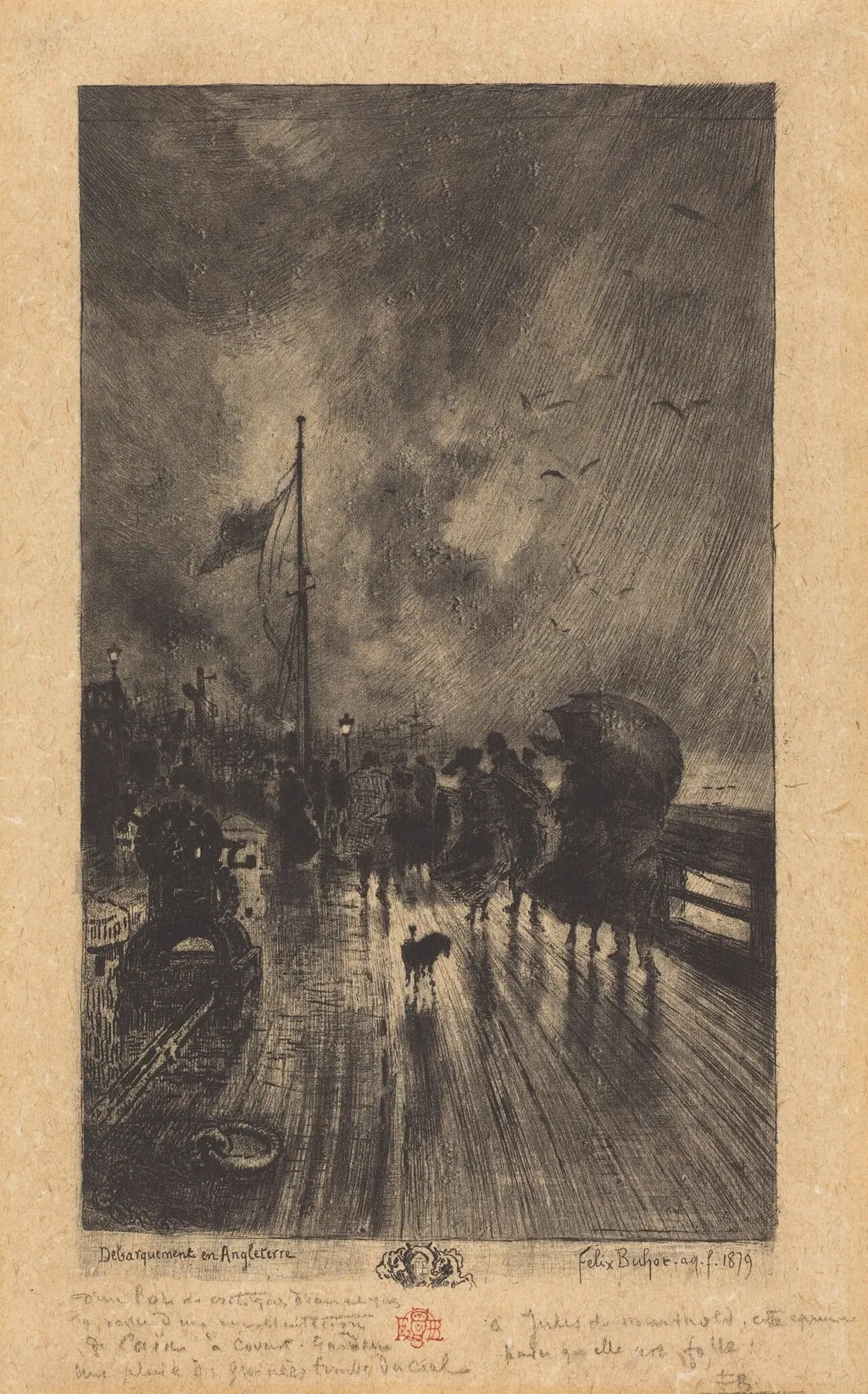
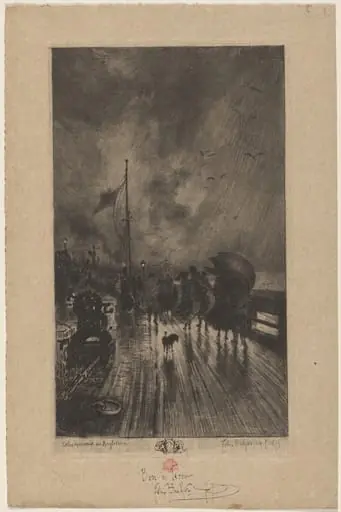
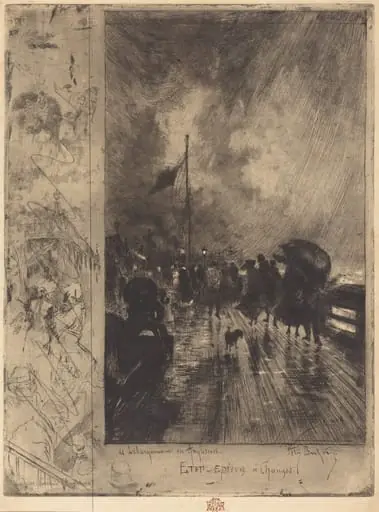
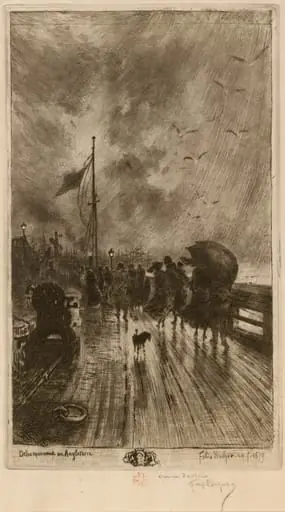
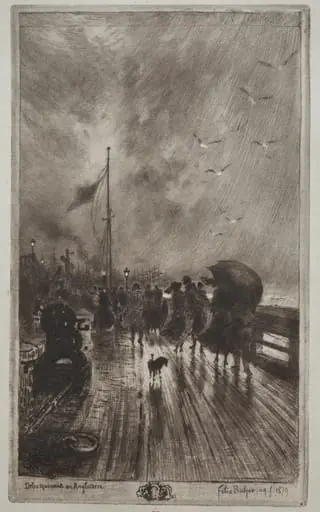
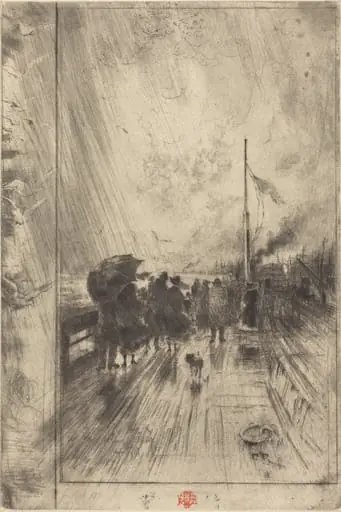
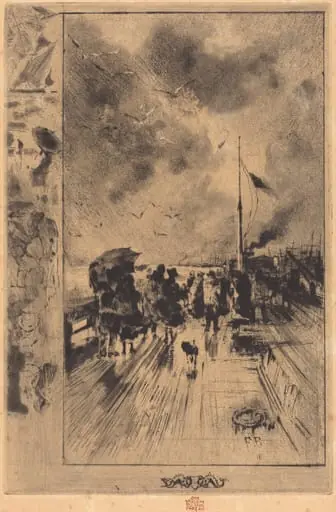
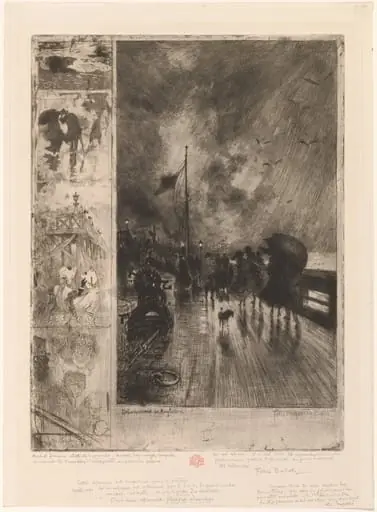
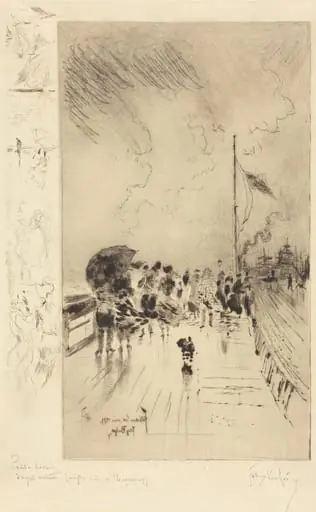
Un Débarquement en Angleterre (Landing in England) is an ink print by the Impressionist artist Félix-Hilaire Buhot. It dates from 1879 and is held in the collection of the National Gallery of Art.
About this work
Overview
The work captures a nocturnal harbor scene with layered textures and atmospheric depth, reflecting Buhot’s interest in urban and maritime life.
Created in 1879 by Félix-Hilaire Buhot, Un Débarquement en Angleterre is a complex print combining etching, drypoint, aquatint, roulette, and burnishing on oatmeal-colored paper. The work captures a nocturnal harbor scene with layered textures and atmospheric depth, reflecting Buhot’s interest in urban and maritime life. Its technical richness distinguishes it as a refined example of late 19th-century printmaking, emphasizing mood over narrative clarity.
Subject & Meaning
The scene depicts a dockside arrival at night, with a ship moored offshore and figures gathered along the shore under dim lamplight. Wagons, pedestrians, and indistinct forms suggest the arrival of travelers or goods. The title implies a landing in England, though the setting remains deliberately ambiguous. The work conveys the transient, anonymous nature of migration and commerce, focusing on collective movement rather than individual stories.
Technique & Style
Buhot employed multiple intaglio methods to achieve varied tonal effects: aquatint created smoky gradients, drypoint added dense, scratchy lines, and burnishing softened edges to suggest fog and motion. The roulette tool introduced stippled textures for rough surfaces, while the dust ground enhanced atmospheric density. The result is a tactile, almost chaotic surface that mirrors the energy of the harbor, with light and shadow interacting dynamically across the composition.
History & Provenance
The print was produced during Buhot’s mature period, when he focused on urban and maritime subjects in Paris and northern ports. It was likely issued in a small edition, common for artist-printmakers of the time. While its early ownership is undocumented, it entered institutional collections in the 20th century, valued for its technical innovation and evocative depiction of modern transit.
Context
In the late 1870s, European cities were expanding their port infrastructure amid rising transnational travel and trade. Buhot, influenced by Realism and early Impressionism, turned his attention to the rhythms of everyday life at docks and stations. This print aligns with a broader artistic interest in capturing transient moments, reflecting industrialization’s impact on public space and human movement.
Legacy
Buhot’s work, though less widely known than his contemporaries, contributed to the revival of etching as a serious artistic medium in France. Un Débarquement en Angleterre exemplifies his ability to merge technical precision with emotional resonance. It remains a reference in studies of 19th-century printmaking for its layered execution and subtle portrayal of modernity’s quiet dramas.
Artist & collection
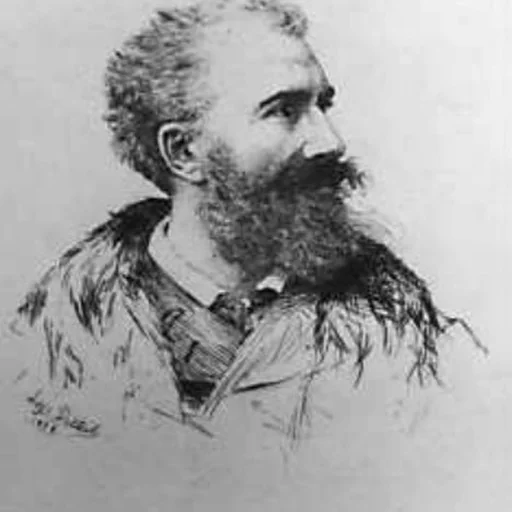

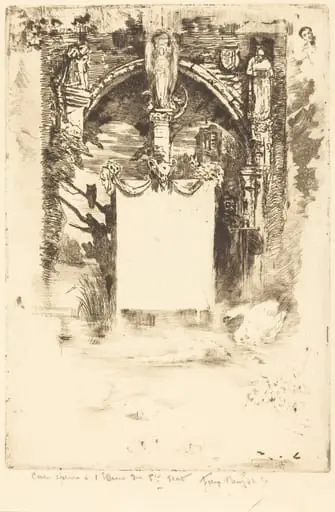 Ex-Libris pour "L'Ensorcelée" (Bookplate for "L'Ensorcelée")
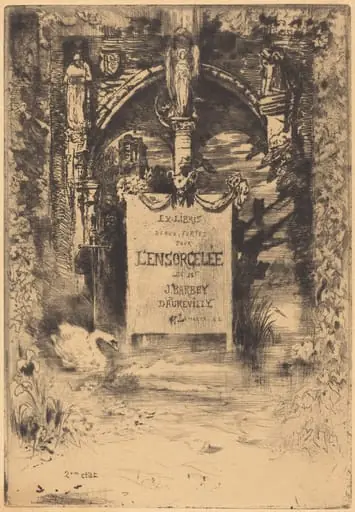 Ex-Libris pour "L'Ensorcelée" (Bookplate for "L'Ensorcelée")
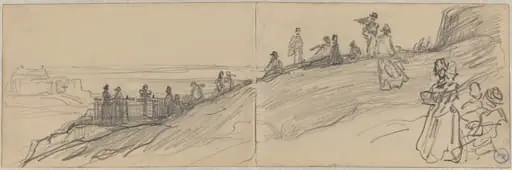 Figures on Top of a Hill, Overlooking the Sea
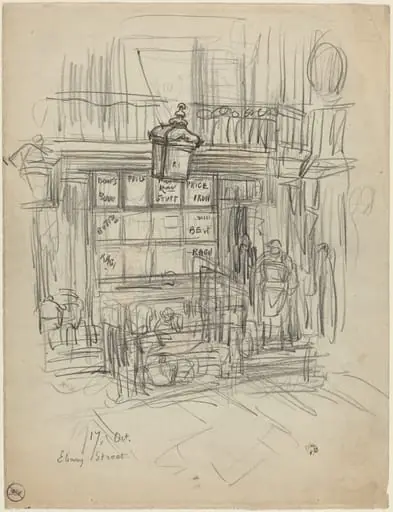 Ebury Street
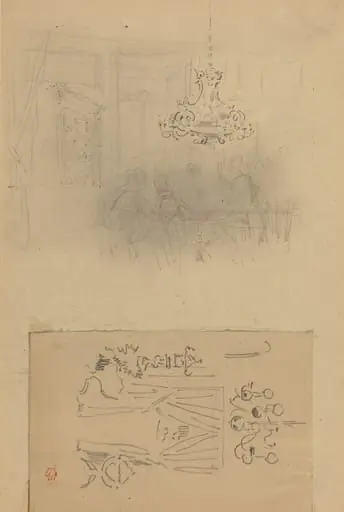 A Gathering in an Interior; A Curtained Doorway
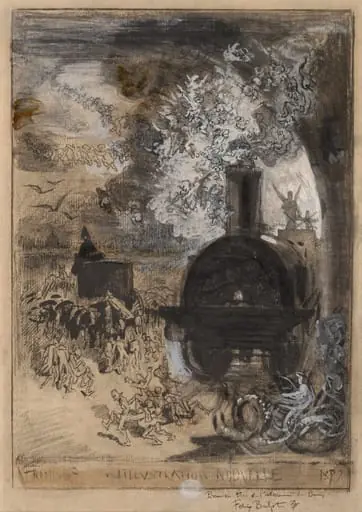 Frontispiece for L'Illustration Nouvelle: The Burial of the Burin
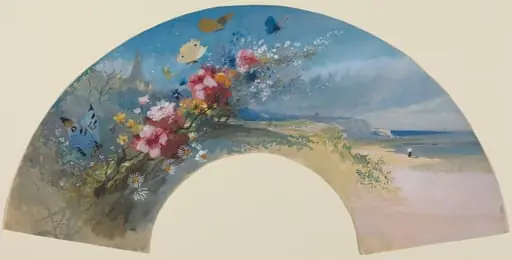 Fan with Wildflowers and Butterflies against the Norman Coast
![Gillingham Pier, London [verso], by Félix-Hilaire Buhot](https://artifactworldgallery.com/img/felix-hilaire-buhot--gillingham-pier-london-verso--641e03dd7de8217b-w320.webp) Gillingham Pier, London [verso]
Gillingham Pier, London [verso]