Artwork
Un Débarquement en Angleterre (Landing in England)
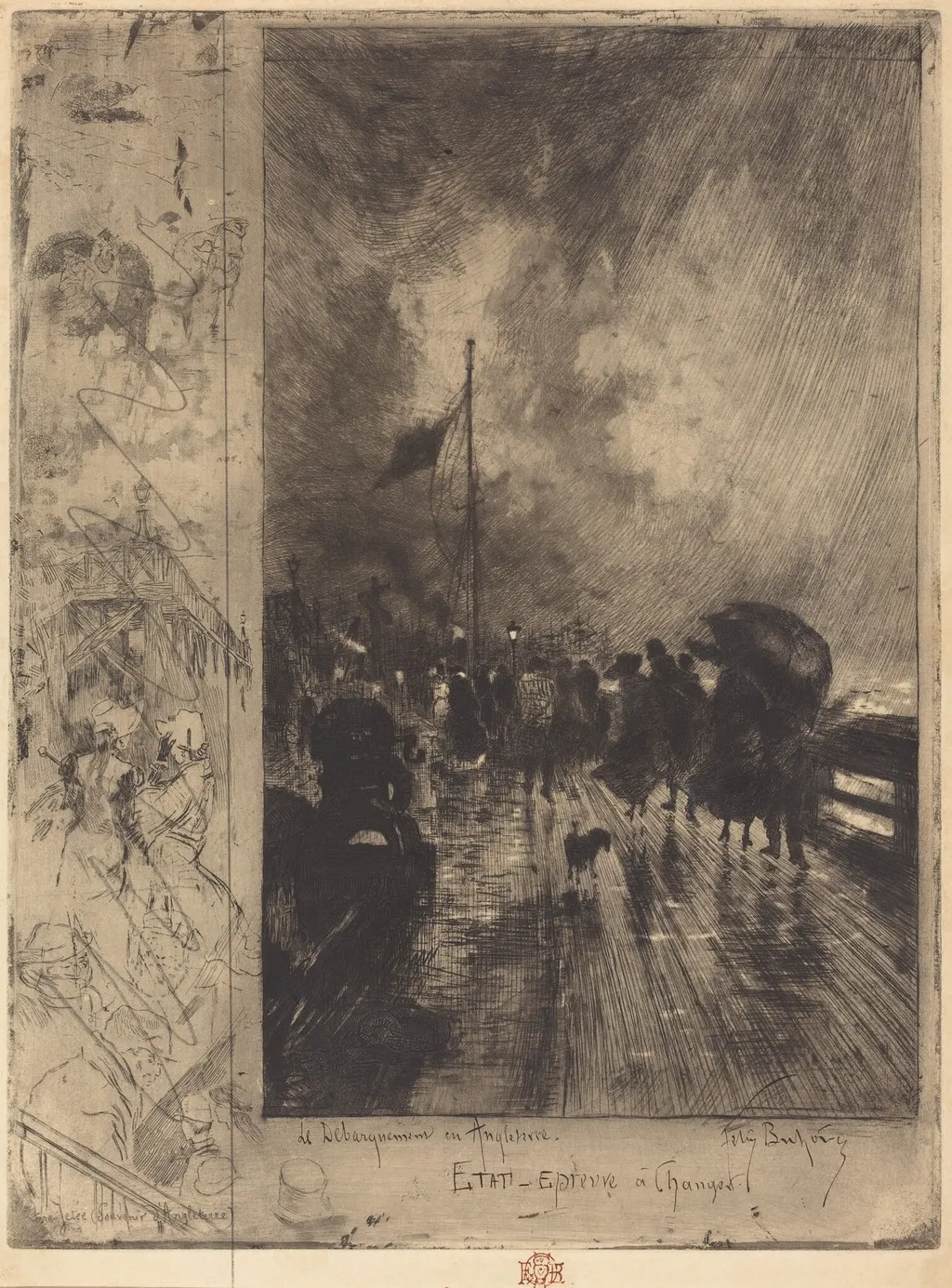
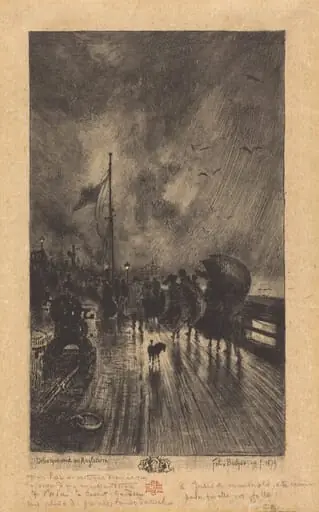
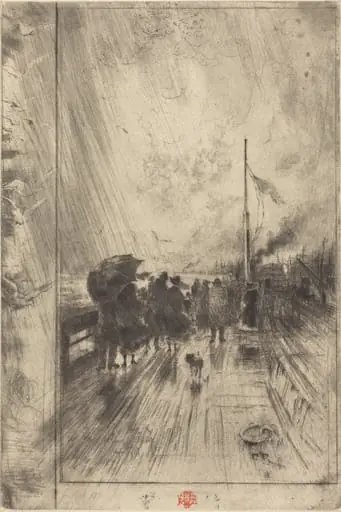
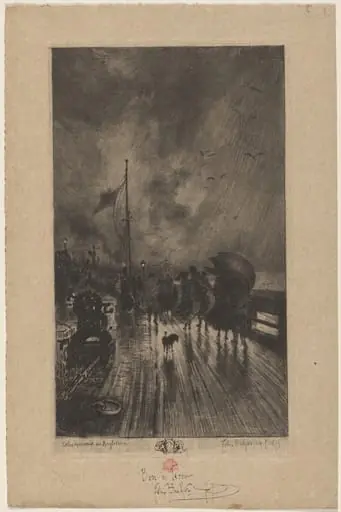
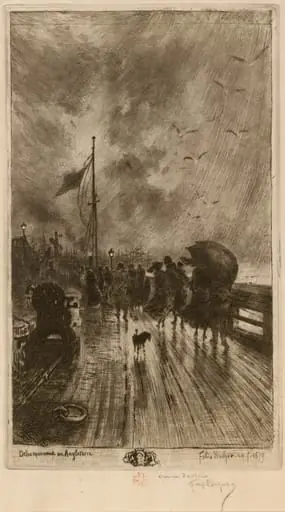
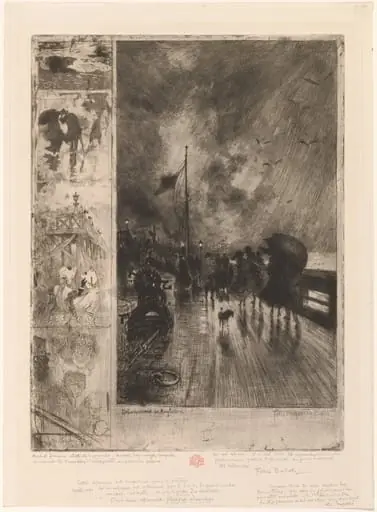
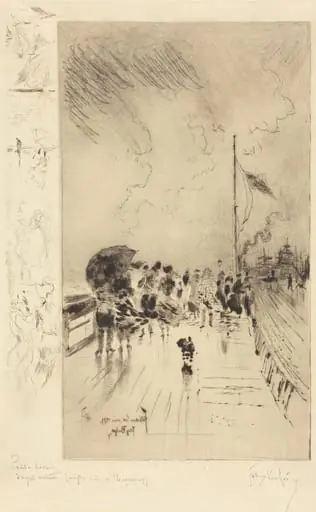
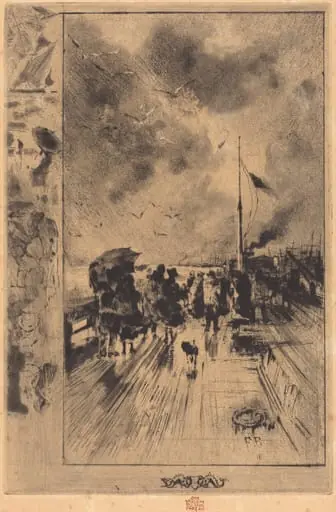
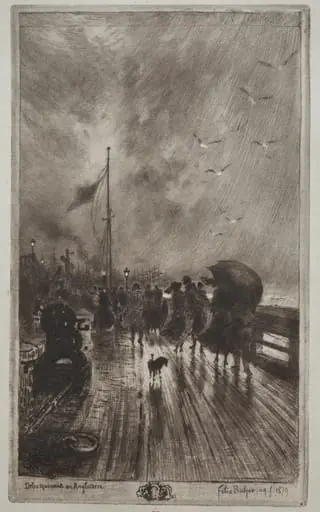
Un Débarquement en Angleterre (Landing in England) is a graphite print by the Impressionist artist Félix-Hilaire Buhot. It dates from 1879 and is held in the collection of the National Gallery of Art.
About this work
Overview
Félix‑Hilaire Buhot’s 1879 print titled *Un Débarquement en Angleterre* (Landing in England) combines etching, dry‑point, aquatint, soft‑ground etching and roulette on a moderately thick cream‑wove sheet. The artist’s later graphite revisions are also visible, revealing a layered process that integrates multiple printmaking methods into a single composition.
Subject & Meaning
The image captures a damp, overcast street scene in England. Figures move along a wet roadway, some sheltering themselves with umbrellas, while a flagpole bearing a flag rises in the distance behind modest buildings. The muted palette and heavy clouds convey a somber, everyday moment rather than a dramatic narrative.
Technique & Style
Buhot employs a mixture of intaglio techniques: etched lines define architecture, dry‑point adds soft, velvety edges, and aquatint—both dust‑ground and spirit‑ground—creates tonal washes that suggest rain‑slicked surfaces. The use of soft‑ground and roulette further textures the sky and pavement, producing a depth that aligns with Impressionist concerns for fleeting atmospheric effects.
Context
Created during the late nineteenth‑century rise of Impressionism, the print reflects the movement’s interest in contemporary life and transient weather conditions. While Buhot is less widely known than some of his French contemporaries, this work exemplifies the period’s experimental approach to print media, extending Impressionist ideals beyond oil painting into the realm of graphic art.
Artist & collection

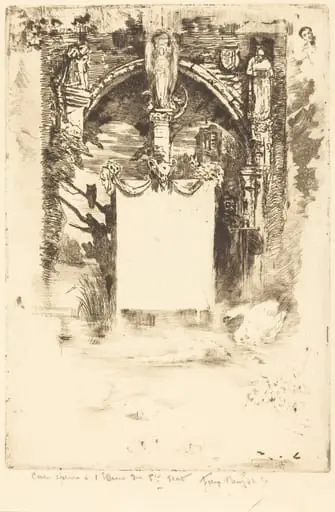 Ex-Libris pour "L'Ensorcelée" (Bookplate for "L'Ensorcelée")
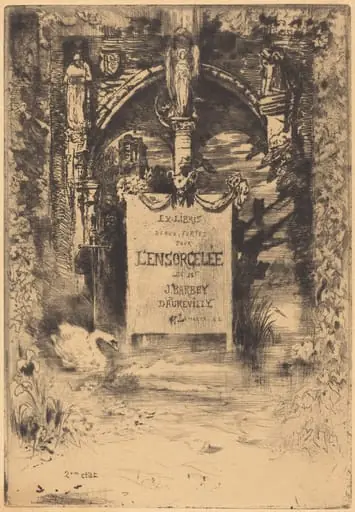 Ex-Libris pour "L'Ensorcelée" (Bookplate for "L'Ensorcelée")
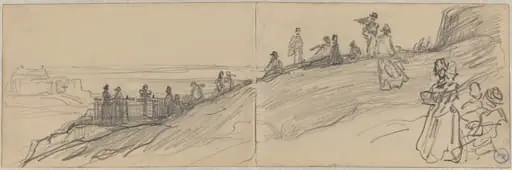 Figures on Top of a Hill, Overlooking the Sea
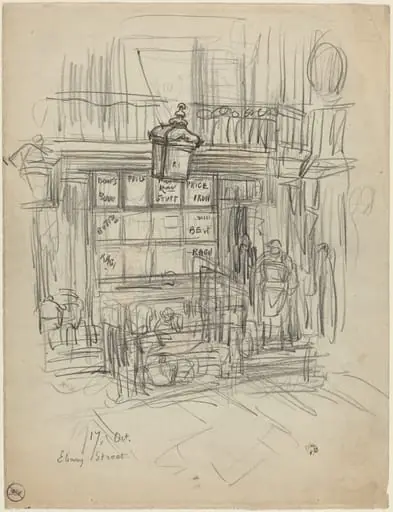 Ebury Street
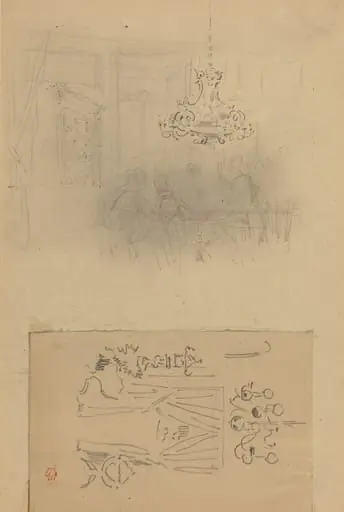 A Gathering in an Interior; A Curtained Doorway
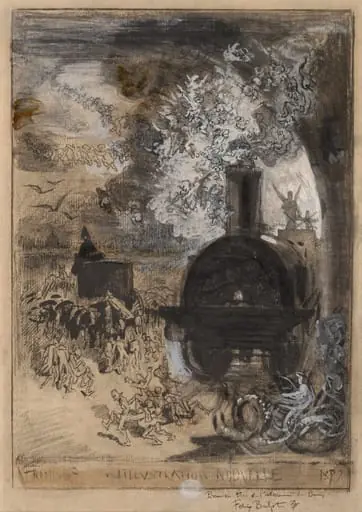 Frontispiece for L'Illustration Nouvelle: The Burial of the Burin
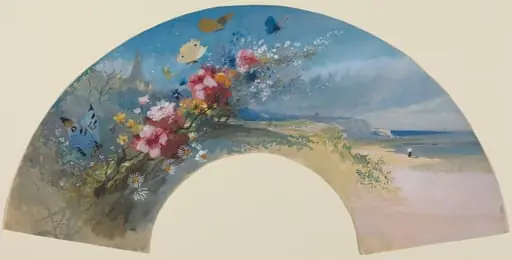 Fan with Wildflowers and Butterflies against the Norman Coast
![Gillingham Pier, London [verso], by Félix-Hilaire Buhot](https://artifactworldgallery.com/img/felix-hilaire-buhot--gillingham-pier-london-verso--641e03dd7de8217b-w320.webp) Gillingham Pier, London [verso]
Gillingham Pier, London [verso]