Artwork
Un Débarquement en Angleterre (Landing in England)
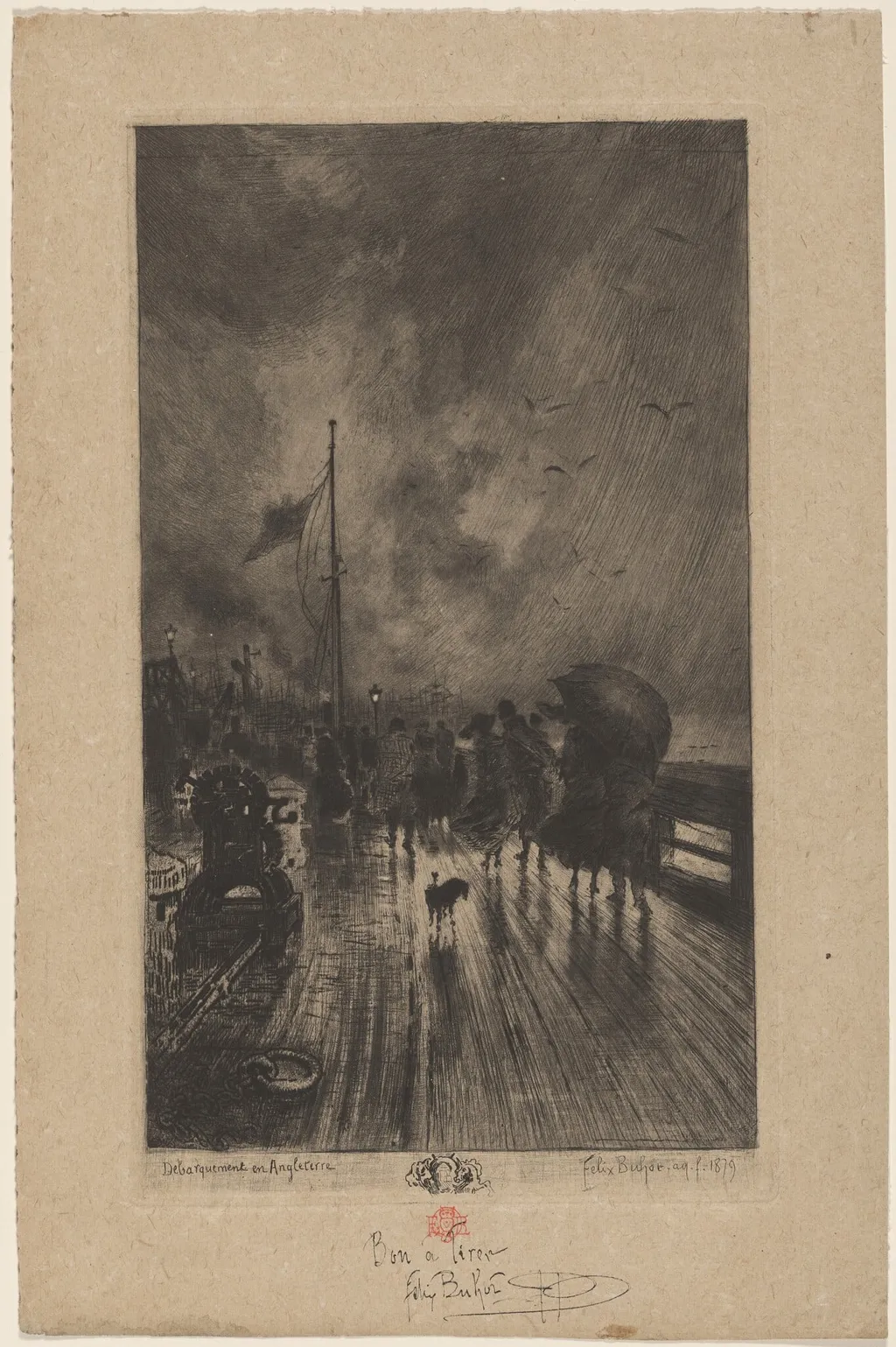
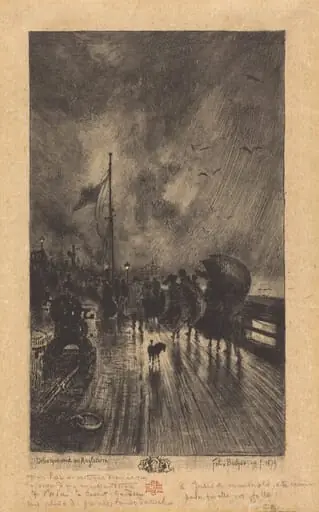
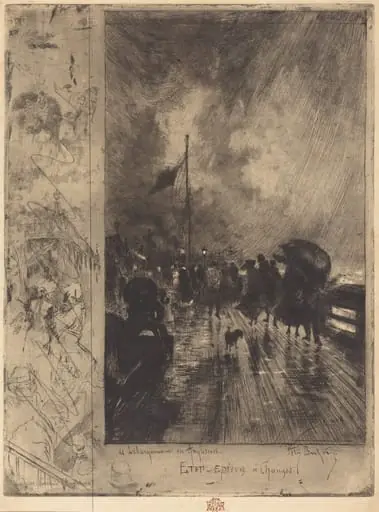
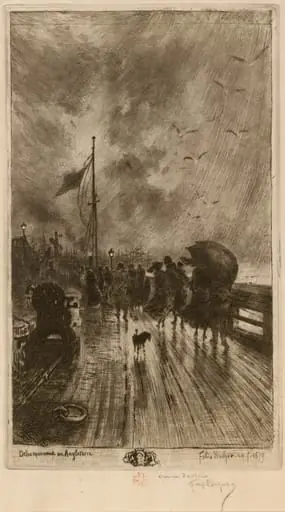
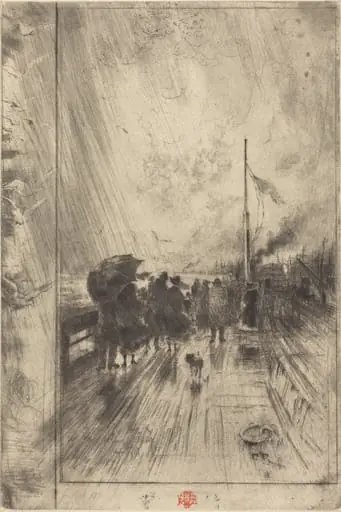
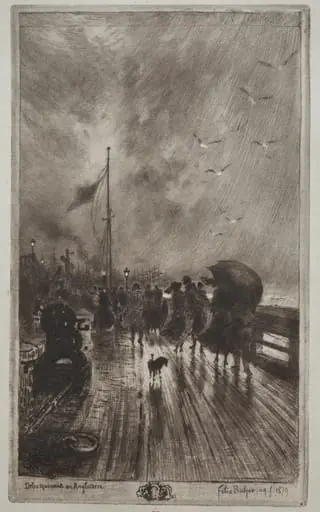
Un Débarquement en Angleterre (Landing in England) is an ink print by the Romanticist artist Félix-Hilaire Buhot. It dates from 1879 and is held in the collection of the National Gallery of Art.
About this work
Overview
The work captures a moment of arrival on a rain-slicked dock, rendered with nuanced tonal gradations and textured surfaces.
Created in 1879, Un Débarquement en Angleterre is a multi-technique print by Félix-Hilaire Buhot, combining etching, drypoint, aquatint, roulette, and spirit ground on tan wove paper. The work captures a moment of arrival on a rain-slicked dock, rendered with nuanced tonal gradations and textured surfaces. Its medium choices reflect Buhot’s interest in atmospheric effects and the tactile qualities of printmaking, distinguishing it from painted equivalents of the era.
Subject & Meaning
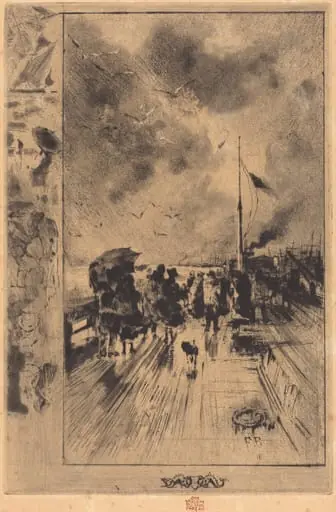
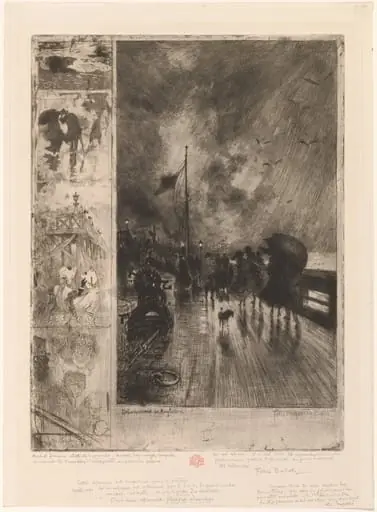
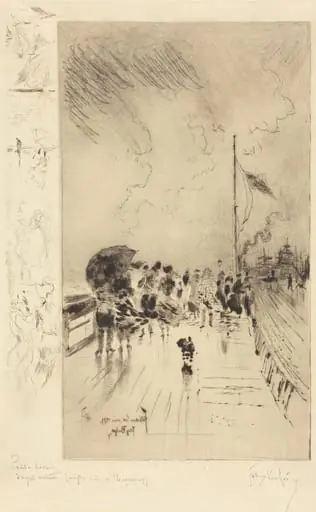
The scene depicts a modest maritime landing in England, with figures in overcoats and hats navigating a wooden pier under heavy rain. A flag flies overhead, and birds wheel in the overcast sky, suggesting movement and transience. The focus on ordinary travelers, rather than grand events, reflects a quiet realism. The work conveys the quiet dignity of daily life amid inclement weather, avoiding romanticized spectacle in favor of observed truth.
Technique & Style
Buhot employed a range of intaglio methods to build depth and mood: etching defined fine lines, drypoint added rich, fuzzy shadows, aquatint created soft tonal fields, and roulette introduced granular texture. The spirit ground on tan paper lent a warm, muted base that enhanced the damp, gray atmosphere. These techniques together simulate the wet sheen of wood, the weight of fabric, and the diffused light of a stormy sky without relying on color.
History & Provenance
The print was made during Buhot’s mature period, when he focused on urban and coastal scenes in France and England. It was likely produced for private collectors or as part of a series documenting port life. While no specific early ownership records are widely documented, the work entered institutional collections in the 20th century, where it is now studied for its technical innovation and observational precision.
Context
In late 19th-century France, printmaking experienced a revival as artists sought alternatives to academic painting. Buhot aligned with this movement, embracing etching’s capacity for immediacy and mood. His depictions of weather, labor, and transit echoed broader European interests in realism and the everyday, while his technical experimentation set him apart from contemporaries who favored cleaner lines or brighter palettes.
Legacy
Buhot’s work influenced later printmakers interested in atmospheric effects and mixed-media techniques. Un Débarquement en Angleterre remains a key example of how intaglio methods could convey emotional texture without color. It is frequently cited in studies of French printmaking’s evolution, valued not for grandeur but for its quiet, precise observation of transient moments in public life.
Artist & collection
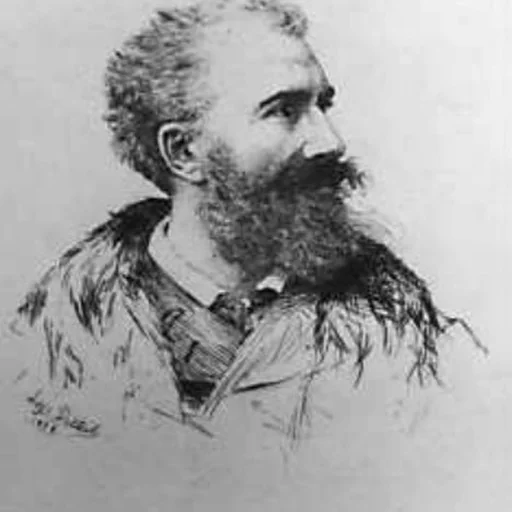

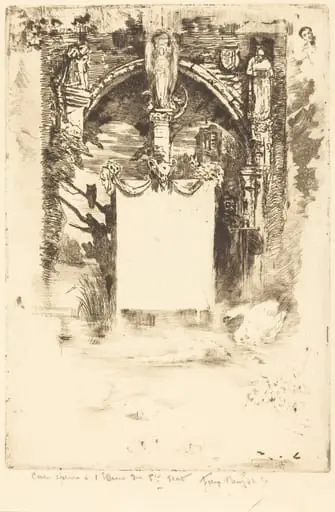 Ex-Libris pour "L'Ensorcelée" (Bookplate for "L'Ensorcelée")
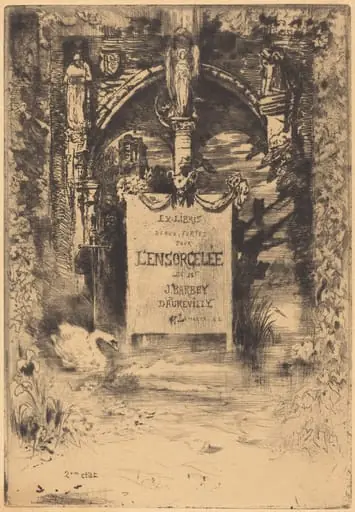 Ex-Libris pour "L'Ensorcelée" (Bookplate for "L'Ensorcelée")
 Figures on Top of a Hill, Overlooking the Sea
 Ebury Street
 A Gathering in an Interior; A Curtained Doorway
 Frontispiece for L'Illustration Nouvelle: The Burial of the Burin
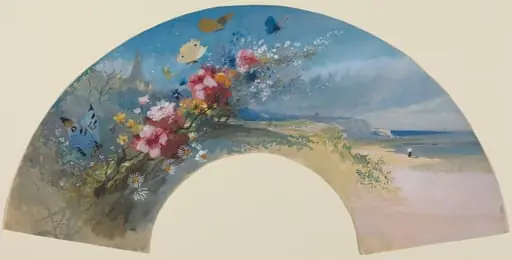 Fan with Wildflowers and Butterflies against the Norman Coast
![Gillingham Pier, London [verso], by Félix-Hilaire Buhot](https://artifactworldgallery.com/img/felix-hilaire-buhot--gillingham-pier-london-verso--641e03dd7de8217b-w320.webp) Gillingham Pier, London [verso]
Gillingham Pier, London [verso]