Artwork
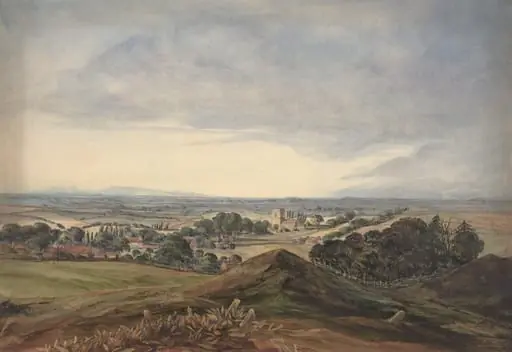
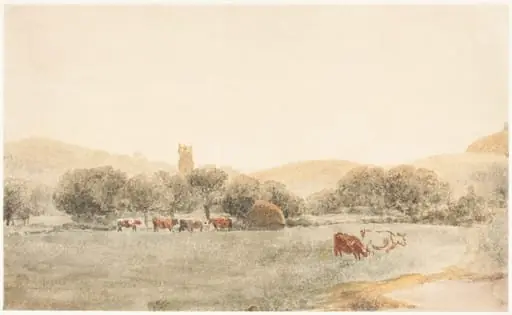
Landscape with Church Steeple
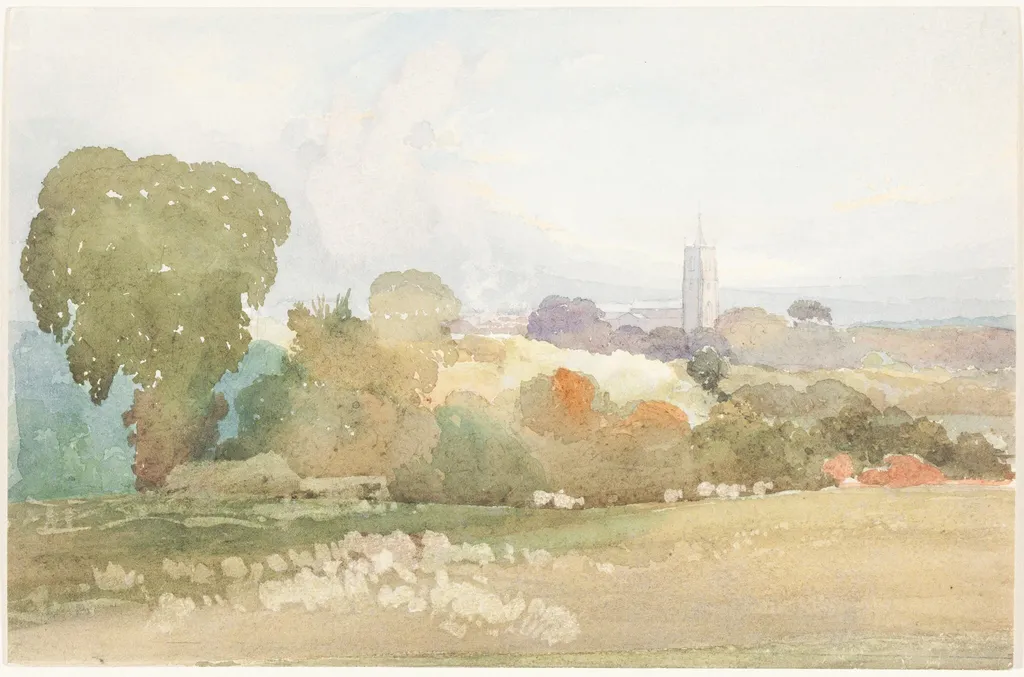
Landscape with Church Steeple is a graphite drawing by the Romanticist artist James Bulwer. It dates from 1828 and is held in the collection of the National Gallery of Art.
About this work
Overview
Created in 1828, this work is a watercolor and graphite drawing by James Bulwer, capturing a quiet rural scene centered on a church steeple. The piece belongs to the tradition of British topographical drawing, emphasizing observational accuracy over dramatic expression. Its modest scale and restrained palette reflect the artist’s focus on recording the character of the English countryside.
Subject & Meaning
No figures or overt narrative elements appear, allowing the architecture to stand as a symbol of community and continuity.
The composition centers on a solitary church steeple rising above rolling fields and scattered trees, suggesting a quiet, enduring presence within the landscape. No figures or overt narrative elements appear, allowing the architecture to stand as a symbol of community and continuity. The scene evokes stillness rather than grandeur, aligning with early 19th-century sensibilities toward pastoral order.
Technique & Style
Bulwer employed transparent watercolor over light graphite underdrawing to build subtle tonal gradations. The graphite outlines define forms with precision, while washes of color suggest atmospheric depth and seasonal light. The handling is deliberate and unembellished, prioritizing clarity and structural integrity over expressive brushwork, characteristic of topographical artists of the period.
History & Provenance
The drawing was produced during Bulwer’s active years as a watercolorist in southern England, likely as part of a series documenting regional architecture. It remained in private collections after its creation, with no public exhibition record until the 20th century. Its survival reflects its value as a document of local topography rather than a sought-after artistic object.
Context
In the 1820s, watercolor drawing was widely used by amateur and professional artists to record landscapes for personal or scholarly purposes. Bulwer’s work aligns with the growing interest in regional identity and architectural heritage, particularly in rural England. This piece contributes to a broader visual archive of parish churches as anchors of community life.
Legacy
Though not widely known today, the drawing exemplifies the quiet rigor of early Victorian topographical art. It survives as a record of a specific place and moment, valued for its fidelity to observed detail rather than stylistic innovation. Its preservation offers insight into how ordinary landscapes were documented before the rise of photography.
Own this work as a print
Artist & collection


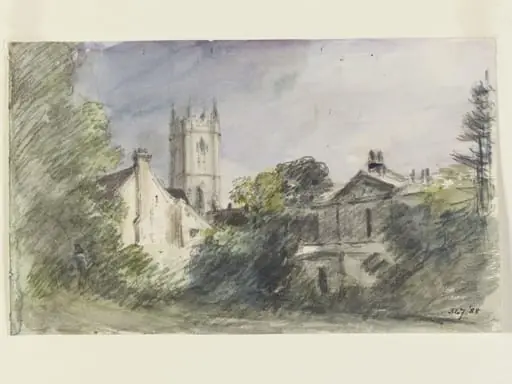 Houses in Dedham, with the church tower
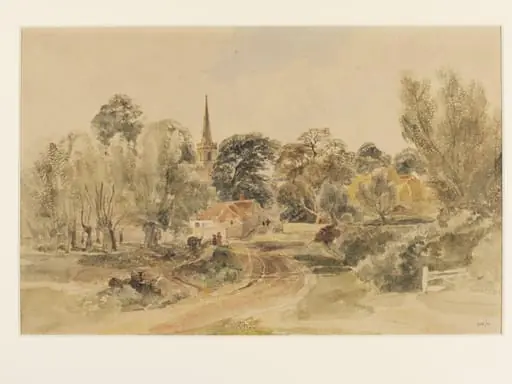 Wilsford, Lincolnshire
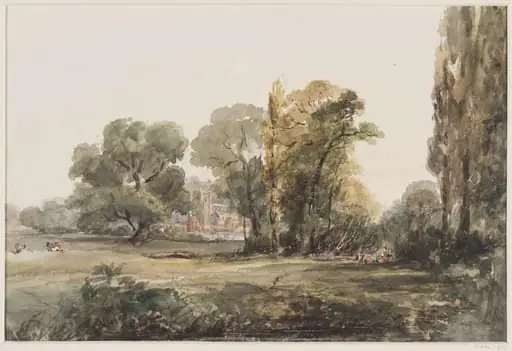 Stowe: a church in the distance, seen amid trees
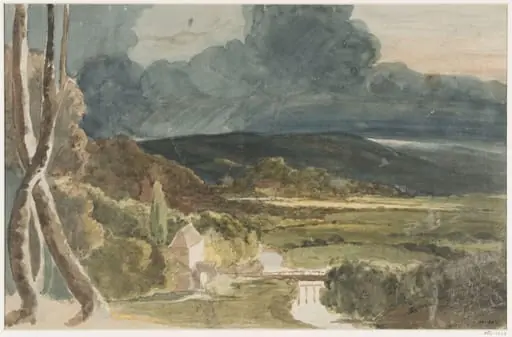 Landscape with river and mountains
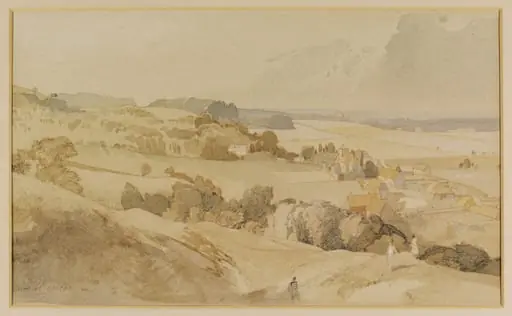 The Southdown, Underhill Road; Clayton Village
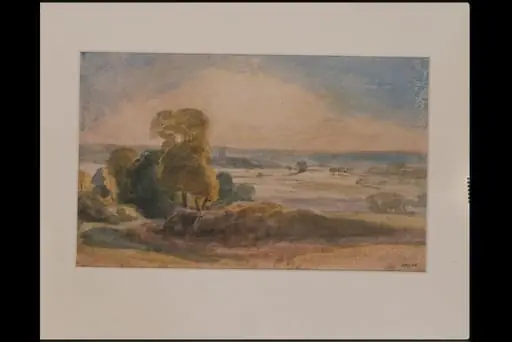 Dedham Vale
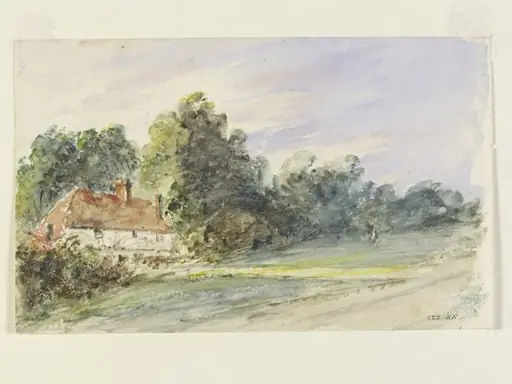 A cottage with a red-tiled roof, by a wood
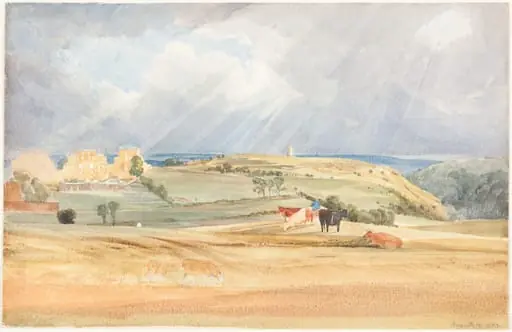 Landscape with Cattle (Somerset?)
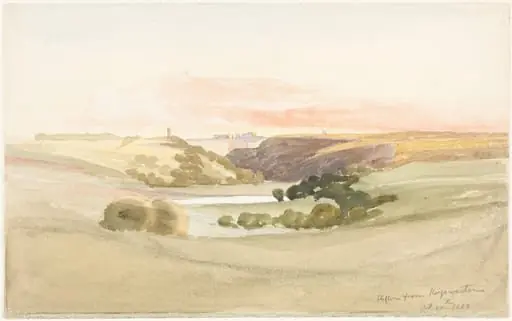 Clifton from Kingsweston
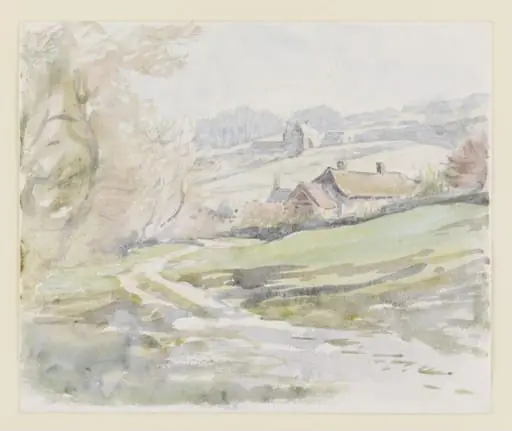 Landscape near Sidmouth, with cottages surrounded by fields and woods
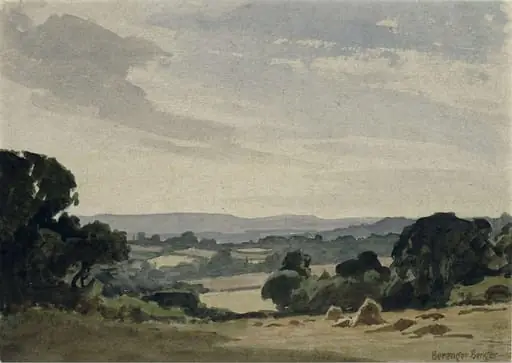 Sussex Weald
 A Meadow with Cattle near Glastonbury