Artwork
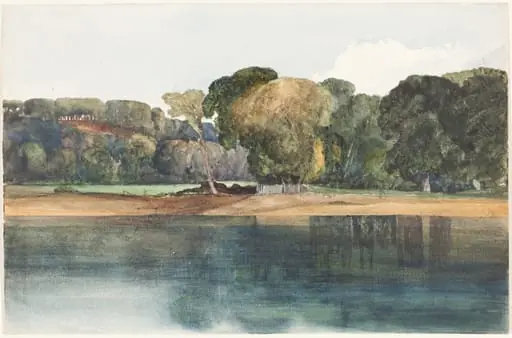
Clifton from Kingsweston
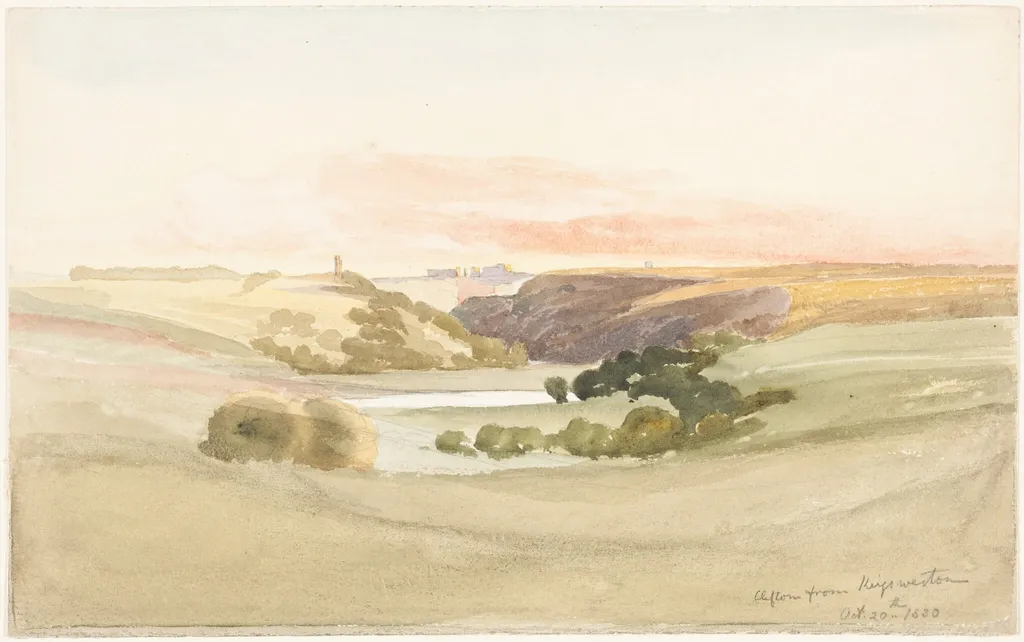
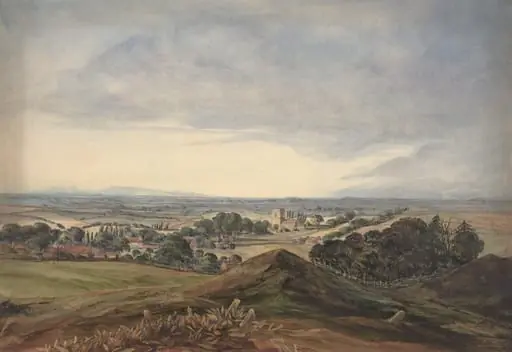
Clifton from Kingsweston is a graphite drawing by the Romanticist artist James Bulwer. It dates from 1830 and is held in the collection of the National Gallery of Art.
About this work
Overview
James Bulwer’s 1830 work titled “Clifton from Kingsweston” is a watercolor executed over a graphite sketch. The piece presents a gentle countryside scene, rendered in a restrained palette of greens, browns and grays. Light clouds fill the sky, while a modest building can be discerned on the horizon, giving the composition a calm, measured atmosphere.
Subject & Meaning
The drawing depicts a stretch of rolling hills punctuated by a few scattered trees and a small water feature—likely a pond or stream—situated in the foreground. The tranquil water element and the soft, open sky combine to evoke a sense of peaceful rural life, reflecting an appreciation for the quiet beauty of the English landscape.
Technique & Style
Bulwer employed watercolor washes atop an initial graphite underdrawing, allowing the faint pencil lines to guide the placement of color while remaining largely concealed. The muted tones and delicate handling are characteristic of early 19th‑century British landscape practice, aligning the work with the broader Romantic interest in nature’s subdued, contemplative aspects.
Context
Created during a period when British artists were increasingly turning to the countryside for inspiration, the piece mirrors the Romantic movement’s focus on atmosphere and emotional resonance rather than dramatic spectacle. While not overtly narrative, the work’s emphasis on mood and natural simplicity situates it within the era’s evolving approach to landscape representation.
Own this work as a print
Artist & collection


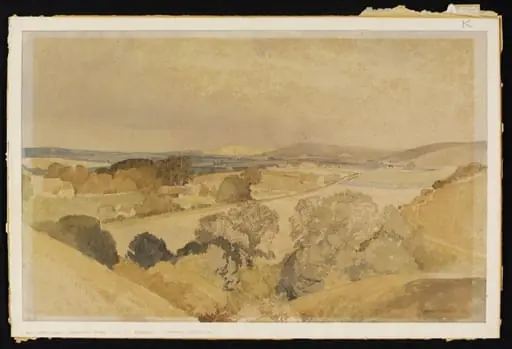 The Southdown, Underhill Road; Edburton, and the Road Eastwards
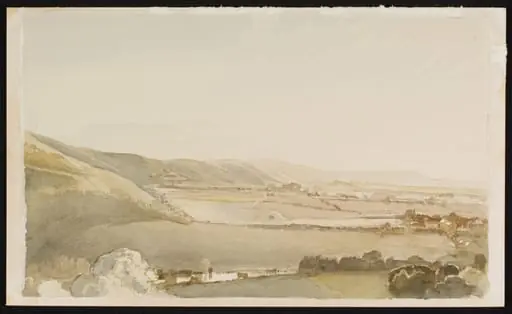 The Southdown, Underhill Road: Westwards from Poynings
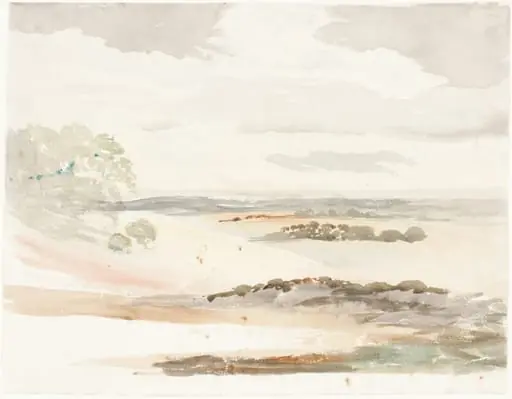 An Extensive View in Shropshire
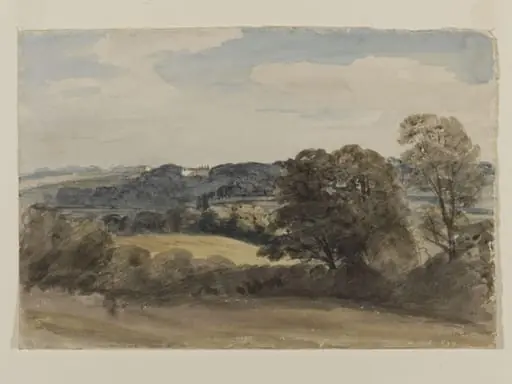 Landscape with buildings in the distance
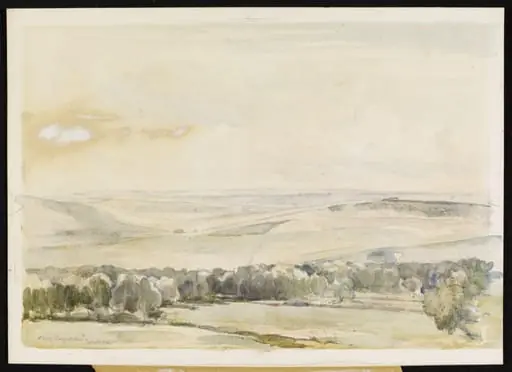 The Downs from Friston
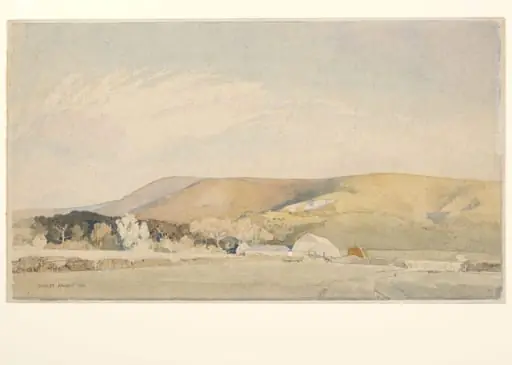 Lodge Barn, near Ditchling
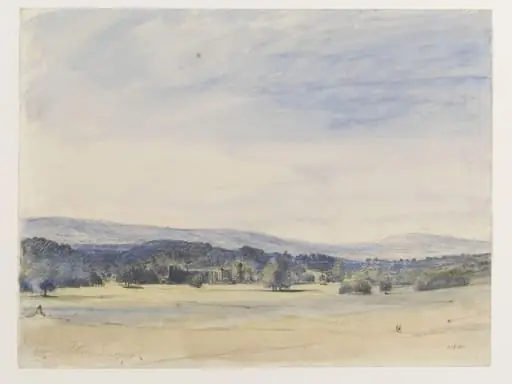 The ruins of a Cowdray House
 Dedham Vale
 Carrigogunniel
 The Sea of Galilee from the heights of Safad
 Landscape with river and mountains