Artwork
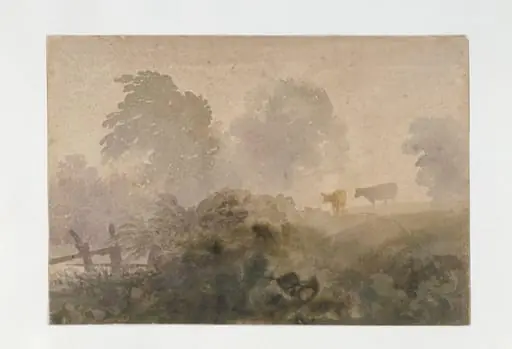
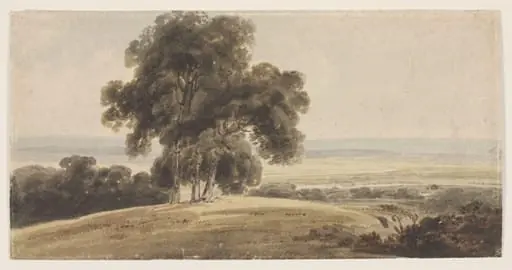
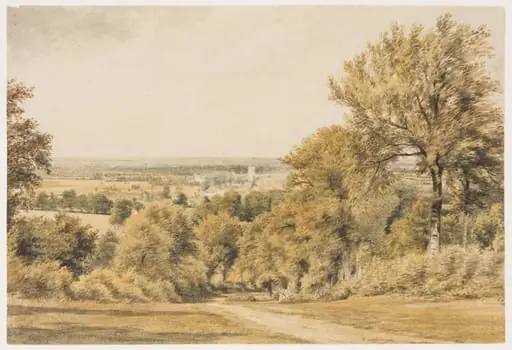
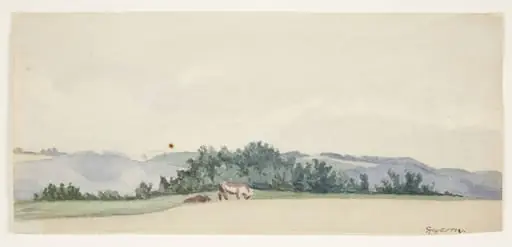
A Meadow with Cattle near Glastonbury
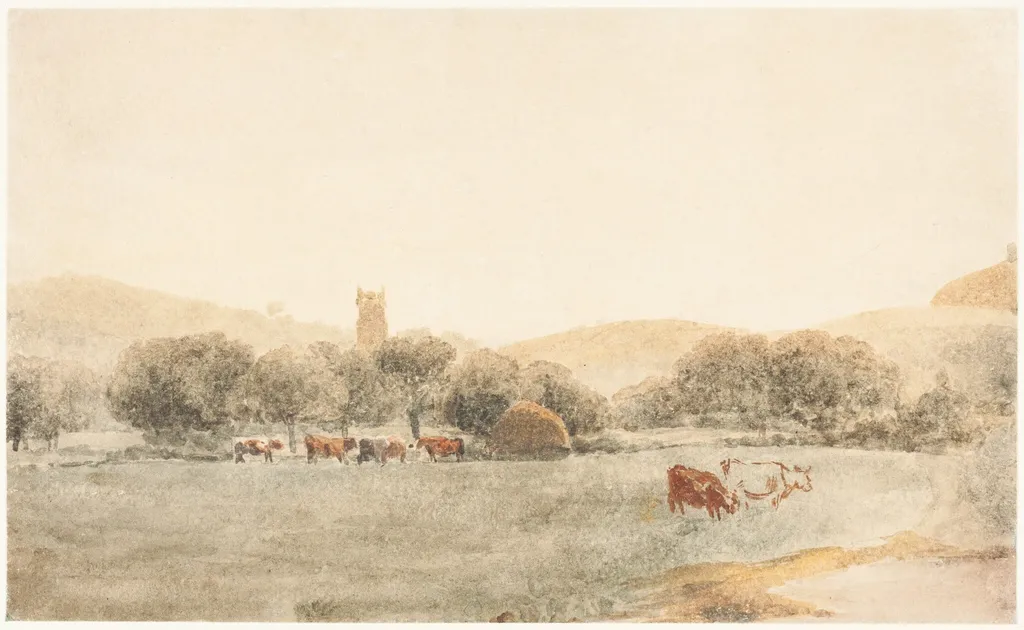
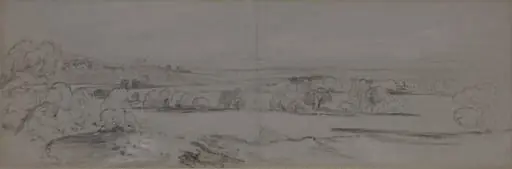
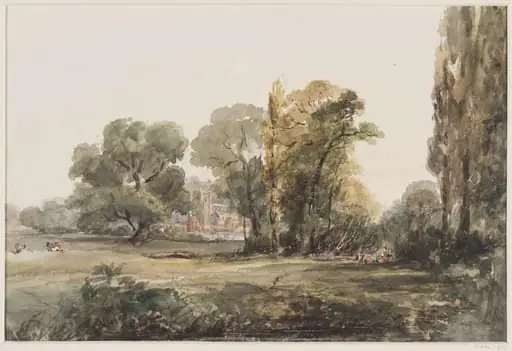
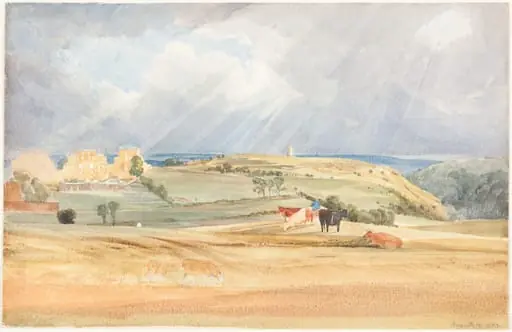
A Meadow with Cattle near Glastonbury is a graphite drawing by the Romanticist artist Peter De Wint. It dates from 1816 and is held in the collection of the National Gallery of Art.
About this work
Overview
Executed on wove paper with graphite underdrawing, the work captures a tranquil meadow where cattle graze under a soft, diffused sky.
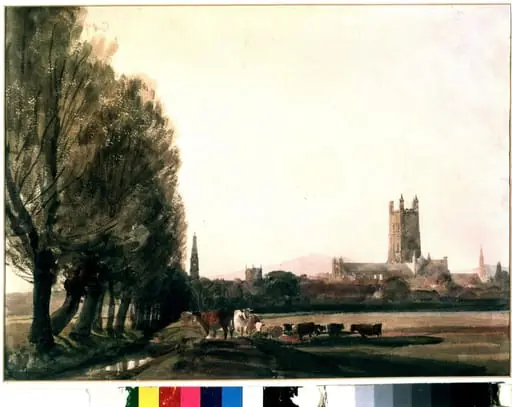
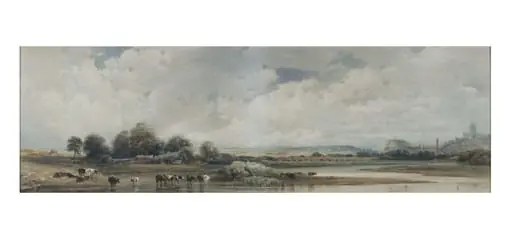
Created in 1816, this watercolor drawing by Peter De Wint depicts a pastoral landscape near Glastonbury, England. Executed on wove paper with graphite underdrawing, the work captures a tranquil meadow where cattle graze under a soft, diffused sky. The composition emphasizes quietude and natural harmony, typical of early 19th-century British landscape traditions that favored observed rural scenes over idealized ones.
Subject & Meaning
The scene presents an unembellished view of agricultural life: cows in various resting and feeding postures, scattered across a gently rolling field. Distant trees and a faint architectural form suggest the presence of human settlement without intrusion. The absence of human figures reinforces a sense of solitude and continuity, reflecting a Romantic-era reverence for nature’s quiet rhythms rather than its drama.
Technique & Style
De Wint employed thin, layered watercolor washes over a light graphite sketch to achieve subtle tonal transitions and atmospheric depth. The pale green hues of the grass and the hazy background were built through glazing, allowing underlying layers to subtly influence the final effect. This method created a luminous, ethereal quality, characteristic of his mature style and aligned with contemporary British watercolor practices.
History & Provenance
Painted during De Wint’s early period of travel through Somerset, the work reflects his direct engagement with the English countryside. It remained in private collections for much of the 19th century before entering institutional holdings. Its survival in good condition offers insight into the artist’s working methods and the popularity of topographical watercolors among collectors of the time.
Context
In the 1810s, British artists increasingly turned to local landscapes as subjects worthy of serious artistic attention. De Wint’s work aligns with this shift, moving away from grand European vistas toward intimate, observed scenes of rural England. His approach resonated with contemporary literary and philosophical ideals that valued nature as a source of moral and aesthetic reflection.
Legacy
This drawing exemplifies De Wint’s influence on the development of British watercolor as a serious medium. His restrained palette and attention to light and atmosphere helped define a distinct national style. Though not widely exhibited in his lifetime, such works contributed to the enduring appreciation of watercolor as a vehicle for quiet, contemplative landscape expression.
Own this work as a print
Artist & collection