Artwork
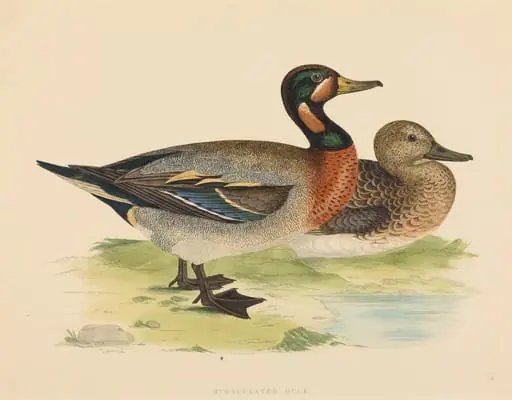
Bemaculated Duck
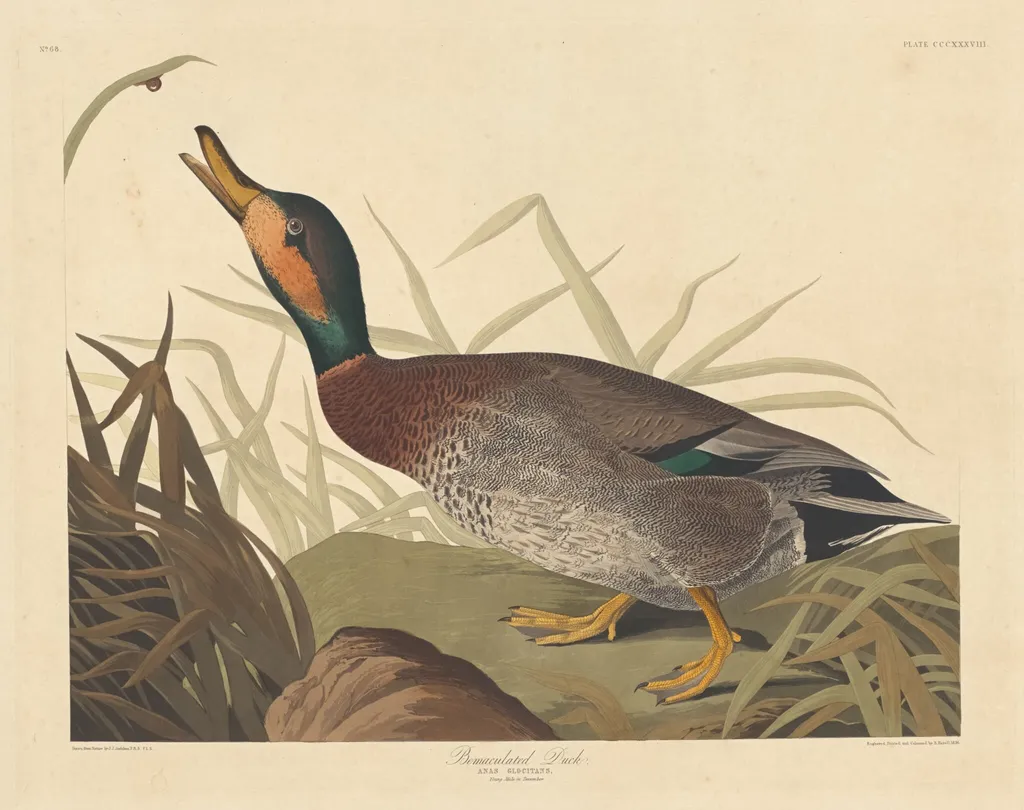
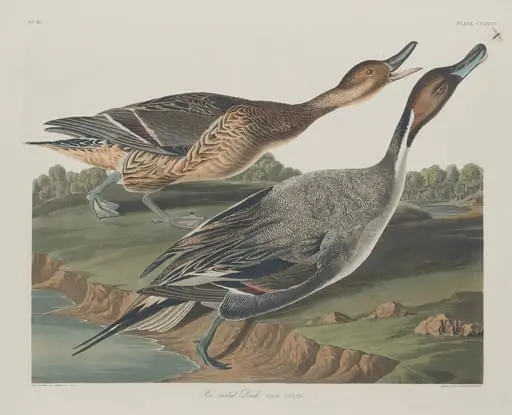
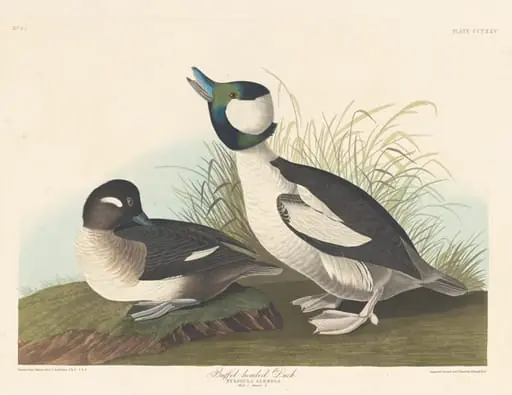
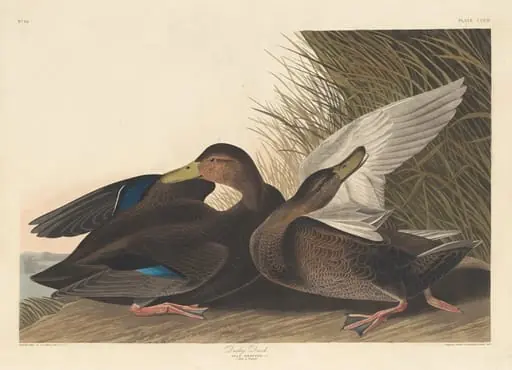
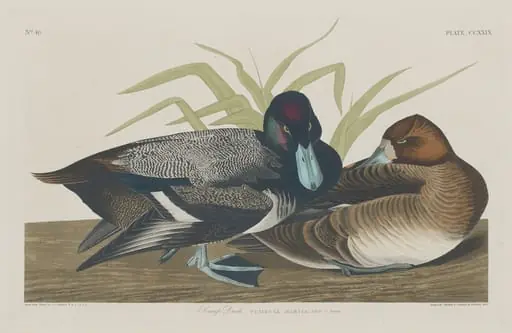
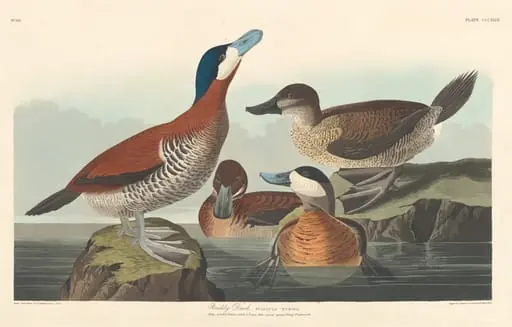
Bemaculated Duck is an ink print by the Romanticist artist Robert Havell Jr.. It dates from 1836 and is held in the collection of the National Gallery of Art.
About this work
Overview
Havell’s technical skill is evident in the delicate rendering of texture and form, characteristic of his family’s long-standing engagement with printmaking.
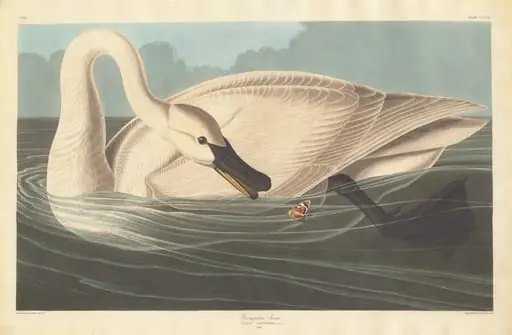
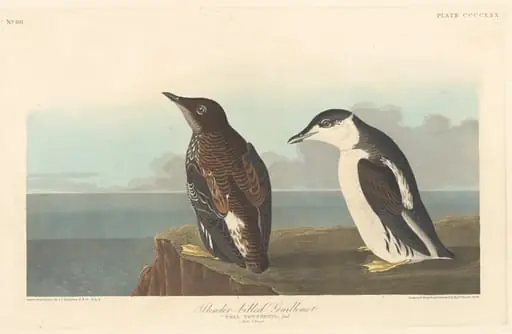
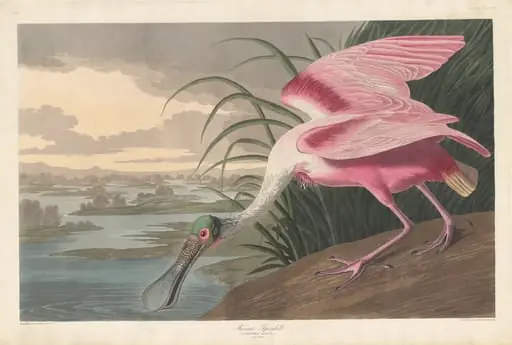
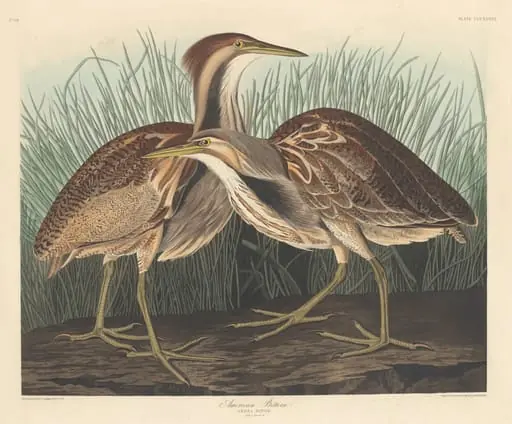
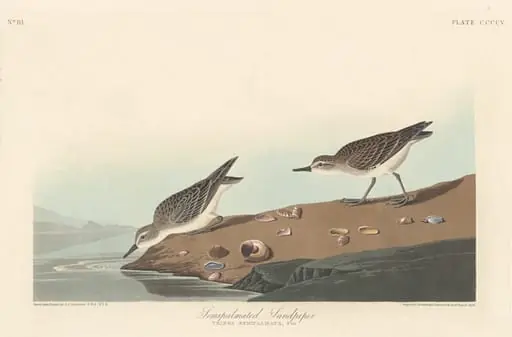
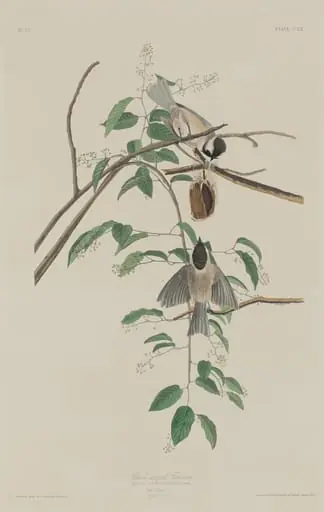
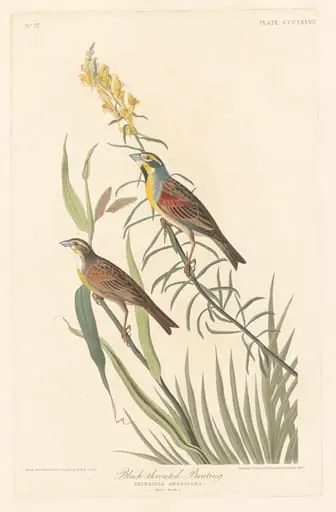
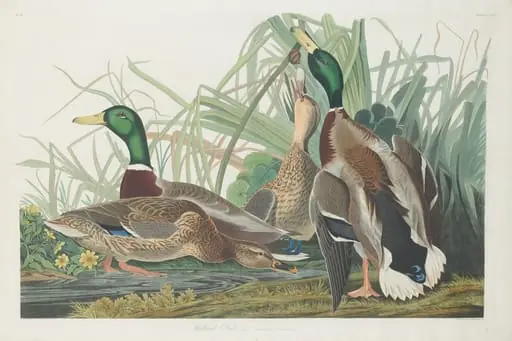
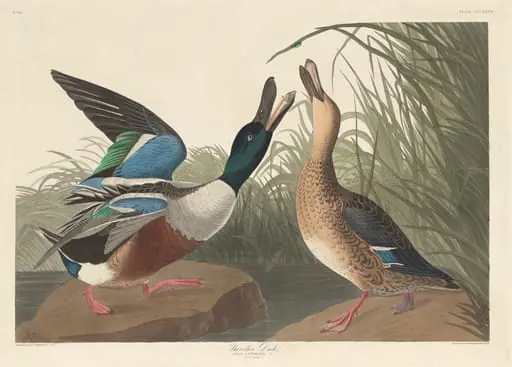
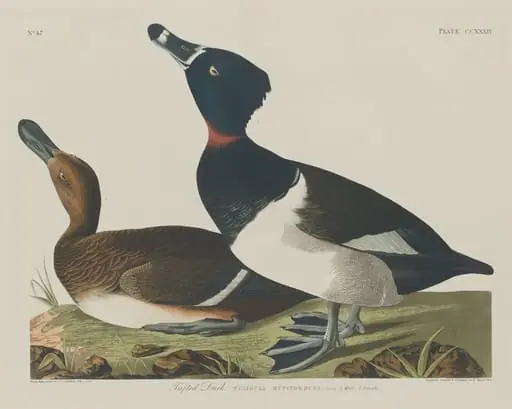
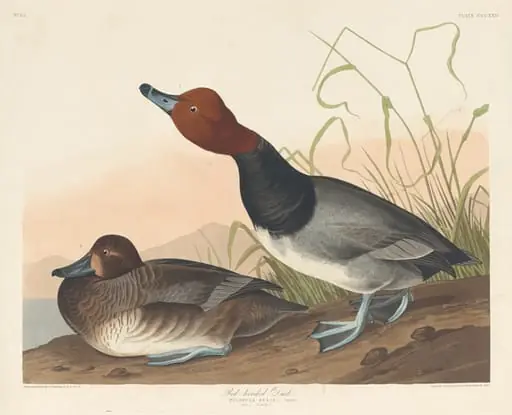
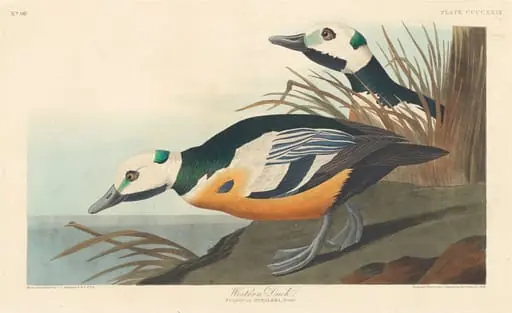
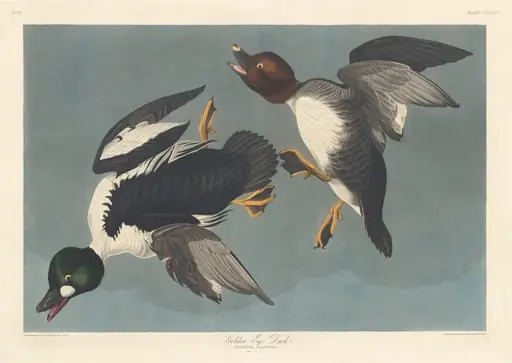
Created in 1836 by Robert Havell Jr., this hand-colored engraving and aquatint on Whatman wove paper depicts a solitary duck in a quiet, contemplative pose. The work belongs to a broader series of ornithological prints produced during the early 19th century, reflecting the period’s interest in natural history and precise visual documentation. Havell’s technical skill is evident in the delicate rendering of texture and form, characteristic of his family’s long-standing engagement with printmaking.
Subject & Meaning
The duck, standing on one leg, is rendered with stillness and attention to anatomical detail. Its muted plumage contrasts with the vivid orange of its bill, drawing focus to this single point of color. The composition avoids narrative or symbolic overtones, instead emphasizing observational accuracy. The image functions as a scientific record, aligning with the era’s naturalist pursuits rather than romantic or allegorical interpretations of wildlife.
Technique & Style
Havell employed aquatint to achieve subtle tonal gradations in the duck’s feathers, complemented by fine engraving lines that define individual plumage. Hand-coloring was applied with restraint, preserving the ink’s structural clarity while adding naturalistic hues. The use of Whatman wove paper, prized for its smooth surface and durability, allowed for precise ink hold and delicate color layering, showcasing the Havell family’s mastery of reproductive print techniques.
History & Provenance
Robert Havell Jr. was part of a multi-generational family of English engravers based in Reading, Berkshire, known for their work in natural history illustration. This print emerged from a context of commercial and scientific publishing, where detailed animal studies were in demand among collectors and institutions. Though not part of a widely published series, it reflects the family’s consistent output in ornithological prints during the 1830s.
Context
In the 1830s, illustrated natural history publications flourished in Britain, driven by expanding scientific inquiry and public interest in exotic and native species. Havell’s work aligns with this trend, sharing methods and goals with contemporaries like John James Audubon. While his family had connections to Indian art through colonial commissions, this particular piece focuses on a European bird, underscoring the breadth of their subject matter beyond regional influences.
Legacy
Havell Jr.’s prints, including this duck, represent a quiet but significant contribution to the tradition of scientific illustration. Their precision and restraint distinguish them from more theatrical natural history imagery of the time. Though less celebrated than some of his contemporaries, his work remains a testament to the craftsmanship of 19th-century reproductive printmaking and its role in documenting the natural world.
Artist & collection

Artist
The Havell family of Reading, Berkshire, England, included a number of notable engravers, etchers and painters, as well as writers, publishers, educators, and musicians.