Artwork
Soapweed, Arizona (no. 2)
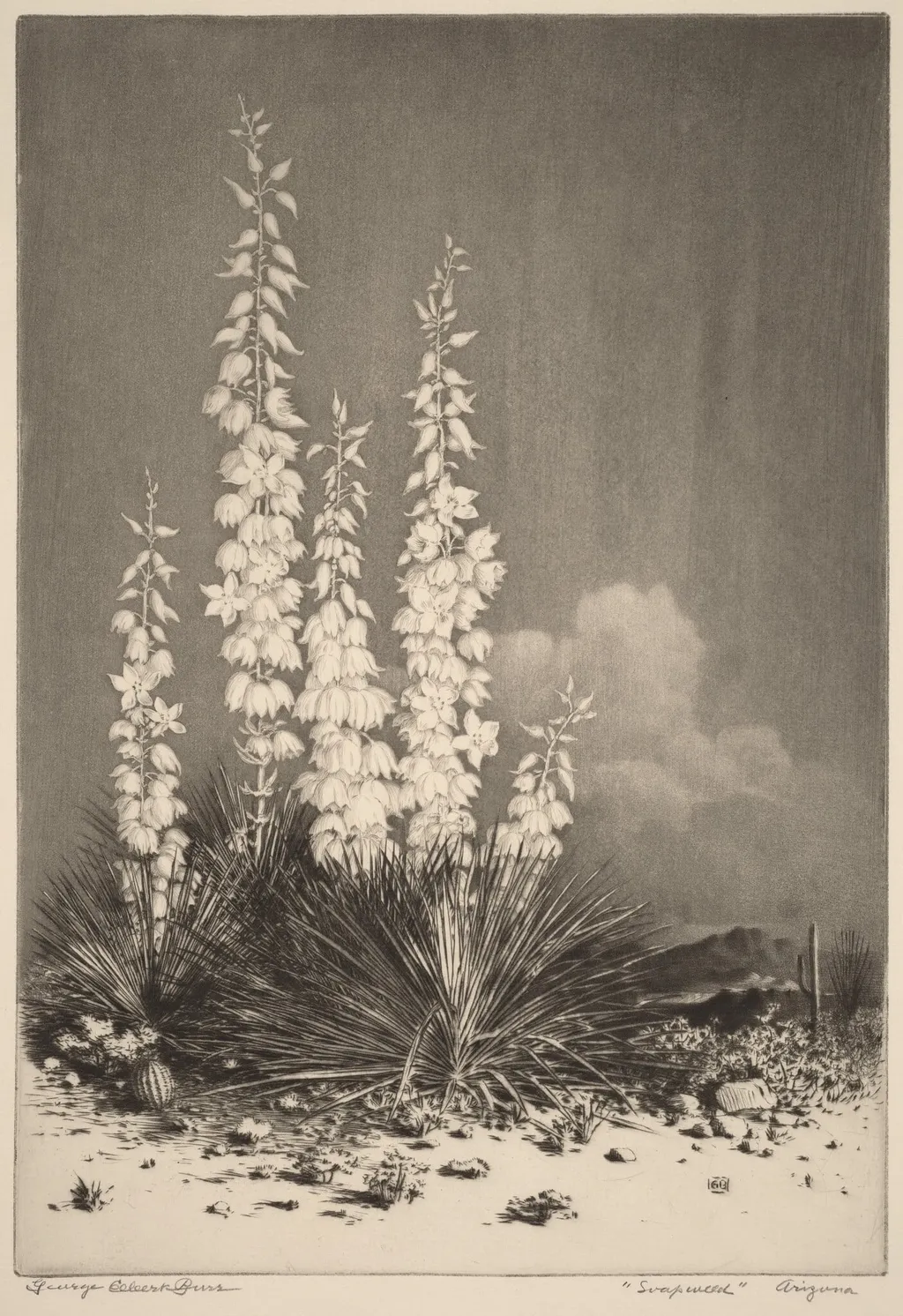
Soapweed, Arizona (no. 2) is an ink print by George Elbert Burr. It dates from 1924 and is held in the collection of the National Gallery of Art.
About this work
Overview
George Elbert Burr produced *Soapweed, Arizona (no. 2)* circa 1924 as a black ink print combining etching, drypoint, and aquatint techniques. A dedicated chronicler of the American West’s terrain, Burr focused on the quiet intensity of desert environments. This work belongs to a series capturing the sparse, resilient flora of arid regions, rendered with precision and atmospheric depth.
Subject & Meaning
The plant’s solitary presence evokes endurance in a harsh climate.
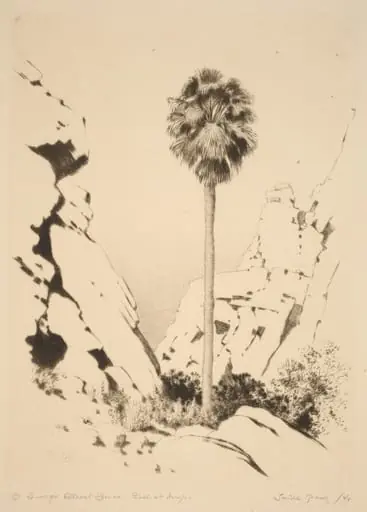
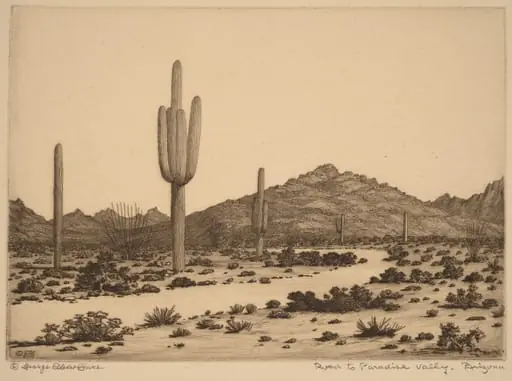
The composition centers on a tall soapweed plant, its slender white blooms and spiky leaves rising above a cluster of smaller, rounded vegetation and scattered rocks. The plant’s solitary presence evokes endurance in a harsh climate. The dark, overcast sky above contrasts with the ground’s textured stillness, suggesting isolation and the quiet persistence of life in the Southwest’s unforgiving landscape.
Technique & Style
Burr employed multiple intaglio methods to achieve tonal richness: etching defined fine lines, drypoint added dense, velvety shadows, and aquatint created subtle gradations of gray. The black ink emphasizes contrast, heightening the plant’s angular forms against the looming sky. His handwork captures both the fragility of petals and the rigidity of desert stone, balancing detail with emotional restraint.
History & Provenance
Created during Burr’s mature period, the print was produced after years of travel through Arizona and New Mexico, where he sketched directly from nature. It entered the collection of the National Gallery of Art in Washington, D.C., as part of its broader effort to document American printmaking traditions. The work remains a representative example of early 20th-century regionalist printmaking.
Context
In the 1920s, American artists increasingly turned to the West’s landscapes as subjects distinct from Eastern traditions. Burr’s work aligned with a growing interest in regional identity and environmental character, rejecting romanticized views in favor of observed truth. His prints contributed to a visual record of the desert’s ecology and mood, separate from frontier mythology.
Legacy
Burr’s *Soapweed, Arizona (no. 2)* endures as a quiet testament to the aesthetic potential of printmaking in capturing ecological specificity. His technical discipline and refusal to dramatize the desert influenced later generations of Western printmakers who valued restraint and observation over spectacle.
Artist & collection

Artist
George Elbert Burr (April 14, 1859 – November 17, 1939 ) was an American printmaker and painter best known for his etchings and drypoints of the desert and mountain regions of the American West.