Artwork
Various Lions
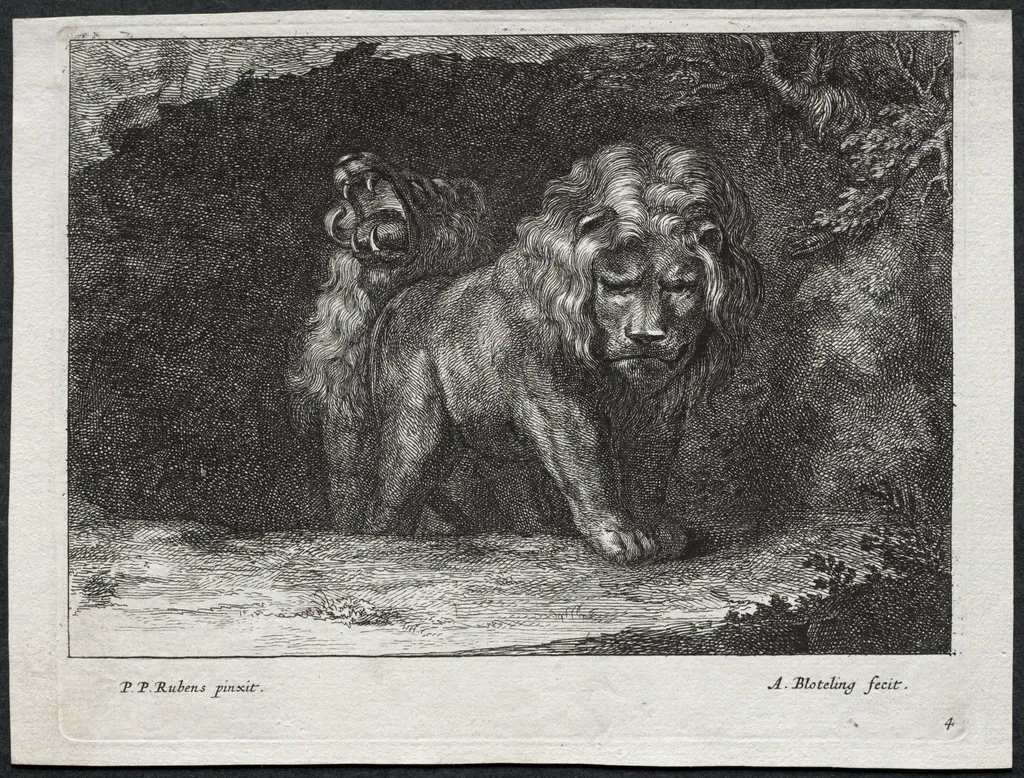
Various Lions is a print by the Baroque artist Abraham Blooteling. It dates from 1672 and is held in the collection of the Cleveland Museum of Art.
About this work
Overview
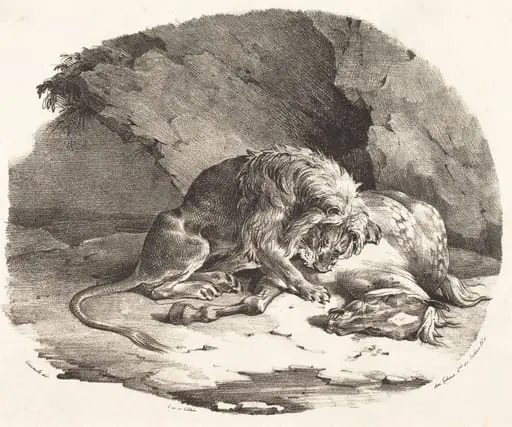
Created in 1672 by Abraham Blooteling, this black-and-white print depicts a single lion resting on rugged terrain. Executed in etching and engraving, the work emphasizes texture and form through controlled line work rather than color. The composition is sparse, focusing attention on the animal’s stillness and presence. The Cleveland Museum of Art holds the only known impression of this print.
Subject & Meaning
This portrayal aligns with 17th-century naturalism, where animals were studied as subjects of observation rather than symbolic allegories.
The lion, rendered in a moment of quiet alertness, conveys strength without aggression. Its crouched posture and detailed facial features suggest vigilance rather than motion. The absence of narrative context or human figures shifts focus to the animal’s inherent dignity. This portrayal aligns with 17th-century naturalism, where animals were studied as subjects of observation rather than symbolic allegories.
Technique & Style
Blooteling employed fine, varied etching lines to simulate the density of the lion’s fur, with swirling strokes defining the mane and shorter, angular marks suggesting muscle beneath the skin. Shading is achieved through cross-hatching and controlled dotting, creating volume without gradients. The background is minimized to a faint contour, isolating the figure and enhancing its sculptural presence.
History & Provenance
The print was made during Blooteling’s active period in the Dutch Republic, where he specialized in reproductive engravings after paintings. This original composition, however, reflects his personal interest in animal studies. It entered the Cleveland Museum of Art’s collection in the 20th century, likely through a broader acquisition of Dutch graphic works from the Baroque era.
Context
In the late 17th century, Dutch artists increasingly turned to natural observation, influenced by scientific inquiry and the growing interest in zoology. Blooteling’s lion fits within this trend, distinct from mythological or heraldic depictions common elsewhere in Europe. Its quiet realism contrasts with the theatricality of Italian Baroque, reflecting northern European priorities in detail and restraint.
Legacy
Though not widely reproduced or exhibited, the print remains a refined example of Dutch printmaking’s capacity for quiet intensity. Blooteling’s attention to anatomical accuracy and surface texture influenced later animal studies in print. The work endures as a testament to the artistic value placed on solitary, observed nature in the early modern period.
Own this work as a print
Artist & collection

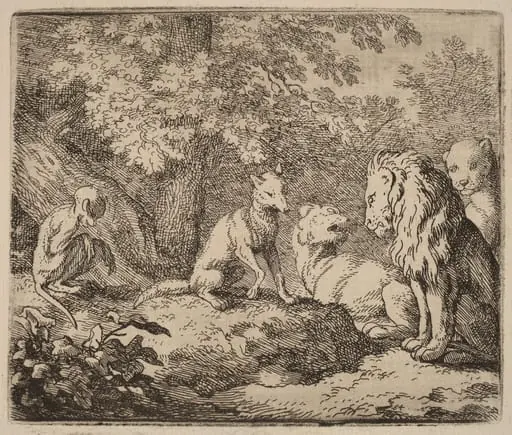 Reynard Tells a Story of Hidden Treasure
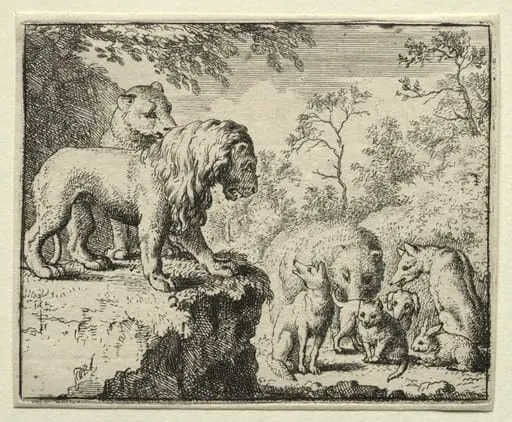 Reynard the Fox: The Pardon of Reynard
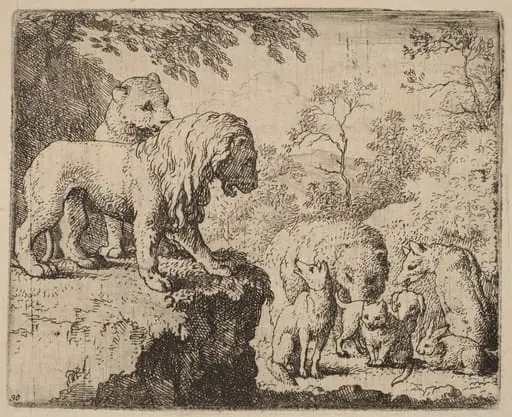 The Lion Pardons Reynard before the Other Animals
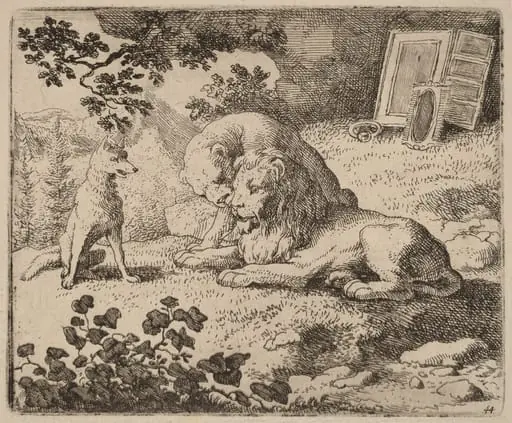 Reynard Describes the Missing Treasures
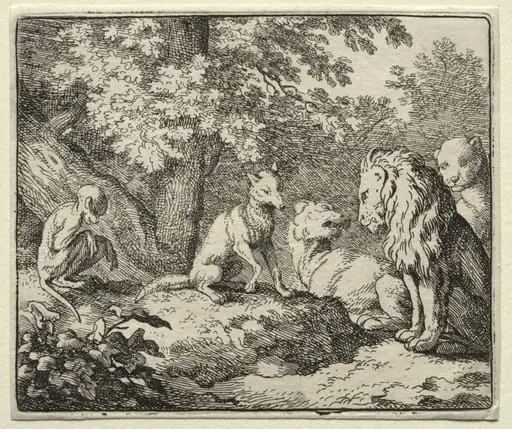 Reynard the Fox: Further False Testimony from Reynard
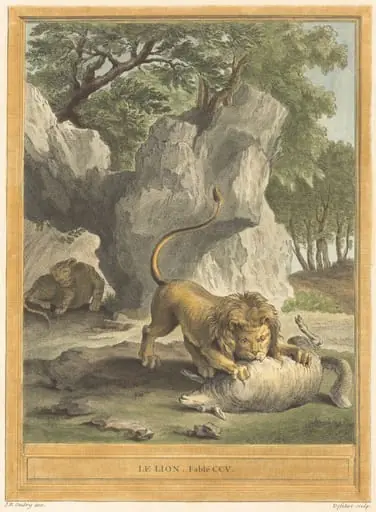 Le lion (The Lion)
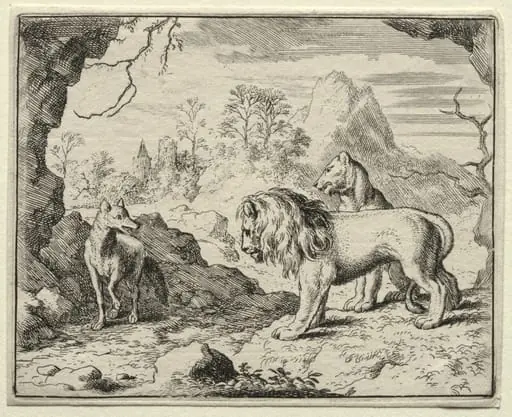 Reynard the Fox: Reynard Tells of Hidden Treasure
 Lion Devouring a Horse