Artwork
The Lion
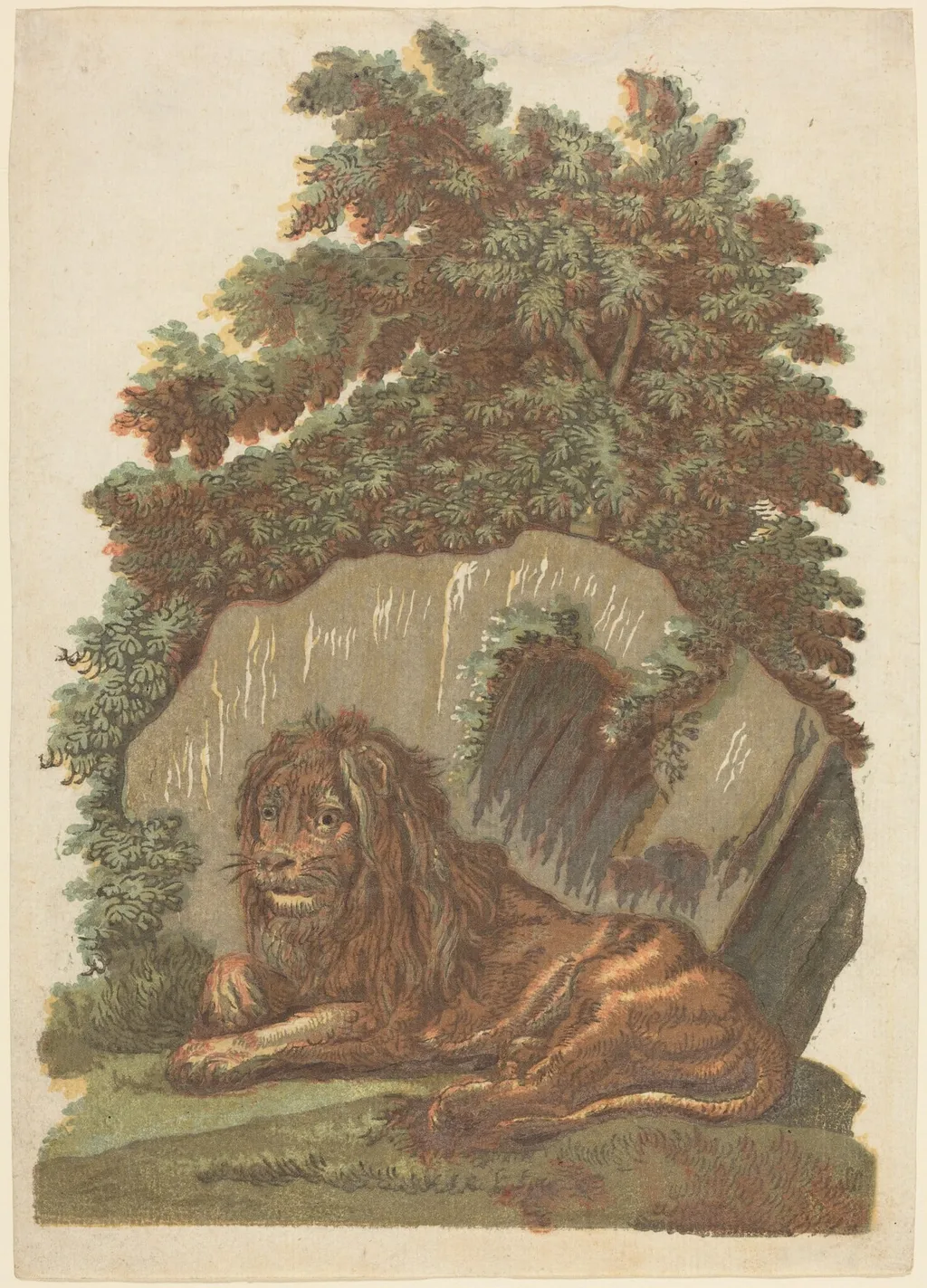
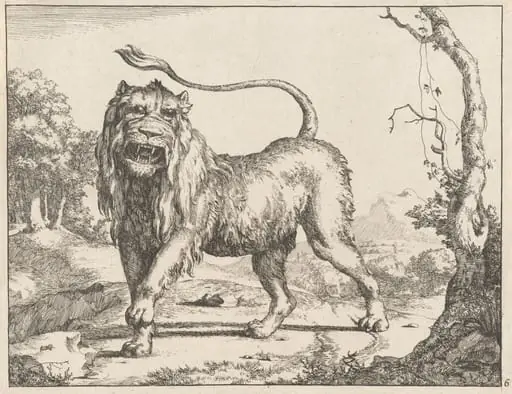
The Lion is an ink print by the Romanticist artist John Baptist Jackson. It dates from 1754 and is held in the collection of the National Gallery of Art.
About this work
Overview
Created in 1754, *The Lion* is a chiaroscuro woodcut executed on laid paper. The print presents a solitary lion rendered through stark contrasts of light and shadow, a hallmark of the technique that emphasizes three‑dimensional form within a two‑dimensional medium.
Subject & Meaning
The central figure is a lion, depicted with a sense of weight and presence. By exploiting tonal gradations, the artist conveys the animal’s muscular bulk and the atmospheric depth of its surroundings, inviting viewers to contemplate the creature’s power and the dramatic interplay of illumination.
Technique & Style
John Baptist Jackson employed the chiaroscuro woodcut process, in which multiple blocks are inked in varying tones and printed sequentially. This method allows for subtle overprinting and the creation of rich, layered shadows, producing a textured surface that enhances the illusion of volume and depth.
History & Provenance
Jackson, a British printmaker active in the mid‑eighteenth century, worked chiefly in Paris and Venice. Known for adapting and expanding woodcut practices, he experimented with heavy embossing and nuanced color ranges, positioning *The Lion* within his broader pursuit of technical innovation.
Context
During the 1700s, chiaroscuro woodcuts served as a bridge between drawing and painting, offering a more affordable means to reproduce the tonal qualities of oil paintings. Jackson’s prints, including this work, reflect the period’s fascination with dramatic lighting and the growing interest in reproducing painterly effects through print.
Artist & collection

Artist
John Baptist Jackson (1701–1780) was a British artist, a woodcut printmaker of the eighteenth century.

![The Marriage at Cana [left plate], by John Baptist Jackson](https://artifactworldgallery.com/img/john-baptist-jackson--the-marriage-at-cana-left-plate--22bae83d46cc40b5-w320.webp)