Artwork
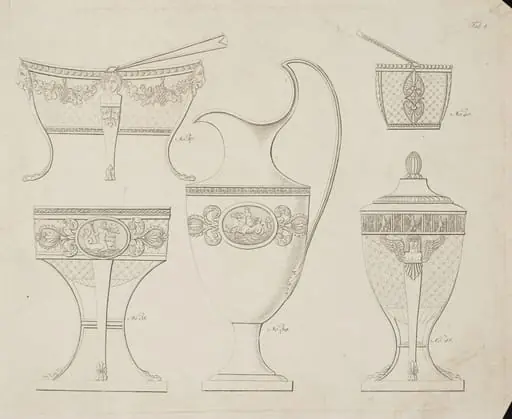
A drawing of a tureen after Paul de Lamarie
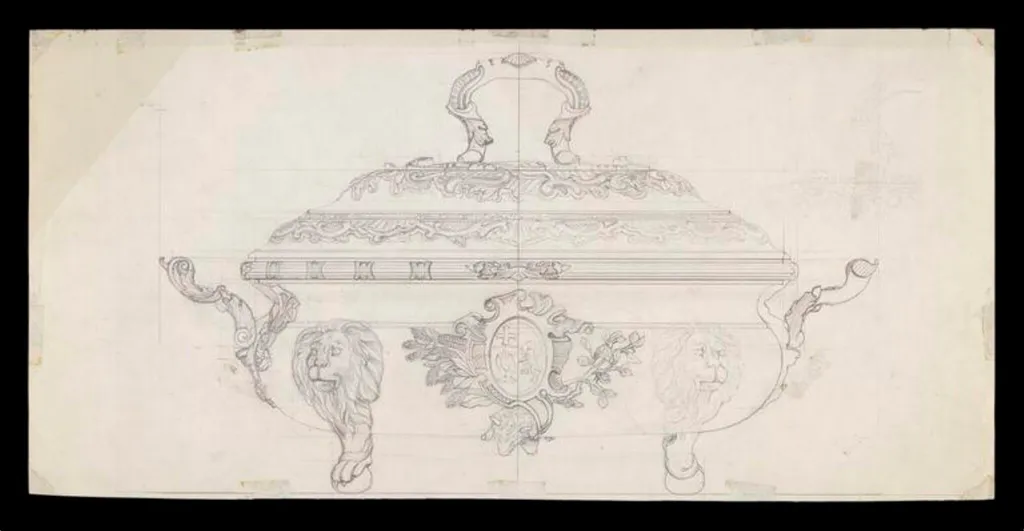
A drawing of a tureen after Paul de Lamarie is a drawing by C. J. Vander. It dates from 1950 and is held in the collection of the Victoria and Albert Museum. The work is a hand‑drawn representation of a silver tureen, executed in the early twentieth century by C.
About this work
This drawing is titled A drawing of a tureen after Paul de Lamarie.
It was created by C. J. Vander in the early 20th century.
The artist's firm was known for producing high-quality silverware and jewellery, and had connections to other notable silversmiths and jewellers.
You can learn more about the artist's work and style at the Victoria and Albert Museum.
Overview
The work is a hand‑drawn representation of a silver tureen, executed in the early twentieth century by C.J. Vander. It records a design originally created by the French silversmith Paul de Lamarie, whose elaborate ornamental forms were widely reproduced in English silver workshops.
Subject & Meaning
The drawing depicts a shallow serving vessel, or tureen, rendered with attention to its decorative borders and handles. By reproducing de Lamarie’s model, the image serves as a study for craftsmen, illustrating the translation of a celebrated continental aesthetic into the English silver‑making tradition.
Technique & Style
Executed in pencil on paper, the illustration combines precise line work with shading to convey the three‑dimensional volume of the tureen. The style reflects the practical, instructional approach of commercial silversmith studios, emphasizing clarity of form over artistic flourish.
History & Provenance
C.J. Vander was the principal of the London firm C.J. Vander, a prominent silversmith and retailer founded in 1886 by Cornelius Joshua Vanderpump. The company supplied high‑quality silverware and jewellery, drawing on a network that included Elkington & Co. and other notable makers. The drawing likely originated in the firm’s design department as part of its production process.
Context
During the early twentieth century English silversmiths frequently adapted historic French designs, especially those of de Lamarie, to meet domestic demand for ornate tableware. Vander’s workshop, with its connections to Sheffield manufacturers and a reputation for fine craftsmanship, was well placed to reinterpret such models for contemporary markets.
Artist & collection
Artist
C. J. Vander made careful drawings copying old silver shapes. In the early 1900s they sketched a tureen after a design by Paul de Lamerie, a London silversmith from the 1700s. The drawing shows crisp edges and measured…

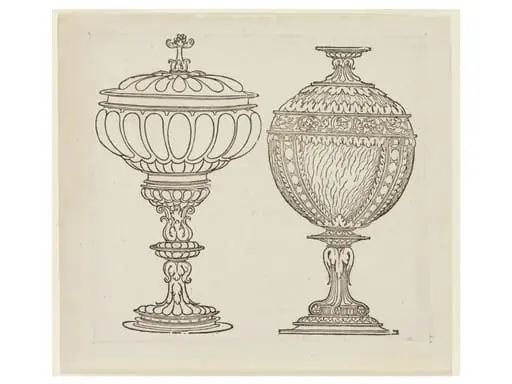 Untitled
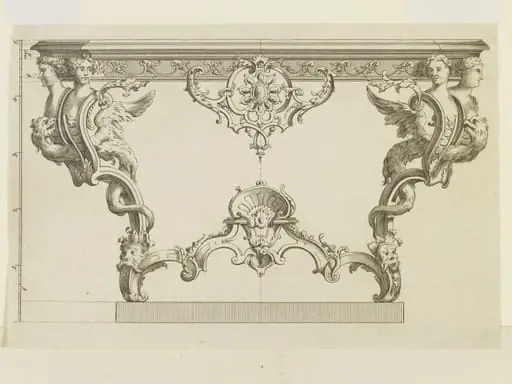 Nouveaux Desseins de Pieds de Tables et de Vases et Consoles de Sculpture
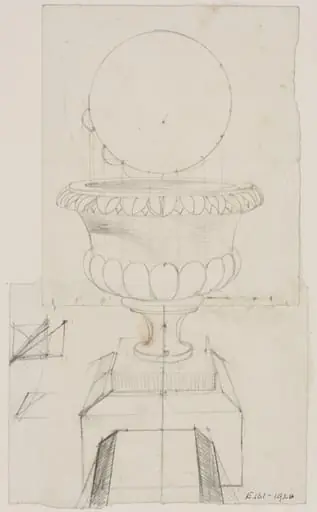 Drawing illustrating the theory of perspective
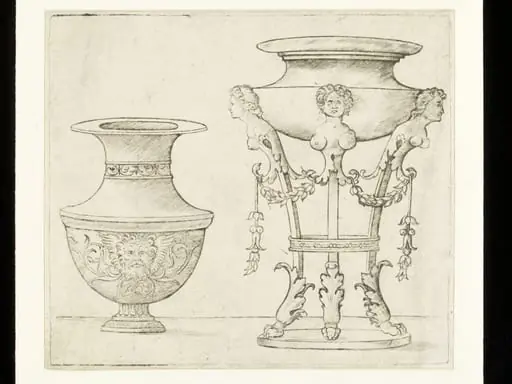 A vase and a tripod
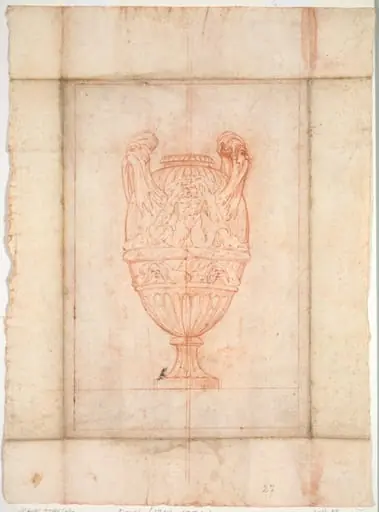 Vase Design for 'Suite of Vases': Plate 27
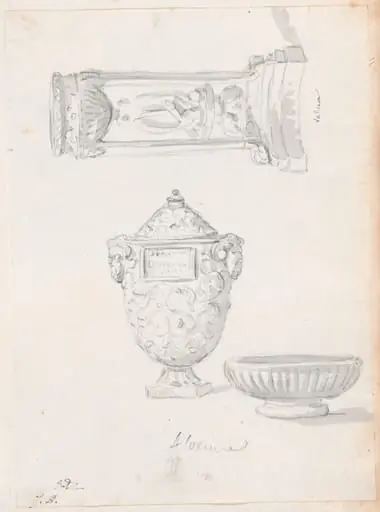 Decorative Details from Florence and the Vatican
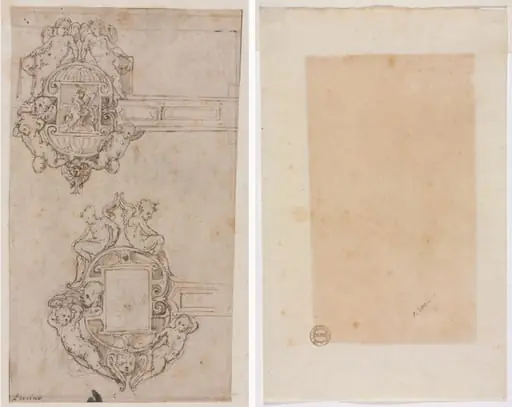 Design for Decorative Hinges (recto) Border Lines (verso)
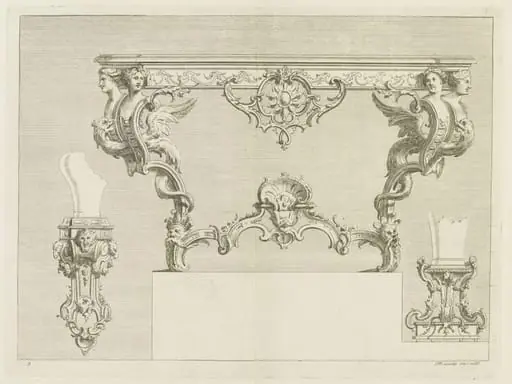 Nouveaux Desseins de Pieds de Tables et de Vases et Consoles de sculpture en bois Inventes par le sieur Pineau sculpteur
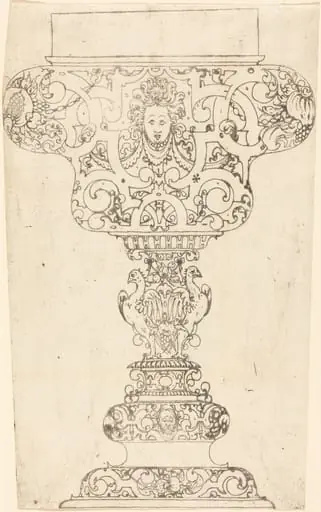 Ornament - Large Goblet
 7 engraved prints
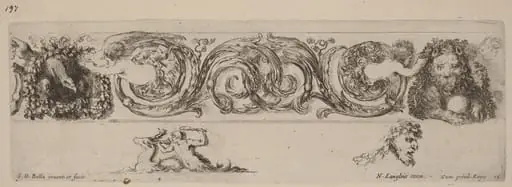 Ornamental Frieze with Eagle and Lion Engarlanded by Children
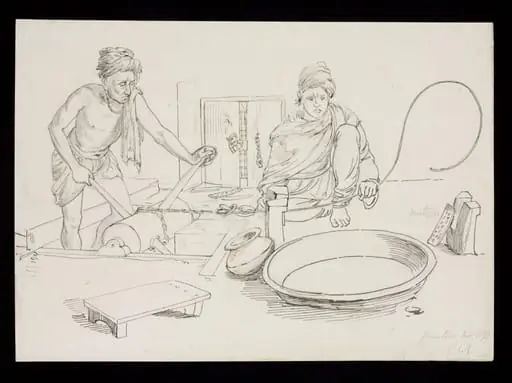 Two men working with machines to produce silver gilt wire