Artwork
Nouveaux Desseins de Pieds de Tables et de Vases et Consoles de sculpture en bois Inventes par le sieur Pineau sculpteur
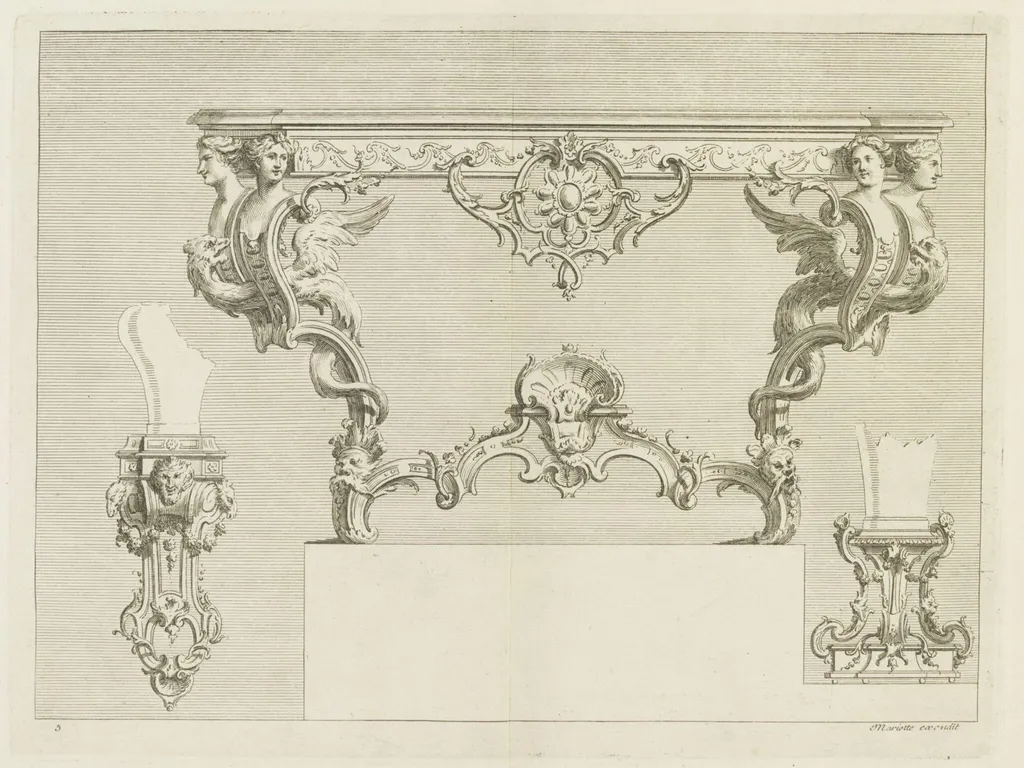
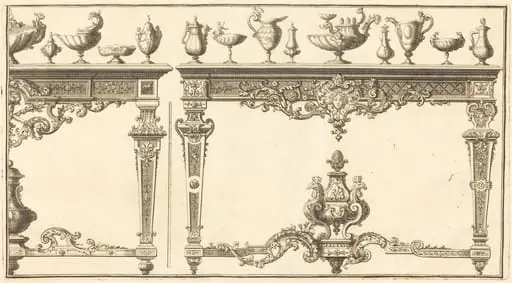
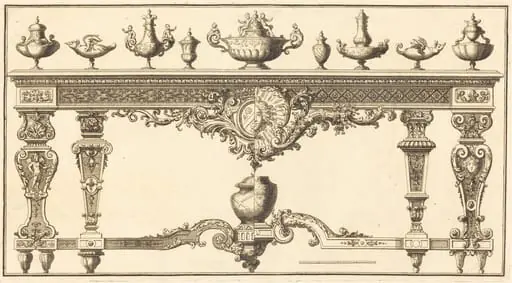
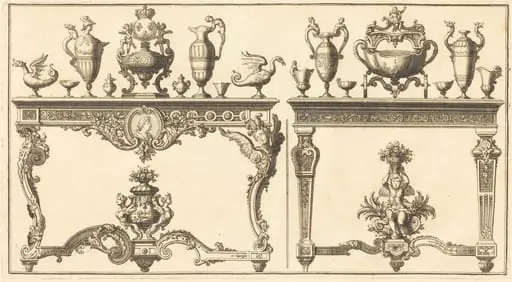
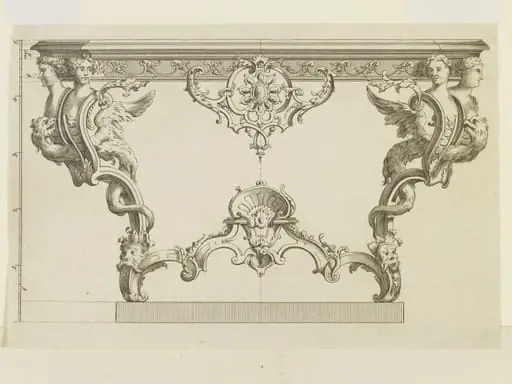
Nouveaux Desseins de Pieds de Tables et de Vases et Consoles de sculpture en bois Inventes par le sieur Pineau sculpteur is a print by the Baroque artist Nicolas Pineau. It dates from 1737 and is held in the collection of the Victoria and Albert Museum.
About this work
Overview
This 1737 engraving by Nicolas Pineau illustrates decorative elements for furniture and sculptural supports, including table legs, vases, and consoles.
This 1737 engraving by Nicolas Pineau illustrates decorative elements for furniture and sculptural supports, including table legs, vases, and consoles. Rendered in fine line work, the designs reflect the ornamental language of French Rococo, emphasizing fluidity and intricate detail. Though presented as a printed sheet, the plates were intended as working templates for craftsmen to translate into carved wood.
Subject & Meaning
The designs feature swirling vegetal forms, masked faces, and acanthus leaves entwined in asymmetrical compositions. These motifs draw from naturalistic and mythological sources, common in aristocratic interiors of the period. The inclusion of human visages suggests a playful, theatrical sensibility, aligning with Rococo’s preference for whimsy over rigid formality in domestic decoration.
Technique & Style
Executed with precise, clean engraving lines, the print captures the illusion of three-dimensional carving. The dense yet balanced patterning avoids clutter through rhythmic repetition and negative space. Pineau’s technique mimics the hand of a sculptor, suggesting how the designs would appear when rendered in wood—each curve implying the tool’s movement and the material’s grain.
History & Provenance
Originally published in Paris, the designs were reproduced without permission in London in 1740 within *The City and Country Builder's and Workmen's Treasury of Designs*. This unauthorized reprint highlights the international demand for French decorative models and the porous boundaries of intellectual property in 18th-century design publishing.
Context
Pineau’s work emerged during a period when interior design was increasingly specialized, with artists like him transitioning from architectural sculpture to producing pattern books for artisans. His designs circulated among cabinetmakers and carvers across Europe, helping to standardize and disseminate the Rococo aesthetic beyond Parisian salons into provincial workshops.
Legacy
Though Pineau’s original engravings were not widely collected as art, they functioned as essential references for generations of craftsmen. Their influence persisted in furniture production well into the late 18th century, and later scholars recognized them as key documents in understanding the practical transmission of Rococo design principles across Europe.
Artist & collection
Artist
Nicolas Pineau (1684–1754) was a French carver and ornamental designer, one of the leaders who initiated the exuberant style of the French rocaille or Rococo. He worked in St. Petersburg and Paris.

![Dousieme livre des Oeuvres de J. A. Messonnier [<i>sic</i>] Livre de Chandeliers de Sculpture en Argent, by Gabriel Huquier](https://artifactworldgallery.com/img/gabriel-huquier--dousieme-livre-des-oeuvres-de-j-a-messonnier-i-sic-i-livre-d--d48396ff912cb7bf-w320.webp)