Artwork
Design for Decorative Hinges (recto) Border Lines (verso)
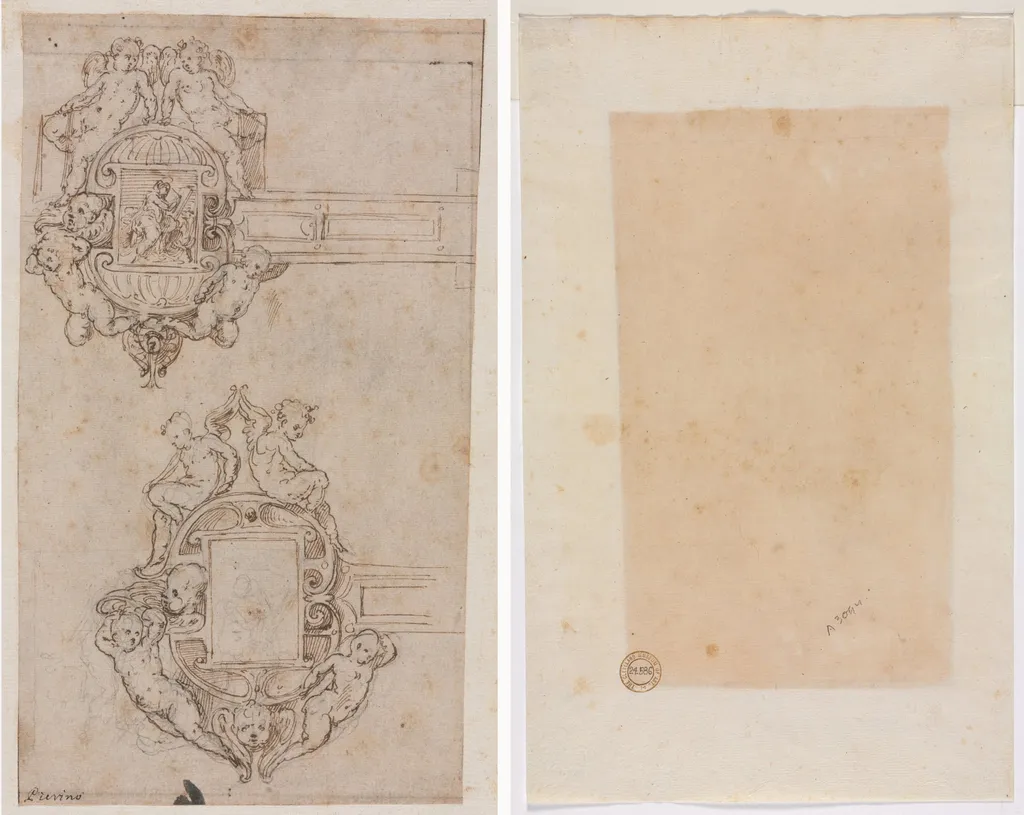
Design for Decorative Hinges (recto) Border Lines (verso) is a drawing by the Renaissance artist Luzio Romano. It dates from 1504 and is held in the collection of the Cleveland Museum of Art.
About this work
Overview
Design for Decorative Hinges (recto) Border Lines (verso) is a dual-sided drawing by Luzio Romano, created circa 1504, now part of the Cleveland Museum of Art's collection.
Subject & Meaning
The recto features two ornate metal hinge designs: one with a domed figure enclosure amidst swirls and leaves, and a simpler, scroll-based design with embedded tiny faces. The verso displays border line patterns. These designs likely intended to adorn architectural or furniture elements during the Renaissance.
Technique & Style
Executed with delicate yet detailed lines, the drawings reflect Romano's Mannerist inclinations, characteristic of the High Renaissance. The thin, worn paper bears a faint stamp on the reverse.
History & Provenance
Created around 1504 by Luzio Romano, an Italian artist of multiple disciplines, the work is now housed at the Cleveland Museum of Art, though specific acquisition details are not provided here.
Context
This work exemplifies the decorative arts aspirations of the High Renaissance, where intricate designs were sought for both functional items (like hinges) and ornamental borders, reflecting the era's aesthetic values.
Legacy
While specific influence or renown of this piece is not highlighted, it contributes to the broader understanding of Renaissance decorative design and Luzio Romano's versatile artistic output.
Artist & collection
Artist
Luzio Luzi (sometimes Luzzi or Luci), also known as Luzio Luzi da Todi and Luzio Romano (died late 16th century), was an Italian painter, stuccoist, and draftsman of the High Renaissance era favoring the Mannerist style.

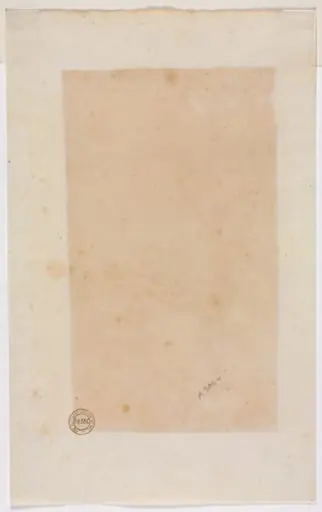 Border Lines (verso)
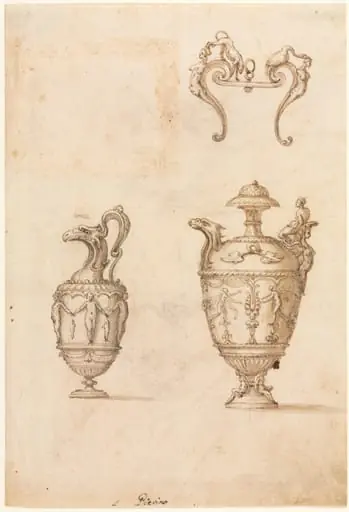 Design for Two Vases and an Ornament (recto)
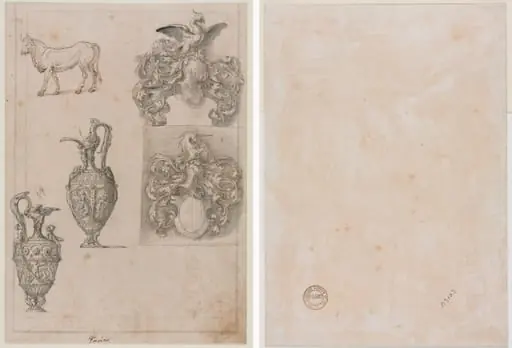 Design for Two Vases, Two Coats of Arms, and a Bull (recto) Several Line Borders (verso)
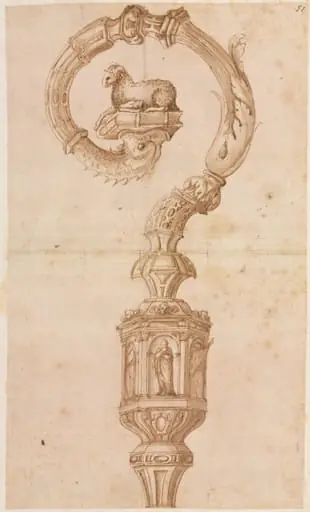 Design for a Crozier
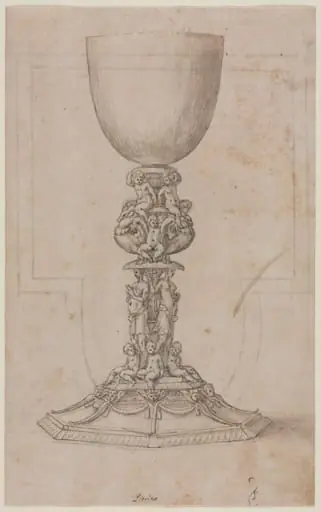 Design for a Chalice (recto)
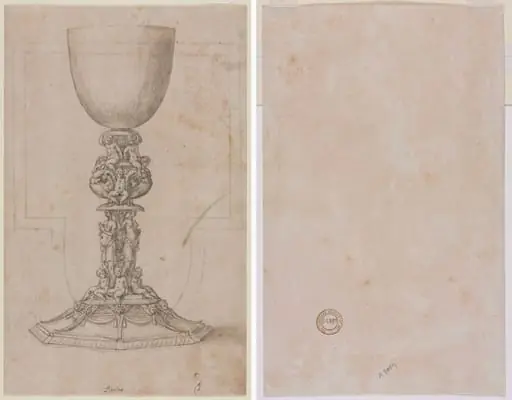 Design for a Chalice (recto) Architectural Plan (verso)
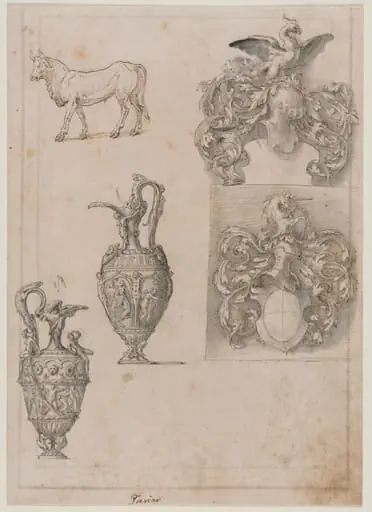 Design for Two Vases, Two Coats of Arms, and a Bull (recto)
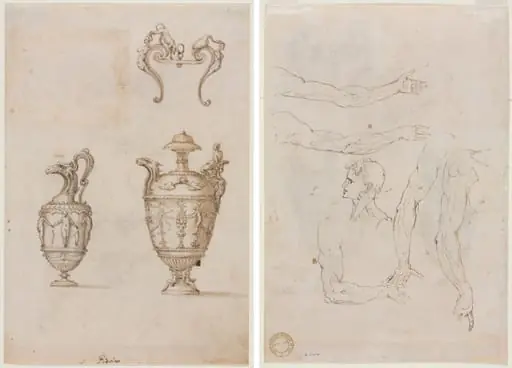 Design for Two Vases and an Ornament (recto); Sketches of Five Arms and a Head (verso)
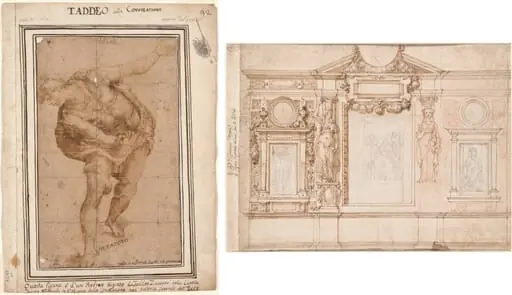 Un Hebreo, from Christ Shown to the People (recto); Design for a Wall Decoration with Pasted-in Sketches after Raphael (verso)
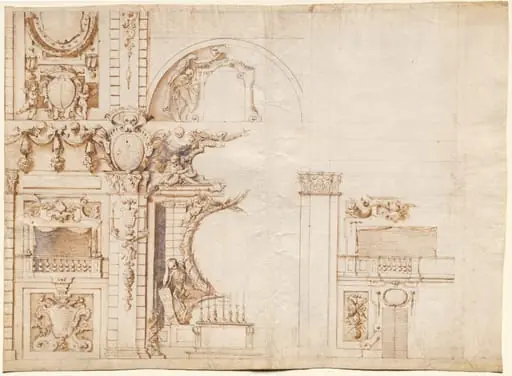 Study for the 'Essequie' Conducted in San Lorenzo, Florence, in 1637 in Honour of Holy Roman Emperor Ferdinand II
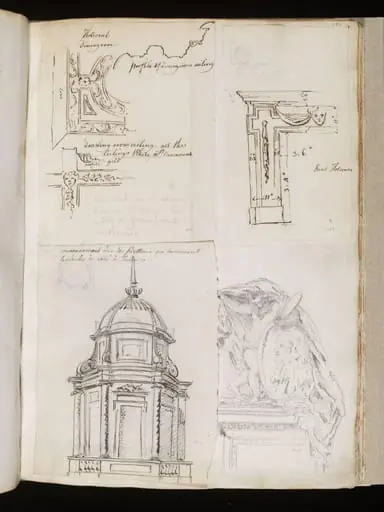 The Franco-Italian Album
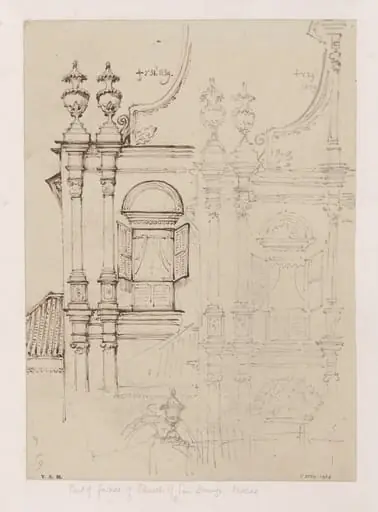 The church of S. Domingos, Macau
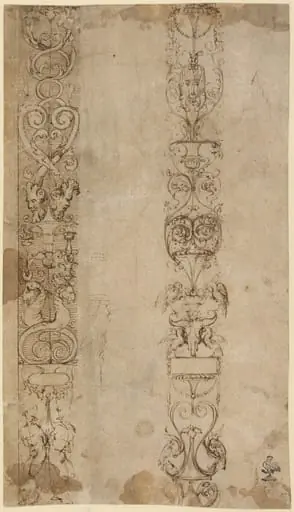 Grotteschi
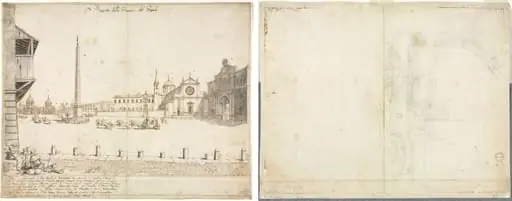 Eighteen Views of Rome: The Piazza del Popolo (recto); Sketch for San Giovanni in Laterano (verso)
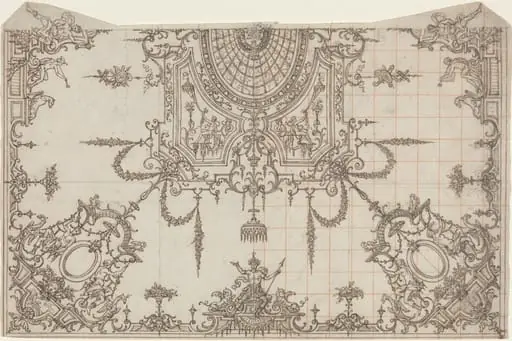 An Elaborate Ceiling with Trellises and Seated Figures
 Design for an Altar