Artwork
Mountain Waterfall
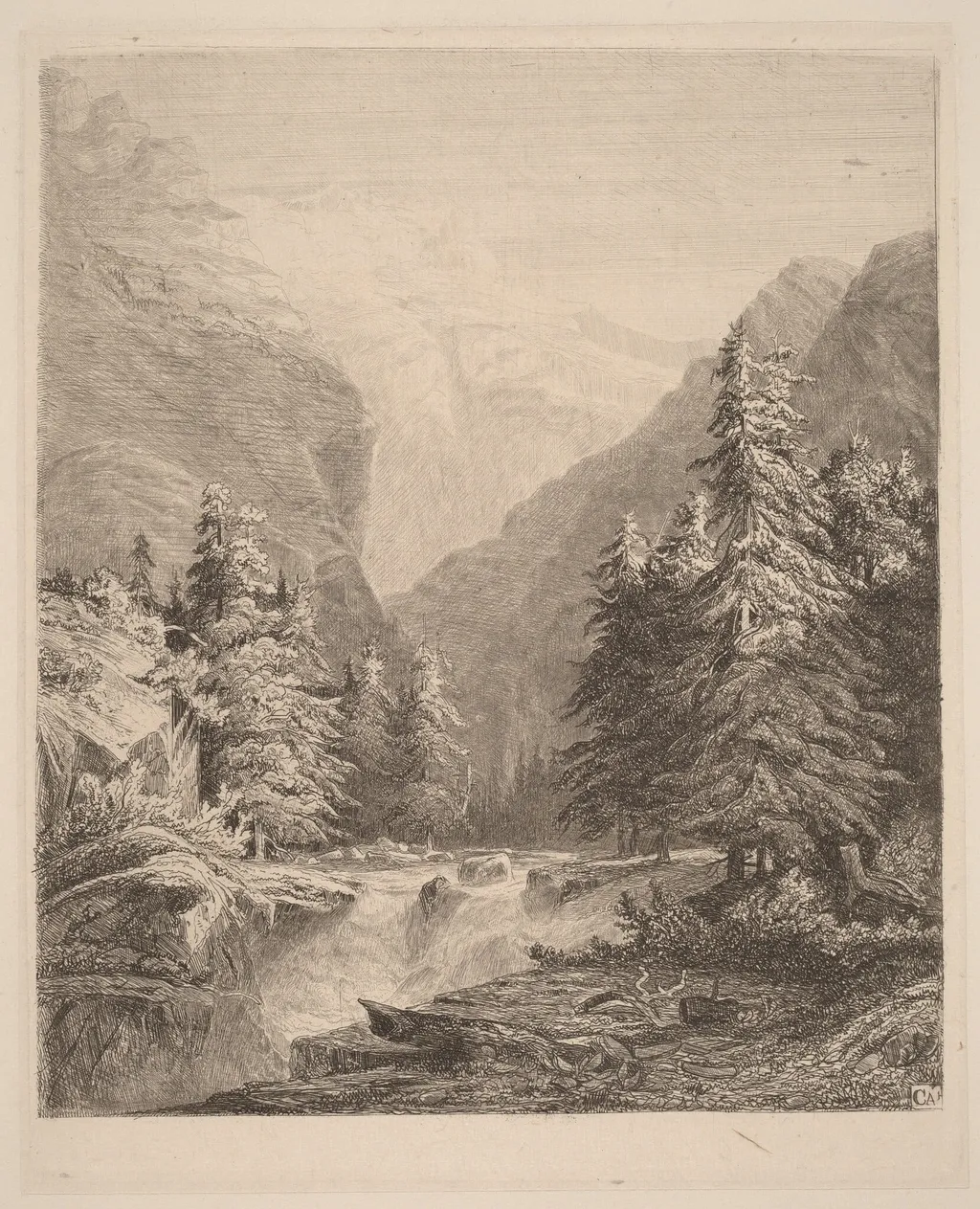
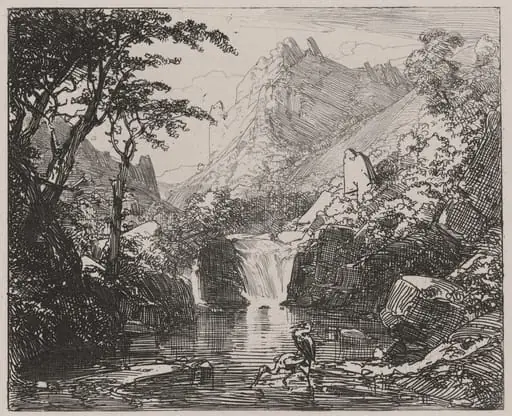
Mountain Waterfall is an ink print by the Romanticist artist Alexandre Calame. It dates from 1838 and is held in the collection of the National Gallery of Art.
About this work
Overview
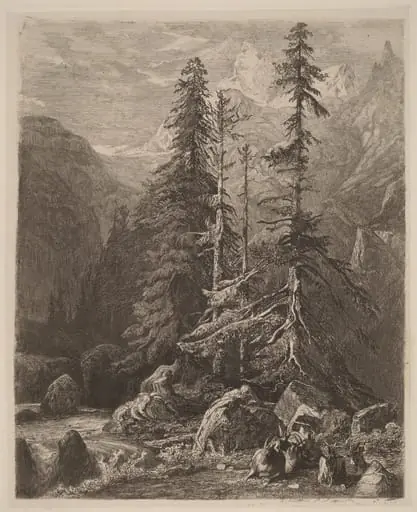
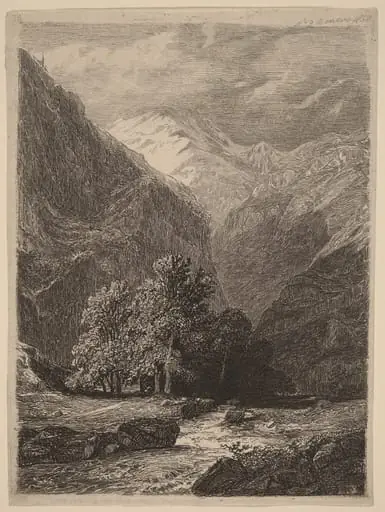
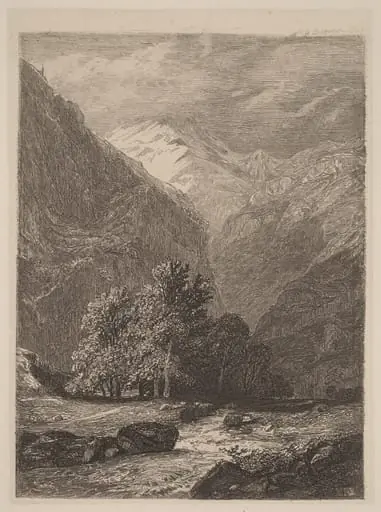
Created in 1838, Alexandre Calame’s print titled “Mountain Waterfall” is an etching executed on a chine collé support. The work presents a compact landscape that combines forest, water, and alpine elements, rendered in a monochrome palette typical of early nineteenth‑century printmaking.
Subject & Meaning
The composition depicts a narrow valley where towering pines flank a central cascade that tumbles over rugged rocks into a tranquil pool. Snow clings to the ground and branches, while distant peaks loom faintly in the background, suggesting the quiet majesty of a high‑altitude environment.
Technique & Style
Calame employed fine, closely spaced lines to model the texture of foliage, the froth of the falling water, and the crystalline snow. The chiaroscuro effect—light arriving from the upper left—highlights the snow’s brightness and deepens the shadows beneath the trees, enhancing the sense of depth within the etching.
Context
The print reflects the Romantic era’s fascination with untamed nature and the Swiss landscape, a subject Calame explored extensively in his paintings and prints. By using chine collé, he achieved a smoother, more resilient surface that allowed delicate line work while preserving the immediacy of the etched image.
Own this work as a print
Artist & collection