Artwork
Mountainous Landscape
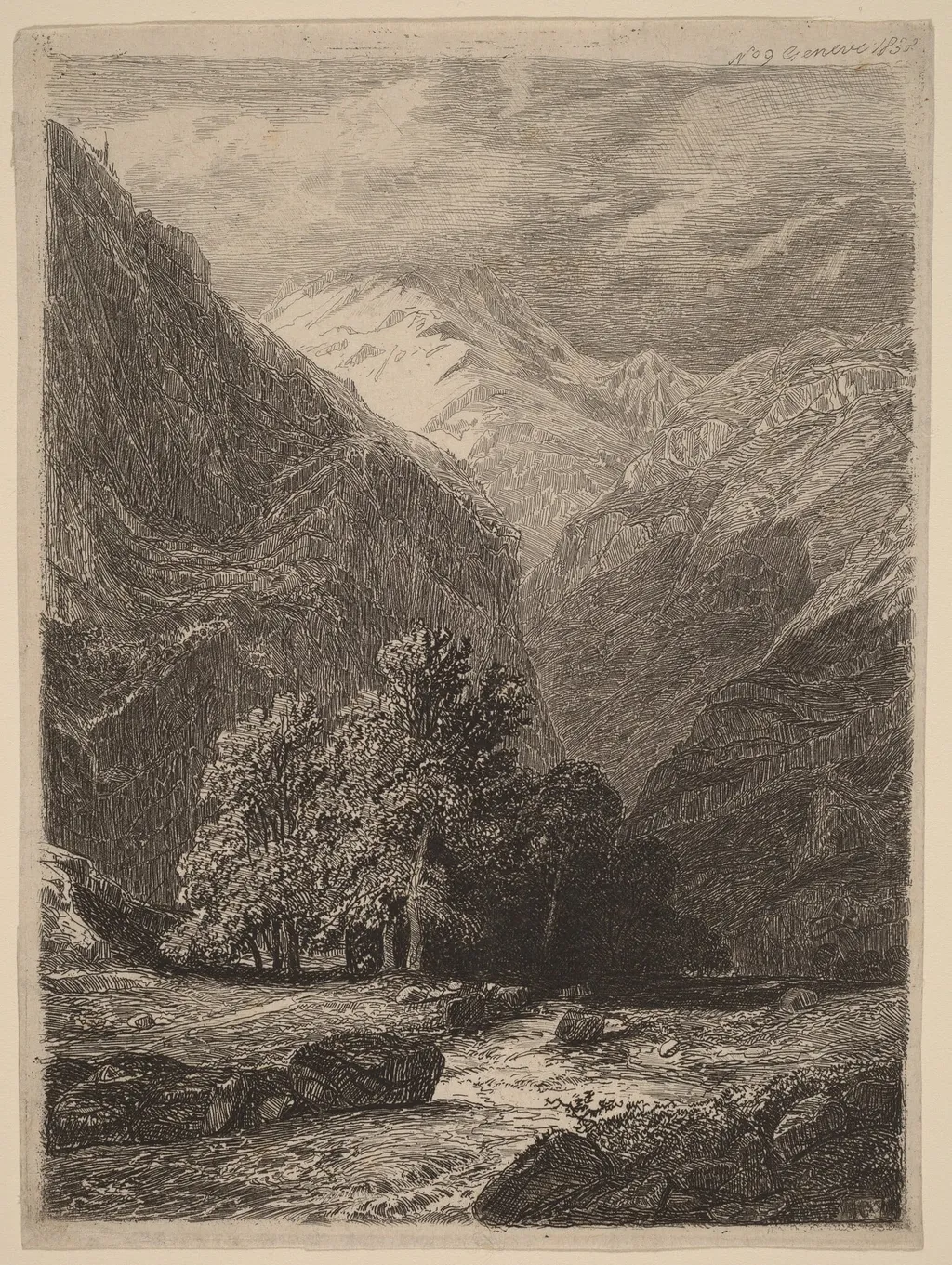
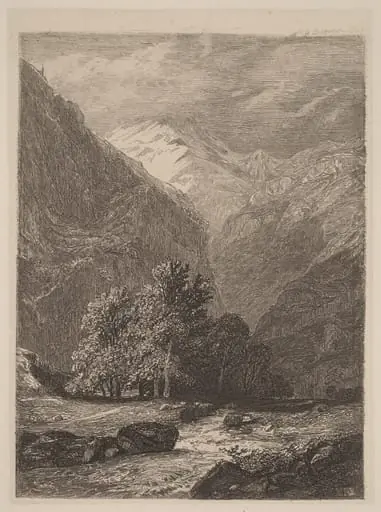
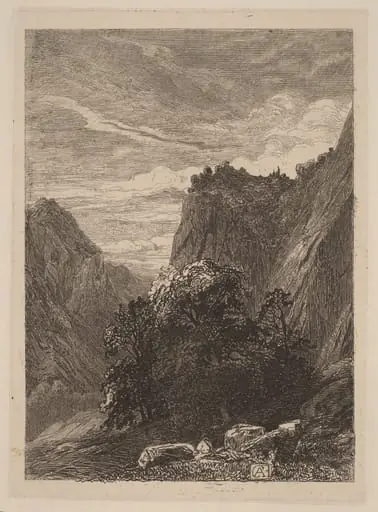
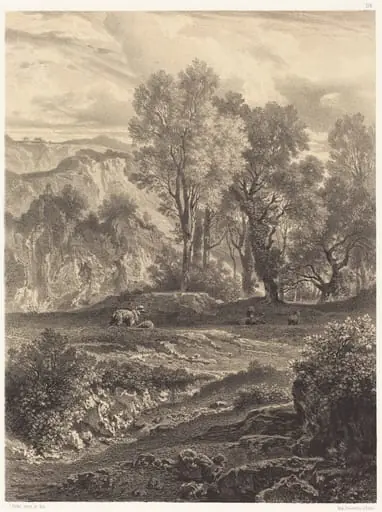
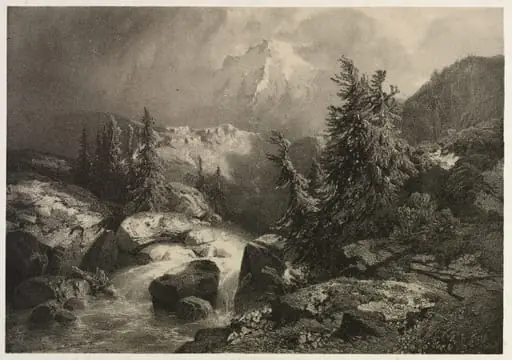
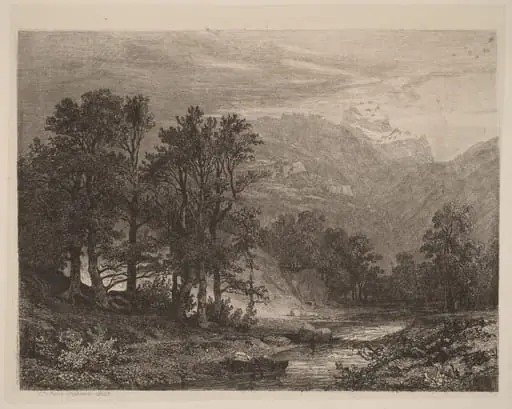
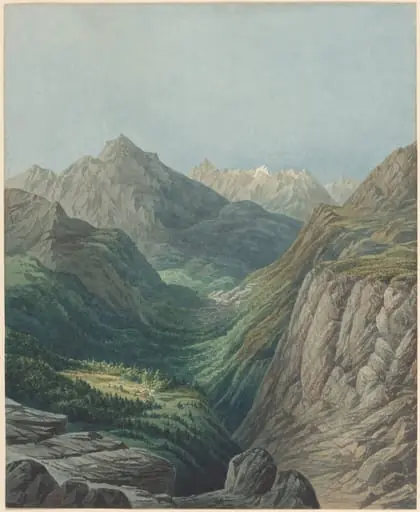
Mountainous Landscape is an ink print by the Romanticist artist Swiss 19th Century. It dates from 1838 and is held in the collection of the National Gallery of Art. This etching on thin wove paper presents a serene mountainous valley, rendered in monochrome tones.
About this work
Overview
The composition emphasizes verticality, with steep slopes rising on either side, creating a sense of enclosure and quiet grandeur.
This etching on thin wove paper presents a serene mountainous valley, rendered in monochrome tones. A winding river cuts through the foreground, flanked by rocky banks and sparse vegetation. The composition emphasizes verticality, with steep slopes rising on either side, creating a sense of enclosure and quiet grandeur. The work belongs to the printmaking tradition of the early 19th century, reflecting a fascination with natural forms.
Subject & Meaning
The landscape conveys a contemplative mood, characteristic of Romantic sensibilities. Nature is portrayed not as a backdrop but as a force of quiet majesty—untouched and immersive. The river’s flow suggests continuity, while the towering peaks imply permanence. There are no human figures, reinforcing a theme of solitude and the sublime in the natural world.
Technique & Style
The artist employs fine, controlled lines to build texture and depth through tonal gradation. Lighter areas suggest water and sky, while darker, cross-hatched regions define rock faces and dense foliage. The use of wove paper allows for subtle ink absorption, enhancing the soft transitions between shadow and light. The etching technique favors precision over boldness, aligning with intimate, detailed landscape traditions.
History & Provenance
The work’s origin is tied to a period when topographical prints gained popularity among collectors seeking idealized natural scenes. Though the artist’s identity is unconfirmed, the style aligns with European printmakers active between 1800 and 1840. Its survival on fragile paper suggests careful preservation, likely within private collections before entering institutional hands.
Context
Produced during the height of Romanticism, the piece reflects broader cultural shifts toward valuing wild, unaltered nature as spiritually significant. Unlike earlier classical landscapes, this work avoids idealized symmetry, instead embracing irregular forms and atmospheric mood. It resonates with contemporaneous literary and artistic efforts to evoke emotion through solitude and scale.
Legacy
As a modest yet refined example of Romantic printmaking, it contributes to the historical record of how nature was visually interpreted beyond painting. Its technical restraint and emotional subtlety influenced later generations of printmakers who sought to capture landscape not as spectacle, but as quiet presence.
Own this work as a print
Artist & collection

Artist
This artist’s small, precise drawings bring 19th-century Switzerland to life. One sheet shows a girl in a thick wool dress sitting still as a pine tree, all in soft black crayon. Another captures jagged peaks sliced by…