Artwork
Luton Park (or Luton Hoo), Bedfordshire, from the South
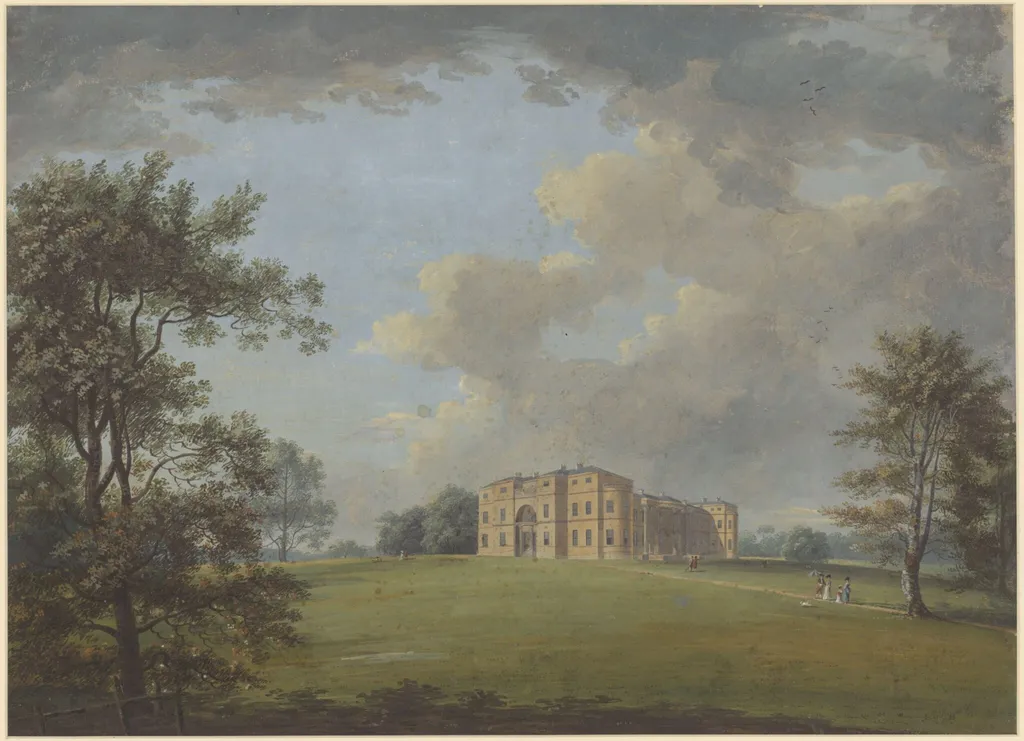
Luton Park (or Luton Hoo), Bedfordshire, from the South is a watercolor work on paper by the Rococo painting artist Callander. It dates from 1783 and is held in the collection of the Victoria and Albert Museum.
About this work
Overview
This 1783 watercolour by Adam Callander depicts Luton Park (Luton Hoo), Bedfordshire, from the south, showcasing the estate's serene landscape and grand residence.
Subject & Meaning
The scene features a prominent pale yellow house set amidst a lush green field, flanked by trees, with a winding path and figures in the vicinity, conveying a sense of tranquil country life.
Technique & Style
Characterized by soft colors and gentle light, the work exemplifies the 18th-century artistic preference for portraying nature and grand estates in a peaceful, idyllic manner.
History & Provenance
Originally misattributed to Highcliffe, this watercolour was correctly identified as part of a set of four acquired by the museum in 1953, with three being copies of Charles Steuart's oil paintings for John Stuart, 3rd Earl of Bute.
Context
Part of a collection owned by John Stuart, 3rd Earl of Bute, the original oil versions are housed in the Mount Stuart collection, highlighting the artistic commissioning practices of the aristocracy.
Artist & collection

Artist
Callander is a small town in the council area of Stirling in Scotland, situated on the River Teith. The town is located in the historic county of Perthshire and is a popular tourist stop to and from the Highlands.

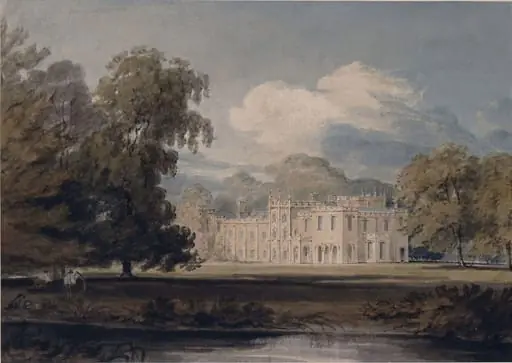 Castellated mansion in a park
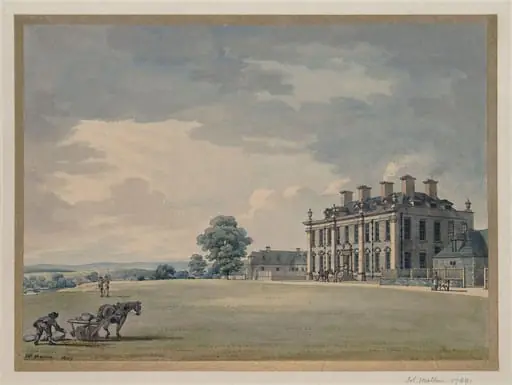 A Country Mansion
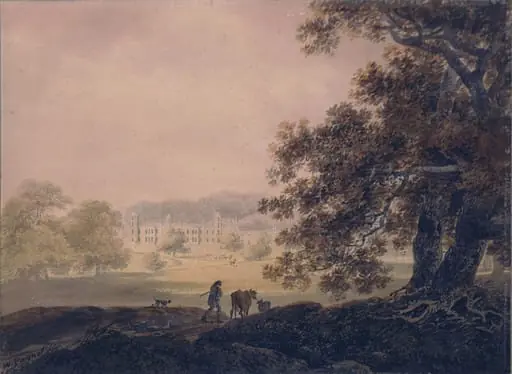 Harewood House, Yorkshire
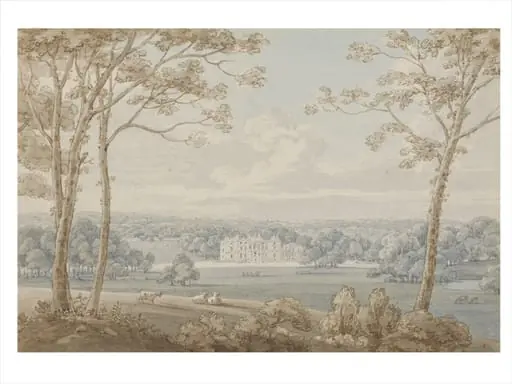 Sandbeck Park, Yorkshire
![A second view of Rathfarnham Castle, showing the front or entrance [...], by Gabriel, ca.1729-1817 Beranger](https://artifactworldgallery.com/img/gabriel-ca-1729-1817-beranger--a-second-view-of-rathfarnham-castle-showing-the-front-or-ent--3b1f8da88f33e09f-w320.webp) A second view of Rathfarnham Castle, showing the front or entrance [...]
A second view of Rathfarnham Castle, showing the front or entrance [...]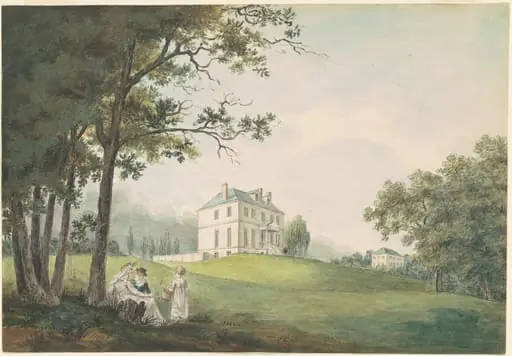 Sweet Briar
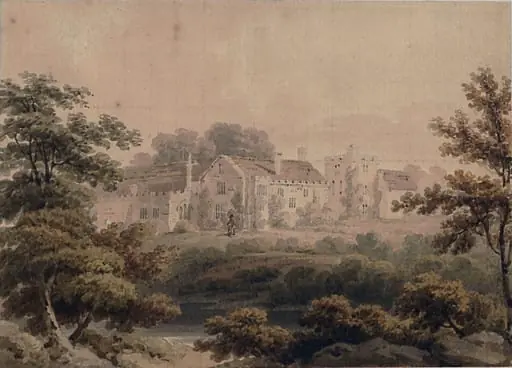 Pooley Hall, Warwickshire
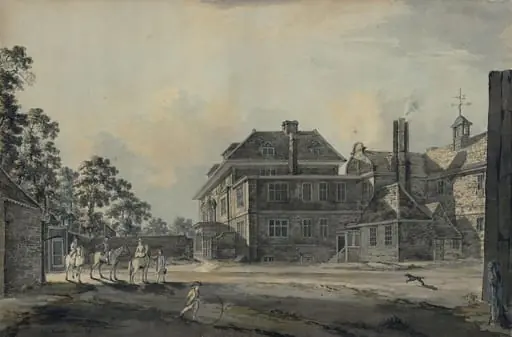 The Courtyard of a Mansion with Figures
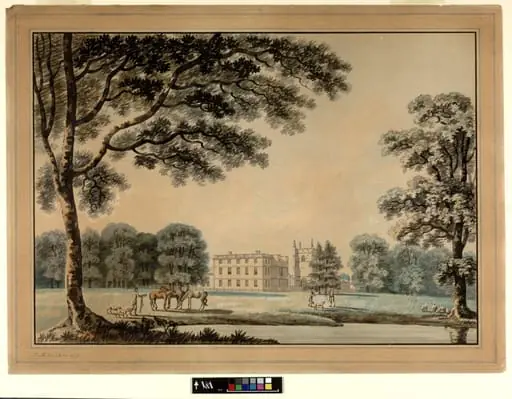 A Country House and Park, probably Norton Hall, near Sheffield
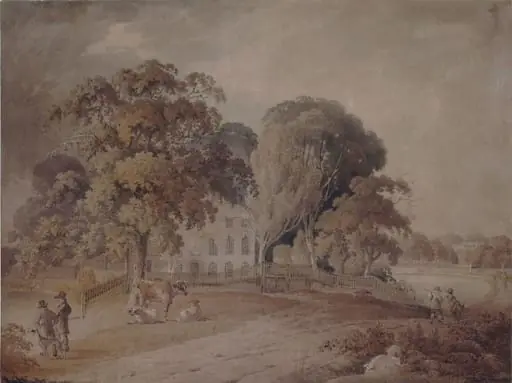 Lake House, Epping