Artwork
A Leg and a Pig's Head
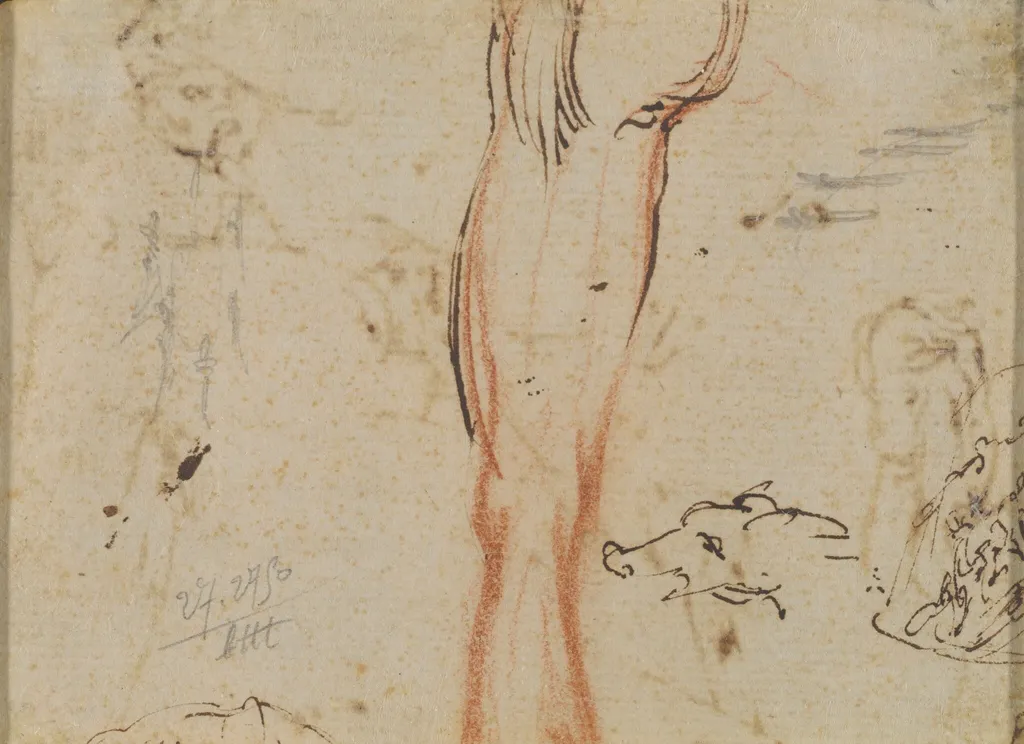
A Leg and a Pig's Head is an ink drawing by the Baroque artist Jacques Callot. It dates from 1616 and is held in the collection of the National Gallery of Art.
About this work
Overview
Created in 1616 by Jacques Callot, this drawing combines pen and brown ink with red chalk and graphite on laid paper.
Created in 1616 by Jacques Callot, this drawing combines pen and brown ink with red chalk and graphite on laid paper. It belongs to a body of work that reflects the artist’s keen interest in the human form and the grotesque. Unlike his polished etchings, this piece reveals a private, experimental side of his practice, capturing a moment of spontaneous observation rather than a finished composition.
Subject & Meaning
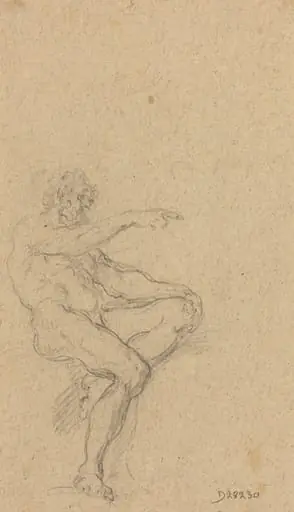
The drawing depicts a nude human figure with the head of a pig, juxtaposing the anatomical realism of the body with the animalistic features of the head. The pairing suggests a satirical or allegorical intent, possibly commenting on human folly or the blurring of boundaries between human and animal. The absence of narrative context leaves interpretation open, inviting viewers to consider themes of identity, degradation, or humor.
Technique & Style
Callot employed loose, energetic strokes in pen and ink, layered with warm red chalk to define volume and shadow. Graphite underdrawing is visible in places, indicating a process of revision. The gestural quality and visible corrections convey immediacy, as if the image emerged through rapid, intuitive mark-making. The contrast between the precise rendering of the pig’s snout and the fluid lines of the body highlights his control over varied textures and forms.
History & Provenance
The drawing is one of many surviving studies by Callot, likely made during his early years in Florence or Paris, where he absorbed Italian and Flemish influences. It remained in private hands for centuries before entering a public collection. Its survival is notable, as many of Callot’s drawings were preparatory and not intended for preservation. Its presence today underscores its value as a rare glimpse into his working method.
Context
In early 17th-century Europe, artists often explored fantastical or grotesque imagery as part of intellectual and artistic experimentation. Callot’s interest in marginal figures—beggars, soldiers, jesters—extended to this kind of hybrid form. Such drawings were not meant for public display but served as tools for visual inquiry, reflecting broader Baroque fascinations with the body, transformation, and the uncanny.
Legacy
This drawing exemplifies Callot’s role as a bridge between Renaissance draftsmanship and Baroque expressiveness. While he is best known for his etchings, works like this reveal his willingness to engage with the bizarre and the bodily in private. It has influenced later artists interested in caricature and the grotesque, contributing to a tradition that values the sketch as a space for unfiltered creativity.
Artist & collection

Artist
Jacques Callot was a baroque printmaker and draftsman from the Duchy of Lorraine.

 Holy Family at supper
 Restoration of the Aqueduct at Pisa
 Restoration of the Aqueduct at Pisa
 Square in Paris with Many Figures
 Square in Paris with Many Figures
 Horsemen Attacked by Robbers
 HOW WILL A COVERED PART BE CORRECTED?HOW WIKA A COVERED HEART DEED CORRECTED?
![Christ Walking on the Water [second plate], by Jacques Callot](https://artifactworldgallery.com/img/jacques-callot--christ-walking-on-the-water-second-plate--2069f3bfe4cb2126-w320.webp) Christ Walking on the Water [second plate]
Christ Walking on the Water [second plate]
![Study of Two Putti and a Draped Arm [verso], by Giovanni Battista Cipriani](https://artifactworldgallery.com/img/giovanni-battista-cipriani--study-of-two-putti-and-a-draped-arm-verso--47f39e682d8c982d-w320.webp) Study of Two Putti and a Draped Arm [verso]
Study of Two Putti and a Draped Arm [verso]![Statue of a Roman Woman (Female Deity?) Seen from the Side [verso], by Hubert Robert](https://artifactworldgallery.com/img/hubert-robert--statue-of-a-roman-woman-female-deity-seen-from-the-side-vers--4bf9208a795411cc-w320.webp) Statue of a Roman Woman (Female Deity?) Seen from the Side [verso]
Statue of a Roman Woman (Female Deity?) Seen from the Side [verso] Two Studies of a Leg (verso)
![Studies of Figures for an Adoration of the Magi [verso], by Donato Creti](https://artifactworldgallery.com/img/donato-creti--studies-of-figures-for-an-adoration-of-the-magi-verso--a4ea202b1ff86cc6-w320.webp) Studies of Figures for an Adoration of the Magi [verso]
Studies of Figures for an Adoration of the Magi [verso] Statue of Cleopatra
 A Striding Youth with His Arms Raised, Seen from Behind
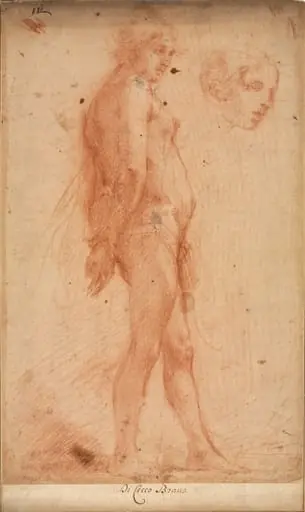 Study of a Standing Male Nude, with a Study of Head in Three-Quarter Profile
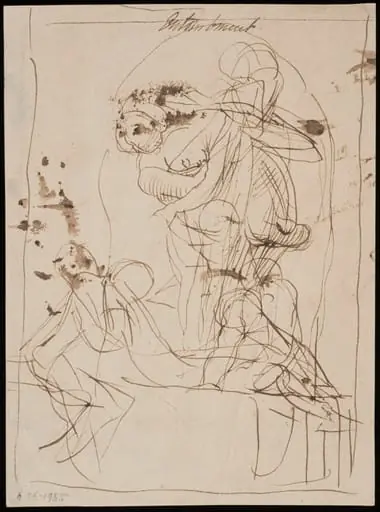 The Entombment
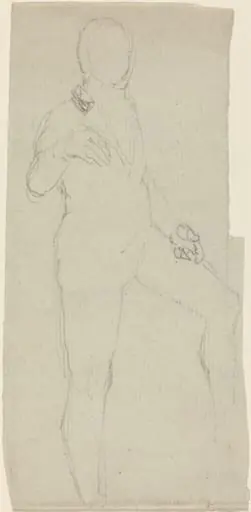 Male Figure in Contemporary Dress
![Two Studies of the Statue of Alexander and Bucephalus [verso], by Hubert Robert](https://artifactworldgallery.com/img/hubert-robert--two-studies-of-the-statue-of-alexander-and-bucephalus-verso--c8baec3f622cceea-w320.webp) Two Studies of the Statue of Alexander and Bucephalus [verso]
Two Studies of the Statue of Alexander and Bucephalus [verso]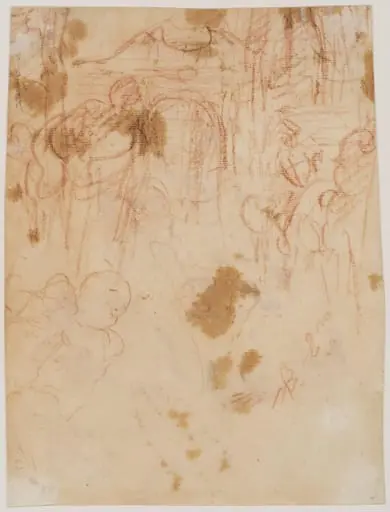 Recto: Rinaldo and Armida; verso: Study for a gateway
 A Seated Nude Man Pointing to the Right