Artwork
Cap. Mala Gamba and Cap. Bellavita
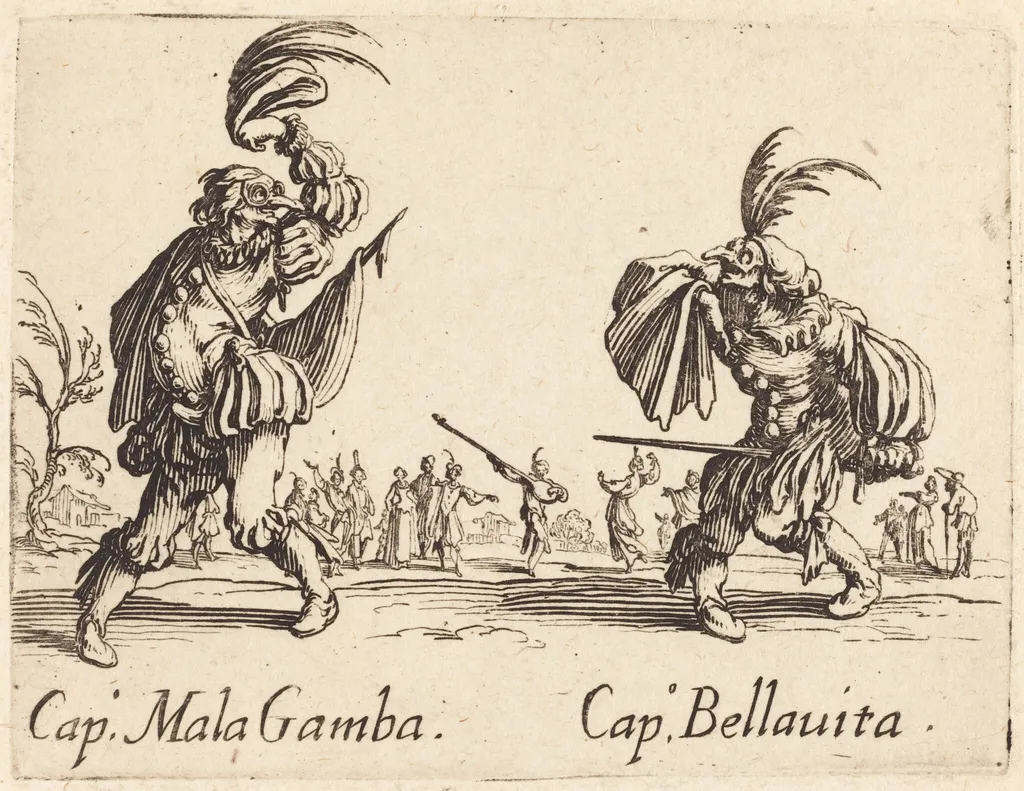
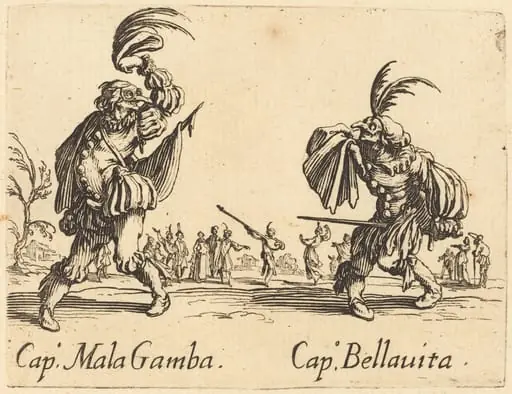
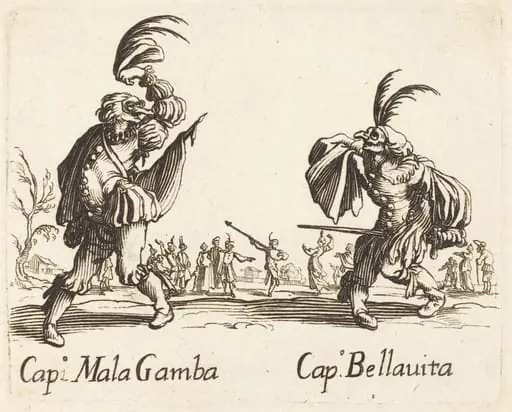
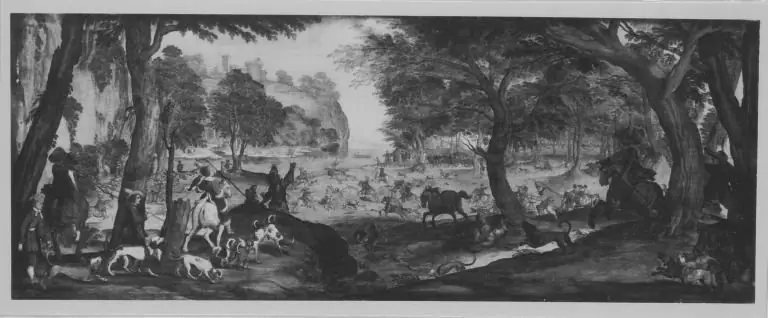
Cap. Mala Gamba and Cap. Bellavita is an ink print by the Baroque artist Jacques Callot. It dates from 1622 and is held in the collection of the National Gallery of Art.
About this work
Overview
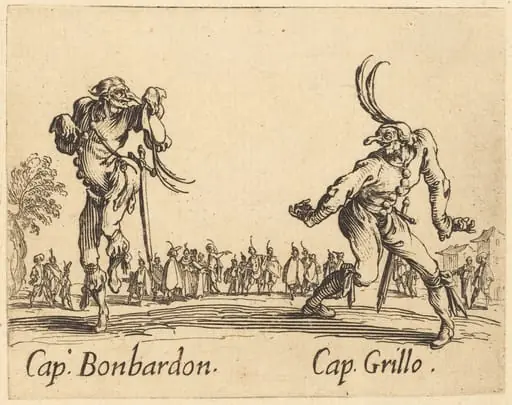
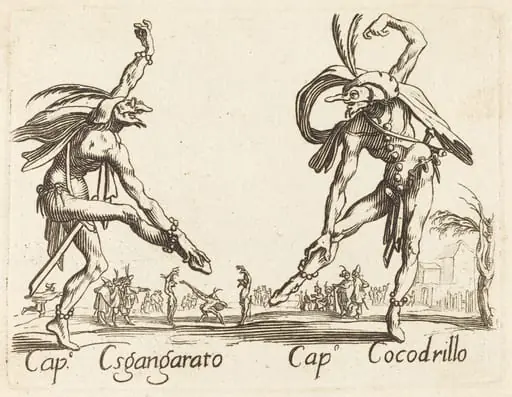
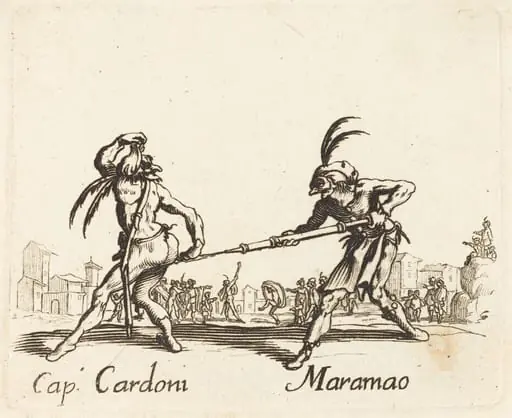
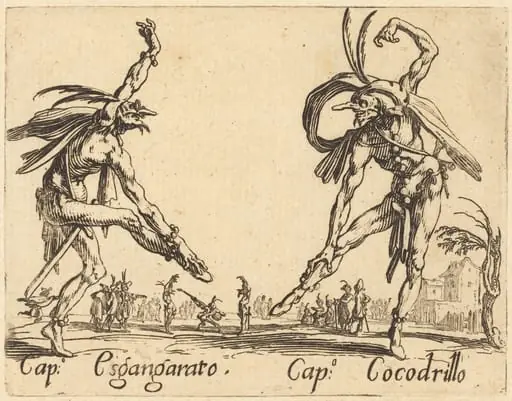
Executed on laid paper, the work captures two exaggerated figures in mid-confrontation, surrounded by a lively crowd.
Jacques Callot, a French artist from the Duchy of Lorraine, produced this etching around 1622 as part of a broader series documenting military and civilian life. Executed on laid paper, the work captures two exaggerated figures in mid-confrontation, surrounded by a lively crowd. Callot’s prolific output—over 1,400 prints—often focused on the textures of everyday existence, rendered with meticulous line work and a keen eye for social detail.
Subject & Meaning
The two central figures, labeled 'Cap. Mala Gamba' and 'Cap. Bellavita,' appear as caricatures rather than historical persons, their flamboyant attire and absurd postures suggesting satire. Their weapons—a sword and a long pole—frame a comical clash, while the surrounding onlookers react with amusement or curiosity. The scene evokes theatrical farce, possibly mocking the vanity or incompetence of provincial officers, though no definitive narrative accompanies the image.
Technique & Style
Callot employed fine, controlled etching lines to define textures—from the ruffles of doublets to the folds of feathered hats—while using varying line density to suggest depth and shadow. The crowd is rendered with rapid, economical strokes, contrasting with the detailed figures in the foreground. His use of atmospheric perspective draws the viewer’s eye into a receding landscape, enhancing the sense of a staged, public spectacle.
History & Provenance
The print belongs to a suite of works Callot created during his time in Florence and Paris, where he observed military encampments and street life. Though the specific provenance of this impression is undocumented, similar prints from the series circulated widely among collectors and artists in early 17th-century Europe. No contemporary records explain the identities of the captains, leaving their names as enigmatic labels.
Context
In the early 1600s, the Thirty Years’ War brought soldiers and mercenaries into European towns, inspiring artists to depict their flamboyant and often chaotic presence. Callot’s prints responded to this cultural moment, blending observation with humor. His depictions of soldiers and beggars stood apart from idealized historical scenes, offering instead a grounded, sometimes irreverent view of contemporary society.
Legacy
Callot’s technical innovations in etching influenced generations of printmakers, particularly in his ability to render complex scenes with clarity. While this particular image was not widely reproduced in later centuries, it remains a representative example of his genre-based approach. The work contributes to a broader understanding of how printmaking served as a medium for social commentary in the Baroque era.
Own this work as a print
Artist & collection
Artist
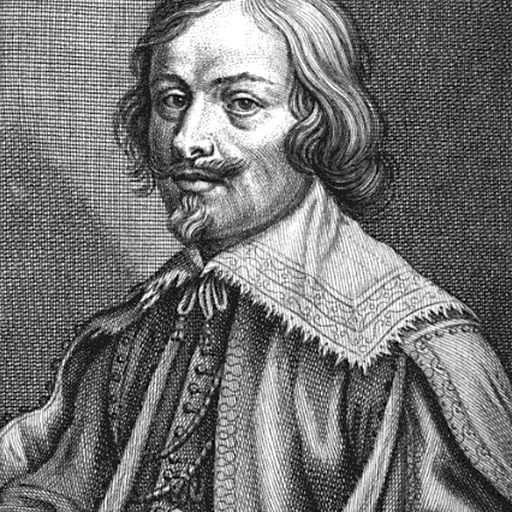
Jacques Callot was a baroque printmaker and draftsman from the Duchy of Lorraine.

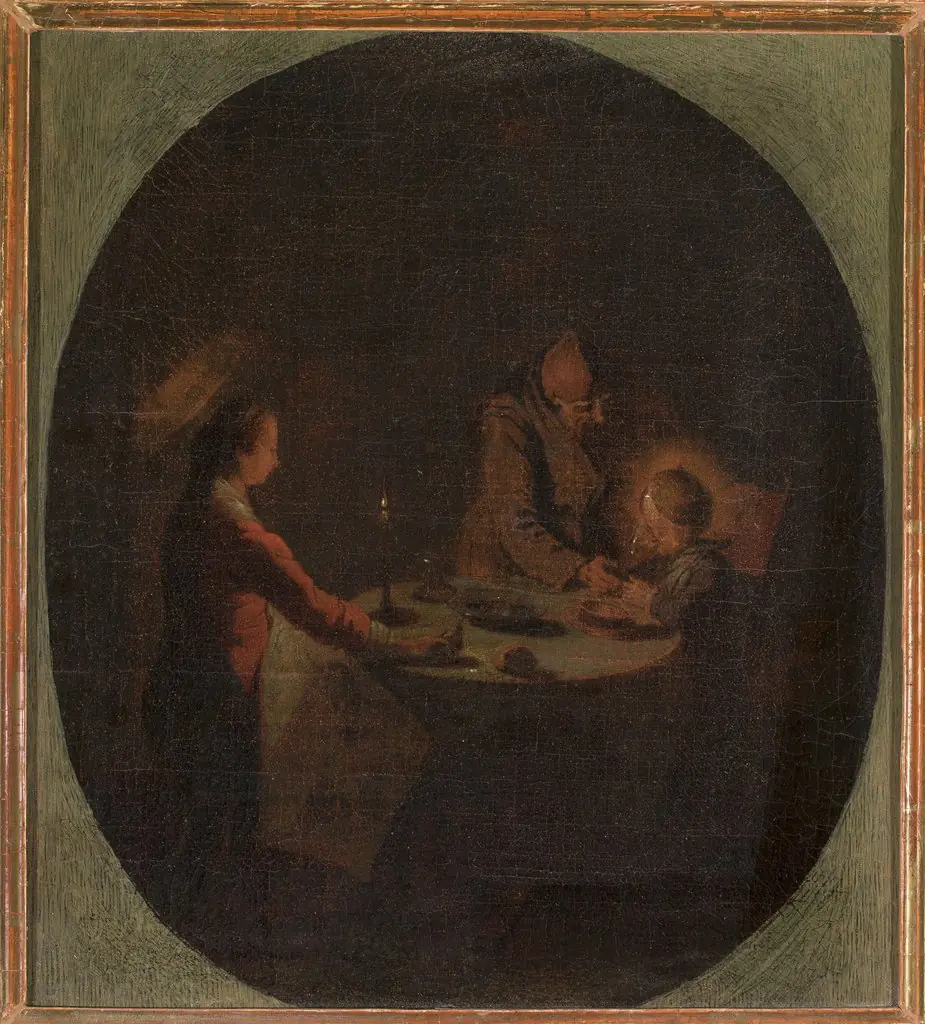 Holy Family at supper
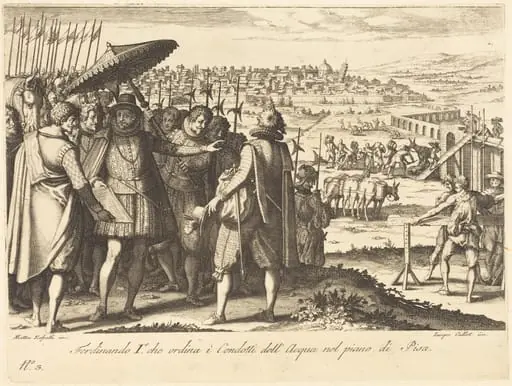 Restoration of the Aqueduct at Pisa
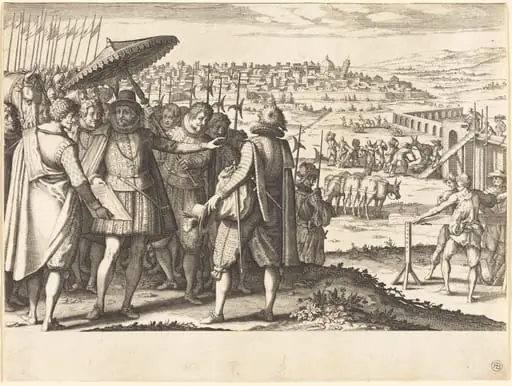 Restoration of the Aqueduct at Pisa
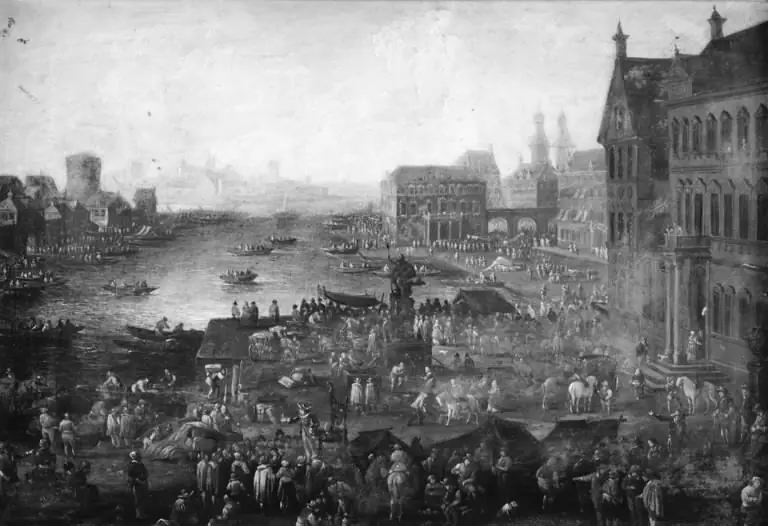 Square in Paris with Many Figures
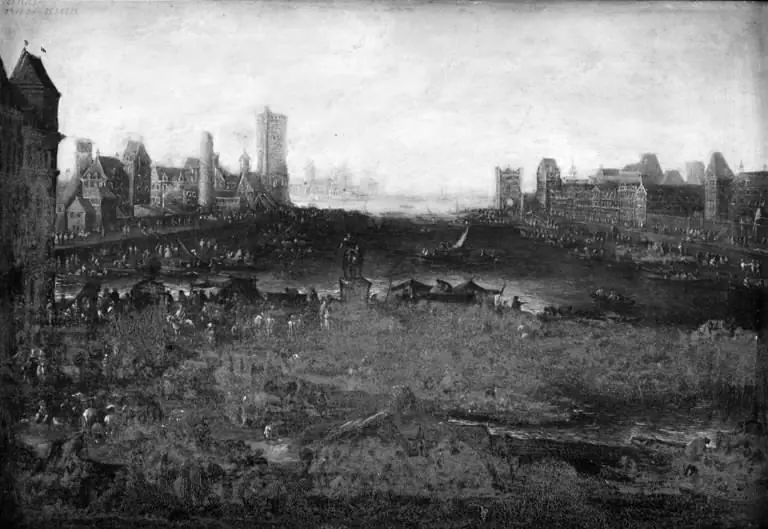 Square in Paris with Many Figures
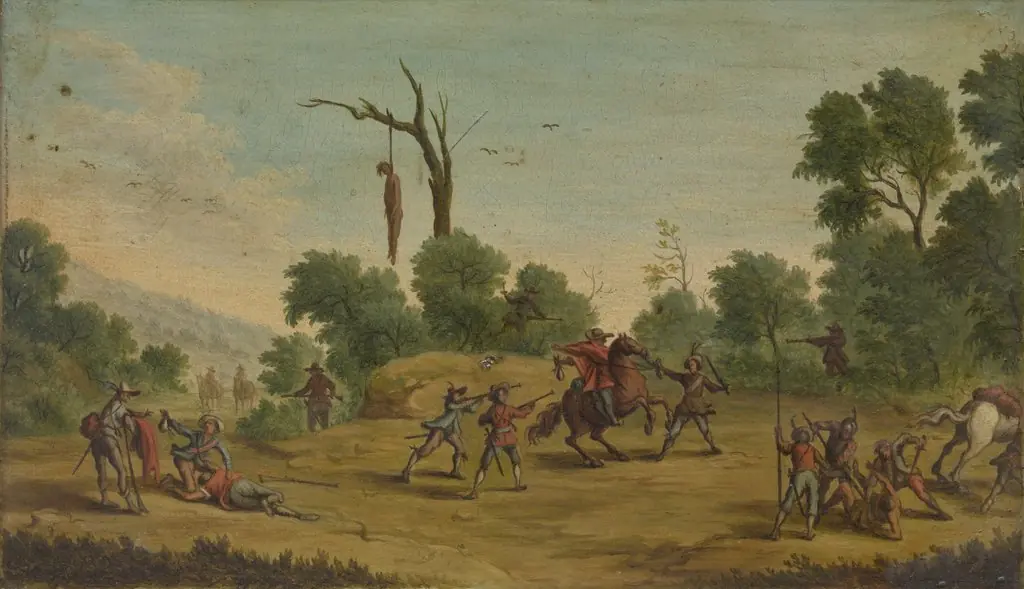 Horsemen Attacked by Robbers
 HOW WILL A COVERED PART BE CORRECTED?HOW WIKA A COVERED HEART DEED CORRECTED?
![Christ Walking on the Water [second plate], by Jacques Callot](https://artifactworldgallery.com/img/jacques-callot--christ-walking-on-the-water-second-plate--2069f3bfe4cb2126-w320.webp) Christ Walking on the Water [second plate]
Christ Walking on the Water [second plate]