Artwork
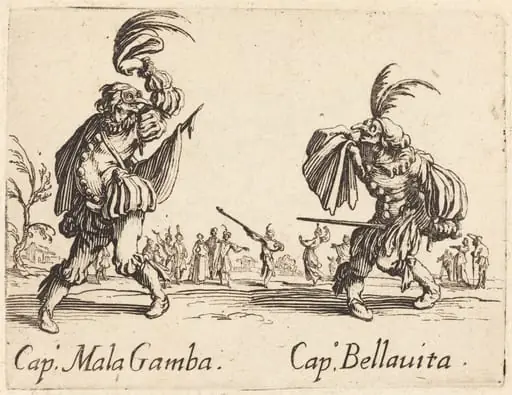
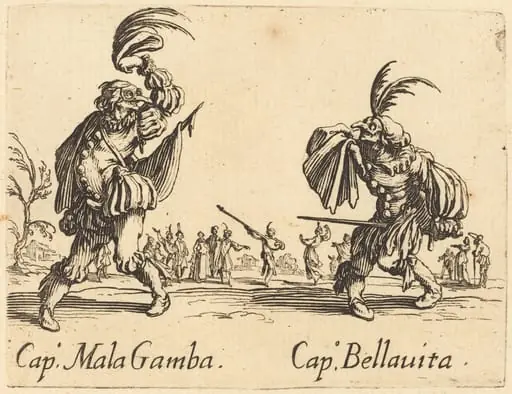
Cap. Mala Gamba and Cap. Bellavita
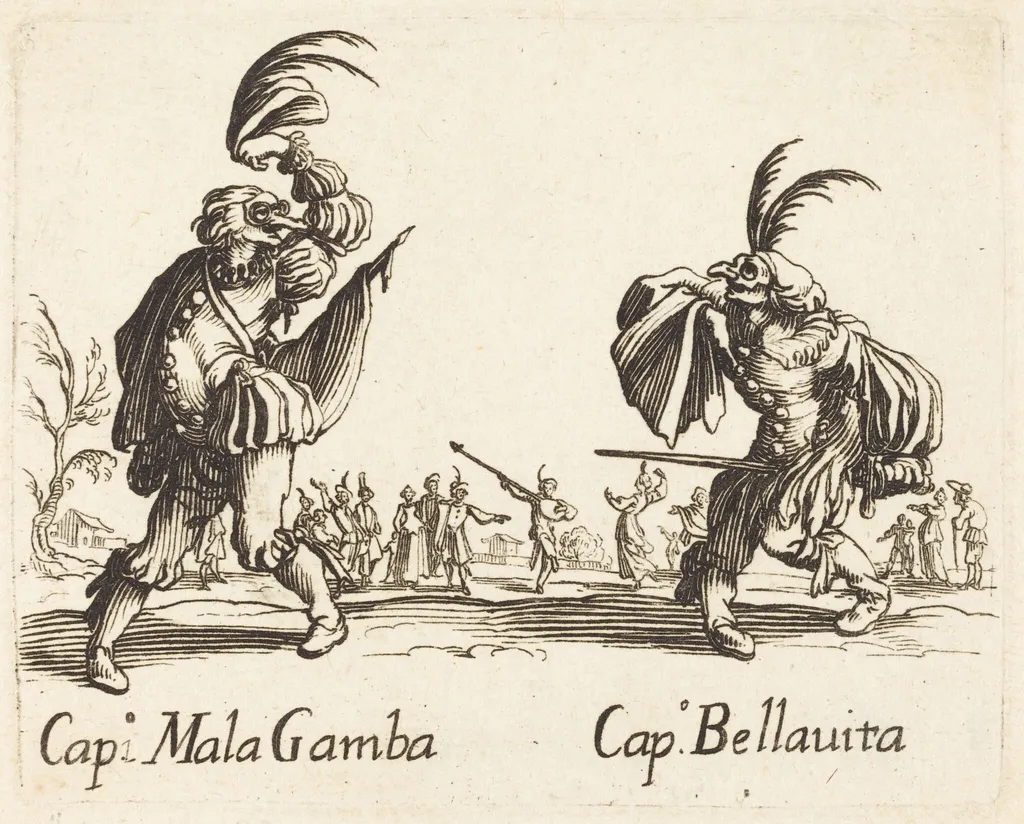
Cap. Mala Gamba and Cap. Bellavita is an ink print by the Baroque artist French 17th Century. It dates from 1622 and is held in the collection of the National Gallery of Art. This etching depicts a lively scene centered around two prominently featured, ornately dressed men, identified as Cap.
About this work
Overview
This etching depicts a lively scene centered around two prominently featured, ornately dressed men, identified as Cap. Mala Gamba and Cap. Bellavita. The composition blends elements of a performance with a gathering, set against a backdrop of onlookers.
Subject & Meaning
The subjects, Cap. Mala Gamba (leaning on a cane) and Cap. Bellavita (holding a long stick), are portrayed in dramatic, larger-than-life poses, suggesting fictional or caricatured characters rather than historical figures. The surrounding smaller figures, diverse in attire, engage in various actions, implying a spectacle or entertainment scenario.
Technique & Style
Executed as an etching on laid paper, the work showcases the medium's capability for sharp, detailed renderings. The overall style, with its emphasis on dynamic poses and a bustling atmosphere, aligns with the artistic tendencies of its time, characterized by vivid depictions of everyday and theatrical life.
Context
The etching reflects the artistic and social climate of its era, where prints often captured scenes of public entertainment, social hierarchy, and theatricality. The mix of 'old-fashioned' and 'loose robes' among the crowd may hint at commentary on social classes or the blending of traditions.
Legacy
While specific lasting impacts or direct influences of this etching are not highlighted in the provided information, it contributes to the broader legacy of etching as a popular medium for capturing the vibrancy of daily and performance arts in historical European society.
Artist & collection

Artist
Seventeenth-century French printmakers turned ink into story. Their tools were burin and acid, paper their stage. Look at the Beggar Woman with Rosary (1622), etched on laid paper, her hands folded around faith, or The…

 Cap. Mala Gamba and Cap. Bellavita
 Cap. Mala Gamba and Cap. Bellavita
 Scapino and Cap. Zerbino
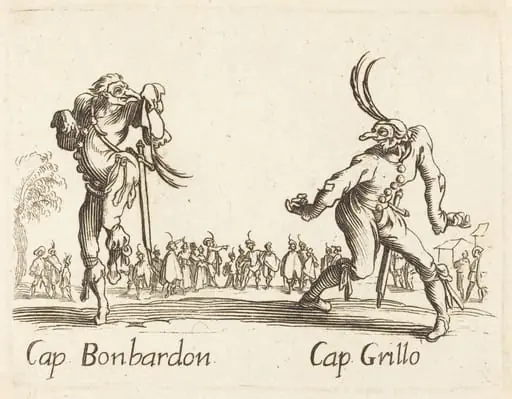 Cap. Bonbardon and Cap. Grillo
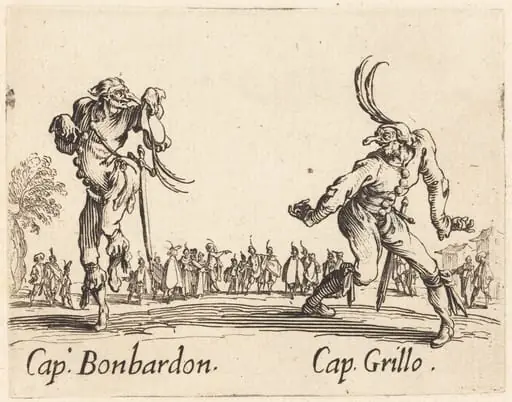 Cap. Bonbardon and Cap. Grillo
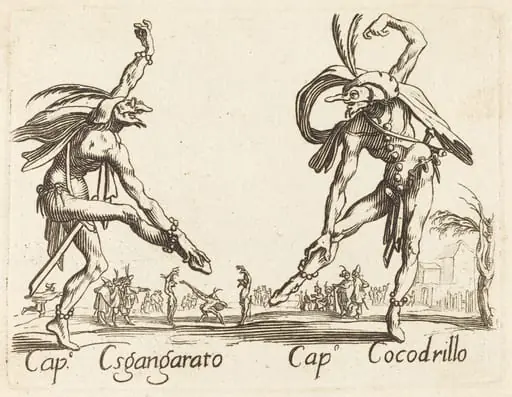 Cap. Esgangarato and Cap. Cocodrillo
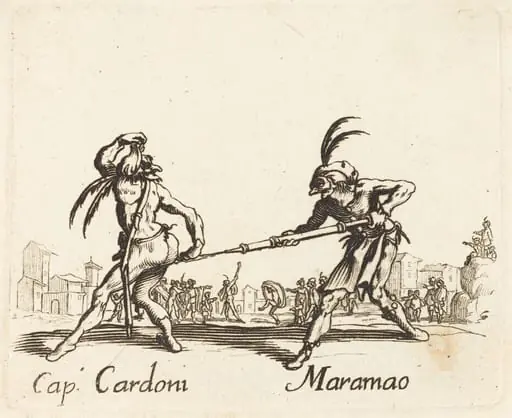 Cap. Cardoni and Maramao
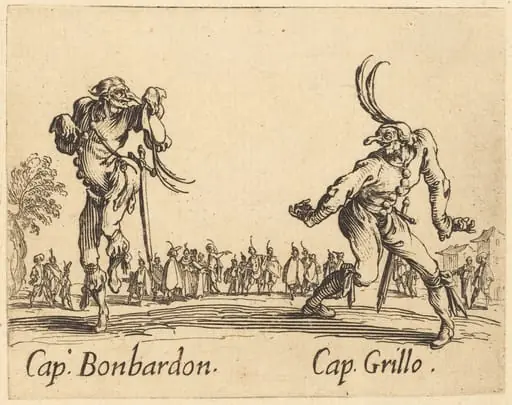 Cap. Bonbardon and Cap. Grillo
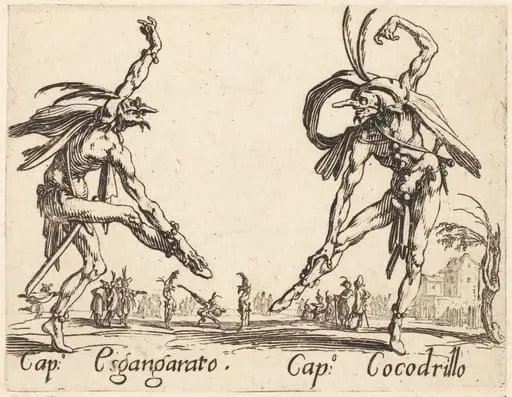 Cap. Esgangarato and Cap. Cocodrillo
 Cap. Esgangarato and Cap. Cocodrillo