Artwork
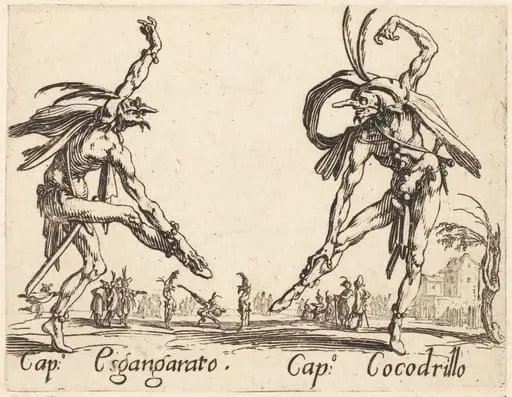
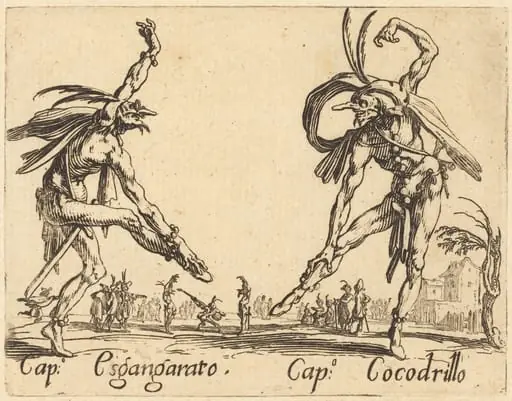
Cap. Esgangarato and Cap. Cocodrillo
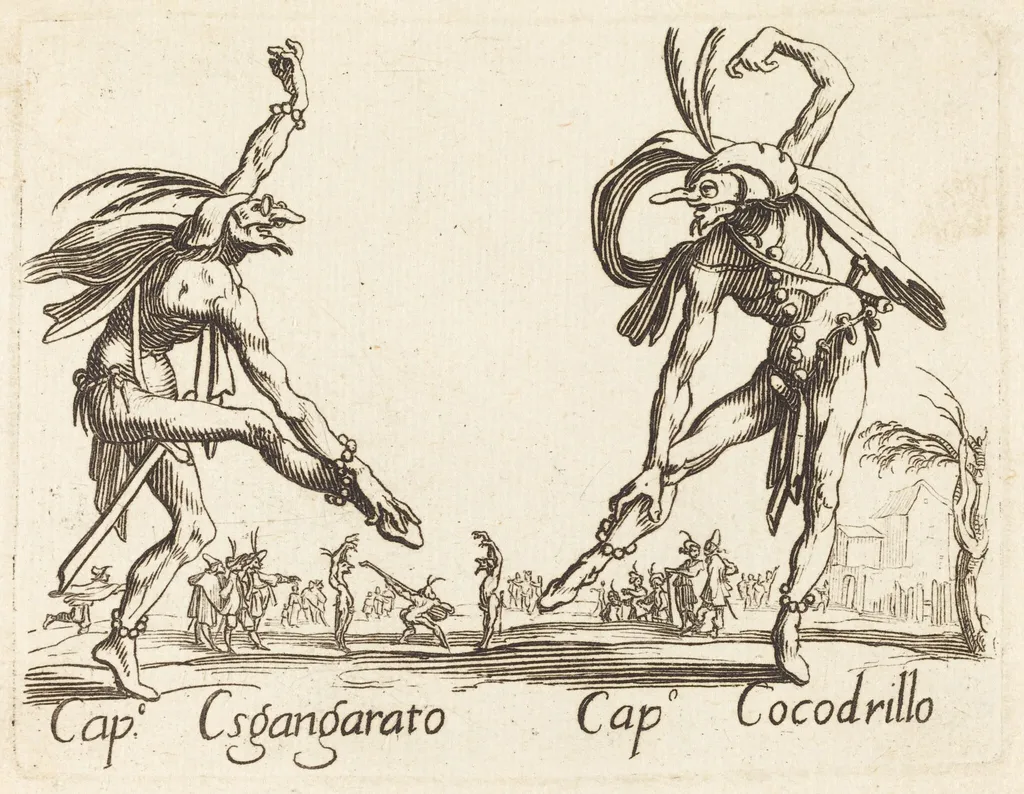
Cap. Esgangarato and Cap. Cocodrillo is an ink print by the Baroque artist French 17th Century. It dates from 1622 and is held in the collection of the National Gallery of Art. Cap.
About this work
Overview
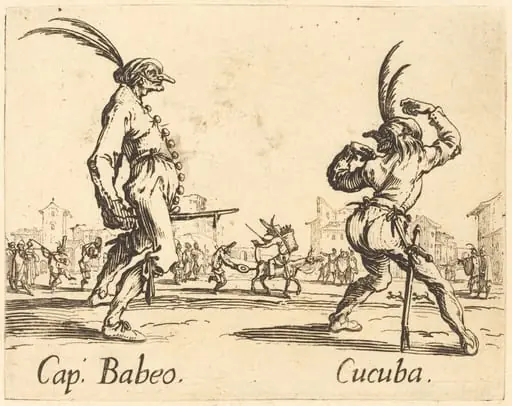
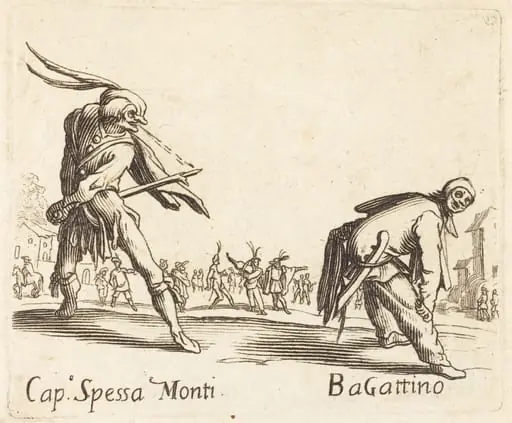
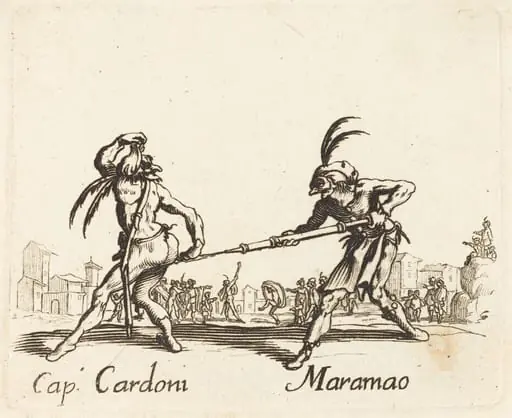
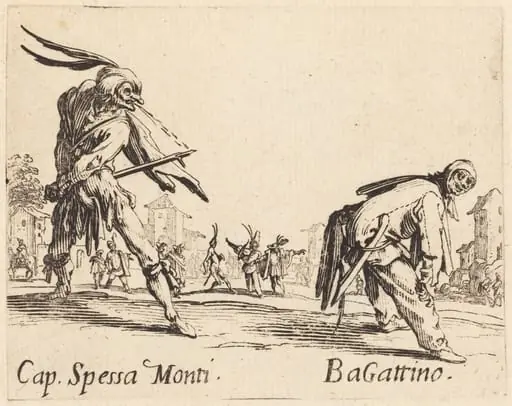
Cap. Esgangarato and Cap. Cocodrillo is an etching executed on laid paper. The print presents two figures in identical military attire, positioned side by side, each bearing a caption that reads “Cap. Esgangarato” and “Cap. Cocodrillo.” The composition is stark, with a plain background that directs attention to the likeness of the two men and the curious names beneath their heads.
Subject & Meaning
The work depicts a pair of captains whose faces are rendered almost indistinguishably, suggesting a deliberate pairing or a visual joke. The unusual surnames, evoking a “swinging” and a “crocodile,” hint at a satirical or riddling intent, inviting viewers to question the identity or role of the figures beyond their formal dress.
Technique & Style
Created through traditional etching, the artist incised fine lines into a metal plate, allowing ink to settle in the grooves before transferring the image onto laid paper. The delicate hatching and cross‑hatching generate subtle tonal variations that give the uniforms a sense of weight and three‑dimensionality, while the unadorned backdrop emphasizes line work over decorative detail.
Context
Printed as a single‑sheet work, the piece belongs to the broader tradition of 19th‑century satirical prints that employed military motifs to comment on social or political themes. The use of mock‑heroic titles aligns it with contemporary caricature, where the juxtaposition of formal portraiture and absurd naming served to critique authority or simply entertain an audience.
Artist & collection

Artist
Seventeenth-century French printmakers turned ink into story. Their tools were burin and acid, paper their stage. Look at the Beggar Woman with Rosary (1622), etched on laid paper, her hands folded around faith, or The…