Artwork
Cap. Cardoni and Maramao
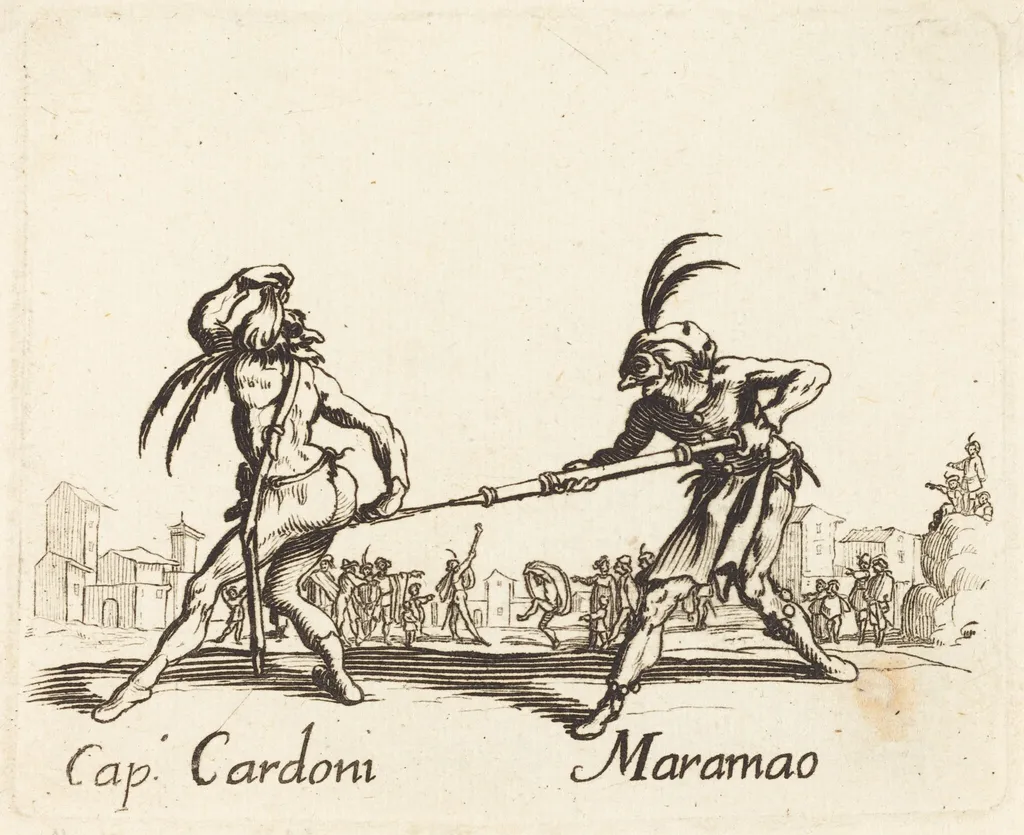
Cap. Cardoni and Maramao is an ink print by the Baroque artist French 17th Century. It dates from 1622 and is held in the collection of the National Gallery of Art. This etching depicts a public brawl between two armed men in a town square, rendered in simple, dynamic lines.
About this work
Overview
This etching depicts a public brawl between two armed men in a town square, rendered in simple, dynamic lines. The composition centers on their physical struggle, framed by onlookers positioned on surrounding architecture. The medium—etching on laid paper—suggests a printed work intended for wider distribution, likely capturing a moment of folk spectacle rather than a formal event.
Subject & Meaning
Their muscular postures and the attentive crowd imply a sanctioned or ceremonial contest, possibly tied to seasonal festivals or civic displays of strength.
The two figures, one in a feathered helmet wielding a pole, the other gripping a club, appear as representatives of local tradition or ritual combat. Their muscular postures and the attentive crowd imply a sanctioned or ceremonial contest, possibly tied to seasonal festivals or civic displays of strength. The scene lacks clear narrative resolution, emphasizing spectacle over moral or heroic outcome.
Technique & Style
The artist employed etching to create crisp, linear forms with minimal shading, relying on contour and gesture to convey motion. The background figures are suggested with sparse strokes, allowing the central duel to dominate. The use of laid paper indicates a hand-made, textured surface typical of early printmaking, enhancing the raw, immediate quality of the scene.
History & Provenance
The work is attributed to an anonymous artist associated with the Cap. Cardoni and Maramao tradition, likely from 17th-century Italy. Such prints were often produced as broadsheets or collectible images of local customs, circulated among urban populations. No definitive provenance is recorded, but similar works appear in regional collections focused on popular imagery of the period.
Context
Public combats like this were common in Italian towns during festivals, serving as both entertainment and displays of communal identity. Etchings of such events functioned as visual records, bridging oral tradition and printed culture. The absence of aristocratic patrons suggests this was a vernacular art form, made for and by the people who witnessed these contests.
Legacy
This print contributes to a broader corpus of early modern popular prints that documented everyday violence and ritual. Its straightforward style influenced later genre scenes in printmaking, particularly in regions where civic spectacle remained a cultural fixture. Though not widely known today, it remains a tangible artifact of how ordinary life was visually preserved before photography.
Artist & collection

Artist
Seventeenth-century French printmakers turned ink into story. Their tools were burin and acid, paper their stage. Look at the Beggar Woman with Rosary (1622), etched on laid paper, her hands folded around faith, or The…

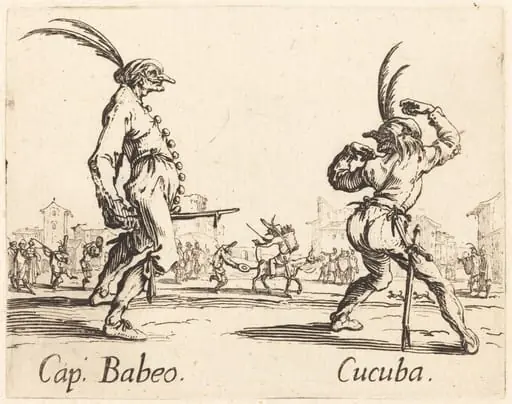 Cap. Babeo and Cucuba
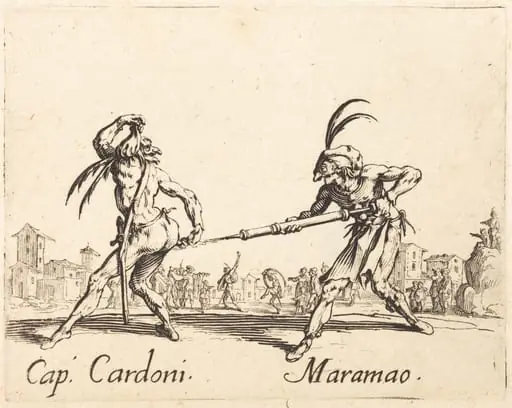 Cap. Cardoni and Maramao
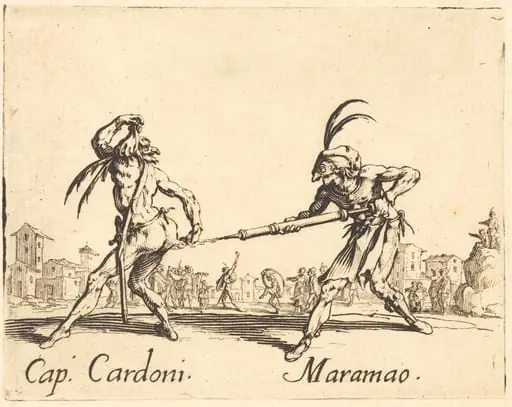 Cap. Cardoni and Maramao
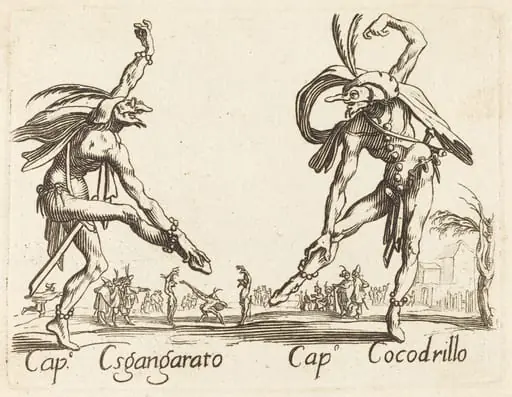 Cap. Esgangarato and Cap. Cocodrillo
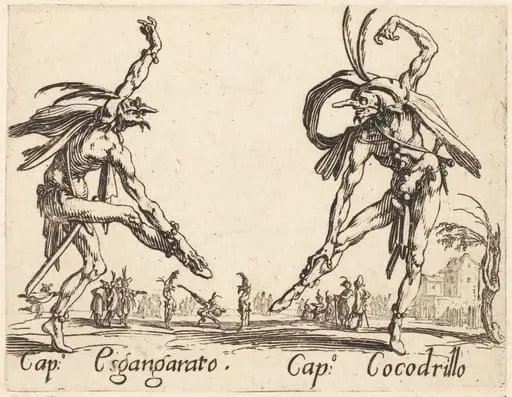 Cap. Esgangarato and Cap. Cocodrillo
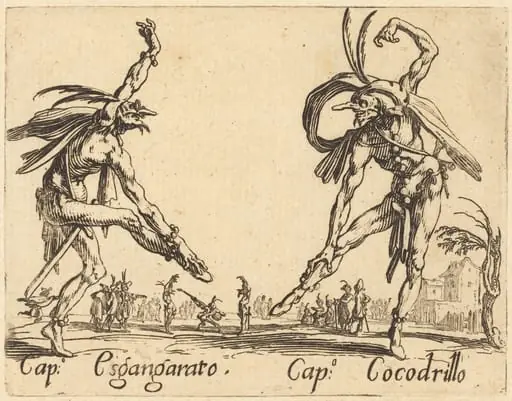 Cap. Esgangarato and Cap. Cocodrillo
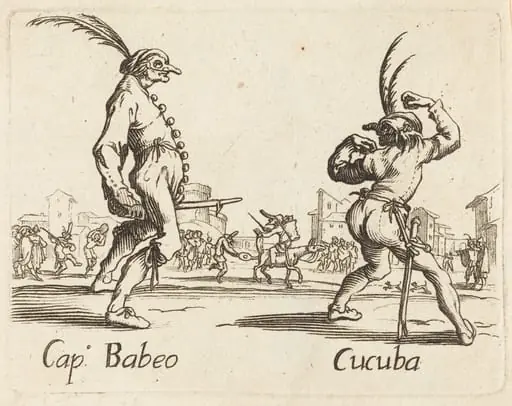 Cap. Babeo and Cucuba
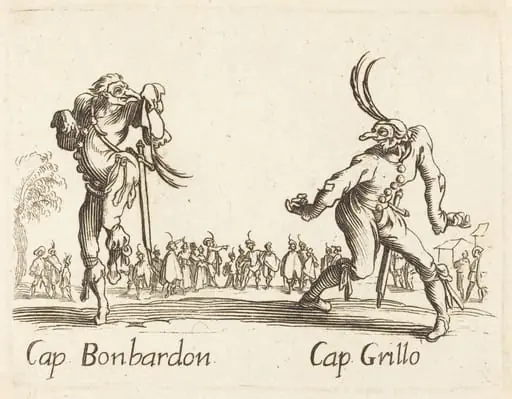 Cap. Bonbardon and Cap. Grillo
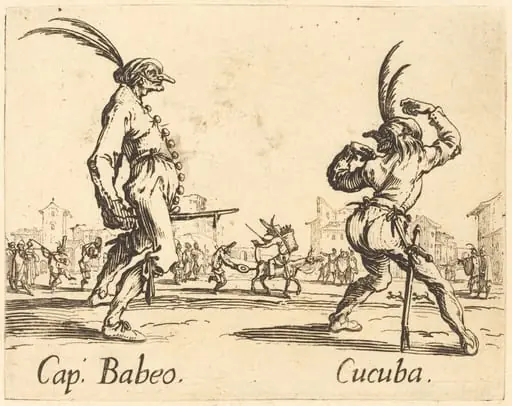 Cap. Babeo and Cucuba
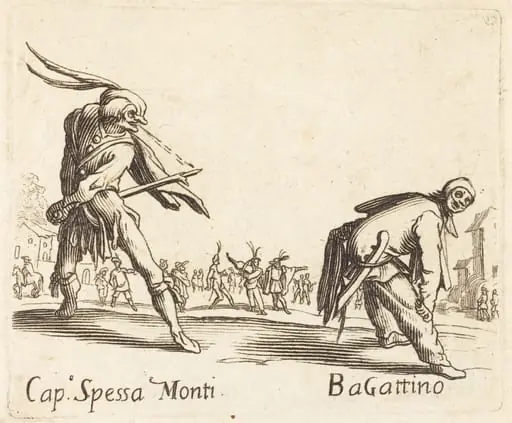 Cap. Spessa Monti and Bagattino
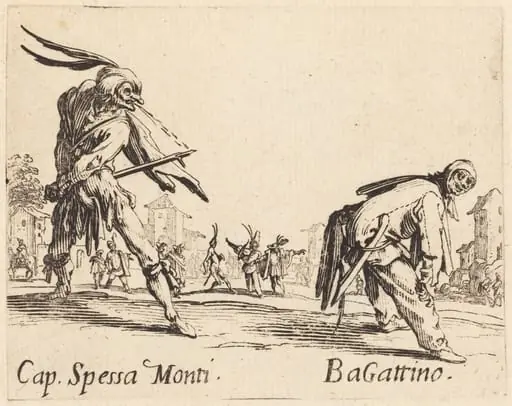 Cap. Spessa Monti and Bagattino