Artwork
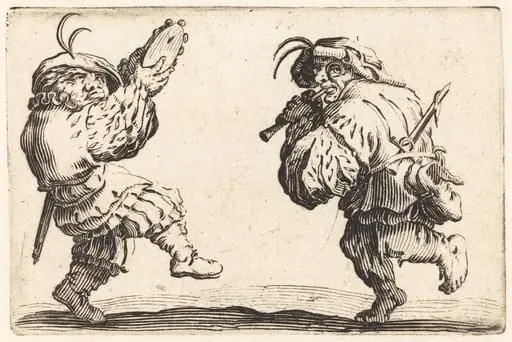
Dancers with Lute
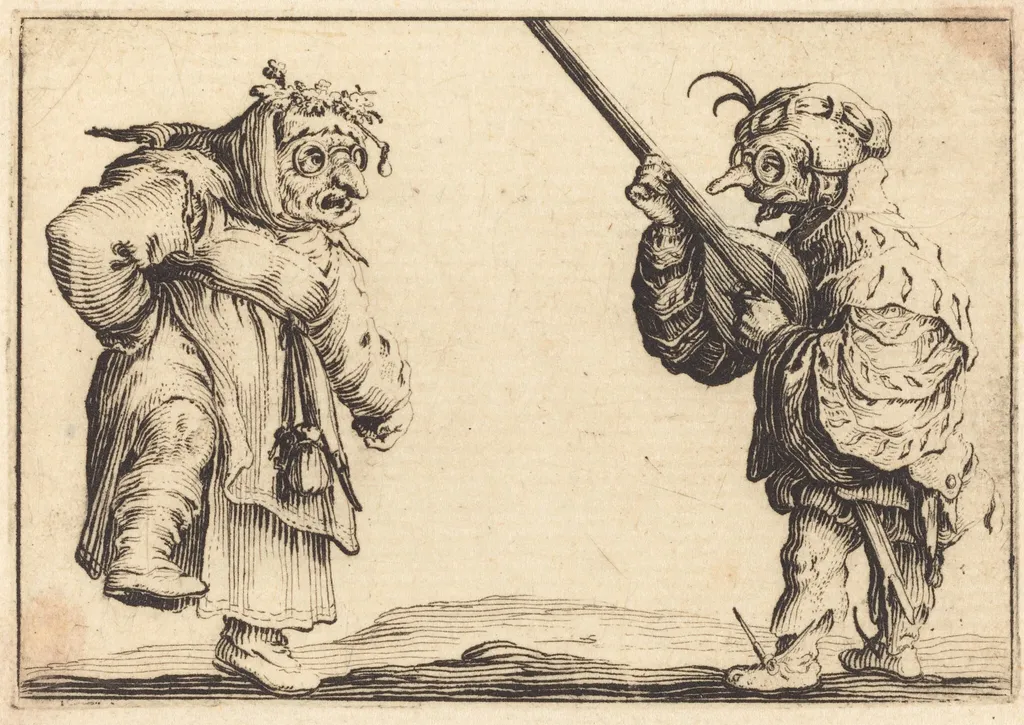
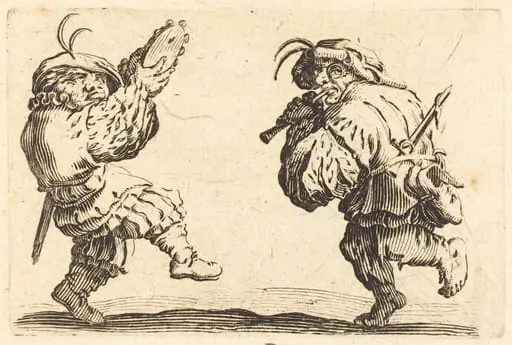
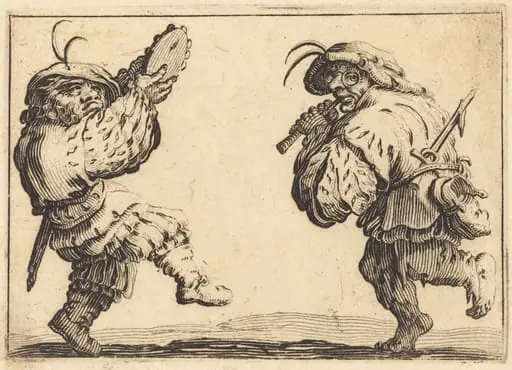
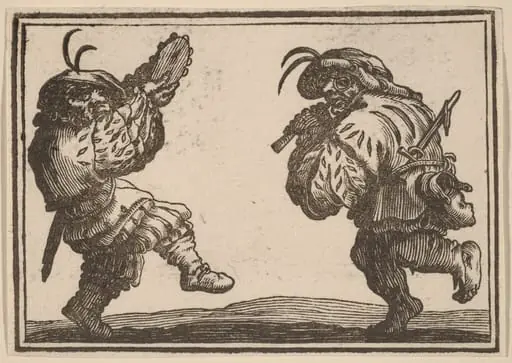
Dancers with Lute is an ink print by the Baroque artist Jacques Callot. It dates from 1617 and is held in the collection of the National Gallery of Art.
About this work
Overview
As a native of the Duchy of Lorraine, Callot produced over 1,400 prints, many depicting figures from the margins of society and theatrical performances.
Created around 1617, this etching on laid paper by Jacques Callot belongs to a prolific body of work that established him as a defining printmaker of the early Baroque period. As a native of the Duchy of Lorraine, Callot produced over 1,400 prints, many depicting figures from the margins of society and theatrical performances. This piece captures a moment of performance, blending movement and costume with atmospheric depth, characteristic of his approach to narrative in small-scale works.
Subject & Meaning
The image portrays two masked figures in theatrical attire: one dances with a raised sword, the other holds a lute. Their costumes and gestures suggest a commedia dell’arte or courtly masquerade, where performance blurred social boundaries. The juxtaposition of music and weapon implies a tension between entertainment and violence, common in Baroque representations of fleeting human drama. The scene is not merely decorative but evokes the instability and artifice of staged life.
Technique & Style
Callot employed fine, controlled etching lines to render texture, motion, and spatial depth with remarkable economy. The background’s subtle gradation suggests distance without heavy shading, while bold contours define the figures’ dynamic poses. His use of laid paper enhanced the ink’s tonal range, allowing for nuanced contrasts. The precision of his line work—neither overly ornate nor sparse—reflects his mastery of the medium and his ability to convey narrative through minimal yet expressive marks.
History & Provenance
The etching was produced during Callot’s early career, likely in Nancy or Florence, where he was influenced by Italian theatrical traditions. While its exact early ownership is undocumented, it aligns with a broader circulation of his prints among collectors and artists across Europe. These works were often sold individually or in small portfolios, contributing to his reputation beyond his native region and ensuring the survival of such impressions in institutional and private collections.
Context
In early 17th-century Europe, printmaking flourished as a medium for disseminating imagery beyond elite circles. Callot’s depictions of dancers, soldiers, and jesters responded to growing public interest in performance culture and social observation. His work intersected with the rise of carnival, court masques, and traveling troupes, offering a visual record of ephemeral entertainments that were otherwise lost to time.
Legacy
Callot’s technical innovations in etching, including the use of the *stoppout* to achieve finer lines, influenced generations of printmakers. His focus on everyday and theatrical subjects expanded the thematic scope of printmaking, moving it beyond religious or mythological narratives. *Dancers with Lute* exemplifies how a small print could encapsulate complex social and performative dynamics, securing his place as a bridge between Renaissance draftsmanship and Baroque visual storytelling.
Artist & collection
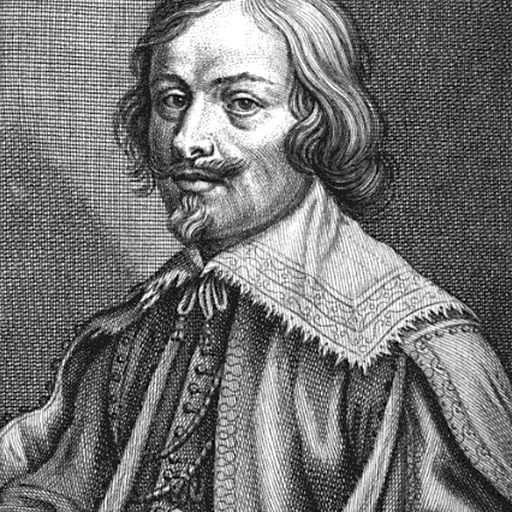
Artist
Jacques Callot was a baroque printmaker and draftsman from the Duchy of Lorraine.

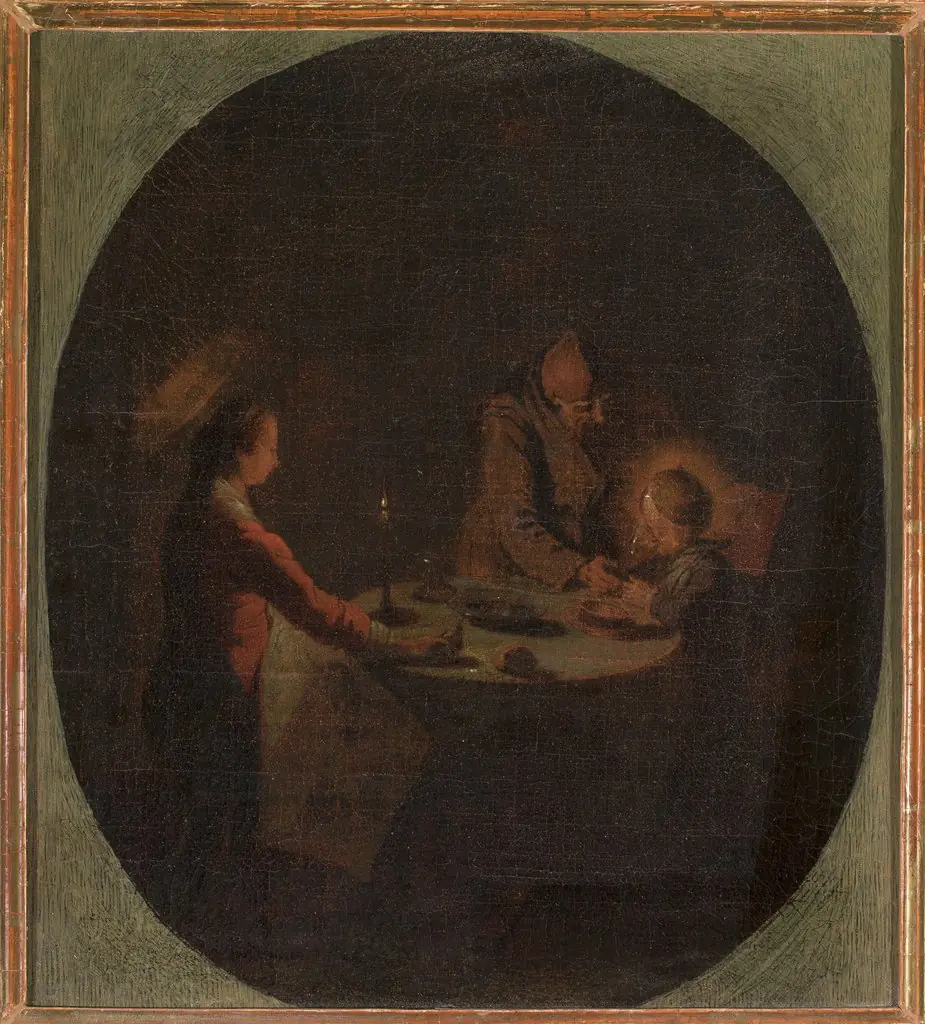 Holy Family at supper
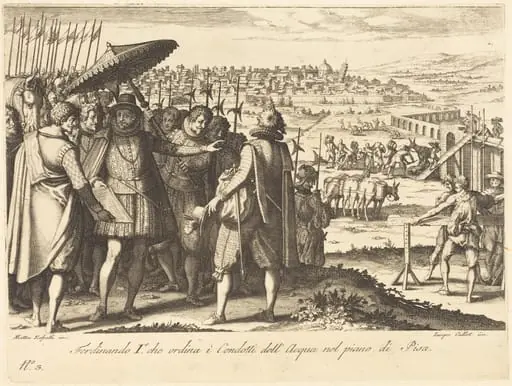 Restoration of the Aqueduct at Pisa
 Restoration of the Aqueduct at Pisa
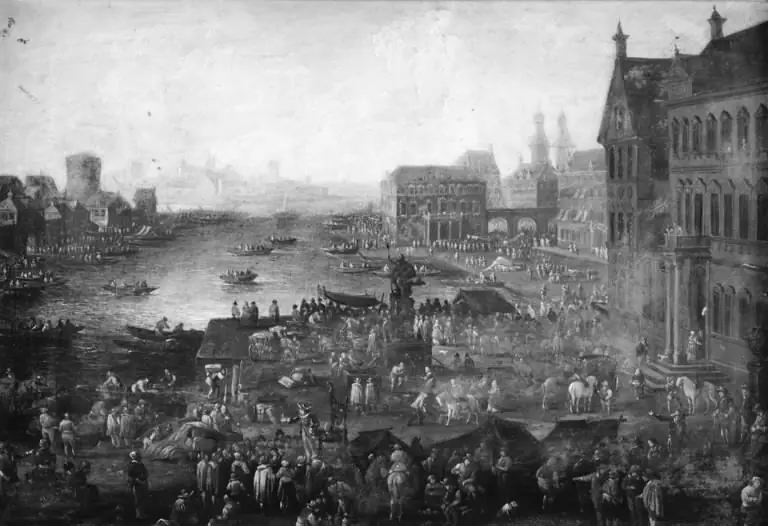 Square in Paris with Many Figures
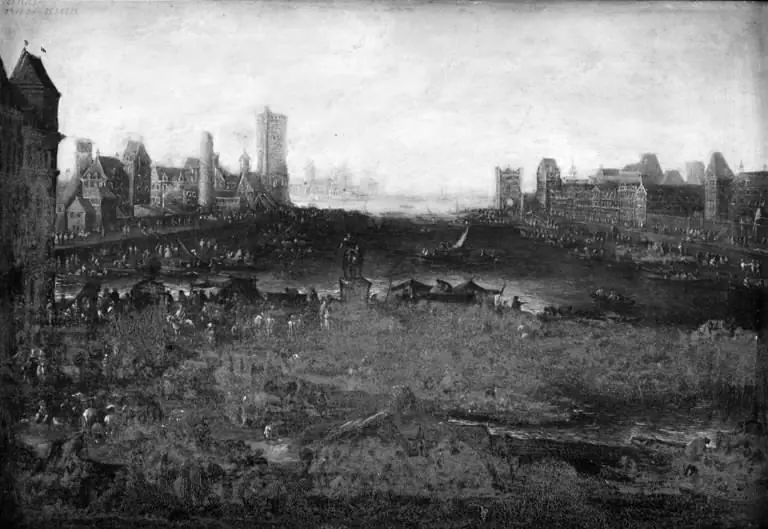 Square in Paris with Many Figures
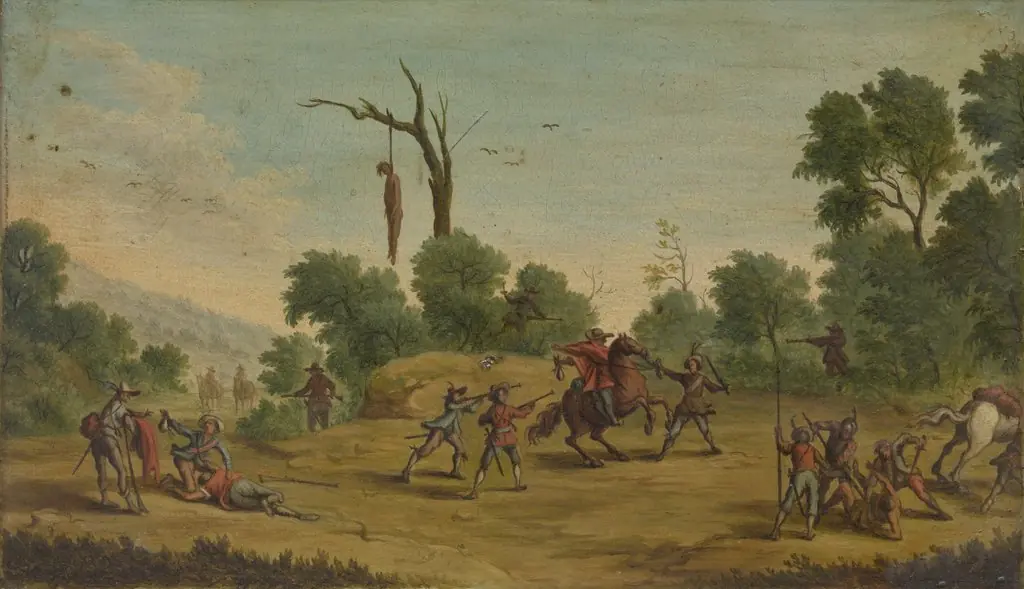 Horsemen Attacked by Robbers
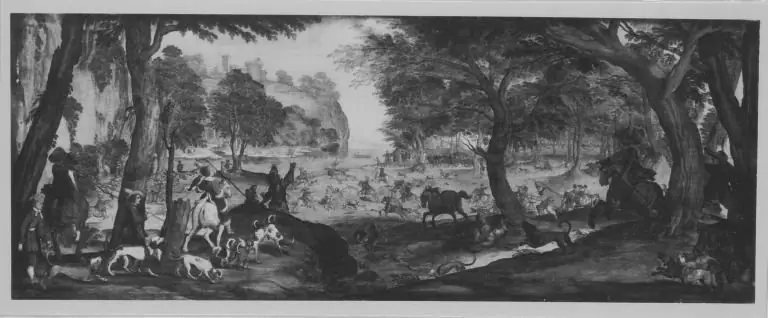 HOW WILL A COVERED PART BE CORRECTED?HOW WIKA A COVERED HEART DEED CORRECTED?
![Christ Walking on the Water [second plate], by Jacques Callot](https://artifactworldgallery.com/img/jacques-callot--christ-walking-on-the-water-second-plate--2069f3bfe4cb2126-w320.webp) Christ Walking on the Water [second plate]
Christ Walking on the Water [second plate]