Artwork
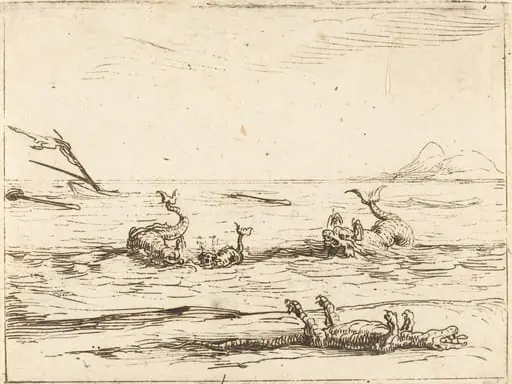
Dolphins and Crocodile
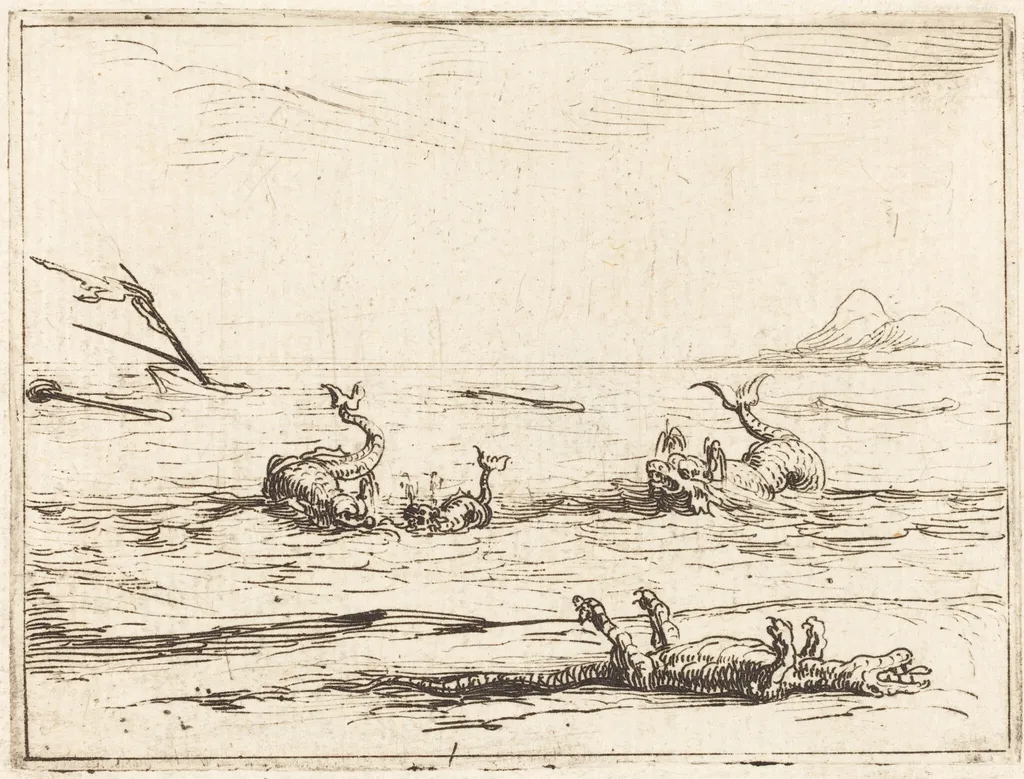
Dolphins and Crocodile is an ink print by the Renaissance artist Jacques Callot. It dates from 1628 and is held in the collection of the National Gallery of Art.
About this work
Overview
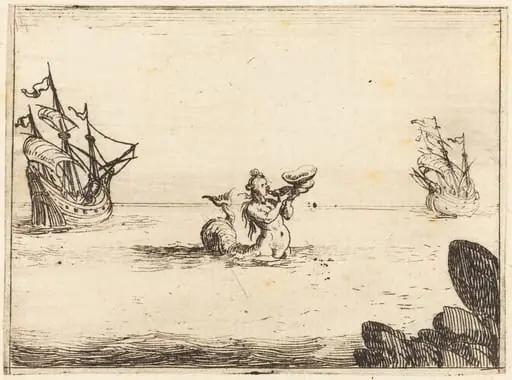
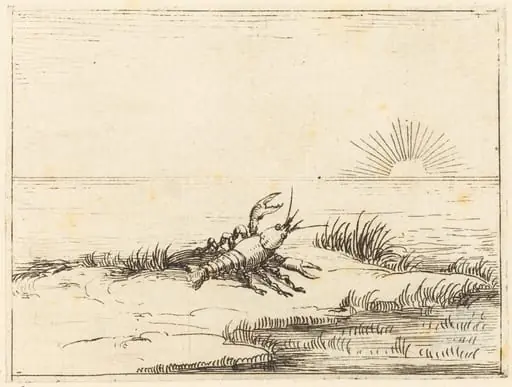
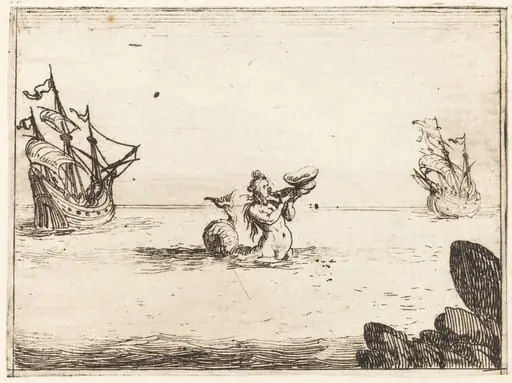
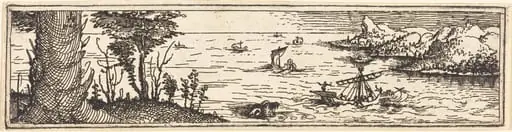
Dolphins and Crocodile is a 1628 etching on laid paper by French Baroque printmaker Jacques Callot, showcasing his technical prowess in printmaking with a dynamic scene of marine and exotic creatures.
Subject & Meaning
The etching depicts dolphins in varied poses and a menacing crocodile, evoking tension and drama. The unusual combination of species may reflect Callot's interest in documenting diverse subjects, though the specific meaning or narrative behind this juxtaposition is not immediately clear.
Technique & Style
Executed with meticulous engraving techniques, the etching features detailed lines and shading, creating depth and texture. The visual energy and sense of movement are hallmark's of Callot's style, drawing the viewer into the scene.
History & Provenance
Created in 1628, this work is part of Callot's extensive oeuvre of over 1,400 etchings, which spanned contemporary life, religious themes, and military scenes, often with detailed landscapes.
Context
While the broader context of 'Dolphins and Crocodile' within Callot's body of work is clear, the specific inspiration or cultural reference for this particular composition is less defined, beyond his general inclination towards diverse and sometimes unusual subjects.
Legacy
As with many of Callot's works, 'Dolphins and Crocodile' contributes to his legacy as a prolific and skilled Baroque printmaker, though its individual impact or influence on subsequent art movements is not distinctly highlighted in available information.
Artist & collection
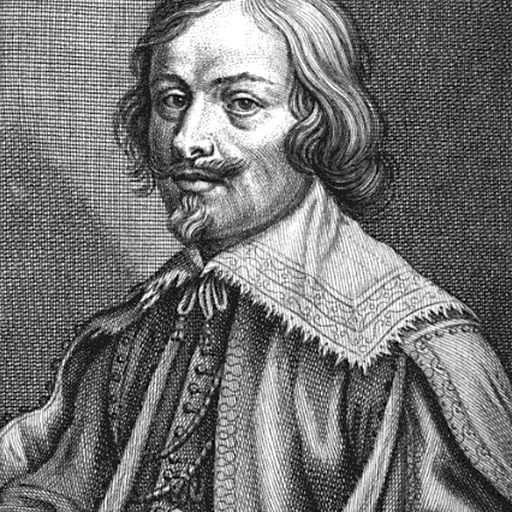
Artist
Jacques Callot was a baroque printmaker and draftsman from the Duchy of Lorraine.

 Holy Family at supper
 Restoration of the Aqueduct at Pisa
 Restoration of the Aqueduct at Pisa
 Square in Paris with Many Figures
 Square in Paris with Many Figures
 Horsemen Attacked by Robbers
 HOW WILL A COVERED PART BE CORRECTED?HOW WIKA A COVERED HEART DEED CORRECTED?
![Christ Walking on the Water [second plate], by Jacques Callot](https://artifactworldgallery.com/img/jacques-callot--christ-walking-on-the-water-second-plate--2069f3bfe4cb2126-w320.webp) Christ Walking on the Water [second plate]
Christ Walking on the Water [second plate]