Artwork
Elevation of Churches including the Holy Manger
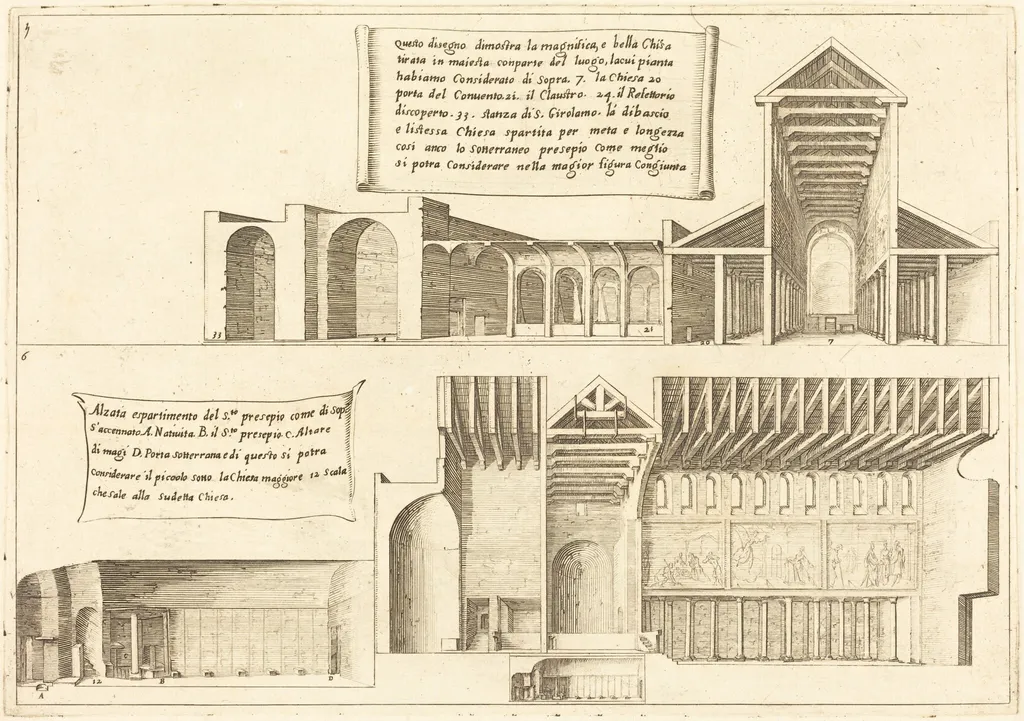
Elevation of Churches including the Holy Manger is an ink print by the Baroque artist Jacques Callot. It dates from 1619 and is held in the collection of the National Gallery of Art.
About this work
Overview
Created in 1619 by Jacques Callot, this print combines etching and engraving on laid paper to depict a complex architectural vision of ecclesiastical spaces.
Created in 1619 by Jacques Callot, this print combines etching and engraving on laid paper to depict a complex architectural vision of ecclesiastical spaces. Though labeled as a restrike, the composition retains the precision of the original. Callot, a Lorrainer artist active in Italy, used his technical mastery to render layered interiors and exteriors of religious buildings, blending observation with imaginative reconstruction.
Subject & Meaning
The print presents two perspectives of a church complex: a vertical cutaway above and a frontal elevation below. The upper section reveals hidden chambers, staircases, and an underground space marked as the Holy Manger, suggesting sacred subterranean rituals. The lower view includes a bell tower and附属 chapel, anchoring the structure in physical reality. Inscriptions in Italian identify key features, implying a devotional or liturgical function for the concealed areas.
Technique & Style
Callot employed fine etched lines and controlled engraving to achieve intricate detail across multiple planes. The cutaway reveals architectural depth through precise hatching and cross-contouring, while tiny figures scale the spaces to emphasize proportion. His use of layered textures—stone, wood, vaulting—demonstrates a systematic approach to spatial representation, characteristic of his methodical draftsmanship and interest in structural clarity.
History & Provenance
The print was produced during Callot’s time in Florence, where he absorbed Italian artistic traditions while maintaining his Northern European attention to detail. Though the original plate was likely used for early impressions, this version is a later restrike, possibly made in the 17th or early 18th century. Its survival reflects continued interest in Callot’s architectural prints among collectors and institutions.
Context
In early 17th-century Italy, religious institutions often concealed sacred relics or altars in subterranean chambers, a practice mirrored here. Callot’s depiction aligns with contemporary treatises on church architecture and devotional topographies. His focus on hidden spaces may respond to Counter-Reformation interests in sacred mystery, while his technical precision echoes the era’s growing fascination with engineered representation.
Legacy
Callot’s architectural prints influenced later generations of draftsmen and engravers interested in spatial complexity. Though less celebrated than his battle scenes or street life studies, this work exemplifies his ability to merge documentary observation with imaginative reconstruction. It remains a reference for scholars examining how printmaking conveyed theological and structural ideas beyond mere illustration.
Artist & collection

Artist
Jacques Callot was a baroque printmaker and draftsman from the Duchy of Lorraine.

 Holy Family at supper
 Restoration of the Aqueduct at Pisa
 Restoration of the Aqueduct at Pisa
 Square in Paris with Many Figures
 Square in Paris with Many Figures
 Horsemen Attacked by Robbers
 HOW WILL A COVERED PART BE CORRECTED?HOW WIKA A COVERED HEART DEED CORRECTED?
![Christ Walking on the Water [second plate], by Jacques Callot](https://artifactworldgallery.com/img/jacques-callot--christ-walking-on-the-water-second-plate--2069f3bfe4cb2126-w320.webp) Christ Walking on the Water [second plate]
Christ Walking on the Water [second plate]
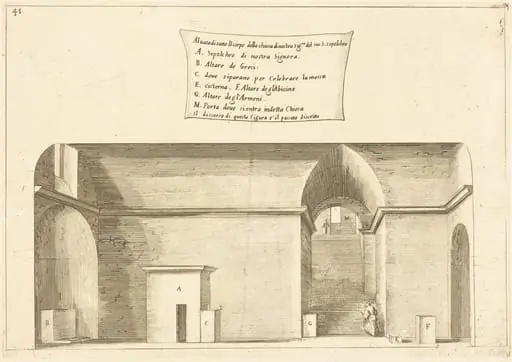 Elevation of the Church of the Holy Sepulchre
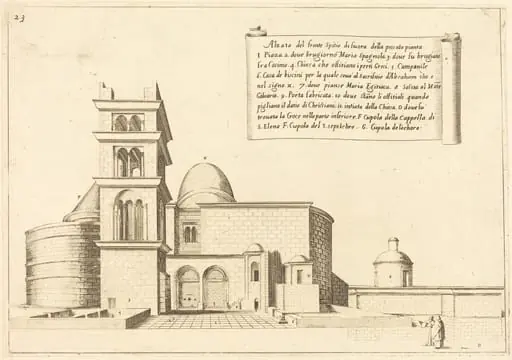 Elevation of a Church
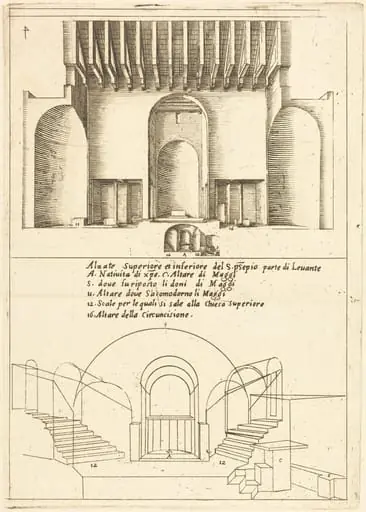 Elevation of the Church of the Holy Manger
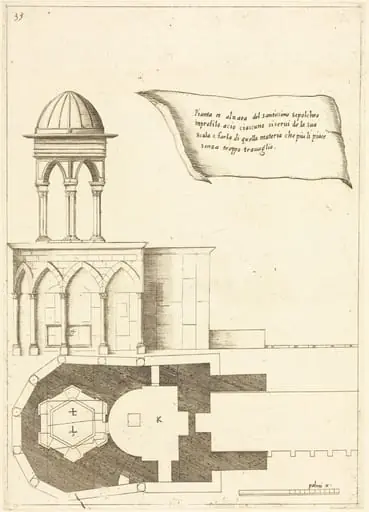 Plan and Elevation of the Church of the Holy Sepulchre
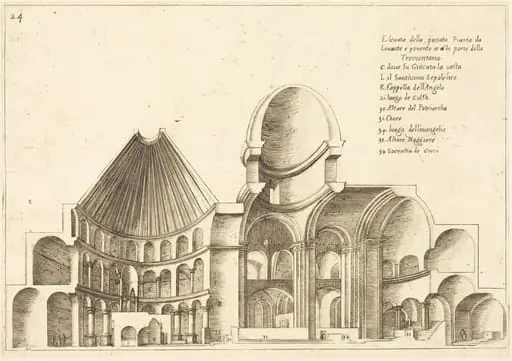 Cross-Section of the Church of the Holy Sepulchre
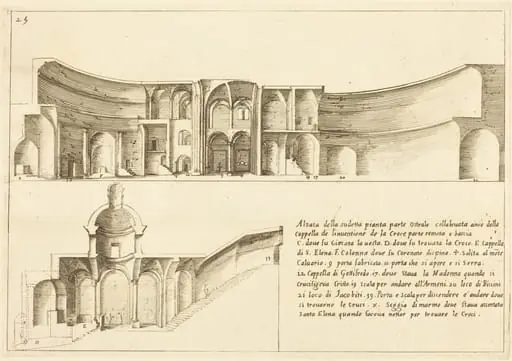 Elevation of the Chapel of the Invention of the Cross
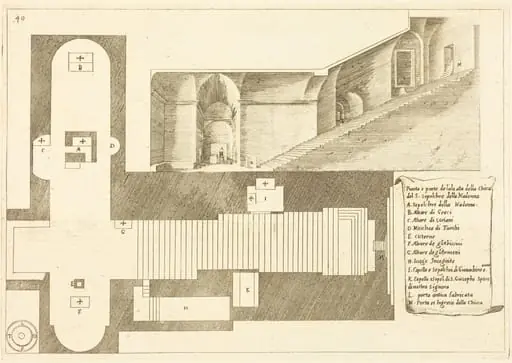 Plan and Part of the Elevation of the Church of the Holy Sepulchre of the Madonna
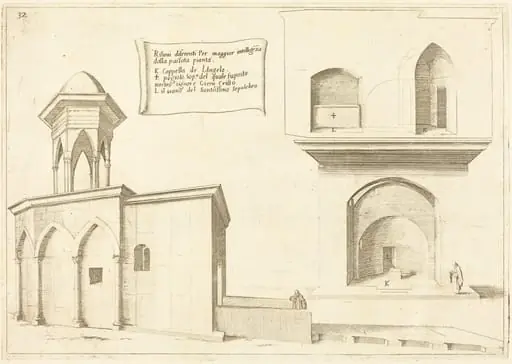 Elevation of the Church of the Holy Sepulchre
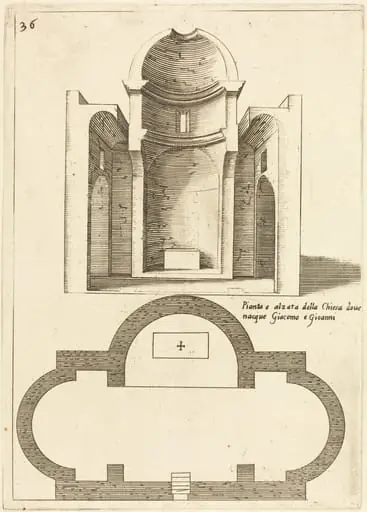 Plan and Elevation of the Church of Saints James and John
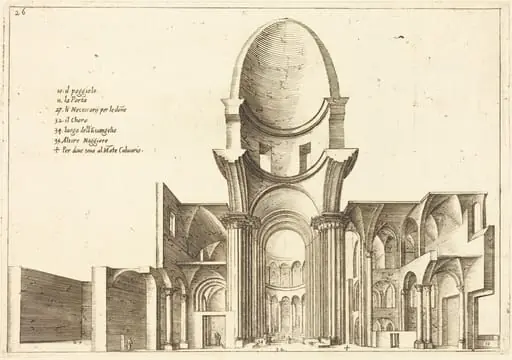 Cross-Section of a Church