Artwork
Entry of Monseigneur Henry de Lorraine, Marquis de Moy, under the Name of Pirandre
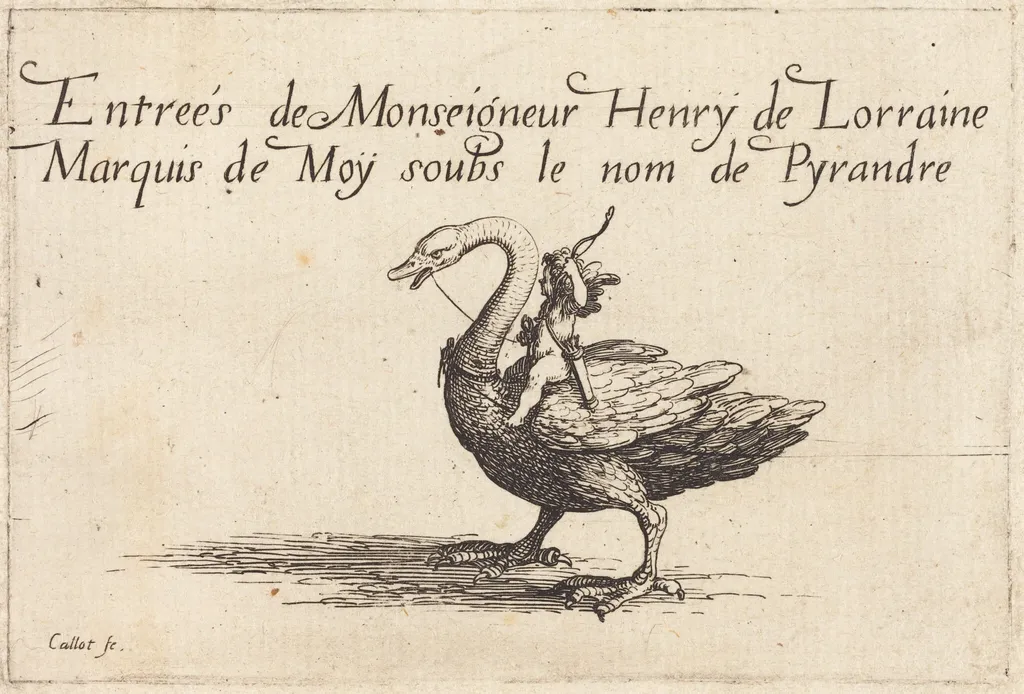
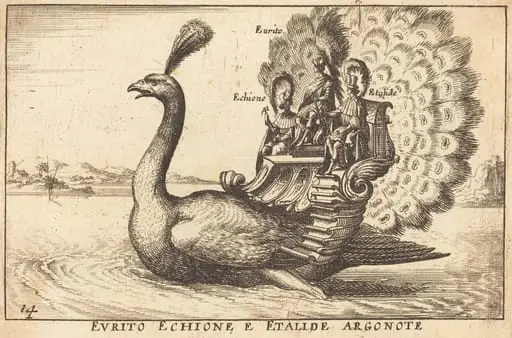
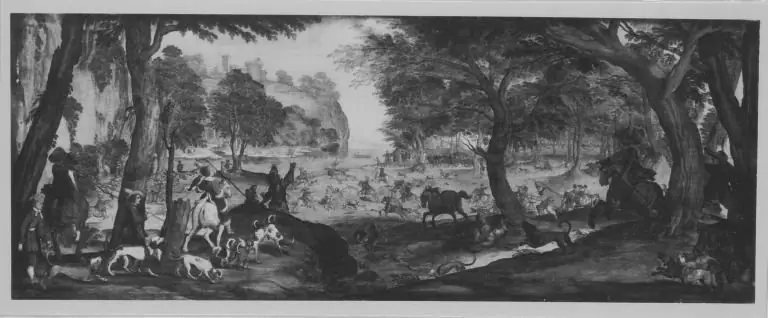
Entry of Monseigneur Henry de Lorraine, Marquis de Moy, under the Name of Pirandre is an ink print by the Baroque artist Jacques Callot. It dates from 1627 and is held in the collection of the National Gallery of Art.
About this work
Overview
Created in 1627, this etching forms the second of a six‑plate series titled *Entry of Monseigneur Henry de Lorraine, Marquis de Moy, under the Name of Pirandre*. Executed by Jacques Callot, a pre‑eminent printmaker of the Baroque era from the Duchy of Lorraine, the work records a formal court procession and exemplifies his prolific output, which exceeds fourteen hundred prints.
Subject & Meaning
The image depicts a ceremonial entry of the Marquis de Moy, a high‑ranking noble, into a public space. A swan, rendered in stark monochrome, stands on one leg in shallow water, its neck arched upward and wings slightly spread, serving as an emblematic stand‑in for the dignitary. The careful pose suggests both poise and a degree of stiffness, echoing the formal nature of the event.
Technique & Style
Callot employed a traditional etching process, incising the design into a copper plate that was later divided into six sections for printing. Acid biting created the fine, sharply defined lines that articulate the swan’s feathers and the rippling water, while the overall composition reflects the Baroque preference for detailed observation and dynamic movement within a controlled framework.
History & Provenance
The series was produced during Callot’s most active period in the early seventeenth century, when he was documenting contemporary courtly and civic spectacles. The plates were later cut into six separate pieces, a practice that facilitated individual handling and collection. The work now resides in the museum’s print department under accession number 1969.15.96‑101.
Context
Callot’s prints frequently juxtaposed scenes of aristocratic ceremony with depictions of soldiers, beggars, and rural landscapes, offering a comprehensive visual record of his time. This particular etching aligns with his broader interest in portraying public events, reinforcing his reputation as a chronicler of early‑modern French society.
Legacy
The series contributed to the development of narrative printmaking, influencing subsequent generations of artists who sought to combine documentary precision with expressive line work. Callot’s meticulous technique and thematic breadth cemented his status as a foundational figure in the evolution of European print art.
Artist & collection
Artist
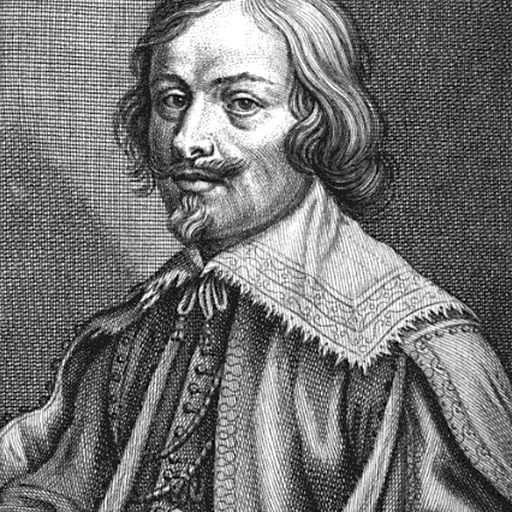
Jacques Callot was a baroque printmaker and draftsman from the Duchy of Lorraine.

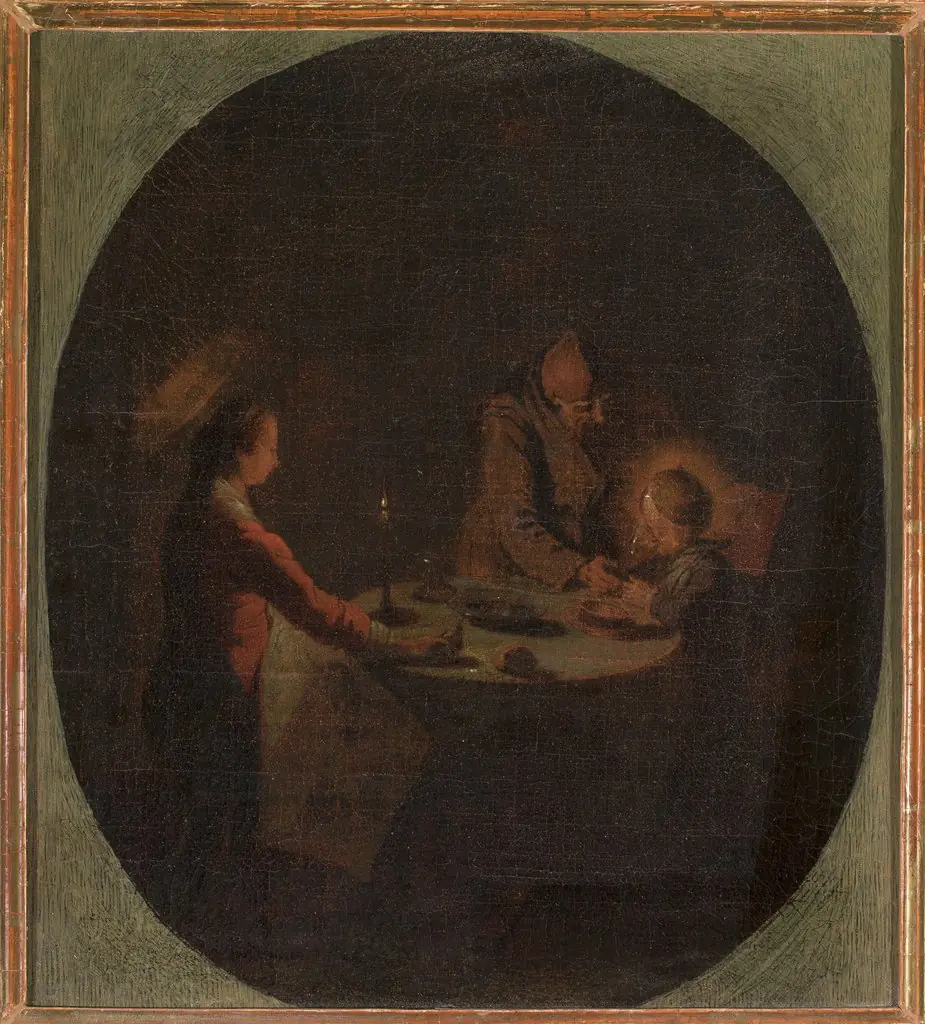 Holy Family at supper
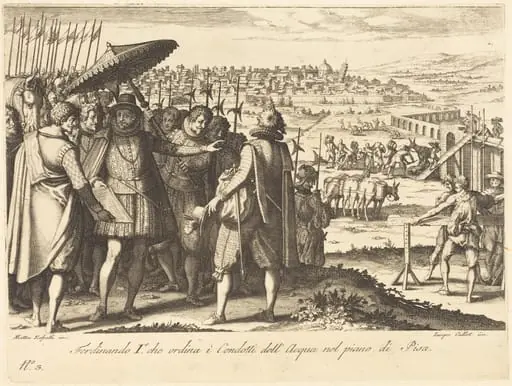 Restoration of the Aqueduct at Pisa
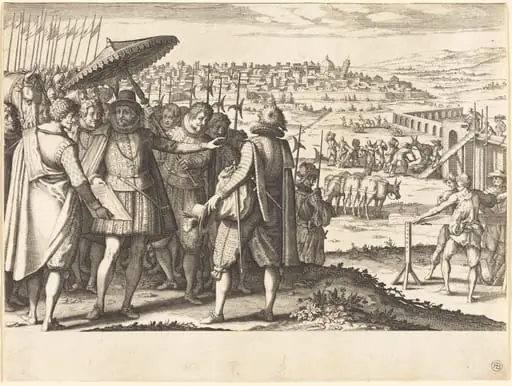 Restoration of the Aqueduct at Pisa
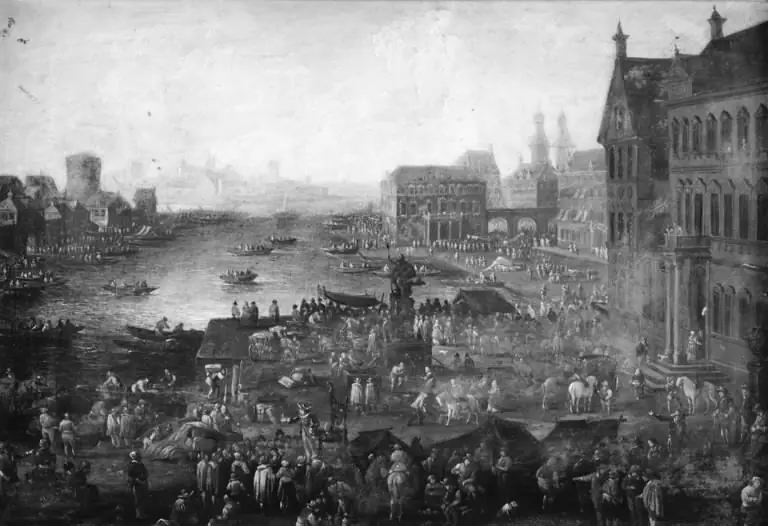 Square in Paris with Many Figures
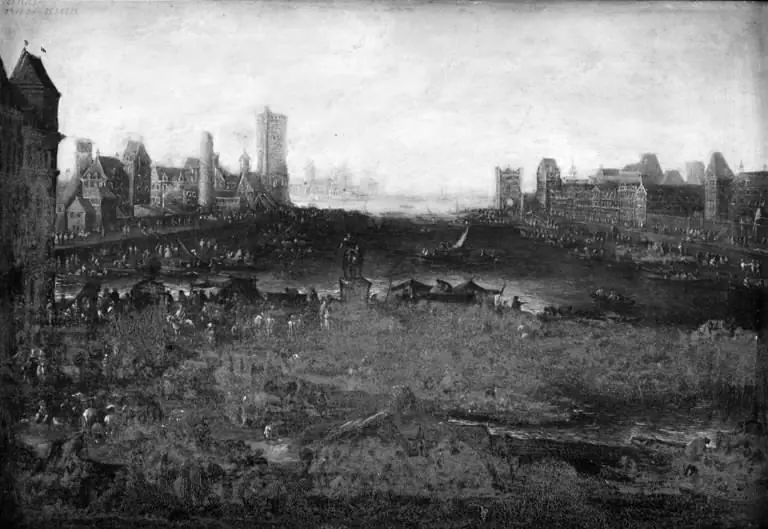 Square in Paris with Many Figures
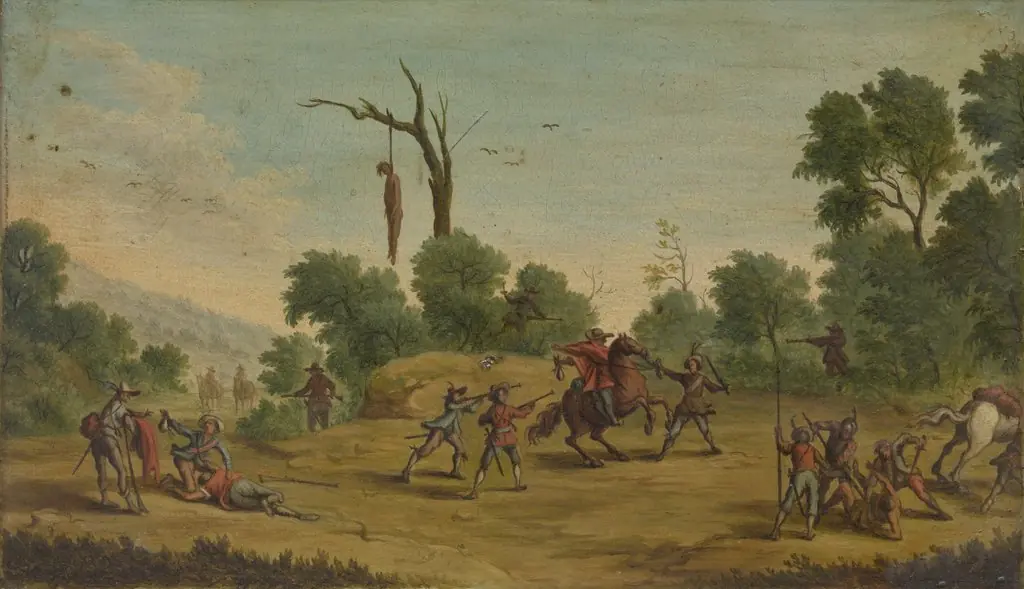 Horsemen Attacked by Robbers
 HOW WILL A COVERED PART BE CORRECTED?HOW WIKA A COVERED HEART DEED CORRECTED?
![Christ Walking on the Water [second plate], by Jacques Callot](https://artifactworldgallery.com/img/jacques-callot--christ-walking-on-the-water-second-plate--2069f3bfe4cb2126-w320.webp) Christ Walking on the Water [second plate]
Christ Walking on the Water [second plate]