Artwork
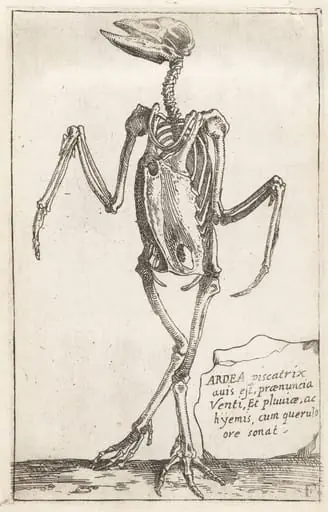
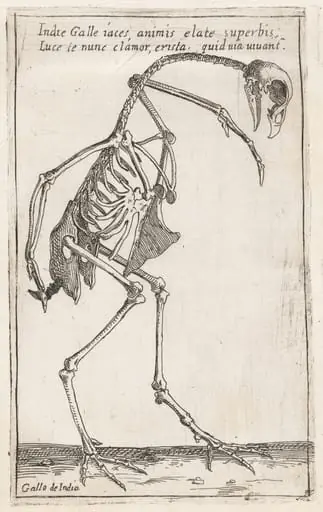
Skeleton of a Goose
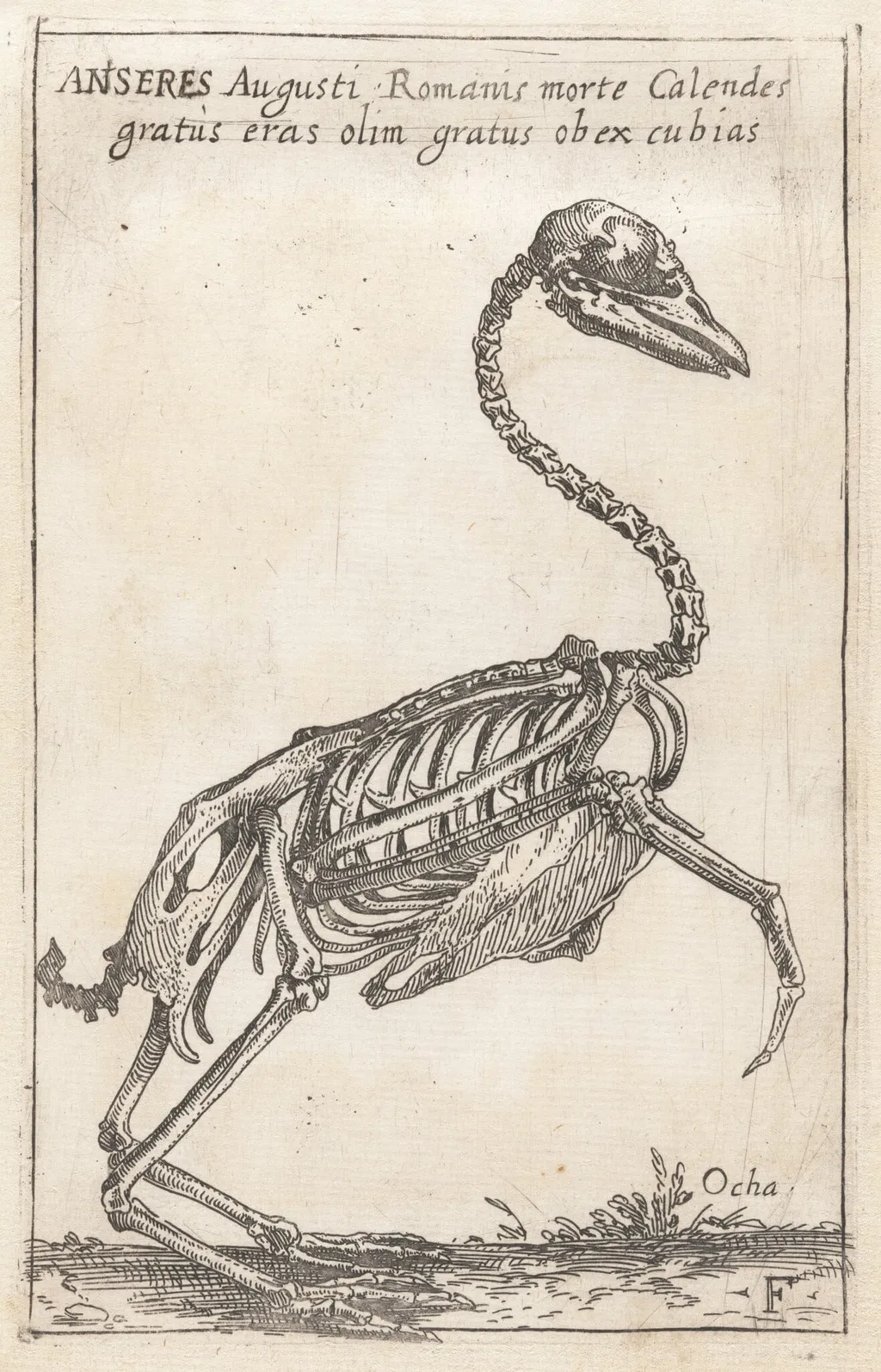
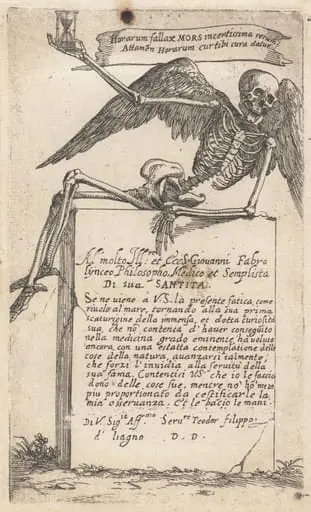
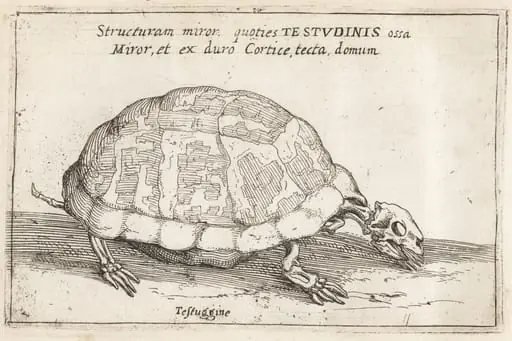
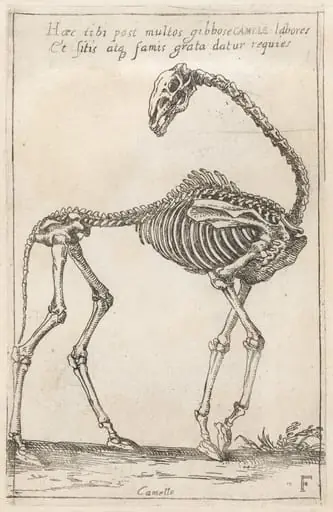
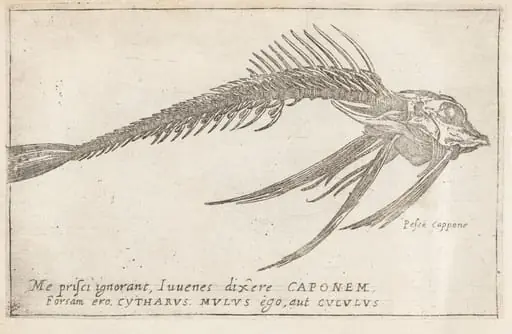
Skeleton of a Goose is an ink print by the Baroque artist Teodoro Filippo di Liagno. It dates from 1620 and is held in the collection of the National Gallery of Art.
About this work
Overview
The work belongs to a tradition of scientific illustration from the early 17th century, where anatomical accuracy was pursued with meticulous care.
Created in 1620 by Teodoro Filippo di Liagno, this etching depicts the skeletal remains of a goose rendered in fine black lines on laid paper. The work belongs to a tradition of scientific illustration from the early 17th century, where anatomical accuracy was pursued with meticulous care. It is part of the collection at the National Gallery of Art in Washington, D.C., preserved as an example of natural history printmaking.
Subject & Meaning
The image presents a goose skeleton standing on a patch of grass beside a body of water, its head turned sideways in a quiet, natural pose. Rather than a purely clinical dissection, the setting suggests a moment of observation in the wild, blending anatomical study with a sense of the bird’s former life. The composition invites contemplation of form, mortality, and the relationship between living creature and its remains.
Technique & Style
The artist employed etching, a printmaking method involving acid-bitten lines on a metal plate, to achieve delicate, precise detail. Each rib, joint, and feather socket is rendered with controlled engraving, reflecting the technical discipline of the period. The tonal range is limited to black ink on paper, emphasizing structure over texture, aligning with the era’s scientific aesthetic that prioritized clarity over ornamentation.
History & Provenance
The etching was produced in the early 1600s, a time when naturalists and artists collaborated to document the natural world with increasing precision. It entered the National Gallery of Art’s collection through established acquisitions of early modern prints, likely as part of a broader effort to preserve scientific imagery from the Renaissance and Baroque periods.
Context
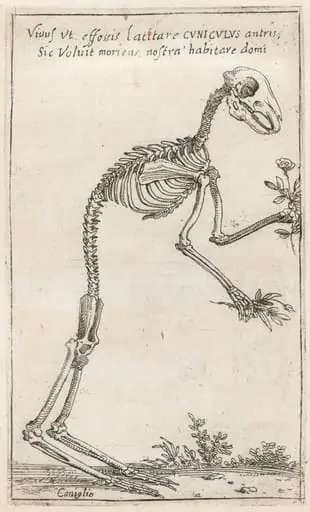
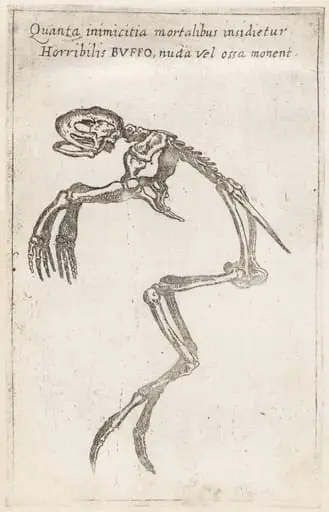
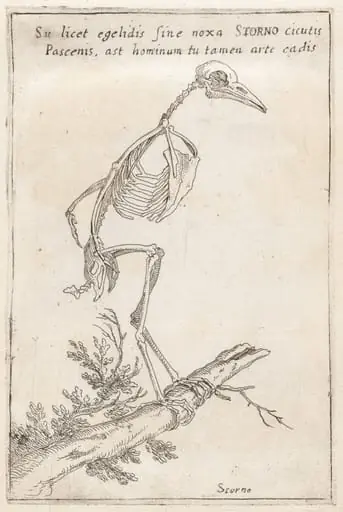
During the 17th century, anatomical studies expanded beyond human subjects to include animals, driven by growing interest in natural philosophy. Artists like Liagno worked alongside scholars to produce images that served both educational and observational purposes. This print reflects a broader movement to visually catalog nature, bridging art and emerging empirical science.
Legacy
Though not widely known today, the work stands as a quiet testament to the role of printmaking in early scientific documentation. Its survival and preservation highlight how artistic technique contributed to the visual language of natural history. It remains a reference point for understanding how observation and representation intersected in pre-modern science.
Artist & collection