Artwork
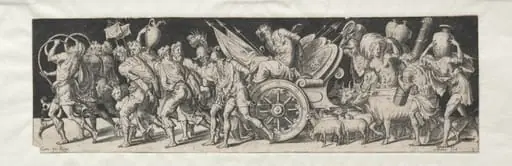
Entry of Monseigneur Henry de Lorraine, Marquis de Moy, under the Name of Pirandre
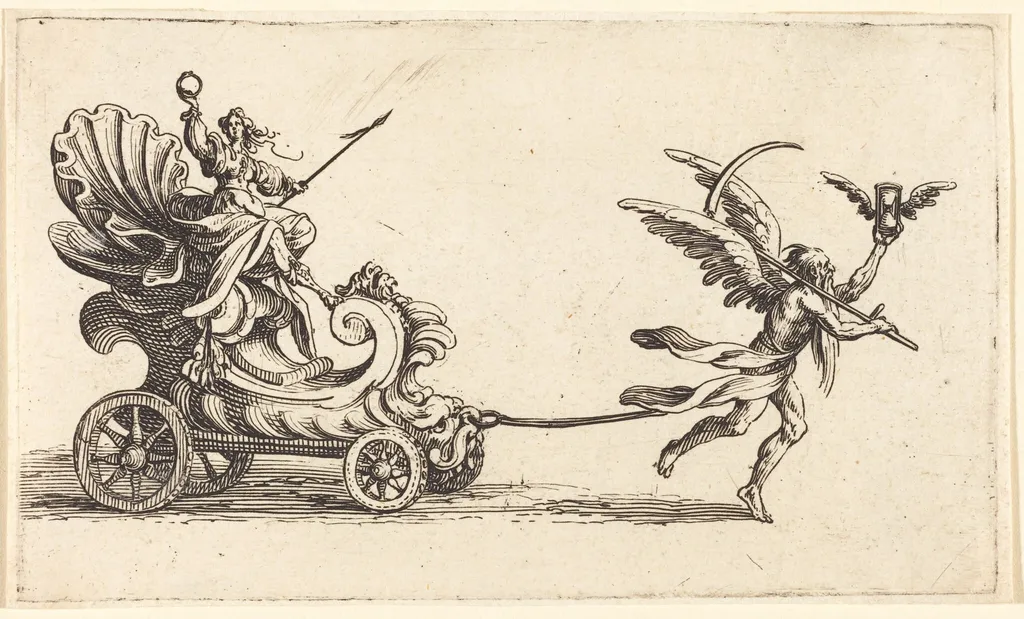
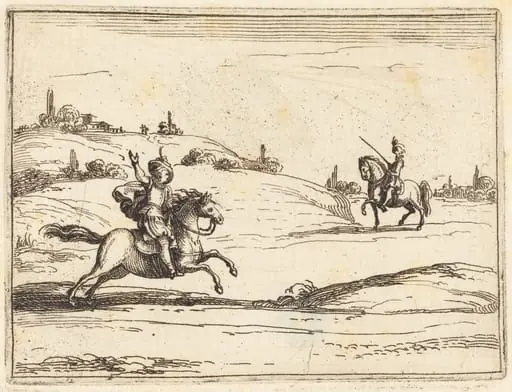
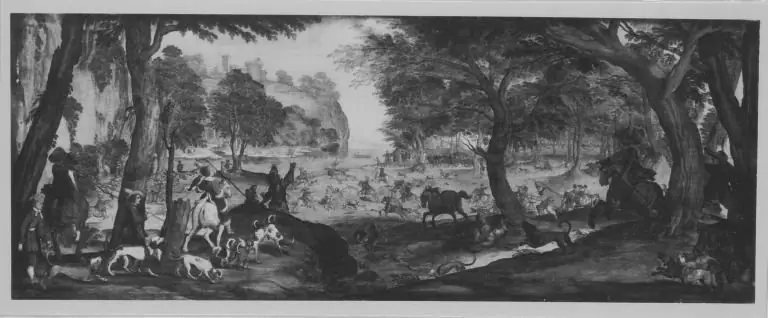
Entry of Monseigneur Henry de Lorraine, Marquis de Moy, under the Name of Pirandre is an ink print by the Baroque artist Jacques Callot. It dates from 1627 and is held in the collection of the National Gallery of Art.
About this work
Overview
The work is now physically divided, with each section held separately, reflecting a later intervention in its preservation history.
This etching, created in 1627 by Jacques Callot, is the fourth of six plates forming a single narrative sequence. Each fragment was originally part of a unified composition depicting the ceremonial entry of Henry de Lorraine, Marquis de Moy, into a city under the fictional persona of Pirandre. The work is now physically divided, with each section held separately, reflecting a later intervention in its preservation history.
Subject & Meaning
The scene portrays a noble procession, likely celebrating the arrival of Henry de Lorraine, who adopted the alias Pirandre for the occasion. The event blends real political presence with theatrical disguise, common in early 17th-century courtly rituals. Callot captures the ceremonial pageantry, emphasizing hierarchy and spectacle, while the fictional name suggests a performative dimension to aristocratic identity.
Technique & Style
Callot employed fine-line etching to render intricate details across a crowded composition. His mastery of the medium allowed for precise rendering of figures, horses, and architectural elements, with subtle tonal gradations achieved through controlled acid biting. Backgrounds are populated with smaller figures and structures, creating depth and a sense of lived environment without overwhelming the central narrative.
History & Provenance
The six plates were originally printed as a continuous sequence but were later separated, possibly for display or sale. The fragment now cataloged as 1969.15.99 was acquired by the museum in 1969. Its division reflects 19th-century practices of treating multi-plate works as individual collectibles, altering their original structural integrity while preserving their visual content.
Context
Callot’s etchings often documented the social and political rituals of Lorraine and neighboring courts. This series emerged during a period when noble families used public processions to assert status and legitimacy. The use of theatrical personas like Pirandre was a known device in courtly entertainment, blending real authority with symbolic performance in a culture deeply attuned to visual representation.
Legacy
Callot’s detailed etchings influenced generations of printmakers across Europe, particularly in their treatment of crowd scenes and urban settings. Though this series was fragmented, its individual plates remain important records of early modern ceremonial culture. They exemplify how printmaking served as both art and historical documentation, capturing transient events with enduring precision.
Artist & collection
Artist
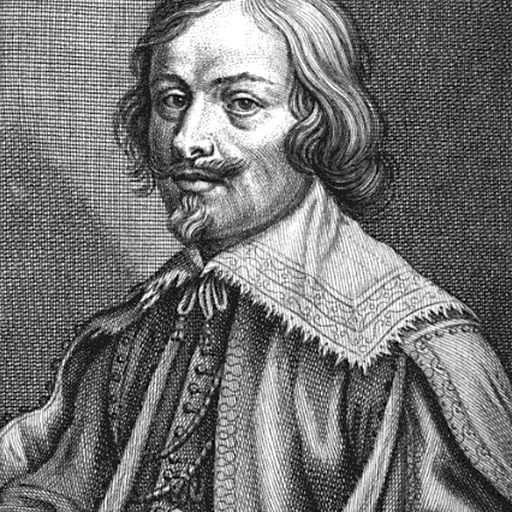
Jacques Callot was a baroque printmaker and draftsman from the Duchy of Lorraine.

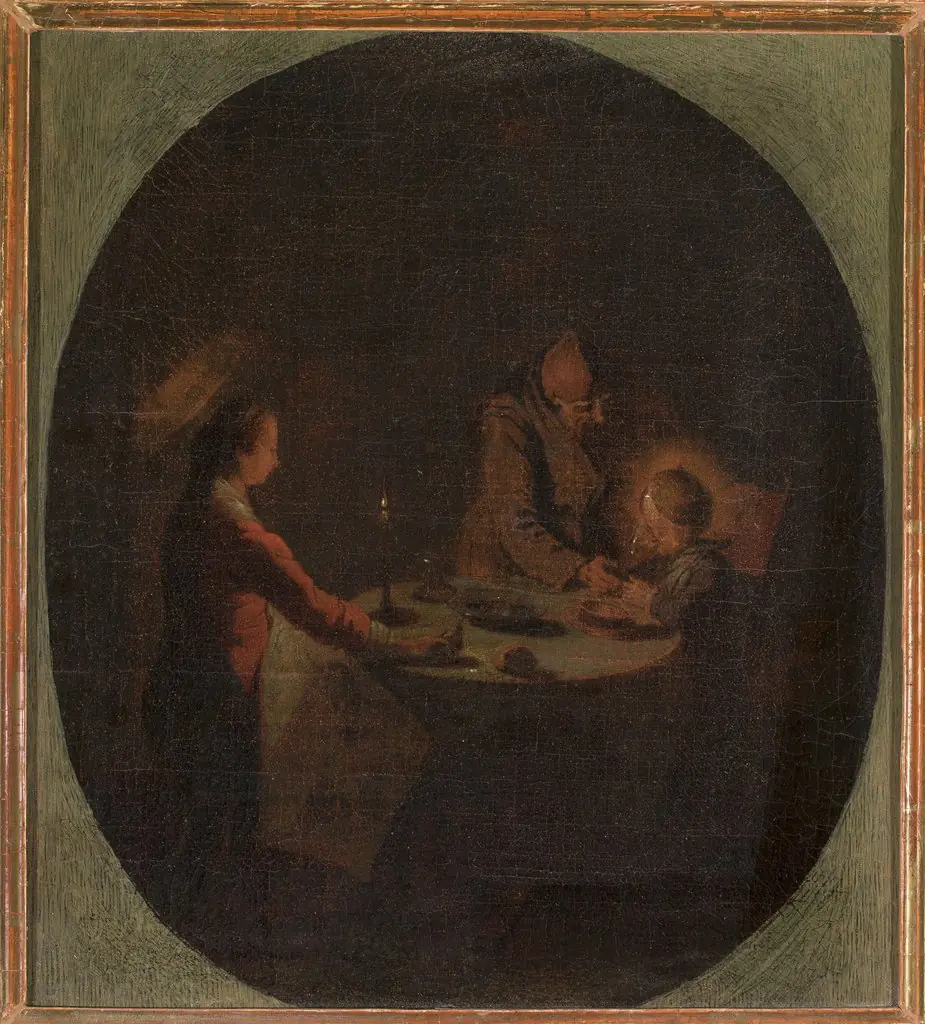 Holy Family at supper
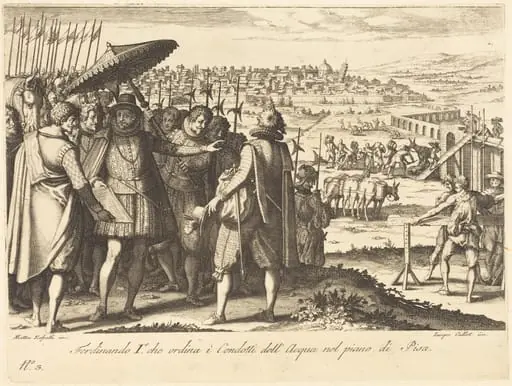 Restoration of the Aqueduct at Pisa
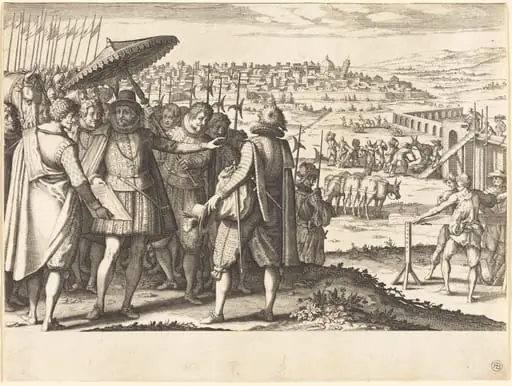 Restoration of the Aqueduct at Pisa
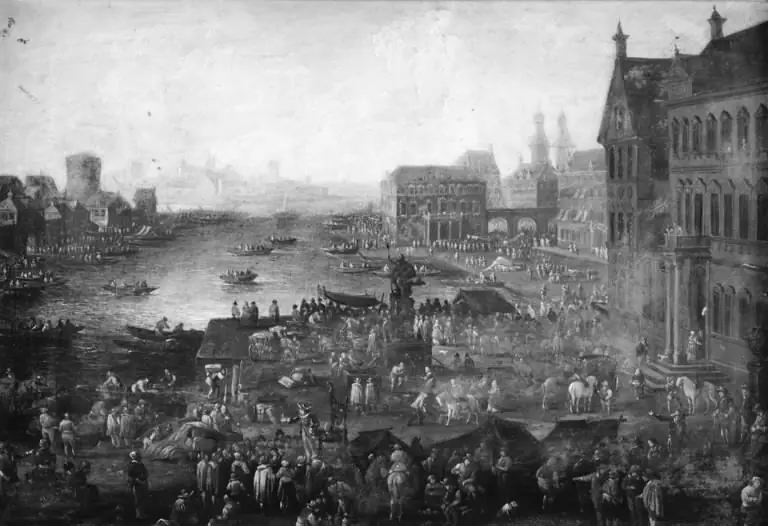 Square in Paris with Many Figures
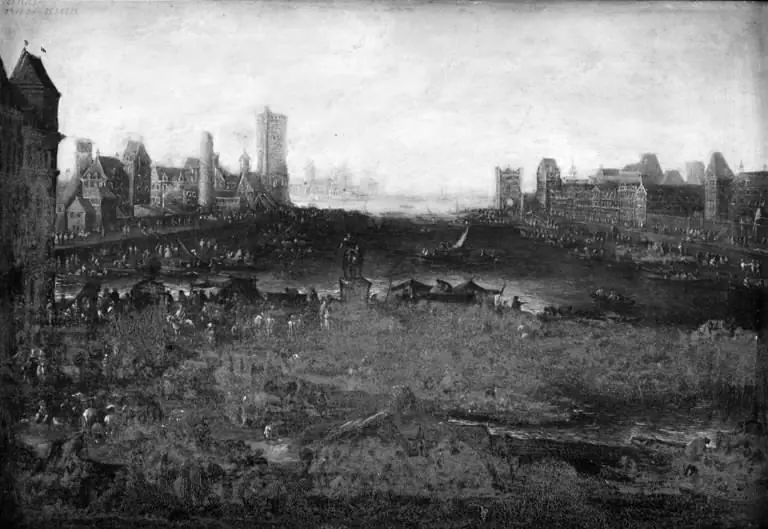 Square in Paris with Many Figures
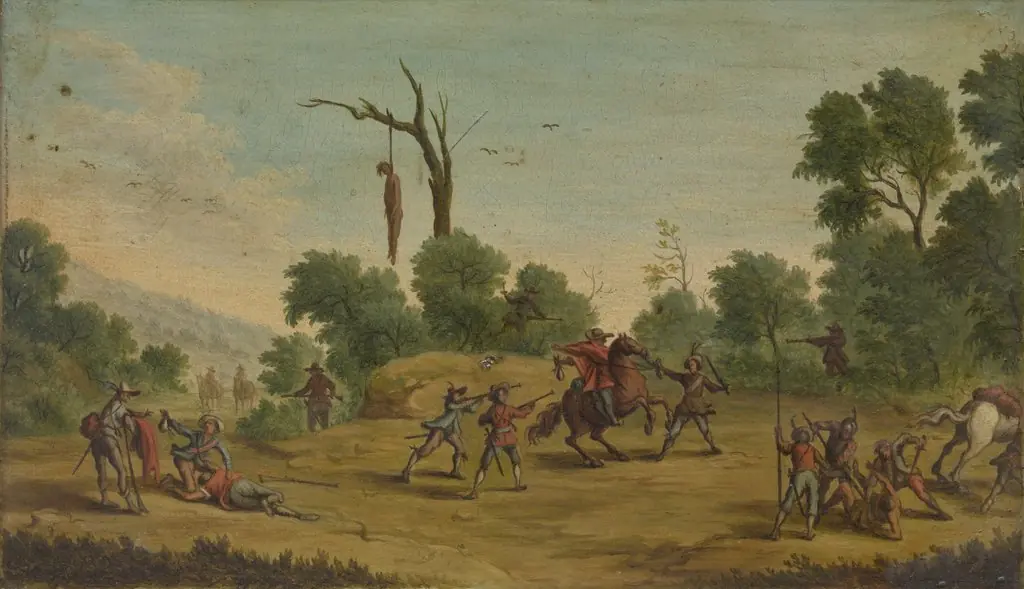 Horsemen Attacked by Robbers
 HOW WILL A COVERED PART BE CORRECTED?HOW WIKA A COVERED HEART DEED CORRECTED?
![Christ Walking on the Water [second plate], by Jacques Callot](https://artifactworldgallery.com/img/jacques-callot--christ-walking-on-the-water-second-plate--2069f3bfe4cb2126-w320.webp) Christ Walking on the Water [second plate]
Christ Walking on the Water [second plate]