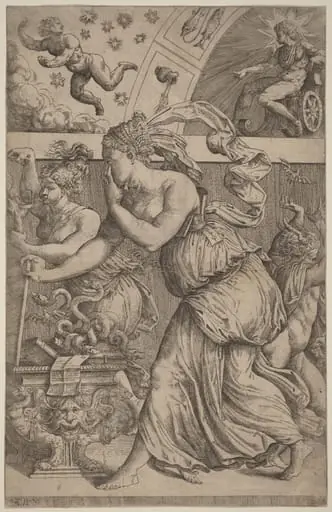
Artwork
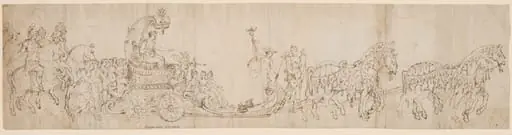
Juno in a Chariot Pulled by Peacocks
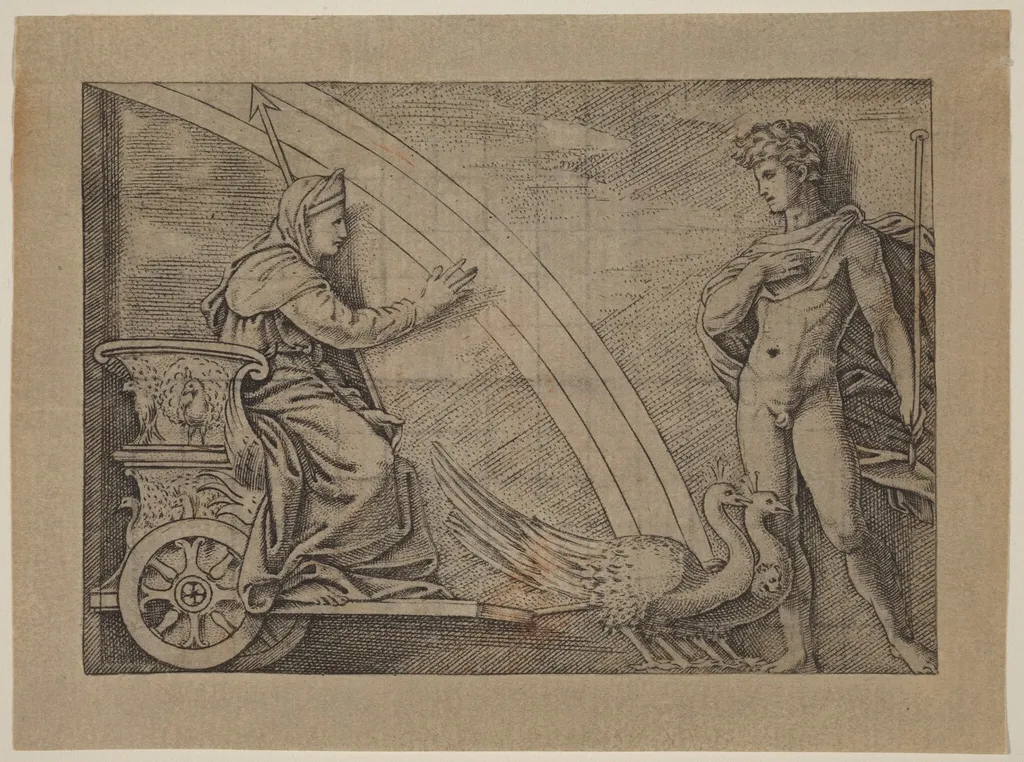
Juno in a Chariot Pulled by Peacocks is an ink print by the Renaissance artist Italian 16th Century. It dates from 1550 and is held in the collection of the National Gallery of Art.
About this work
Overview
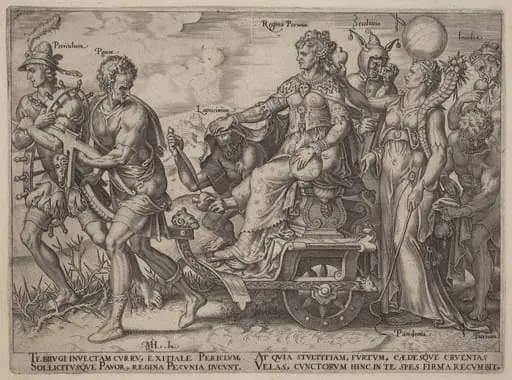
The print, titled *Juno in a Chariot Pulled by Peacocks*, is an engraving that presents a mythological tableau. Central to the composition is a regal figure seated in an ornate chariot, drawn by two peacocks, while a second, staff‑bearing figure stands nearby, a peacock at his feet. The background is rendered with undulating, wave‑like lines that suggest air or water.
Subject & Meaning
The seated rider is identified as Juno, the Roman goddess of marriage and sovereignty, signified by her crown and sumptuous robes. The accompanying figure, likely a attendant or messenger, holds a staff that reinforces his subordinate role. The choice of peacocks—birds traditionally linked to Juno—emphasizes themes of splendor, protection, and the divine authority of the goddess.
Technique & Style
Executed in engraving, the image relies on finely incised lines to model volume and convey texture. Cross‑hatching creates tonal gradations, while parallel strokes define the flowing drapery and the feathered plumage of the peacocks. The wavy background pattern is achieved through rhythmic line work, imparting a sense of movement and atmospheric depth without the use of color.
History & Provenance
The print originates from a period when mythological subjects were popular in European graphic arts, though the specific date and artist remain undocumented in the available record. As a printed work, multiple impressions could have circulated, allowing the image to reach a broader audience than a unique painting would have permitted.
Artist & collection

Artist
A 16th-century Italian sculptor left us small bronze works in dark brown and gold.