Artwork
Combats and Triumphs No. 2: Triumphant March
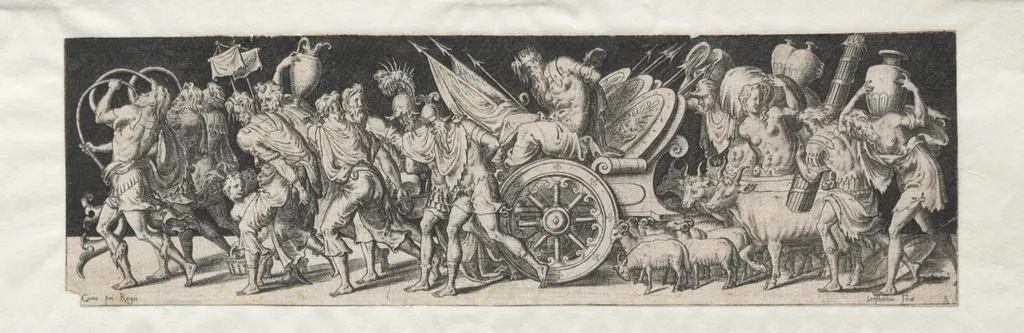
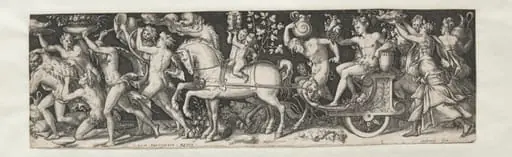
Combats and Triumphs No. 2: Triumphant March is a print by the Renaissance artist Etienne Delaune. It dates from 1561 and is held in the collection of the Cleveland Museum of Art. Created around 1561 by French engraver Étienne Delaune, this print is part of a series titled Combats and Triumphs.
About this work
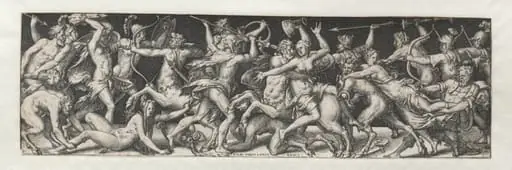
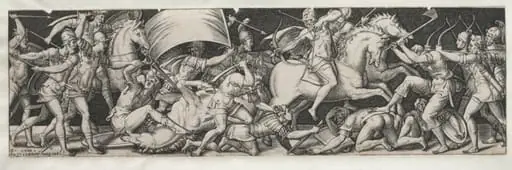
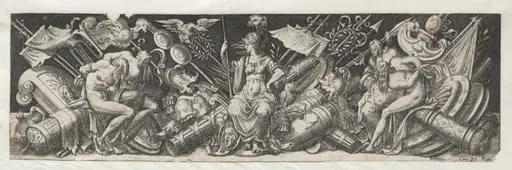
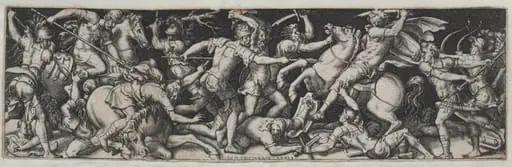
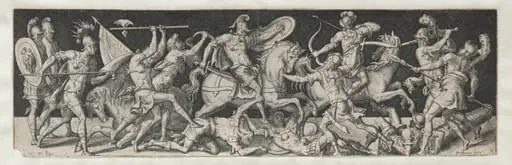
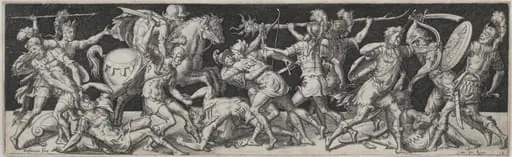
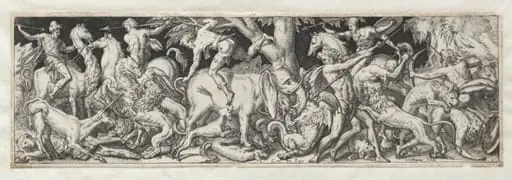
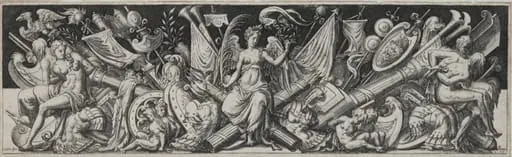
This engraving shows soldiers marching in a perfect line. Their armor gleams. A leader rides ahead on a horse. A crowd cheers in the background.
Delaune made prints, not paintings. This one’s about France’s wars of the 1500s. The soldiers look disciplined, almost like a parade.
See how the light and shadow play across their armor? That’s called chiaroscuro — it makes the scene feel real.
Look up Etienne Delaune (French, 1518/19-c. 1583).
Overview
Executed in fine line engraving, it depicts a ceremonial military procession, reflecting the visual language of Renaissance pageantry.
Created around 1561 by French engraver Étienne Delaune, this print is part of a series titled Combats and Triumphs. Executed in fine line engraving, it depicts a ceremonial military procession, reflecting the visual language of Renaissance pageantry. The work resides in The Cleveland Museum of Art, where it exemplifies Delaune’s mastery of printmaking over painting, a common practice among Northern European artists of the period.
Subject & Meaning
The scene portrays a disciplined march of armored soldiers, led by a mounted commander, with onlookers lining the periphery. Though not tied to a specific historical event, the imagery evokes the ideals of order and state power in mid-16th-century France. The emphasis on uniformity and ceremonial movement suggests a celebration of military authority, possibly commissioned to reinforce royal prestige during a time of internal conflict.
Technique & Style
Delaune employed precise engraving to render intricate details of armor, fabric, and architecture. He used chiaroscuro—delicate contrasts of light and shadow—to model forms and suggest depth, enhancing the three-dimensionality of the figures. The linear precision and rhythmic repetition of soldiers reflect his training in goldsmithing and his familiarity with classical motifs, blending realism with stylized grandeur.
History & Provenance
The print was produced during Delaune’s active years in Paris, where he worked for royal patrons and circulated designs across Europe. Its survival in good condition reflects its value as a collectible print. Acquired by The Cleveland Museum of Art in the 20th century, it remains one of the better-preserved examples of his graphic work, offering insight into the dissemination of military iconography in Renaissance print culture.
Context
Produced amid the French Wars of Religion, the image aligns with efforts by the monarchy to project stability and unity through visual propaganda. Similar processional themes appeared in tapestries and medals of the era, reinforcing state authority. Delaune’s prints, widely distributed, served as both artistic expression and political messaging, bridging elite culture and broader public perception of power.
Legacy
Delaune’s engravings influenced later generations of printmakers through their technical rigor and compositional clarity. While not widely known today, his work contributed to the development of narrative print series in Northern Europe. Combats and Triumphs remains a key reference for understanding how military imagery was standardized and circulated in the 16th century, shaping visual conventions of discipline and leadership.
Artist & collection