Artwork
Triumphal Procession

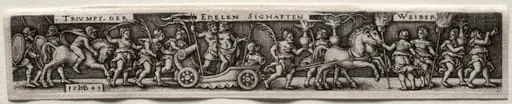
Triumphal Procession is an ink print by the Renaissance artist Sebald Beham. It dates from 1529 and is held in the collection of the National Gallery of Art.
About this work
Overview
Triumphal Procession is an engraving created by Sebald Beham around 1529. It is a characteristic example of the artist's work, known for its intricate detail and miniature scale.
Subject & Meaning
The engraving depicts a ceremonial procession featuring a woman in a chariot, accompanied by horsemen, flag-waving figures, and shield bearers. The scene is densely populated with people and animals, suggesting a celebratory or triumphal event.
Technique & Style
Beham's use of cross-hatching, achieved through tiny parallel lines, creates a sense of depth and texture in the engraving. The contrast between the dark background and the white lines of the figures adds to the overall visual effect, characteristic of Beham's meticulous engraving technique.
History & Provenance
Sebald Beham was a German painter and printmaker active in the early 16th century, associated with the group known as the 'Little Masters.' He worked in Nuremberg and Frankfurt, producing small but highly detailed prints that contributed to the flourishing of German printmaking after Albrecht Dürer.
Artist & collection
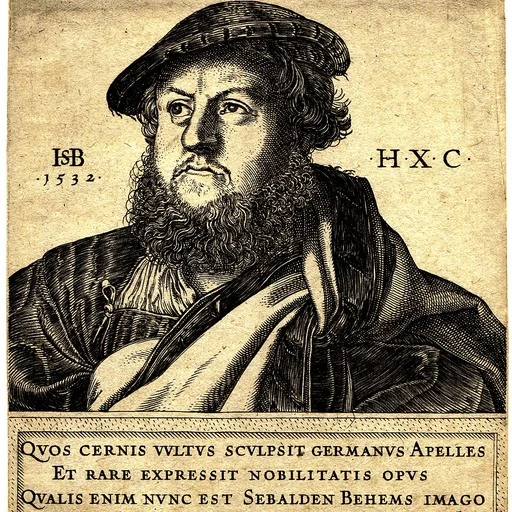
Artist
Sebald Beham (1500–1550) was a German painter and printmaker, mainly known for his very small engravings.


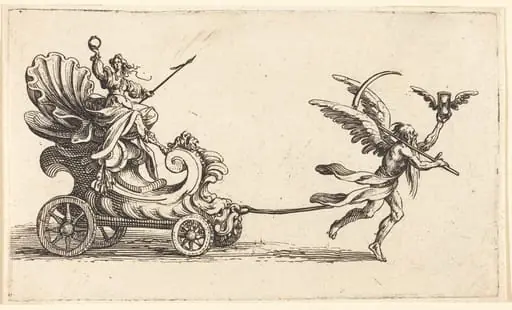 Entry of Monseigneur Henry de Lorraine, Marquis de Moy, under the Name of Pirandre
 The Triumph of Women
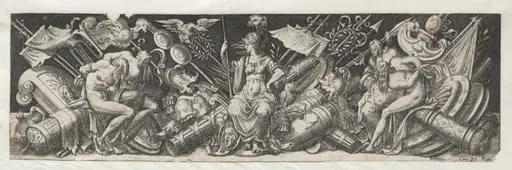 Combats and Triumphs No. 1
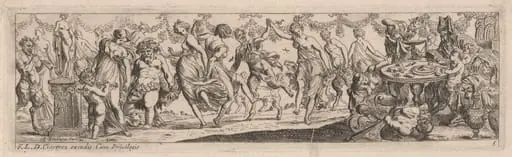 Dancing Nymphs and Satyrs
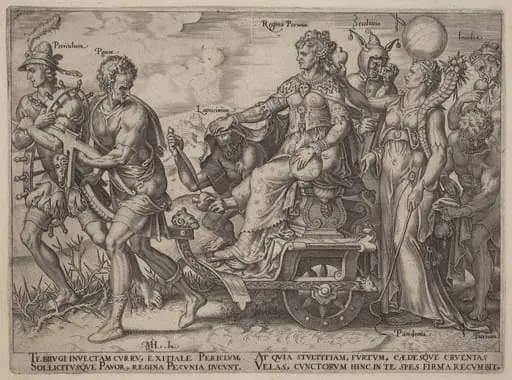 Dangers and Vices Accompanying Wealth
 Putti and Satyrs Shooting Arrows
 Combats and Triumphs No. 2: Triumphant March
 Woman Whipping a Satyr
 Triumph of the Women