Artwork
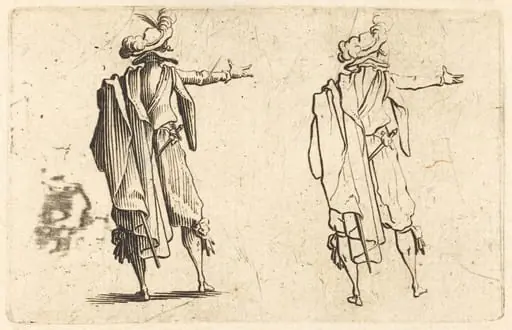
Man seen from Behind with His Right Arm Extended
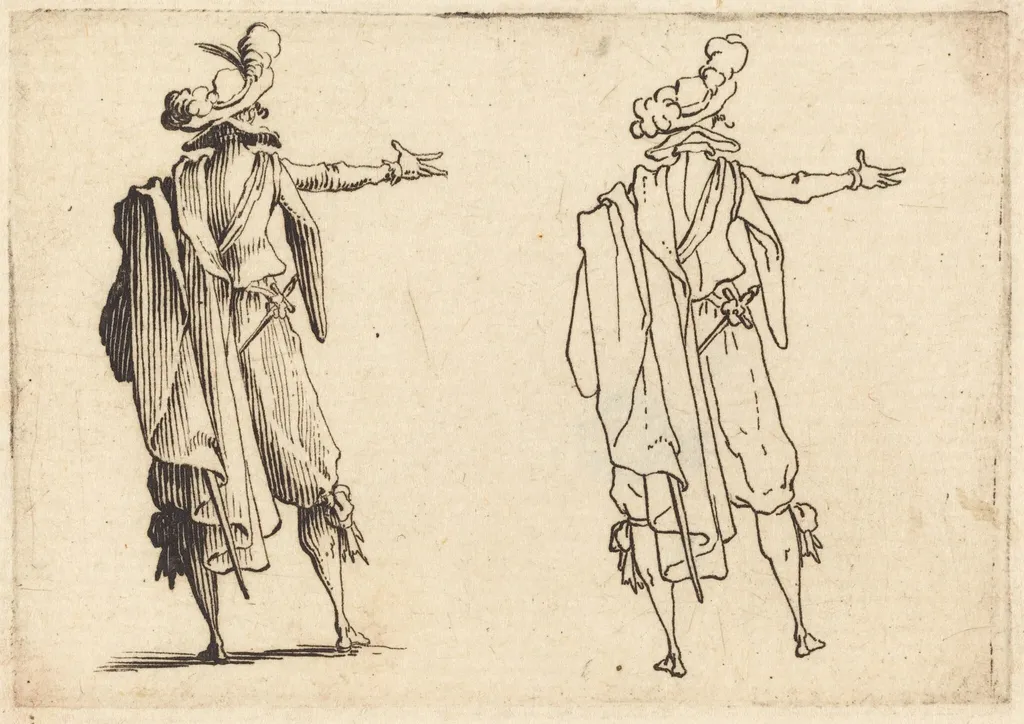
Man seen from Behind with His Right Arm Extended is an ink print by the Baroque artist Jacques Callot. It dates from 1617 and is held in the collection of the National Gallery of Art.
About this work
Overview
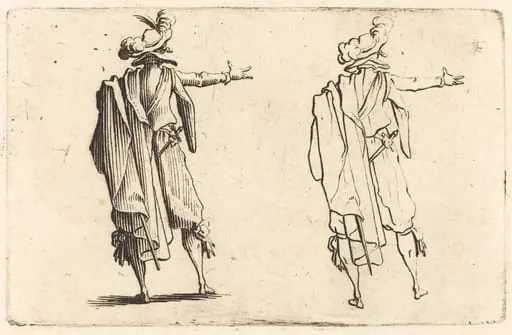
Created around 1617 by Jacques Callot, this etching on laid paper captures a pair of figures viewed from behind, their arms extended outward.
Created around 1617 by Jacques Callot, this etching on laid paper captures a pair of figures viewed from behind, their arms extended outward. Executed with fine, incised lines, the work reflects Callot’s interest in human posture and movement. As a prolific printmaker from Lorraine, he used etching to explore everyday gestures, often with subtle humor or theatricality. This piece belongs to a larger series of figure studies that prioritize observation over narrative.
Subject & Meaning
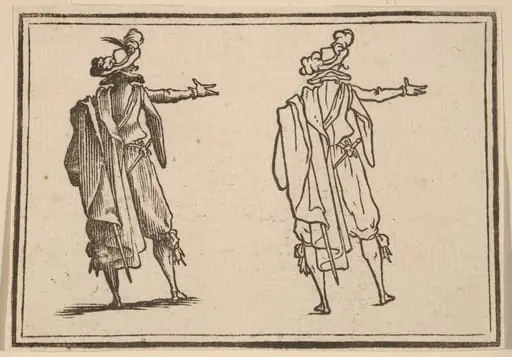
The two men, dressed in long, voluminous coats with wide sleeves and tilted hats, appear in a moment of exaggerated motion. Their outstretched arms and flaring garments suggest a playful, almost caricatured stance—possibly mimicking a gesture of surprise or theatrical display. Callot does not assign a specific story, but invites viewers to consider the absurdity of posture and costume in daily life, treating the human form as both subject and spectacle.
Technique & Style
Callot employed etching to achieve sharp, linear precision, using acid to bite fine grooves into a metal plate. The scratchy, controlled lines define fabric folds and hat brims with rhythmic energy, emphasizing texture and volume. The use of laid paper enhances the tonal contrast, allowing ink to settle in the grooves and create depth. His technique prioritizes draftsmanship over painterly effects, revealing the mechanics of clothing and posture through line alone.
History & Provenance
This print is one of over 1,400 etchings produced by Callot during his career, many of which circulated widely across Europe. While the exact provenance of this specific impression is undocumented, it aligns with his early period in Florence and Paris, where he refined his figure studies. Such works were often collected by connoisseurs and used as references by other artists, contributing to the dissemination of his observational style.
Context
In early 17th-century Europe, printmaking flourished as a medium for both artistic experimentation and social documentation. Callot’s focus on ordinary figures—soldiers, peasants, jesters—reflected a broader interest in human types beyond religious or mythological subjects. His studies of posture and costume were part of a growing trend toward naturalism, influenced by contemporary anatomical inquiry and the rise of secular imagery in print culture.
Legacy
Callot’s figure studies, including this etching, influenced later generations of draftsmen and printmakers through their emphasis on direct observation and expressive line. His technical innovations in etching, particularly in rendering texture and movement, became foundational for artists like Rembrandt and Goya. Though modest in scale, these works helped redefine printmaking as a vehicle for intimate, nuanced portrayals of the human condition.
Artist & collection
Artist
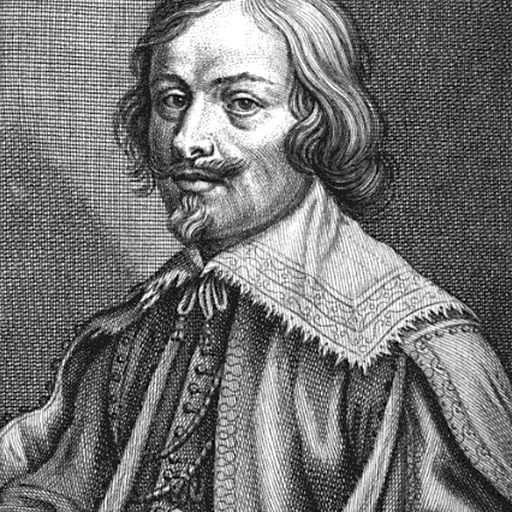
Jacques Callot was a baroque printmaker and draftsman from the Duchy of Lorraine.

 Holy Family at supper
 Restoration of the Aqueduct at Pisa
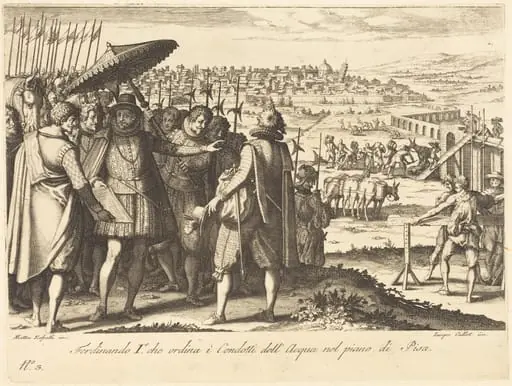
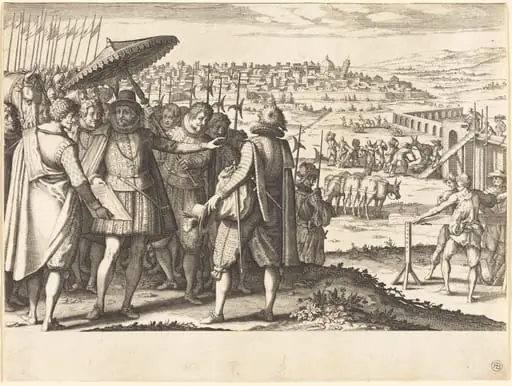 Restoration of the Aqueduct at Pisa
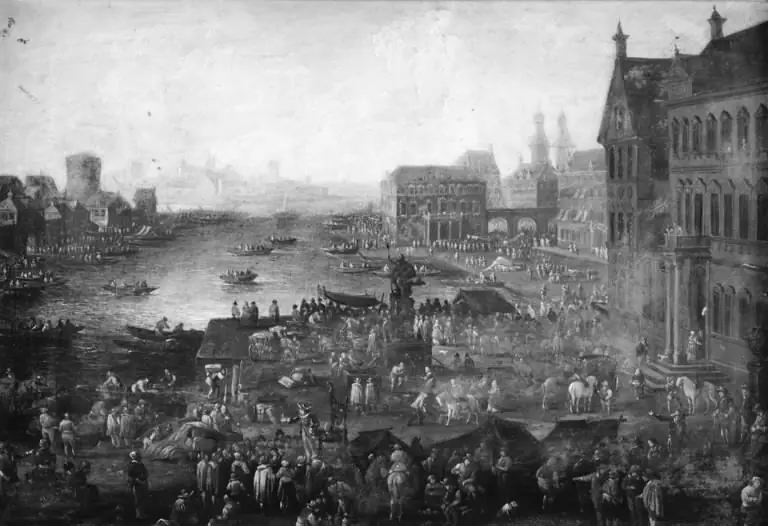 Square in Paris with Many Figures
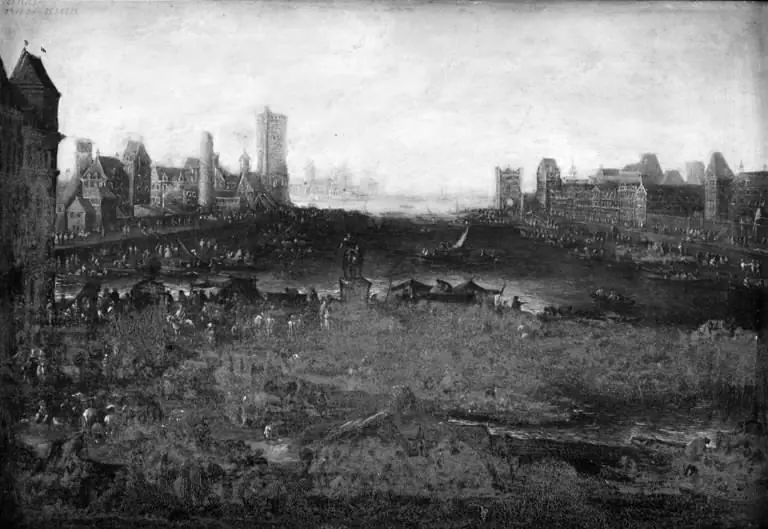 Square in Paris with Many Figures
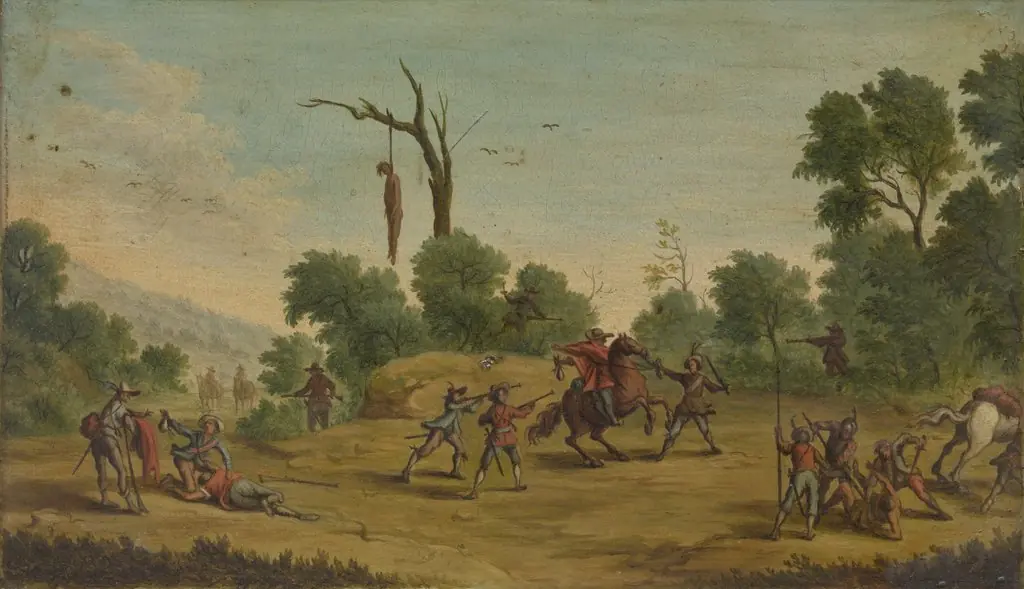 Horsemen Attacked by Robbers
 HOW WILL A COVERED PART BE CORRECTED?HOW WIKA A COVERED HEART DEED CORRECTED?
![Christ Walking on the Water [second plate], by Jacques Callot](https://artifactworldgallery.com/img/jacques-callot--christ-walking-on-the-water-second-plate--2069f3bfe4cb2126-w320.webp) Christ Walking on the Water [second plate]
Christ Walking on the Water [second plate]
 Man seen from Behind with His Right Arm Extended
 Man seen from Behind with His Right Arm Extended
 Man Seen from Behind with His Right Arm Extended
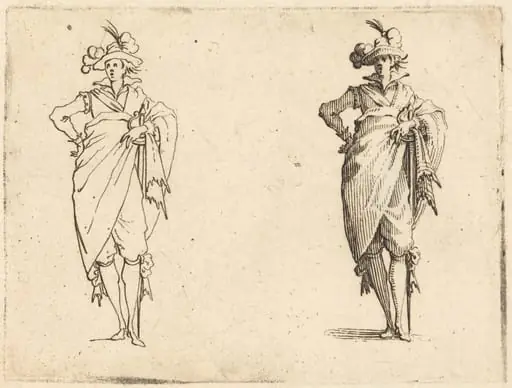 Gentleman Viewed from the Front with Hand on Hip
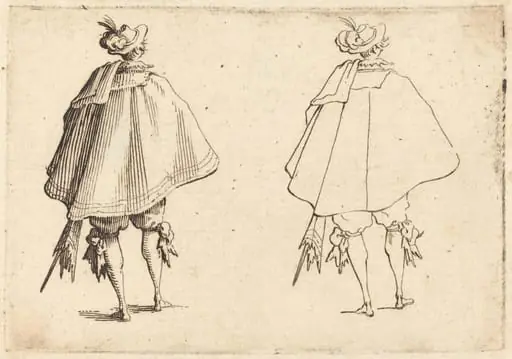 Gentleman in Large Mantle, Seen from Behind
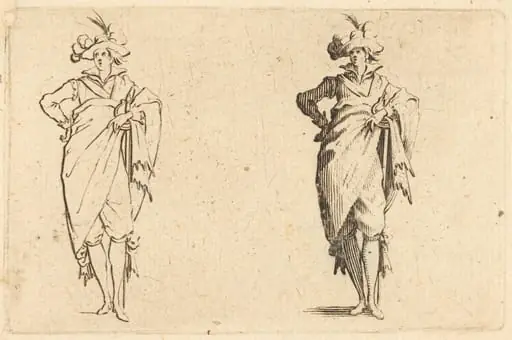 Gentleman Viewed from the Front with Hand on Hip
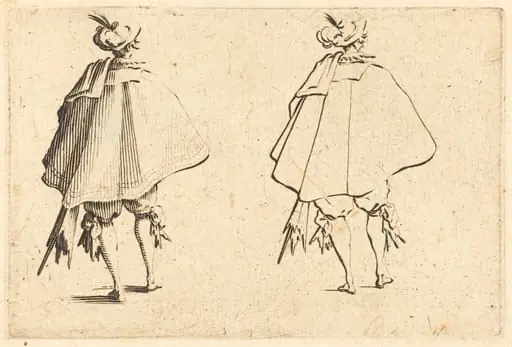 Gentleman in Large Mantle, Seen from Behind
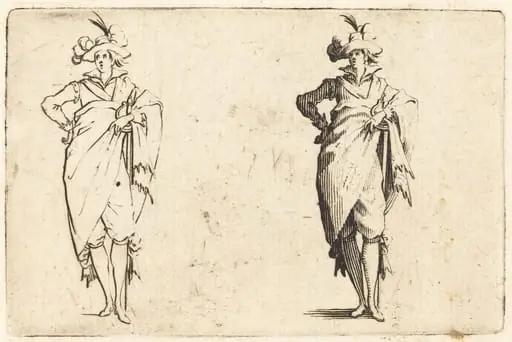 Gentleman Viewed from the Front with Hand on Hip
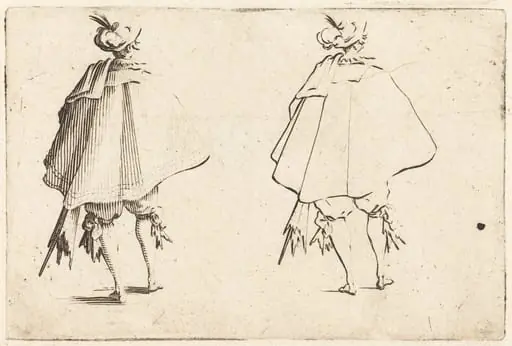 Gentleman in Large Mantle, Seen from Behind
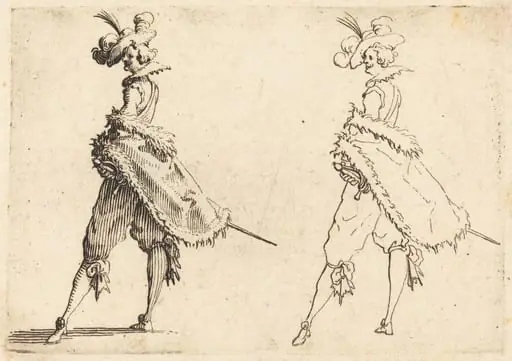 Gentleman Viewed from the Side
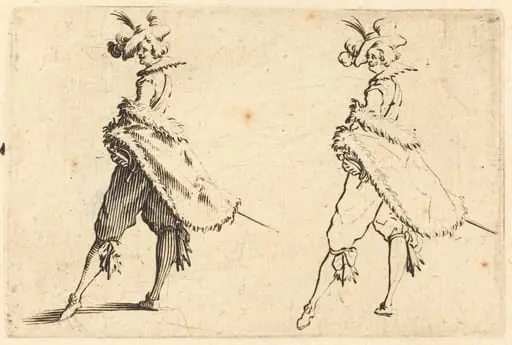 Gentleman Viewed from the Side
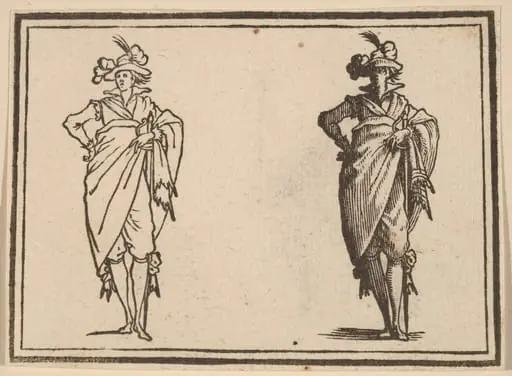 Gentleman Viewed from the Front with Hand on Hips