Artwork
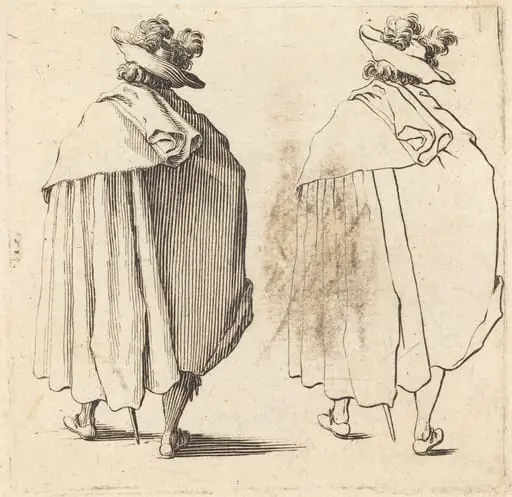
Man seen from Behind with His Right Arm Extended
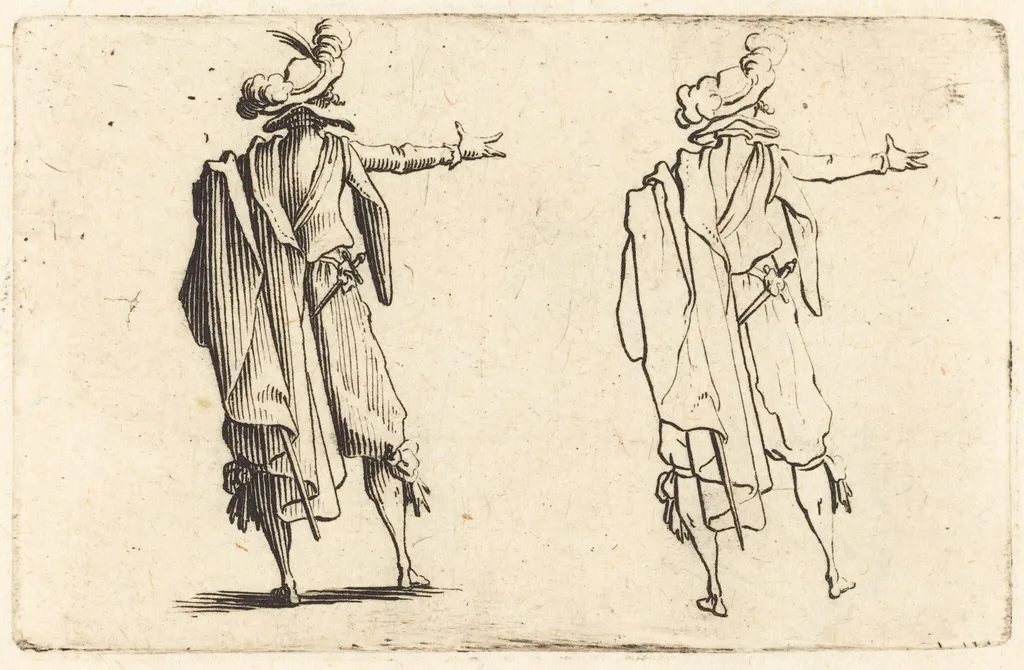
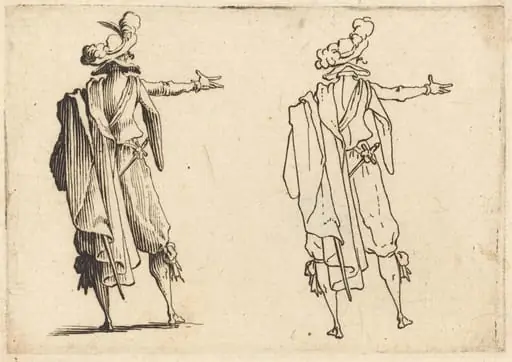
Man seen from Behind with His Right Arm Extended is an ink print by the Baroque artist Jacques Callot. It dates from 1622 and is held in the collection of the National Gallery of Art.
About this work
Overview
As part of Callot’s extensive printmaking practice, the work exemplifies his interest in human form and everyday presence.
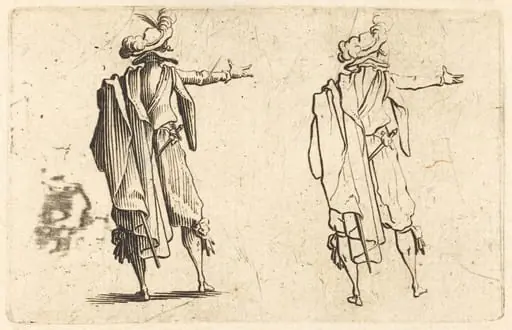
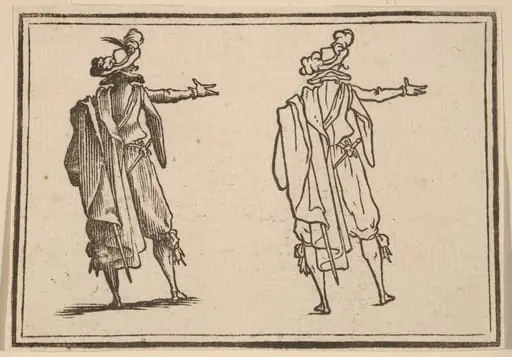
Created around 1622 by Jacques Callot, this etching on laid paper captures two figures viewed from behind, their arms extended in a gesture that suggests both pose and motion. As part of Callot’s extensive printmaking practice, the work exemplifies his interest in human form and everyday presence. Unlike finished paintings, the piece retains the immediacy of a sketch, rendered with deliberate roughness and tactile line work that emphasizes process over polish.
Subject & Meaning
The two figures, dressed in elaborate 17th-century attire with ruffled collars, voluminous sleeves, and long, folded coats, appear as studies in posture and costume rather than narrative characters. Their mirrored stances—facing opposite directions—suggest a deliberate compositional balance. The lack of facial detail shifts focus to bodily gesture and dress, hinting at observations of courtly behavior or theatrical performance, common subjects in Callot’s broader documentation of social life.
Technique & Style
Callot employed etching on a metal plate, using acid to bite fine lines into the surface, which were then inked and pressed onto laid paper. The resulting image features a grainy, scratchy texture, with uneven lines that convey spontaneity. Rather than smoothing details, he preserved the hand’s movement, allowing the medium’s inherent variability to enhance the sense of immediacy. This approach reflects his mastery of etching’s potential for expressive, rather than merely reproductive, mark-making.
History & Provenance
This work originates from Callot’s prolific output during his time in Florence and Paris, where he produced over 1,400 prints. While the specific provenance of this sheet is undocumented, it aligns with his habit of creating independent figure studies alongside larger narrative series. Such drawings were likely kept as references or circulated among patrons and fellow artists, serving as both artistic exercises and records of contemporary dress and gesture.
Context
In early 17th-century Europe, printmaking offered artists a means to explore subjects beyond religious or mythological themes. Callot, working in a period rich with visual documentation, turned to ordinary people and their attire as worthy subjects. His focus on costume and posture reflects broader interests in social observation, influenced by the growing interest in human behavior and material culture across courtly and urban circles.
Legacy
Callot’s figure studies, including this etching, contributed to the elevation of printmaking as a medium for personal expression and observational art. His loose, textured lines influenced later draftsmen and printmakers who valued immediacy over finish. Though not widely exhibited in his lifetime as a standalone work, such studies became foundational to understanding his method and the evolving role of the sketch in artistic practice.
Artist & collection
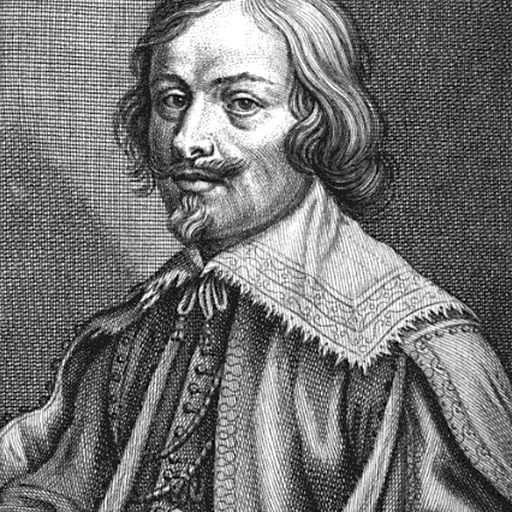
Artist
Jacques Callot was a baroque printmaker and draftsman from the Duchy of Lorraine.

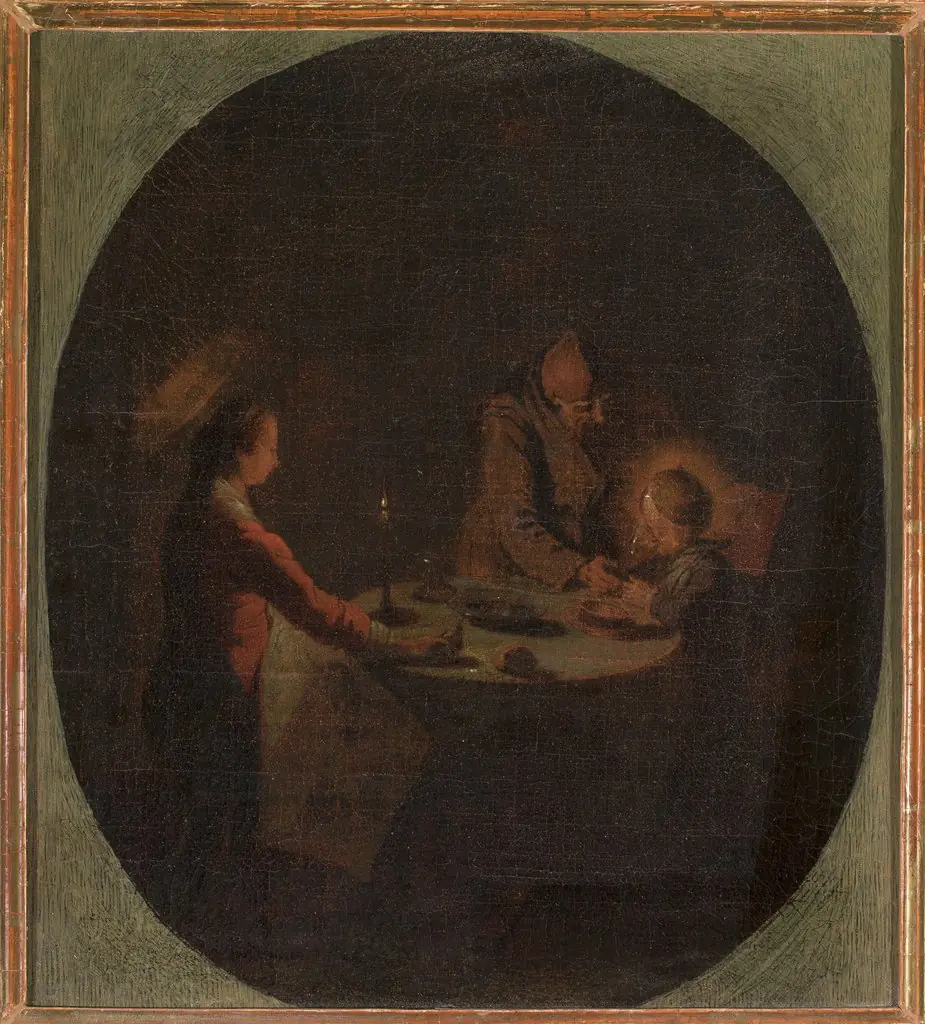 Holy Family at supper
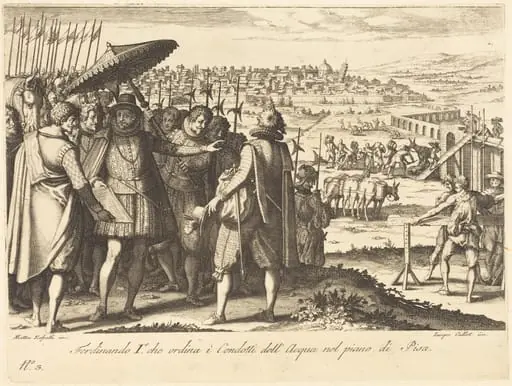 Restoration of the Aqueduct at Pisa
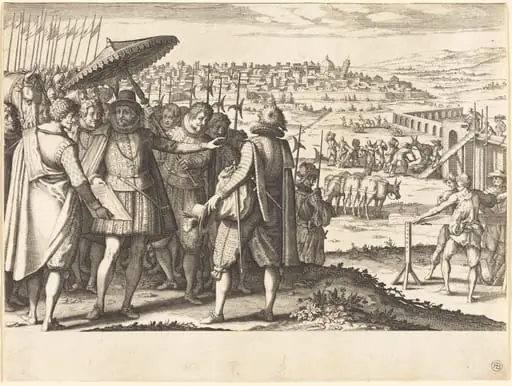 Restoration of the Aqueduct at Pisa
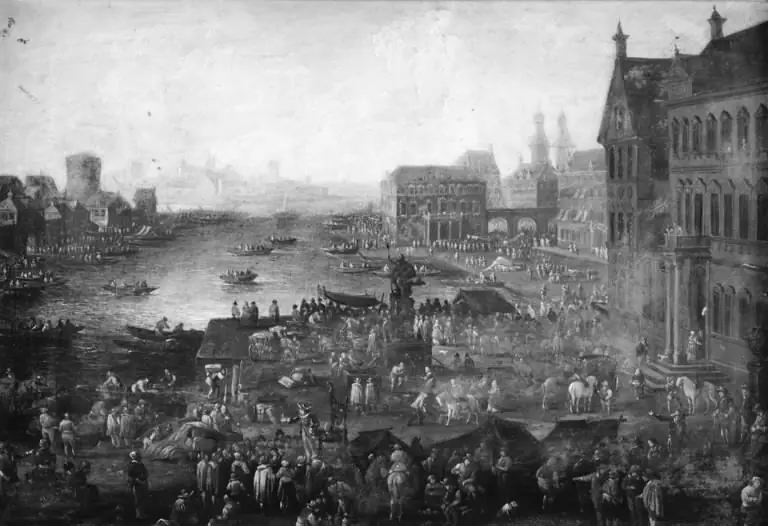 Square in Paris with Many Figures
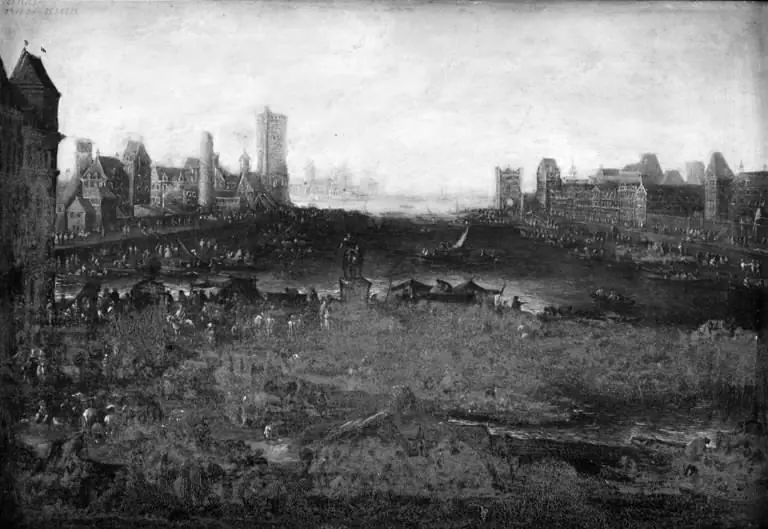 Square in Paris with Many Figures
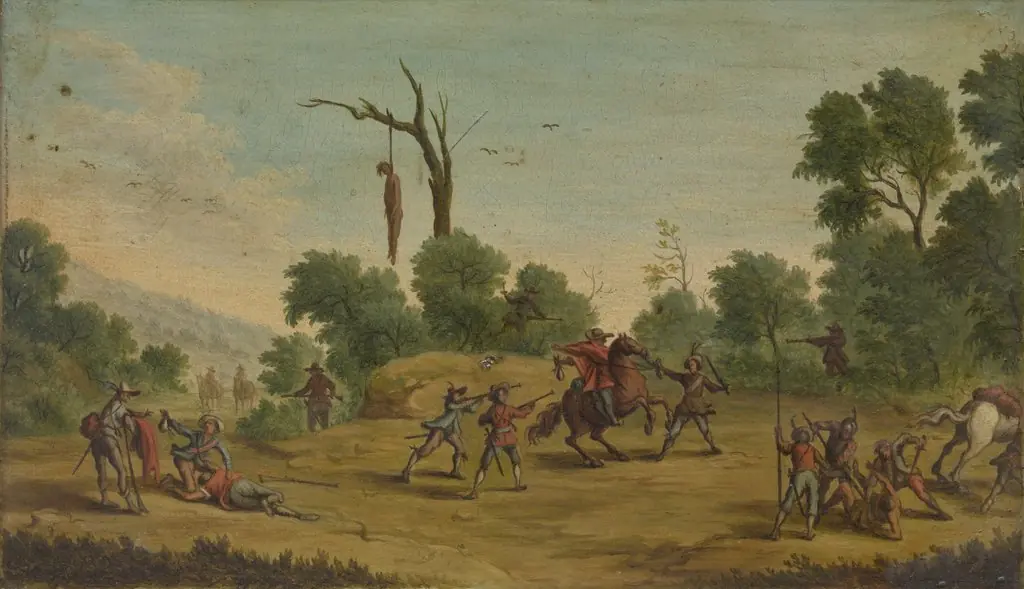 Horsemen Attacked by Robbers
 HOW WILL A COVERED PART BE CORRECTED?HOW WIKA A COVERED HEART DEED CORRECTED?
![Christ Walking on the Water [second plate], by Jacques Callot](https://artifactworldgallery.com/img/jacques-callot--christ-walking-on-the-water-second-plate--2069f3bfe4cb2126-w320.webp) Christ Walking on the Water [second plate]
Christ Walking on the Water [second plate]
 Man seen from Behind with His Right Arm Extended
 Man seen from Behind with His Right Arm Extended
 Man Seen from Behind with His Right Arm Extended
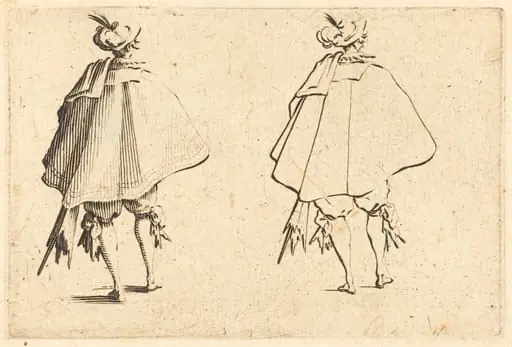 Gentleman in Large Mantle, Seen from Behind
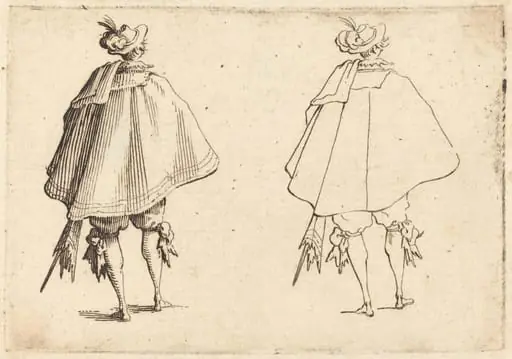 Gentleman in Large Mantle, Seen from Behind
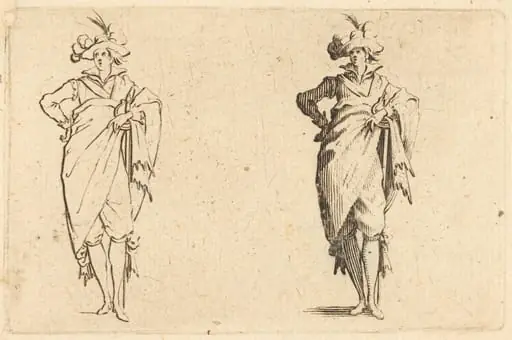 Gentleman Viewed from the Front with Hand on Hip
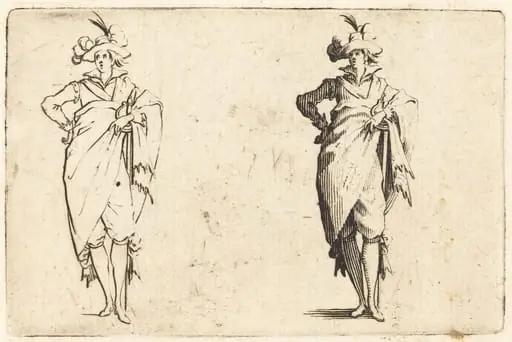 Gentleman Viewed from the Front with Hand on Hip
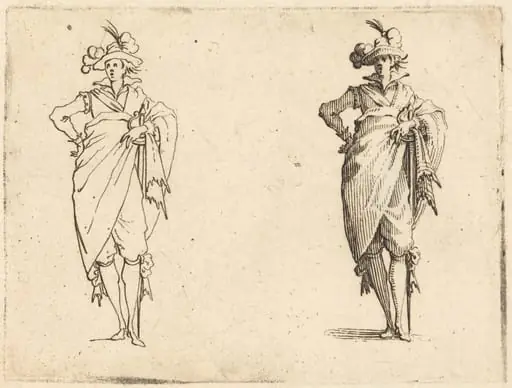 Gentleman Viewed from the Front with Hand on Hip
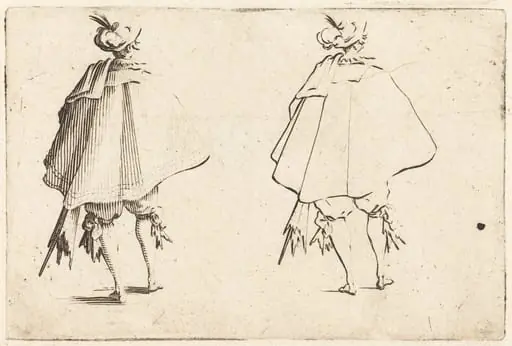 Gentleman in Large Mantle, Seen from Behind
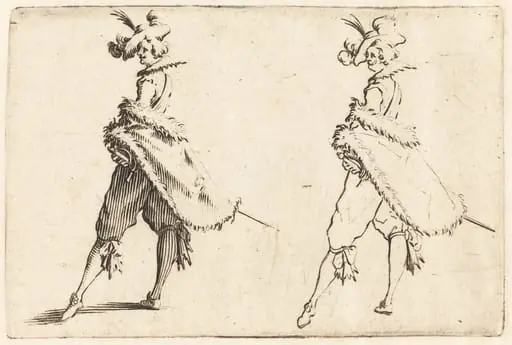 Gentleman Viewed from the Side
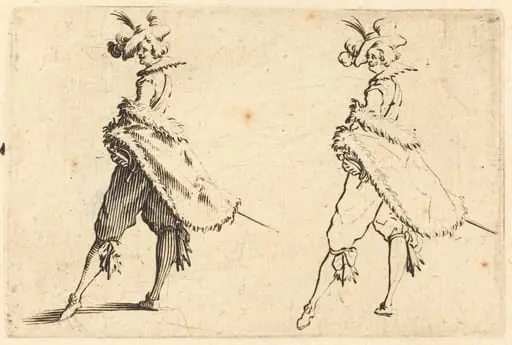 Gentleman Viewed from the Side
 Man in Cloak, Seen from Behind