Artwork
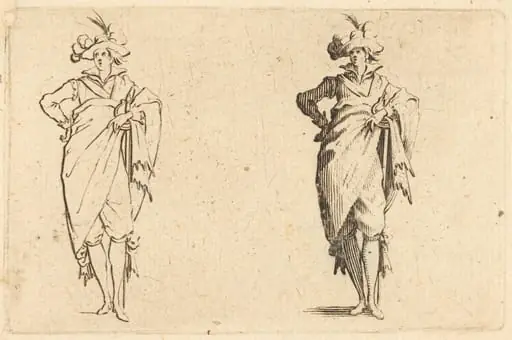
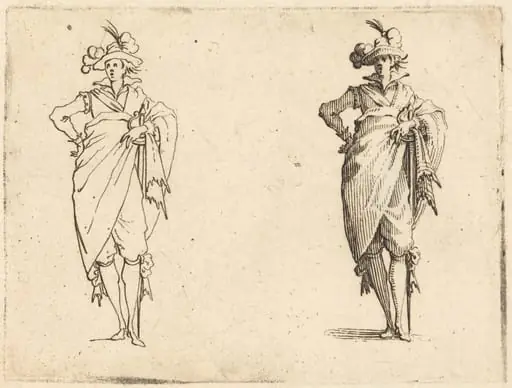
Gentleman Viewed from the Front with Hand on Hip
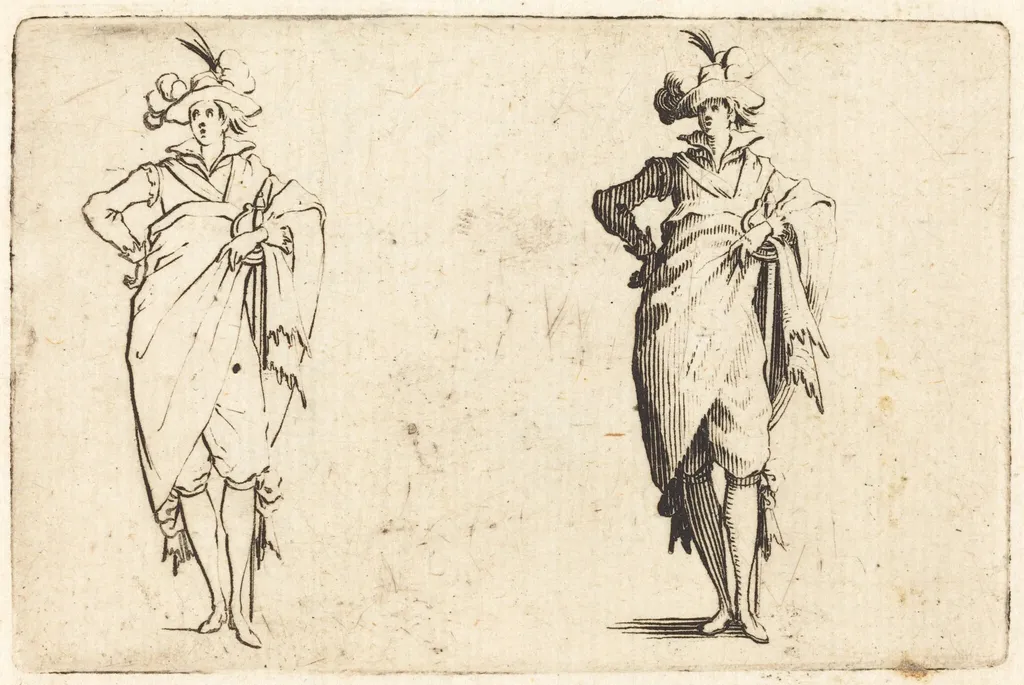
Gentleman Viewed from the Front with Hand on Hip is an ink print by the Baroque artist Jacques Callot. It dates from 1622 and is held in the collection of the National Gallery of Art.
About this work
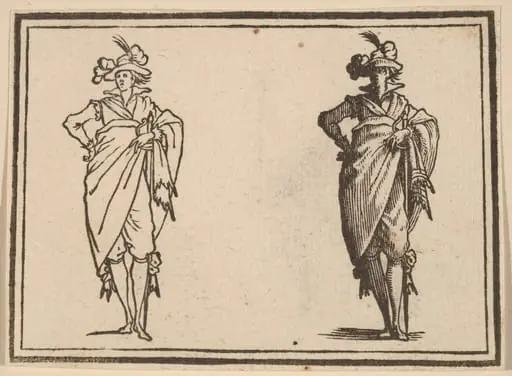
The man on the left has his hand on his hip, while the man on the right has his hand on his waist.
This etching shows two men standing in different poses. The man on the left has his hand on his hip, while the man on the right has his hand on his waist. Both men are wearing hats and long coats.
The etching is done in a simple style, with bold lines and minimal shading. The men's faces are not detailed, and their bodies are shown in a somewhat stiff pose.
The etching is an example of Baroque art, which was popular in Europe during the 17th century. It is held at the National Gallery of Art, Washington. You might also want to look up the artist, Jacques Callot.
Overview
Created circa 1622, this etching by Jacques Callot presents a pair of male figures rendered in a straightforward, linear manner. Both subjects wear hats and long coats; the figure on the left rests a hand on his hip, while the one on the right places a hand on his waist. The composition is executed on laid paper, characteristic of early 17th‑century printmaking.
Subject & Meaning
The work depicts two gentlemen in contrasting stances, suggesting a study of posture and social bearing rather than a narrative scene. The lack of facial detail and the rigid bodily outlines focus attention on the external signs of status—clothing, hat, and pose—reflecting Callot’s interest in cataloguing contemporary types.
Technique & Style
Callot employed etching on laid paper, using bold, unmodulated lines that give the figures a crisp, graphic quality. Shading is minimal, and the overall effect is one of clarity and precision, hallmarks of his approach to rendering figures and backgrounds with economical detail.
History & Provenance
The print belongs to the collection of the National Gallery of Art in Washington, D.C. It forms part of Callot’s prolific output of more than 1,400 etchings, which documented a wide range of social subjects in early 17th‑century Europe.
Context
Produced during the Baroque period, the piece reflects the era’s fascination with dynamic representation and the observation of everyday life. Callot, a French printmaker from the Duchy of Lorraine, was instrumental in advancing the technical possibilities of etching, influencing subsequent generations of artists.
Artist & collection
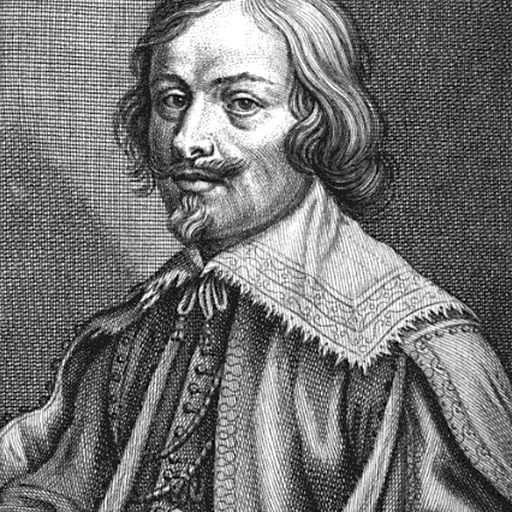
Artist
Jacques Callot was a baroque printmaker and draftsman from the Duchy of Lorraine.

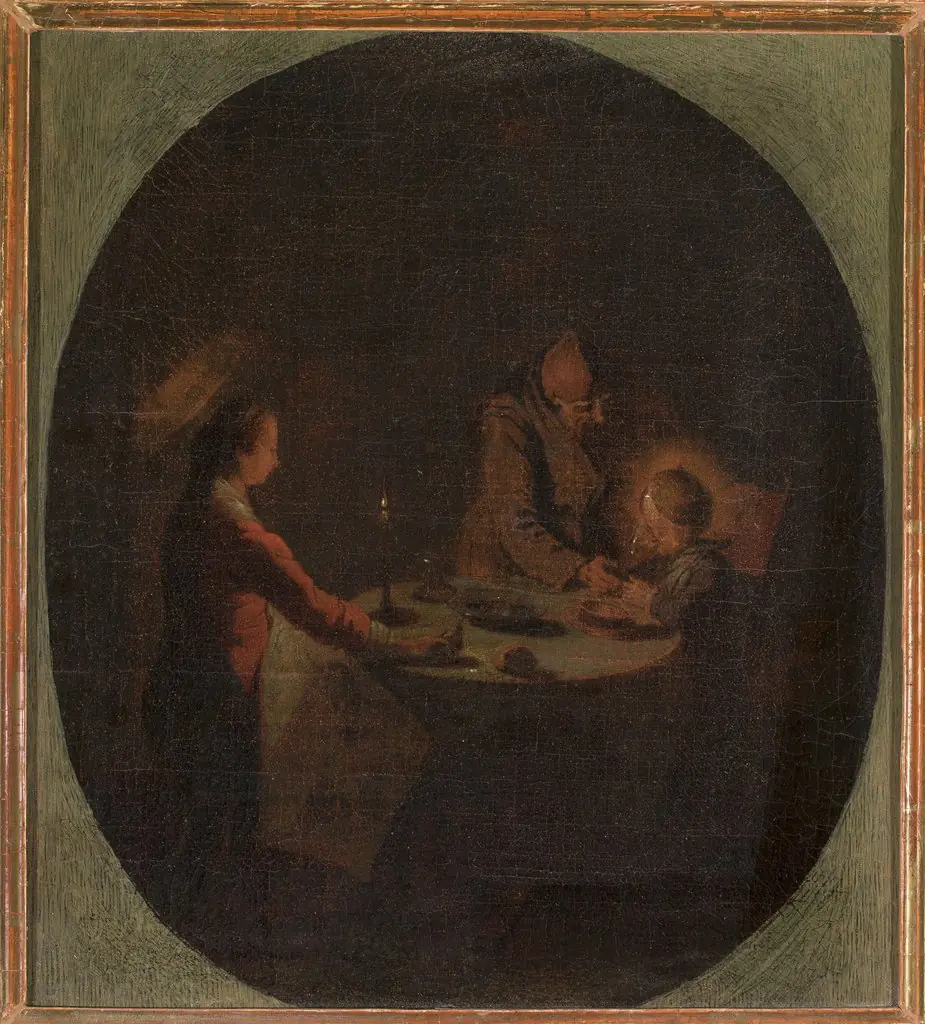 Holy Family at supper
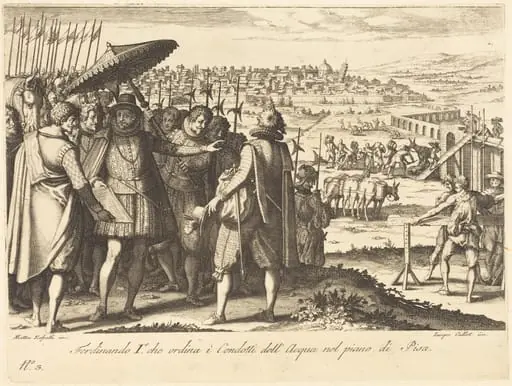 Restoration of the Aqueduct at Pisa
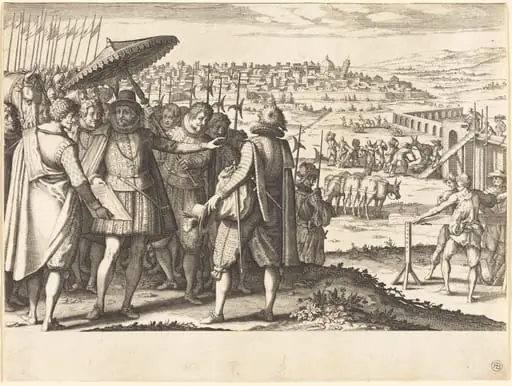 Restoration of the Aqueduct at Pisa
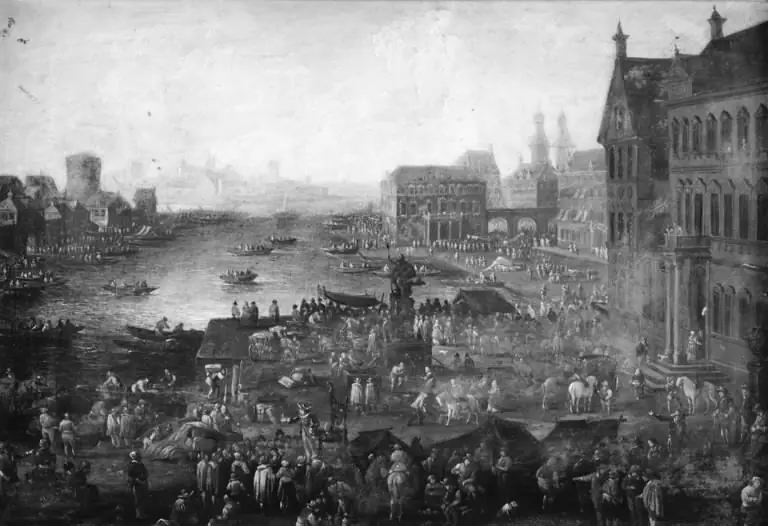 Square in Paris with Many Figures
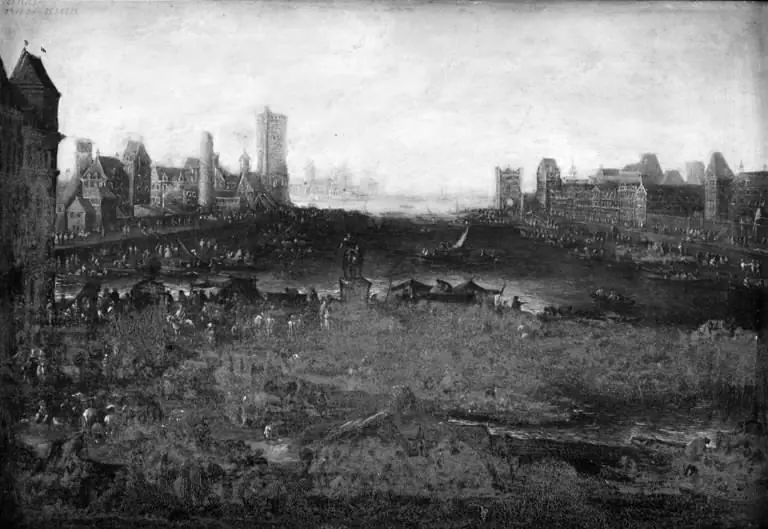 Square in Paris with Many Figures
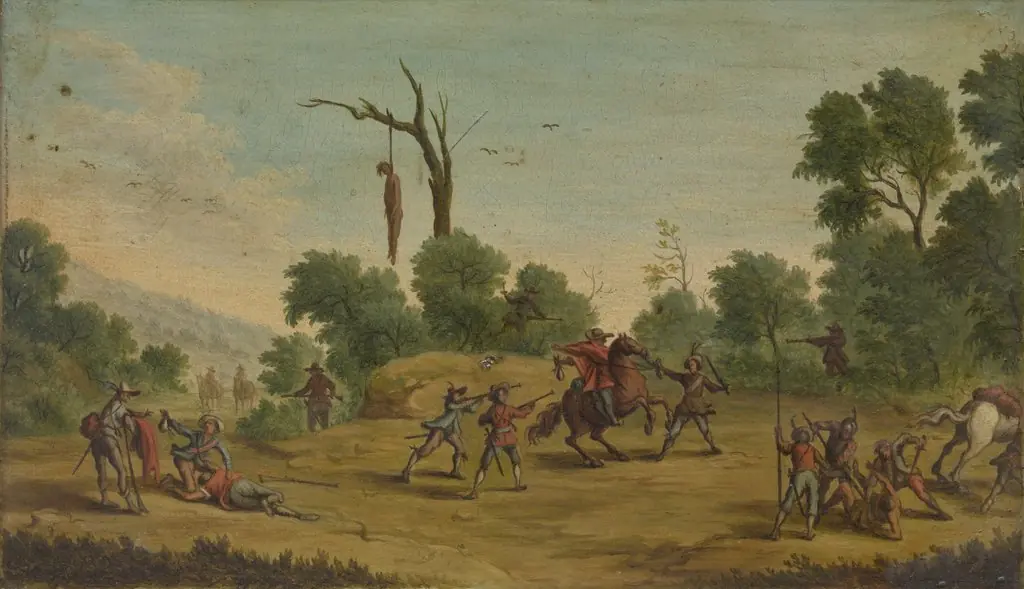 Horsemen Attacked by Robbers
 HOW WILL A COVERED PART BE CORRECTED?HOW WIKA A COVERED HEART DEED CORRECTED?
![Christ Walking on the Water [second plate], by Jacques Callot](https://artifactworldgallery.com/img/jacques-callot--christ-walking-on-the-water-second-plate--2069f3bfe4cb2126-w320.webp) Christ Walking on the Water [second plate]
Christ Walking on the Water [second plate]
 Gentleman Viewed from the Front with Hand on Hip
 Gentleman Viewed from the Front with Hand on Hip
 Gentleman Viewed from the Front with Hand on Hips
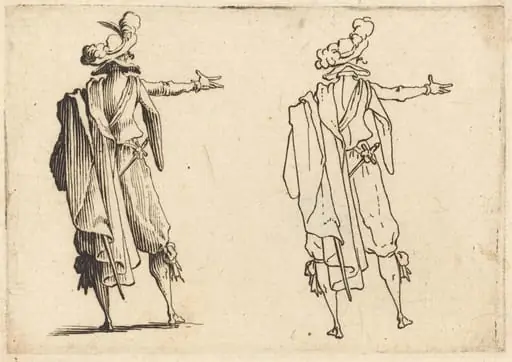 Man seen from Behind with His Right Arm Extended
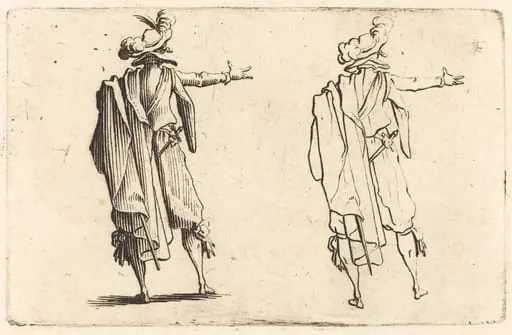 Man seen from Behind with His Right Arm Extended
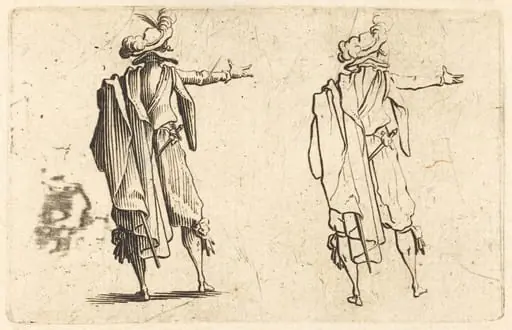 Man seen from Behind with His Right Arm Extended
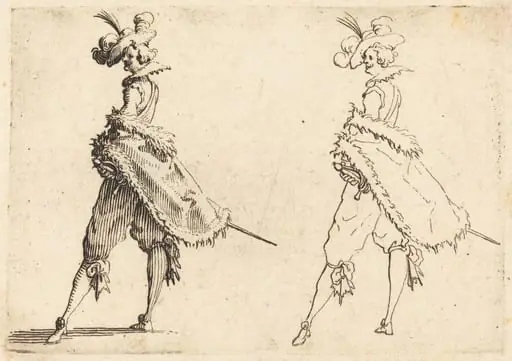 Gentleman Viewed from the Side
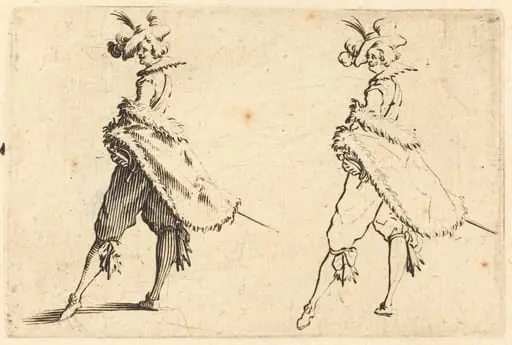 Gentleman Viewed from the Side
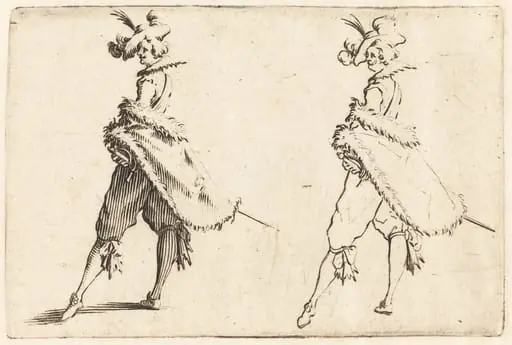 Gentleman Viewed from the Side
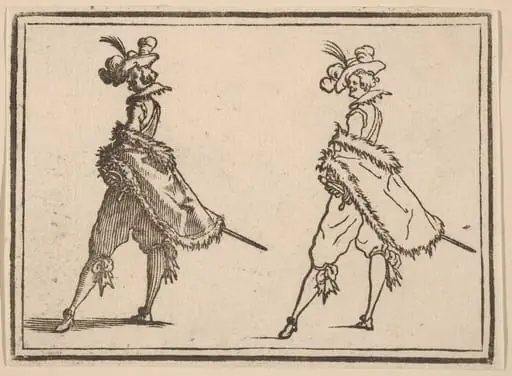 Gentleman Viewed from the Side
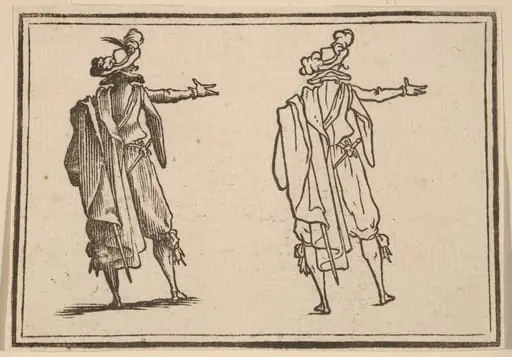 Man Seen from Behind with His Right Arm Extended