Artwork
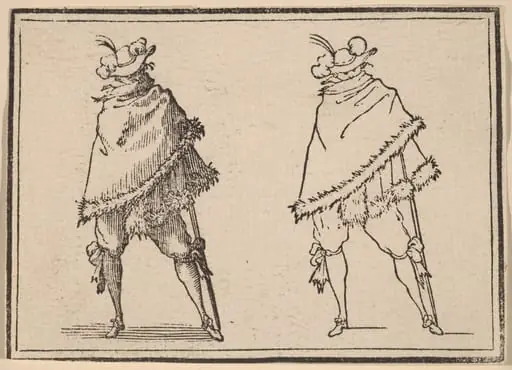
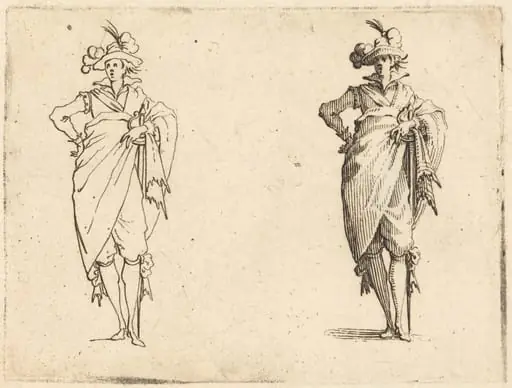
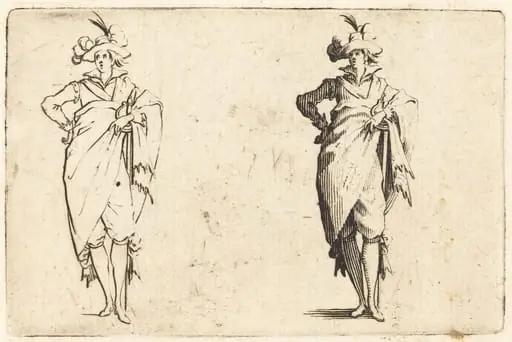
Gentleman Viewed from the Front with Hand on Hips
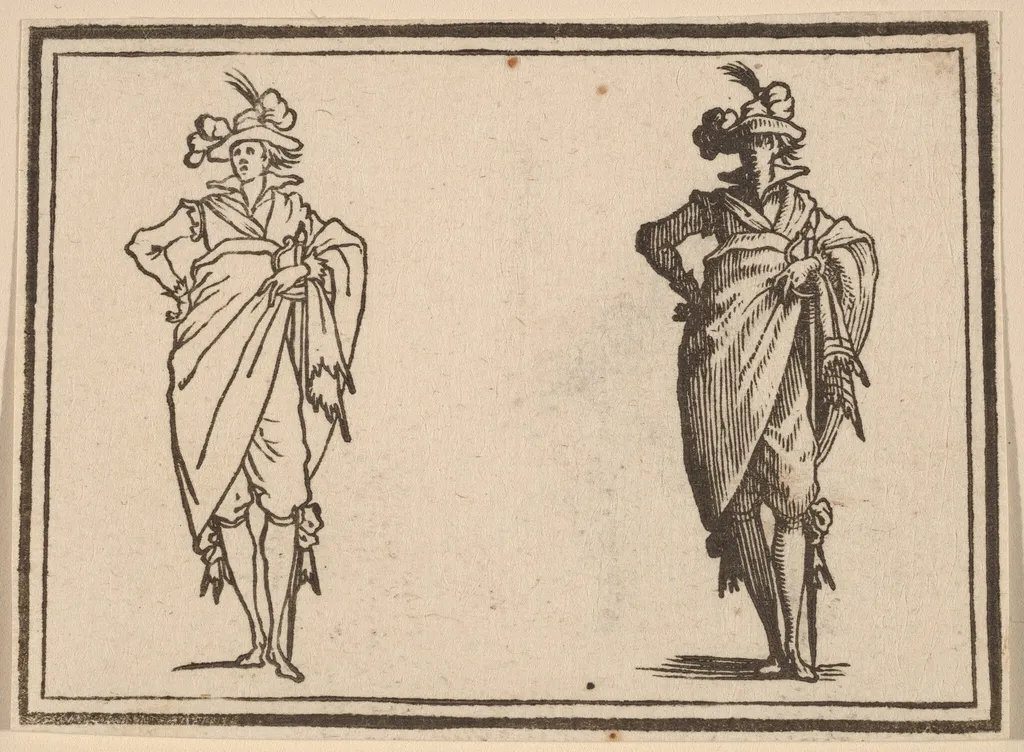
Gentleman Viewed from the Front with Hand on Hips is an ink print by the Baroque artist Edouard Eckman. It dates from 1621 and is held in the collection of the National Gallery of Art.
About this work
Overview
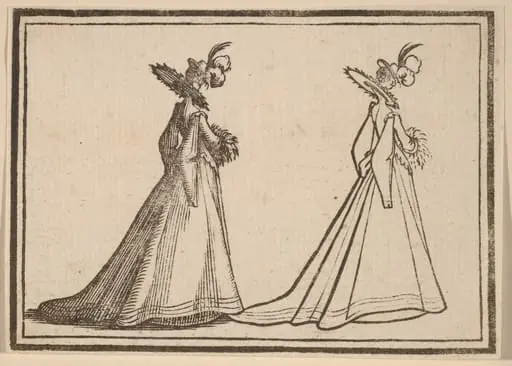
Edouard Eckman’s woodcut, dated 1621, presents a pair of figures dressed in elaborate, flowing attire. One figure faces the viewer directly, hands placed on the hips, while the other stands slightly turned, an arm positioned behind the back. Both wear wide‑sleeved garments and headpieces adorned with feathers or bows, their stances suggesting a poised, perhaps ceremonial, presence.
Subject & Meaning
The composition foregrounds the contrast between the two figures, emphasizing status and poise through costume and gesture.
The composition foregrounds the contrast between the two figures, emphasizing status and poise through costume and gesture. The hand‑on‑hip pose conveys confidence or authority, whereas the concealed arm hints at restraint or formality. The lavish dress and ornamental headgear reflect contemporary fashions of the early seventeenth century, offering insight into the social ideals of elegance and decorum of the period.
Technique & Style
Executed as a woodcut on laid paper, the image relies on carved wooden blocks to receive ink and transfer it onto the surface. The medium yields crisp, linear outlines and a limited tonal range, typical of early‑modern printmaking. Eckman’s handling of line suggests movement within the static medium, using bold contours to delineate the voluminous sleeves and feathered hats.
History & Provenance
Created in 1621, the print belongs to a period when woodcut remained a prevalent method for reproducing fashionable imagery. While specific ownership records are scarce, the work is catalogued among Eckman’s surviving prints, indicating it was likely circulated among collectors interested in contemporary portraiture and costume studies.
Context
The early seventeenth century saw a flourishing of printed portraiture that documented courtly attire and social roles. Eckman’s print aligns with this trend, serving both as a visual record of elite fashion and as a decorative object for a market that valued accessible, reproducible images of genteel life.
Legacy
Although not widely cited in modern scholarship, the print exemplifies the technical capabilities of woodcut in rendering intricate clothing details. It contributes to the broader understanding of how print media disseminated visual standards of dress and comportment during the Baroque era.
Artist & collection


 Gentleman Viewed from the Side
 Gentleman Viewed from the Front with Hand on Hip
 Gentleman Viewed from the Front with Hand on Hip
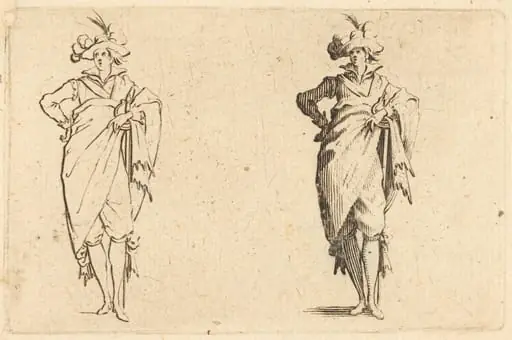 Gentleman Viewed from the Front with Hand on Hip
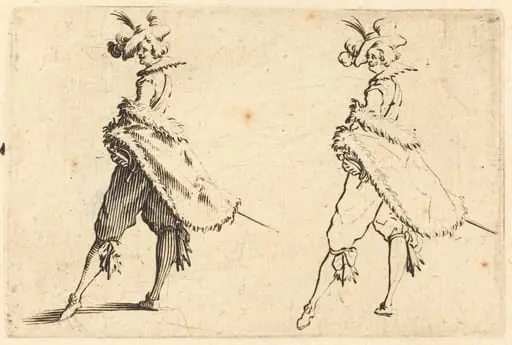 Gentleman Viewed from the Side
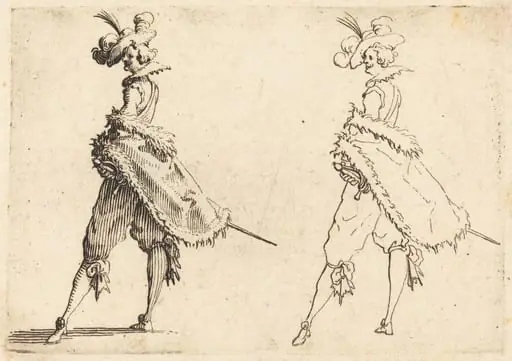 Gentleman Viewed from the Side
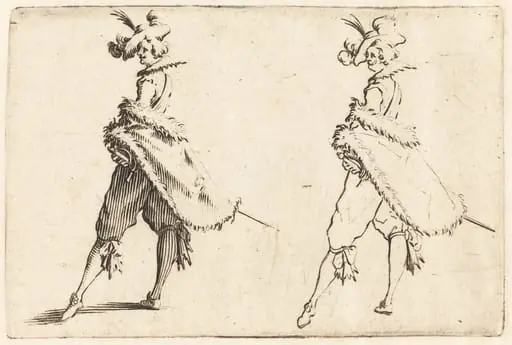 Gentleman Viewed from the Side
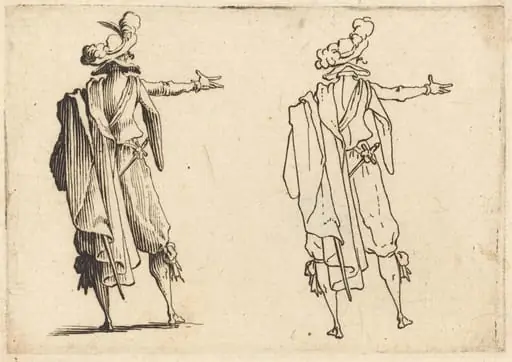 Man seen from Behind with His Right Arm Extended
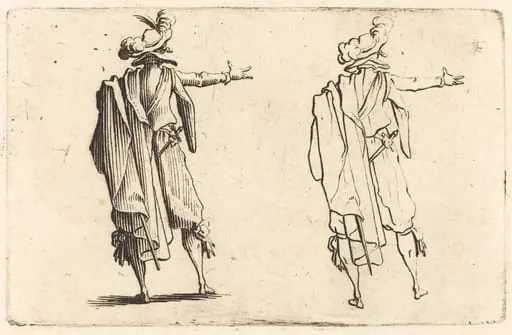 Man seen from Behind with His Right Arm Extended