Artwork
Lady with Arms Folded, and Two Gentlemen
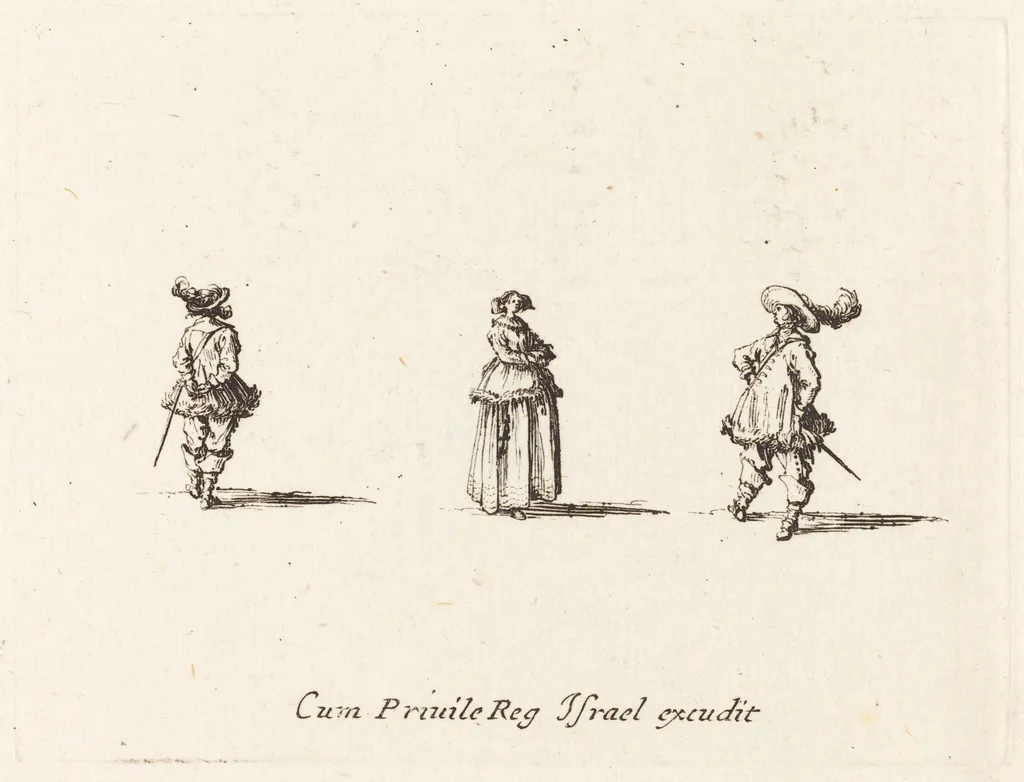
Lady with Arms Folded, and Two Gentlemen is an ink print by the Baroque artist Jacques Callot. It dates from 1634 and is held in the collection of the National Gallery of Art.
About this work
Overview
As one of over 1,400 prints by the Lorraine-born artist, it exemplifies his interest in recording everyday social types rather than grand narratives.
Created around 1634 by Jacques Callot, this etching on laid paper captures three figures in a quiet, frontal composition. As one of over 1,400 prints by the Lorraine-born artist, it exemplifies his interest in recording everyday social types rather than grand narratives. The work’s informal quality suggests it may have been a preparatory study or observational sketch, executed with a spontaneous hand rather than as a finished commission.
Subject & Meaning
The central figure is a woman with folded arms and ruffled sleeves, holding an object near her chest, possibly a fan or glove. Flanking her are two men in formal attire, each wearing broad-brimmed hats and carrying swords. One adjusts a feather in his hat, a gesture of idle refinement. Together, they suggest a moment of social pause—perhaps a courtly encounter or a family portrait in miniature—conveying status through dress and posture without overt narrative.
Technique & Style
Callot employed fine, irregular etching lines to render texture and form, creating a sketchlike immediacy. The fabric folds, hat brims, and surface details are suggested rather than meticulously defined, emphasizing gesture over polish. The scratchy, uneven quality reflects the artist’s direct engagement with the plate, likely worked rapidly to capture the figures’ presence. This approach aligns with his broader practice of using etching as a tool for observational record.
History & Provenance
The print originates from Callot’s prolific output during his time in Florence and Paris, where he served aristocratic patrons and observed urban life. While its early ownership is undocumented, it entered institutional collections in the 19th or early 20th century, likely through European print dealers. Its survival reflects the enduring interest in Callot’s genre scenes among collectors of early modern graphic art.
Context
In the 1630s, etching was widely used for both artistic expression and documentation. Callot stood apart by focusing on ordinary individuals—soldiers, beggars, courtiers—rather than mythological or religious subjects. This print fits within a broader trend of visual ethnography, where artists recorded regional dress and social behavior as Europe’s class structures became more visible and contested.
Legacy
Callot’s observational prints influenced later generations of draftsmen and printmakers who valued immediacy over idealization. While this particular image was not widely reproduced, it contributes to his reputation as a chronicler of 17th-century social nuance. His technique—using etching to capture fleeting moments—helped shift printmaking from reproduction toward personal expression.
Artist & collection
Artist
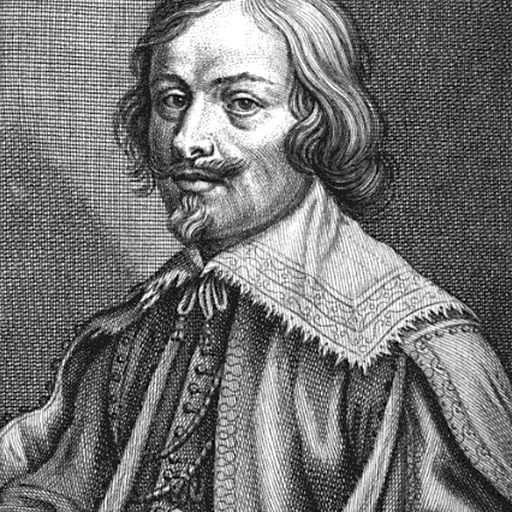
Jacques Callot was a baroque printmaker and draftsman from the Duchy of Lorraine.

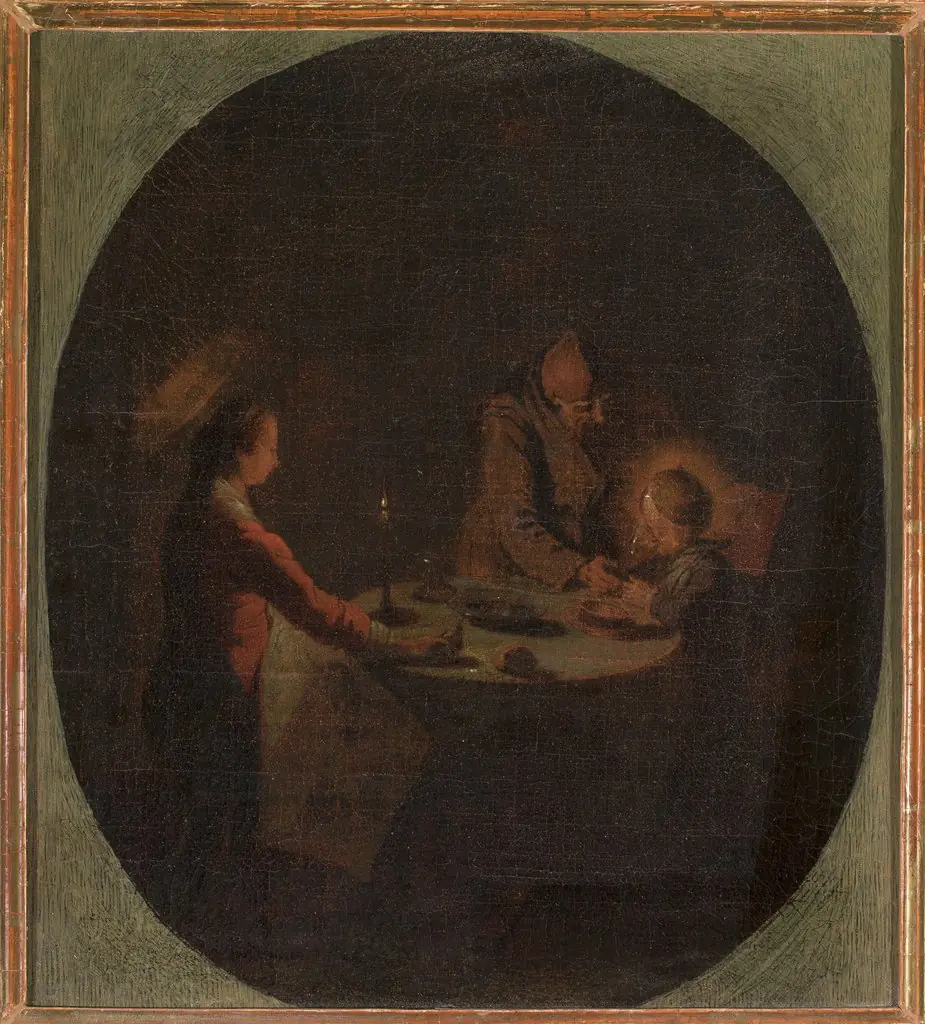 Holy Family at supper
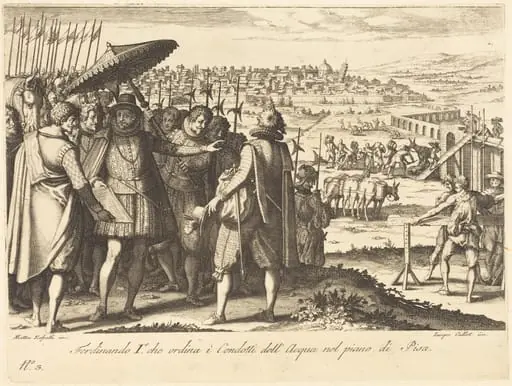 Restoration of the Aqueduct at Pisa
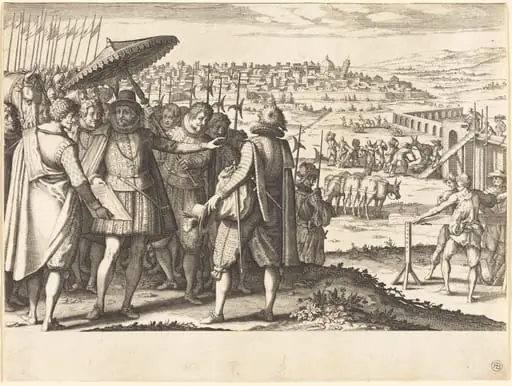 Restoration of the Aqueduct at Pisa
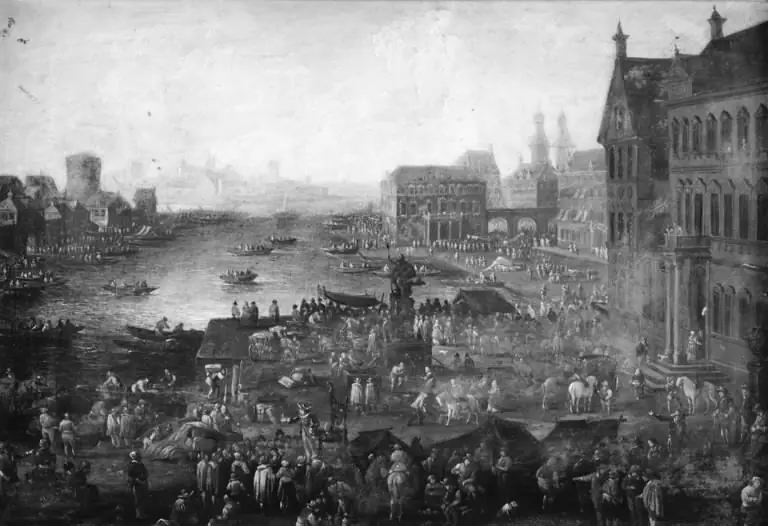 Square in Paris with Many Figures
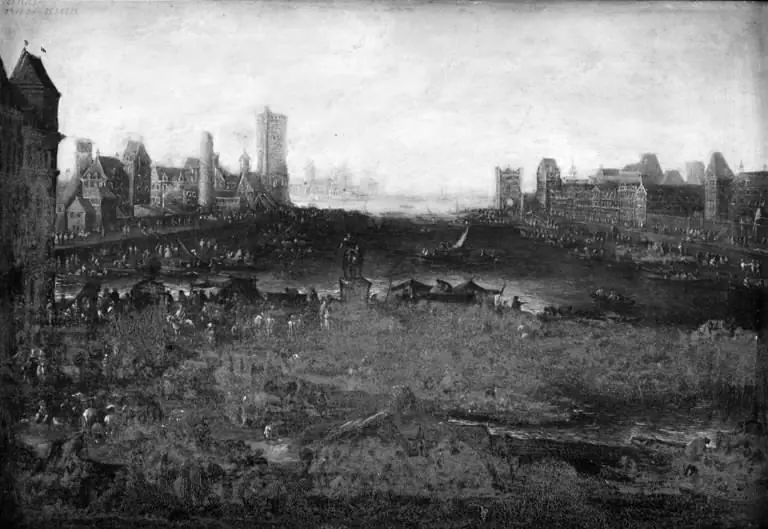 Square in Paris with Many Figures
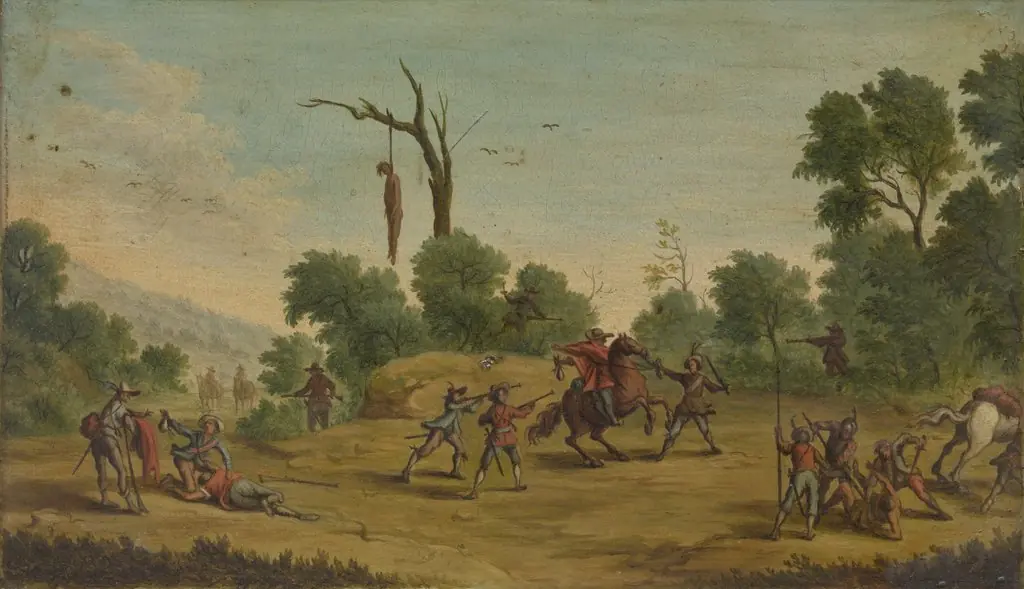 Horsemen Attacked by Robbers
 HOW WILL A COVERED PART BE CORRECTED?HOW WIKA A COVERED HEART DEED CORRECTED?
![Christ Walking on the Water [second plate], by Jacques Callot](https://artifactworldgallery.com/img/jacques-callot--christ-walking-on-the-water-second-plate--2069f3bfe4cb2126-w320.webp) Christ Walking on the Water [second plate]
Christ Walking on the Water [second plate]
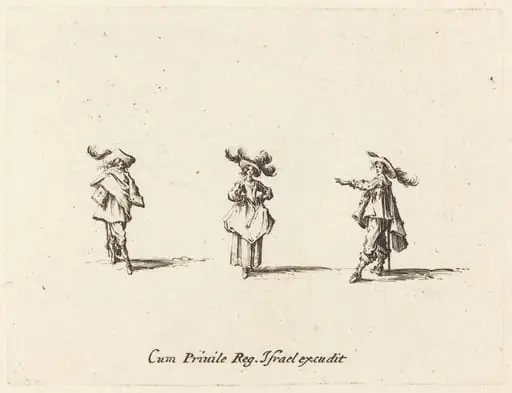 Lady with Large Plumes, and Two Gentlemen
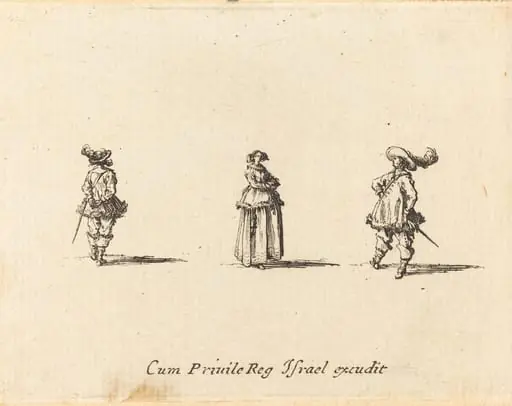 Lady with Arms Folded, and Two Gentlemen
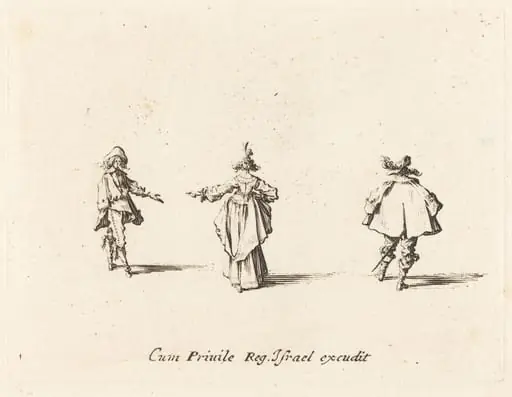 Lady with Outstretched Arm, Seen from Behind, and Two Gentlemen
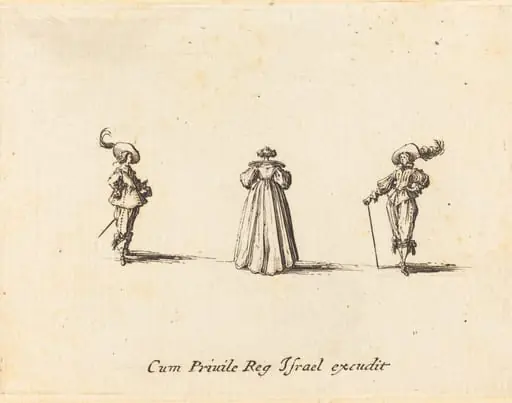 Lady Seen from Behind, and Two Gentlemen
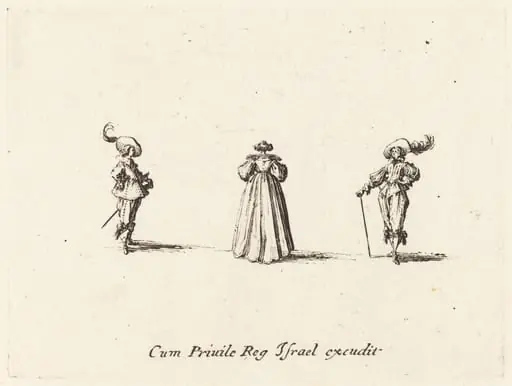 Lady Seen from Behind, and Two Gentlemen
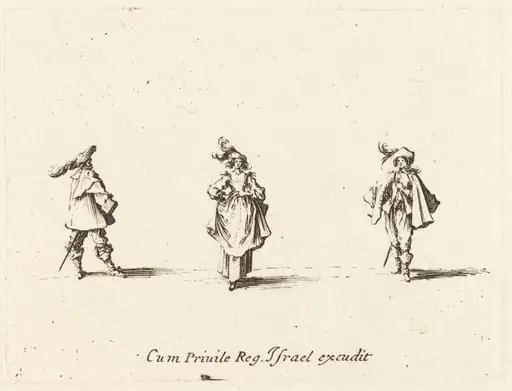 Lady with Plumes, and Two Gentlemen
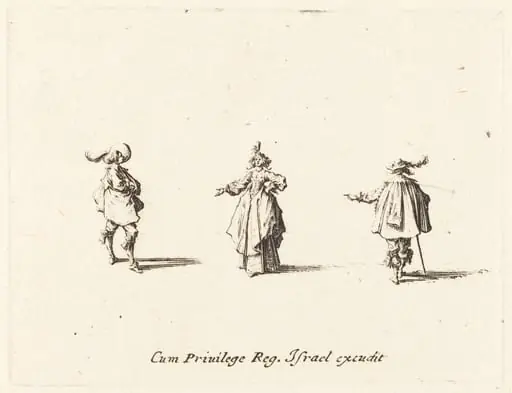 Lady with Outstretched Arm, and Two Gentlemen
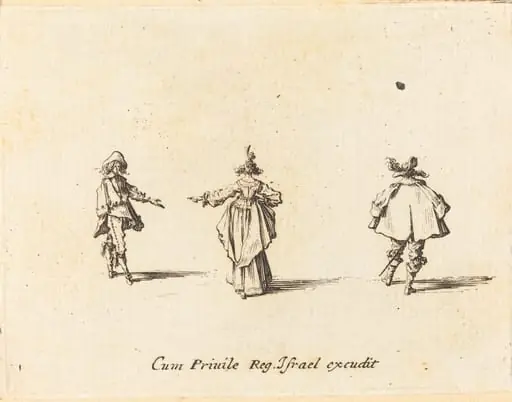 Lady with Outstretched Arm, Seen from Behind, and Two Gentlemen
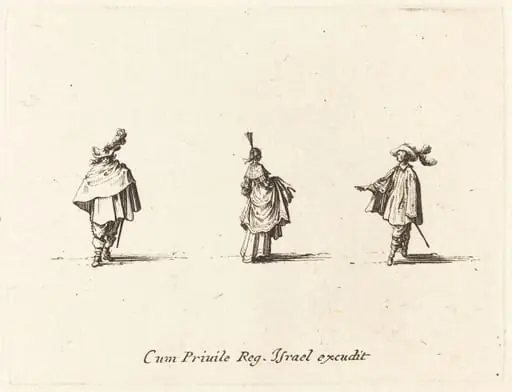 Lady with Dress Gathered Up, and Two Gentlemen
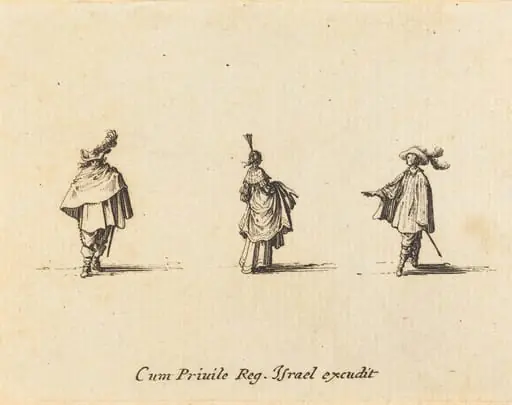 Lady with Dress Gathered Up, and Two Gentlemen