Artwork
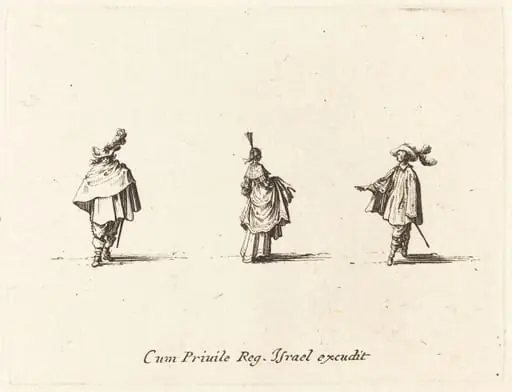
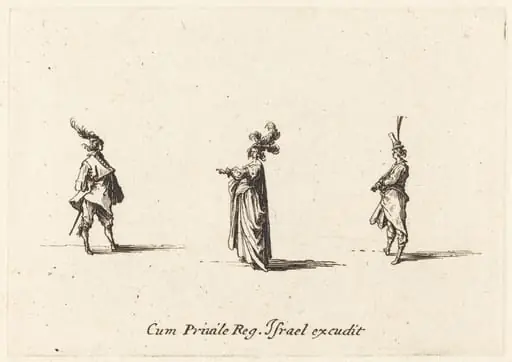
Lady with Dress Gathered Up, and Two Gentlemen
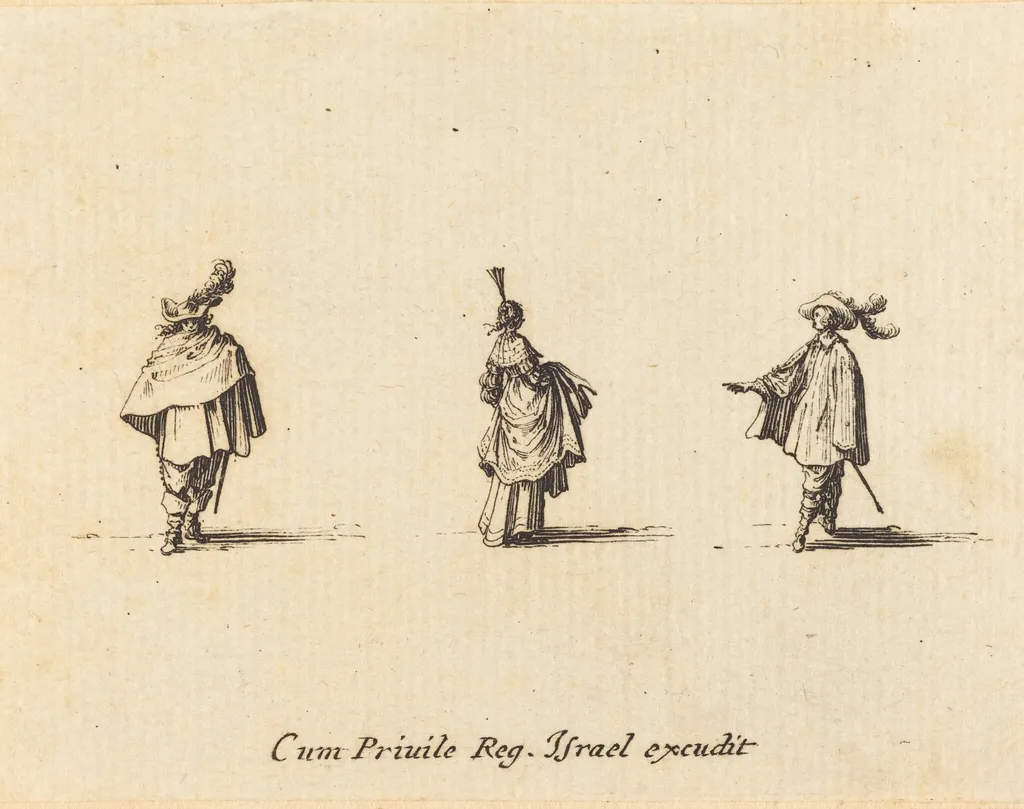
Lady with Dress Gathered Up, and Two Gentlemen is an ink print by the Baroque artist Jacques Callot. It dates from 1634 and is held in the collection of the National Gallery of Art.
About this work
Overview
Executed on laid paper, the work exemplifies Callot’s mastery of fine-line etching, a technique allowing intricate detail within a compact format.
Created around 1634, this etching by Jacques Callot captures a fleeting moment of pedestrian movement in early 17th-century society. Executed on laid paper, the work exemplifies Callot’s mastery of fine-line etching, a technique allowing intricate detail within a compact format. Though modest in scale, it reflects his broader interest in observing ordinary interactions, rendered with clarity and economy of line.
Subject & Meaning
The scene depicts three figures walking in procession: a man in a long cape and feathered hat, a woman lifting the hem of her dress, and a second man with a cane and broad-brimmed hat. The woman’s gesture suggests practical navigation of uneven or muddy terrain, while the men’s attire implies social standing. No overt narrative is given, but the composition invites reflection on social comportment and the quiet rhythms of public life.
Technique & Style
Callot employed fine, controlled etching lines to define fabric folds, hat brims, and the subtle lift of the woman’s dress. The precision of the strokes conveys texture and motion without heavy shading, characteristic of his draftsmanship. The use of laid paper, with its subtle watermark texture, enhances the tactile quality of the image, reinforcing the immediacy of the observed moment.
History & Provenance
The print belongs to Callot’s prolific output during his time in Florence and Paris, where he produced hundreds of scenes drawn from contemporary life. While its early ownership is unrecorded, it entered institutional collections in the 19th century as interest in Northern European printmaking grew. Its survival in good condition reflects its status as a study in observational precision rather than a commissioned work.
Context
In the 1630s, etching was increasingly used for informal, non-religious subjects as artists turned to urban and domestic life. Callot’s work stood apart for its attention to social nuance—capturing figures from various classes without caricature. This print aligns with broader European trends toward documenting everyday behavior, influenced by emerging interest in human observation and secular themes.
Legacy
Callot’s ability to distill complex scenes into precise, unembellished lines influenced generations of printmakers, particularly in France and the Netherlands. This small etching, though not widely exhibited, remains a quiet testament to his skill in capturing transient moments with clarity. It exemplifies how technical discipline could elevate the mundane into enduring visual records.
Artist & collection
Artist
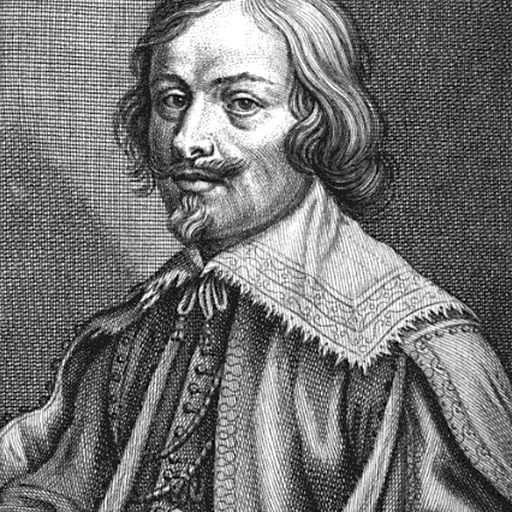
Jacques Callot was a baroque printmaker and draftsman from the Duchy of Lorraine.

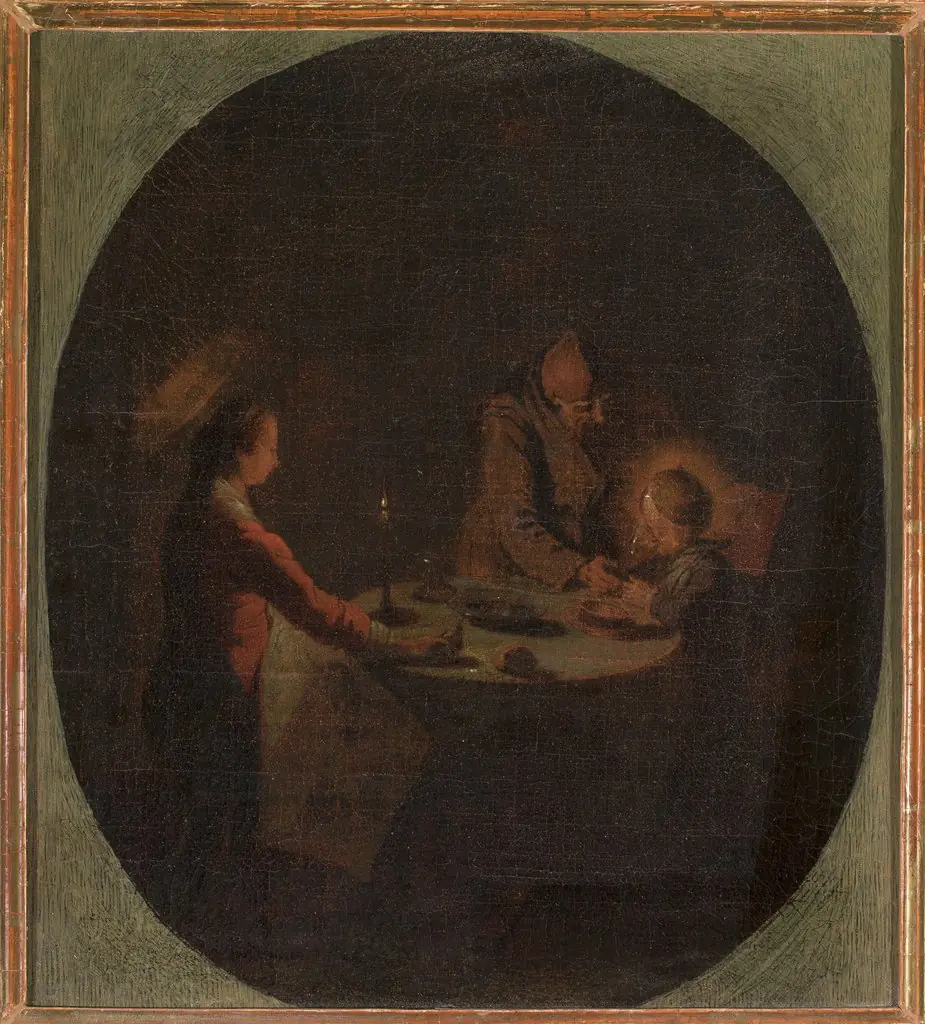 Holy Family at supper
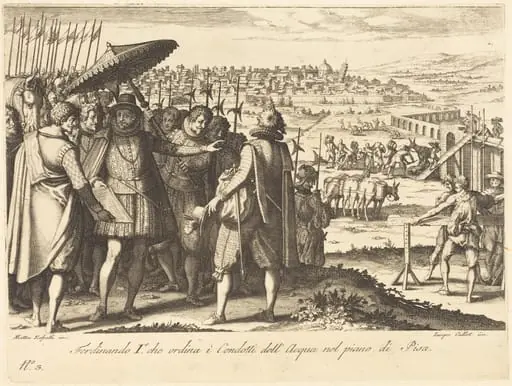 Restoration of the Aqueduct at Pisa
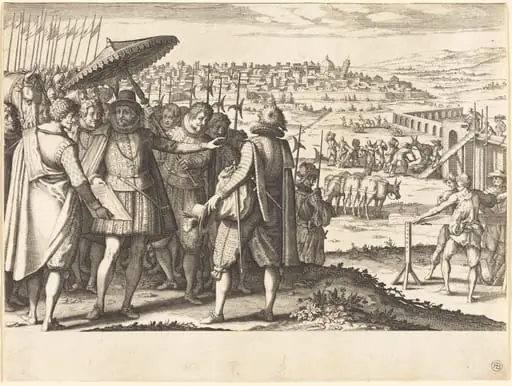 Restoration of the Aqueduct at Pisa
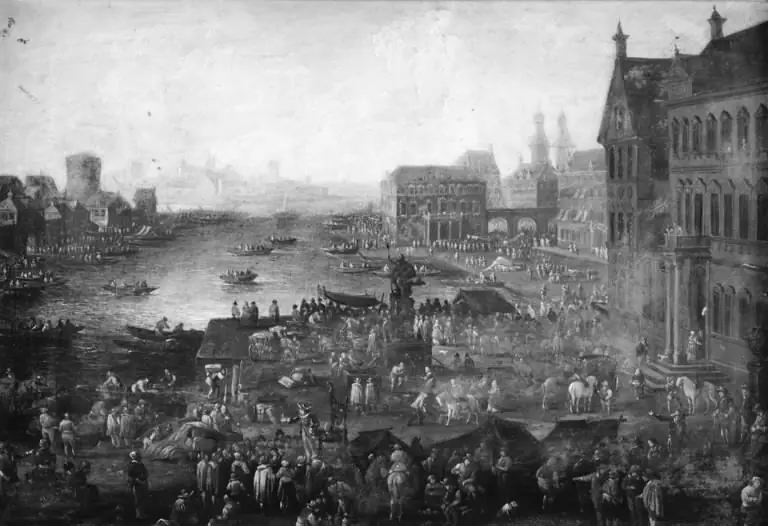 Square in Paris with Many Figures
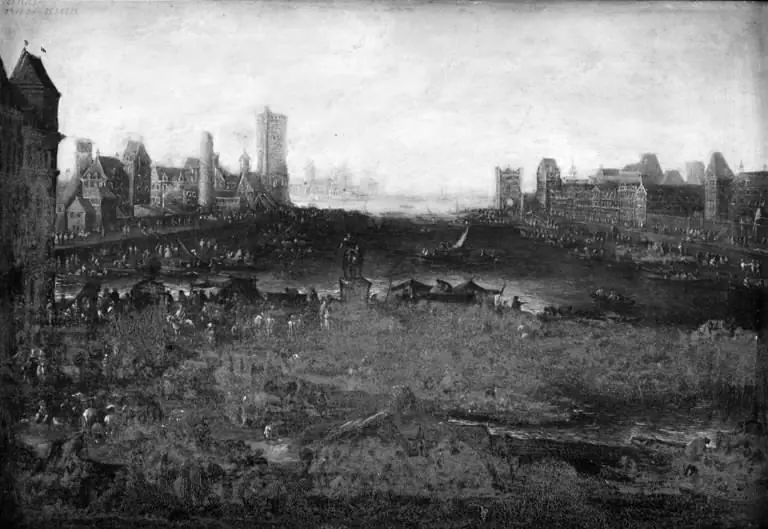 Square in Paris with Many Figures
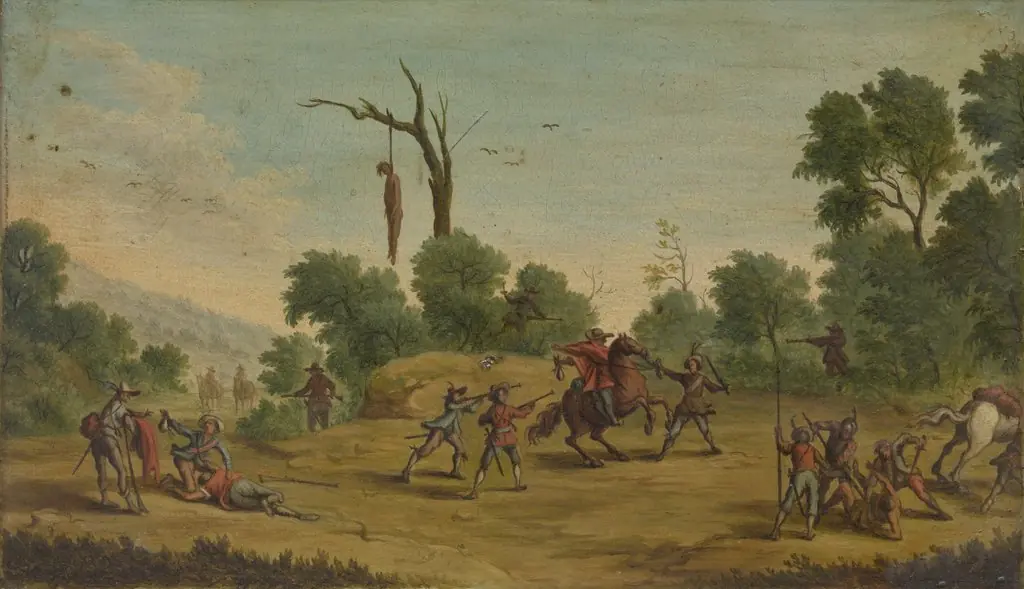 Horsemen Attacked by Robbers
 HOW WILL A COVERED PART BE CORRECTED?HOW WIKA A COVERED HEART DEED CORRECTED?
![Christ Walking on the Water [second plate], by Jacques Callot](https://artifactworldgallery.com/img/jacques-callot--christ-walking-on-the-water-second-plate--2069f3bfe4cb2126-w320.webp) Christ Walking on the Water [second plate]
Christ Walking on the Water [second plate]
 Lady with Dress Gathered Up, and Two Gentlemen
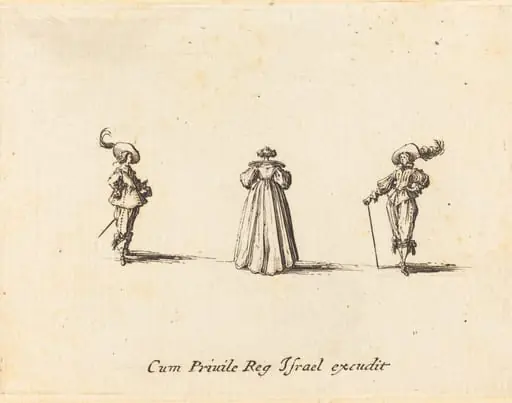 Lady Seen from Behind, and Two Gentlemen
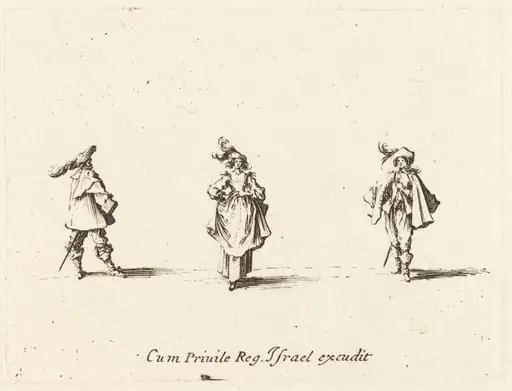 Lady with Plumes, and Two Gentlemen
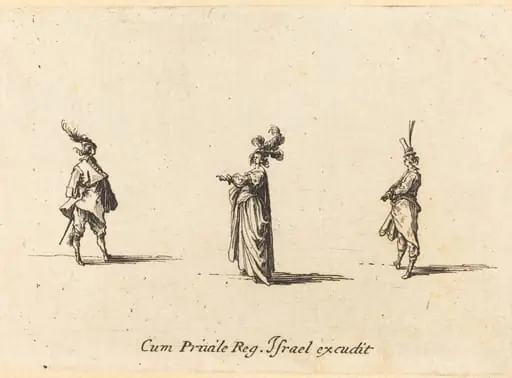 Lady with Plumed Hat, and Two Gentlemen
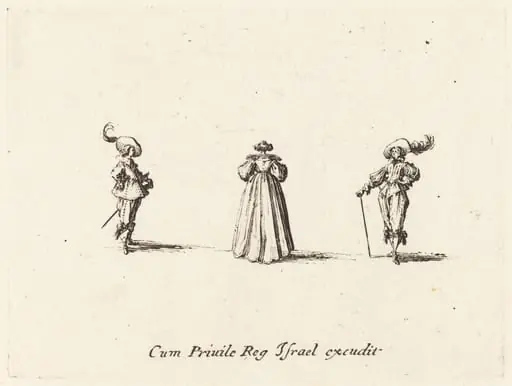 Lady Seen from Behind, and Two Gentlemen
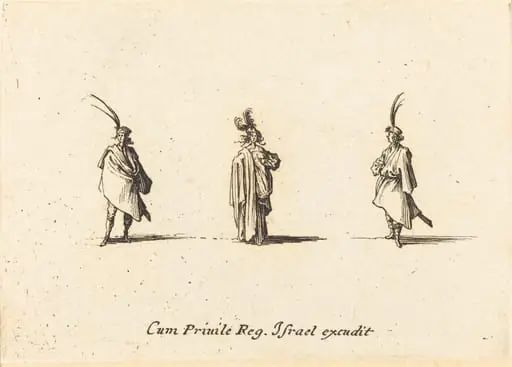 Lady in Long Cloak, and Two Gentlemen
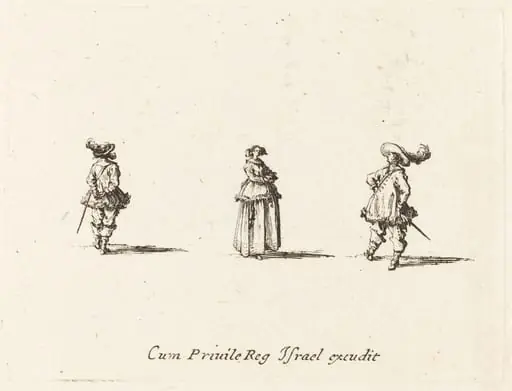 Lady with Arms Folded, and Two Gentlemen
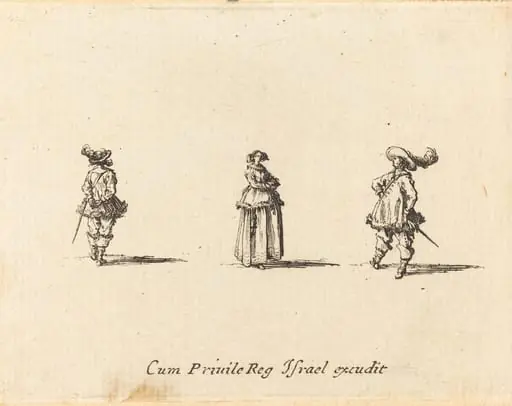 Lady with Arms Folded, and Two Gentlemen
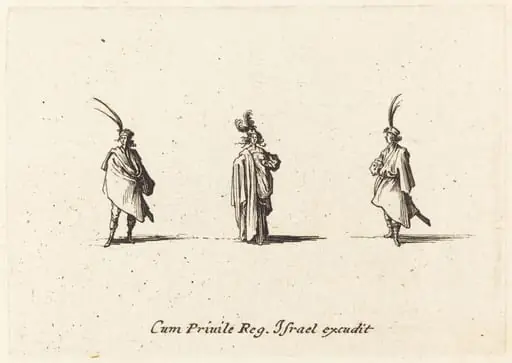 Lady in Long Cloak, and Two Gentlemen
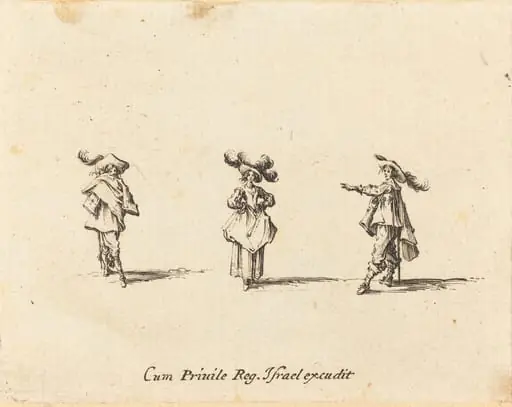 Lady with Large Plumes, and Two Gentlemen
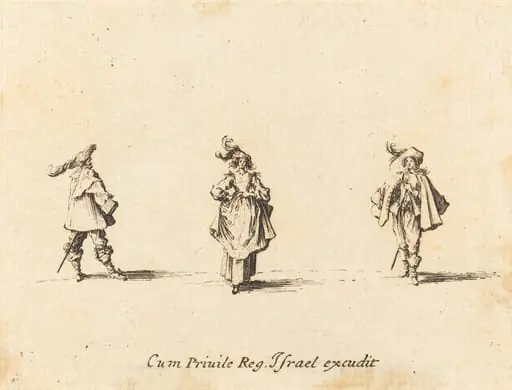 Lady with Plumes, and Two Gentlemen
 Lady with Plumed Hat, and Two Gentlemen