Artwork
Lady Seen from Behind, and Two Gentlemen
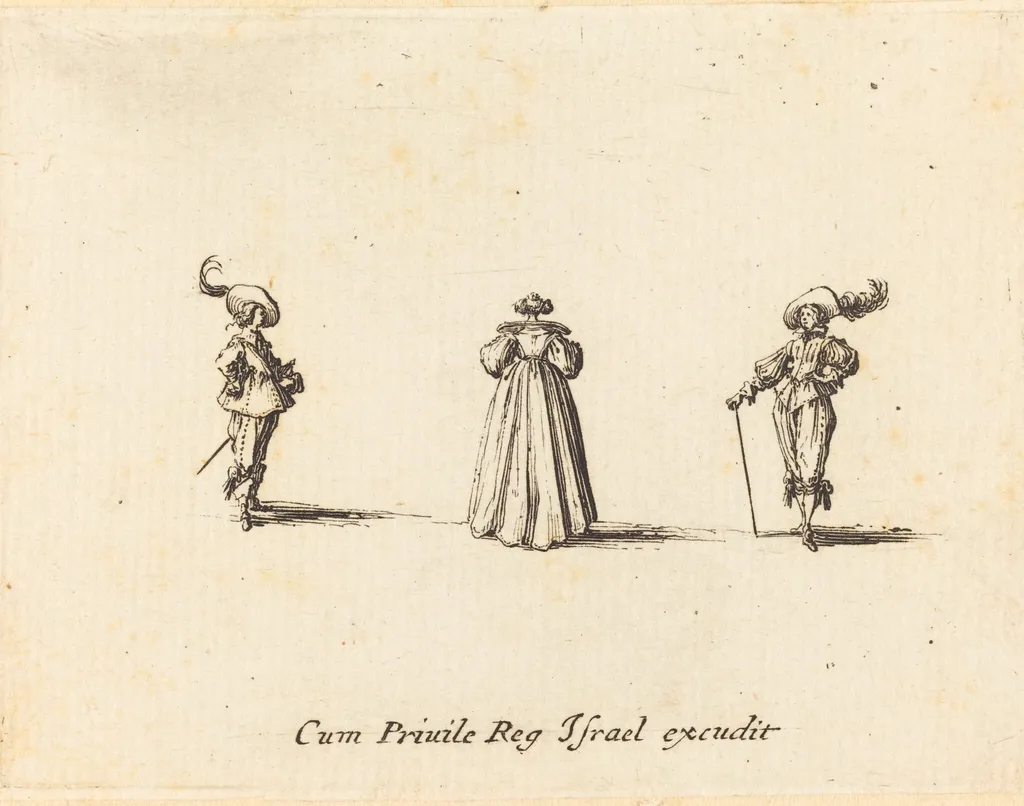
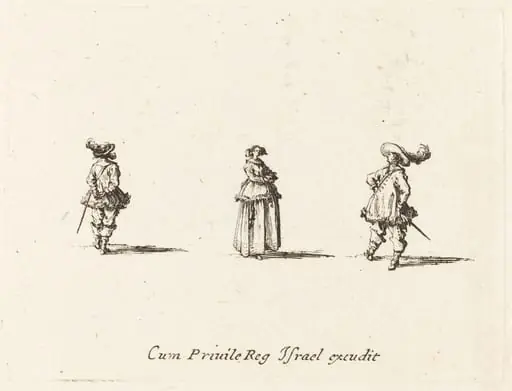
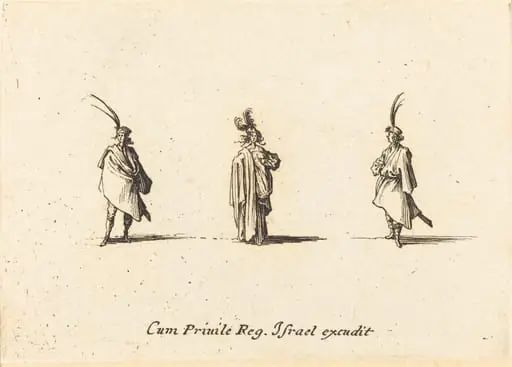
Lady Seen from Behind, and Two Gentlemen is an ink print by the Baroque artist Jacques Callot. It dates from 1634 and is held in the collection of the National Gallery of Art.
About this work
Overview
The composition is rendered in a concise, sketch‑like manner.
Created around 1634, *Lady Seen from Behind, and Two Gentlemen* is an etching on laid paper by Jacques Callot, a French printmaker active in the Duchy of Lorraine. The image presents three figures in contemporary dress: a woman in a long gown positioned between two men in wide-brimmed hats and padded jackets, one of whom carries a cane. The composition is rendered in a concise, sketch‑like manner.
Subject & Meaning
The work captures a fleeting social encounter, juxtaposing a courtly female figure with two male companions of ambiguous status. By placing the woman centrally yet turned away, Callot hints at a moment of observation or transition, inviting viewers to consider the dynamics of gender, class, and interaction in early‑17th‑century urban life.
Technique & Style
Callot employed his characteristic etching process, incising lines into a copper plate before printing on laid paper. The line work is economical yet precise, conveying texture of fabrics and the softness of the woman's gown alongside the sturdier outlines of the men's attire. The overall effect is a rapid, almost spontaneous sketch, typical of Callot’s ability to suggest detail with minimal strokes.
History & Provenance
The print bears the inscription *Cum Privilege Reg Israel excudit*, indicating it was issued under royal privilege, a common form of protection for prints in the period. As part of Callot’s extensive output of more than 1,400 etchings, this piece reflects his systematic documentation of everyday figures and contributes to his reputation as a chronicler of Baroque society.
Context
During the early 1630s, Callot was establishing a reputation for portraying a wide spectrum of social types—from soldiers to beggars—often set against detailed landscapes. This etching aligns with his broader interest in the interplay between individual character and collective milieu, a theme that resonated with contemporary audiences fascinated by the diversity of public life.
Artist & collection
Artist
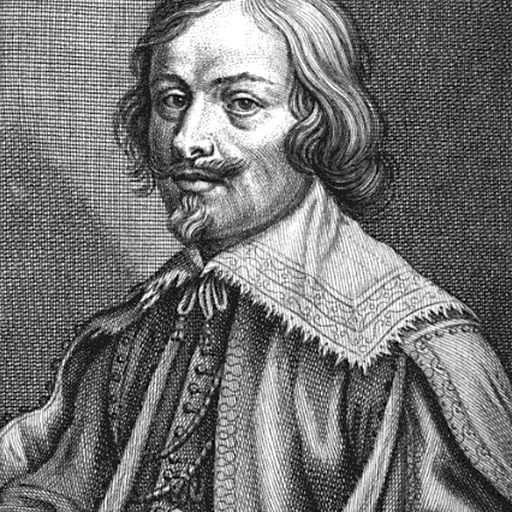
Jacques Callot was a baroque printmaker and draftsman from the Duchy of Lorraine.

 Holy Family at supper
 Restoration of the Aqueduct at Pisa
 Restoration of the Aqueduct at Pisa
 Square in Paris with Many Figures
 Square in Paris with Many Figures
 Horsemen Attacked by Robbers
 HOW WILL A COVERED PART BE CORRECTED?HOW WIKA A COVERED HEART DEED CORRECTED?
![Christ Walking on the Water [second plate], by Jacques Callot](https://artifactworldgallery.com/img/jacques-callot--christ-walking-on-the-water-second-plate--2069f3bfe4cb2126-w320.webp) Christ Walking on the Water [second plate]
Christ Walking on the Water [second plate]
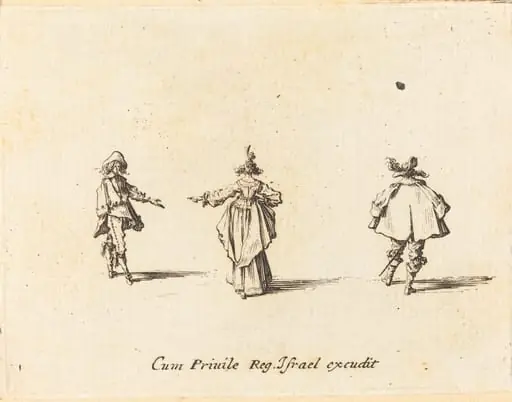 Lady with Outstretched Arm, Seen from Behind, and Two Gentlemen
 Lady Seen from Behind, and Two Gentlemen
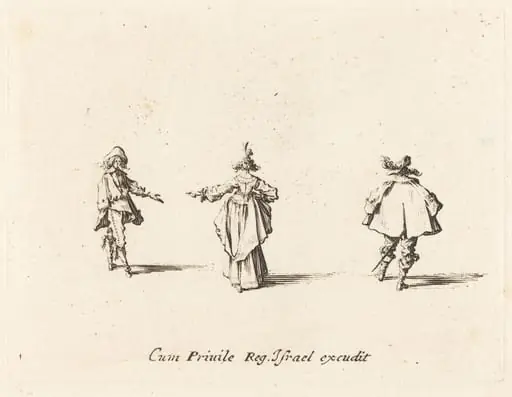 Lady with Outstretched Arm, Seen from Behind, and Two Gentlemen
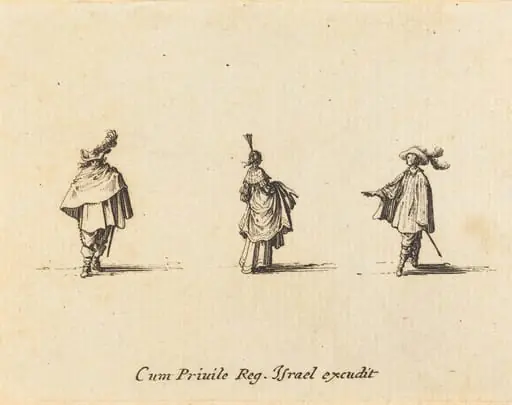 Lady with Dress Gathered Up, and Two Gentlemen
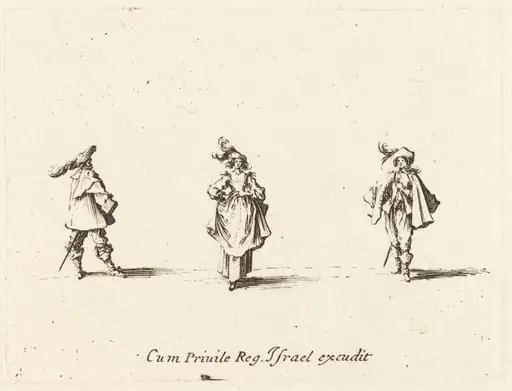 Lady with Plumes, and Two Gentlemen
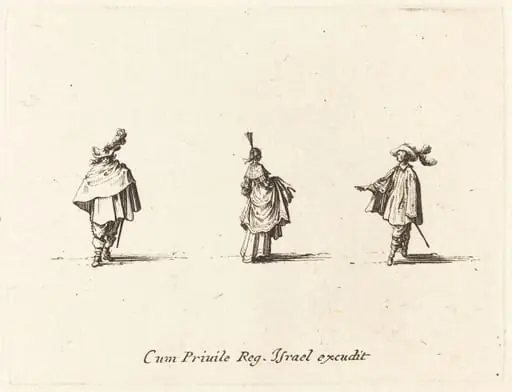 Lady with Dress Gathered Up, and Two Gentlemen
 Lady with Arms Folded, and Two Gentlemen
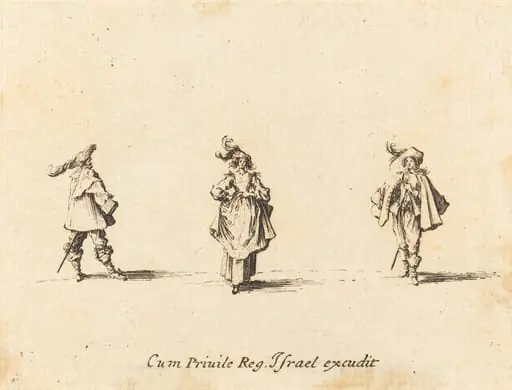 Lady with Plumes, and Two Gentlemen
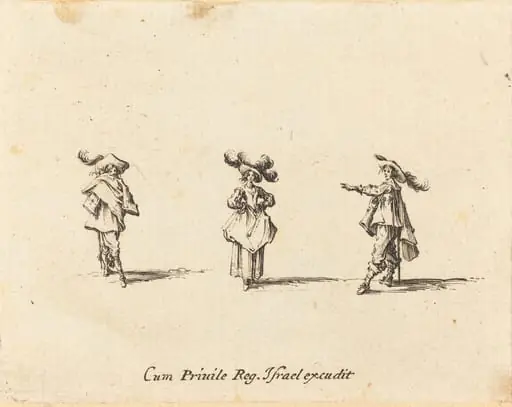 Lady with Large Plumes, and Two Gentlemen
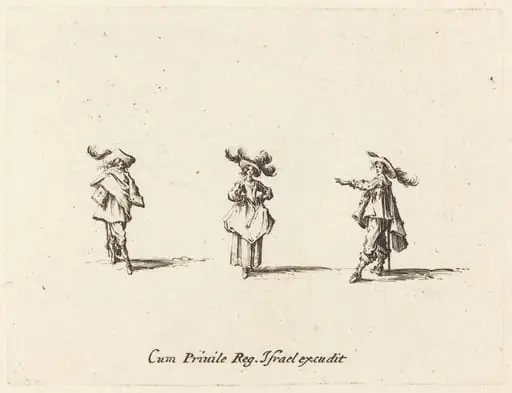 Lady with Large Plumes, and Two Gentlemen
 Lady in Long Cloak, and Two Gentlemen