Artwork
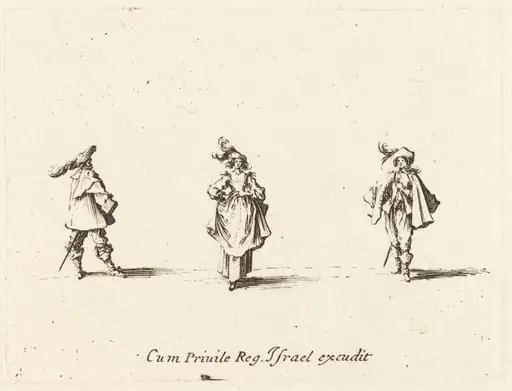
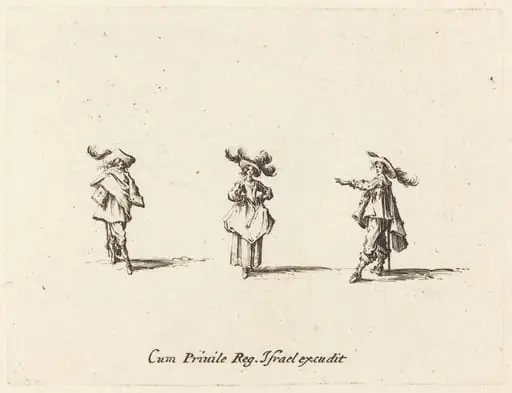
Lady with Plumes, and Two Gentlemen
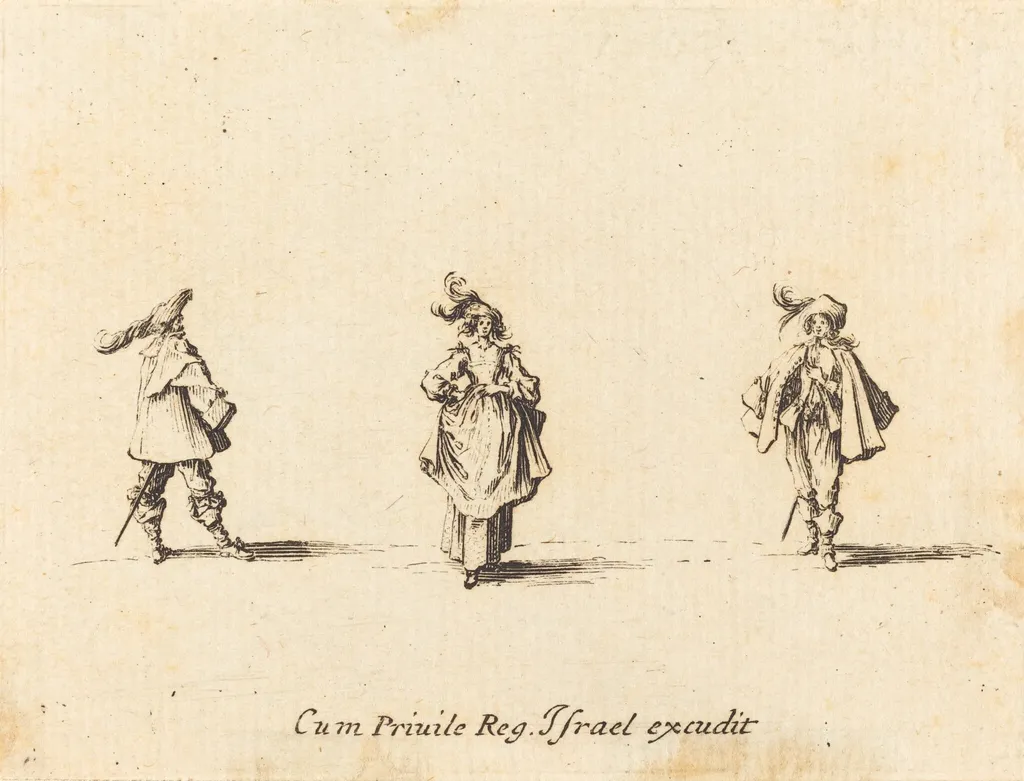
Lady with Plumes, and Two Gentlemen is an ink print by the Baroque artist Jacques Callot. It dates from 1634 and is held in the collection of the National Gallery of Art.
About this work
Overview
The composition captures a fleeting moment of aristocratic presence, rendered with the precision and spontaneity characteristic of his draftsmanship.
Created around 1634, this etching by Jacques Callot depicts three figures in elaborate early 17th-century attire on laid paper. As one of over 1,400 prints produced by the Lorrainer artist, it exemplifies his focus on social observation through printmaking. The composition captures a fleeting moment of aristocratic presence, rendered with the precision and spontaneity characteristic of his draftsmanship.
Subject & Meaning
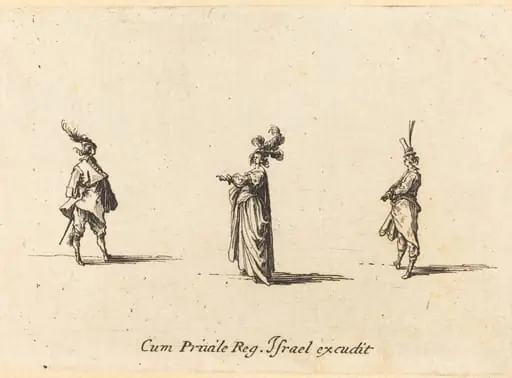
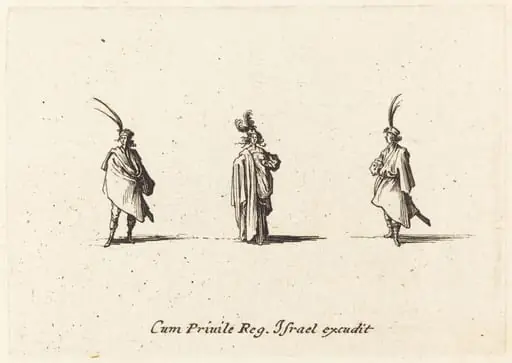
The figures—a woman adorned with an exaggerated plumed hat and two men in distinctive formal dress—suggest a scene of courtly or urban display. The woman’s towering feathered headdress and the men’s ornate garments imply performance of status, possibly at a public gathering. Callot does not idealize; instead, he records the visual language of social ambition in a manner that feels immediate and unvarnished.
Technique & Style
Callot employed fine-line etching to achieve a sketchlike quality, using sharp, fluid strokes that suggest movement and texture without heavy shading. The paper’s laid texture subtly enhances the ink’s grain, reinforcing the impression of a spontaneous observation. Details like fabric folds and feather plumes are rendered with economical yet precise lines, reflecting his mastery of the medium’s potential for both detail and immediacy.
History & Provenance
The print originates from Callot’s prolific output during his time in Florence and Paris, where he served noble patrons and observed urban life. While its early ownership is undocumented, it aligns with a broader corpus of his genre scenes collected by European institutions in the 18th and 19th centuries. Its survival in good condition reflects its enduring appeal among print collectors.
Context
In the 1630s, European courts emphasized elaborate dress as a marker of rank and refinement. Callot, working amid the political and cultural shifts of the Thirty Years’ War, turned his attention to the performative aspects of civilian and aristocratic life. This print stands apart from his more violent or satirical works, offering a quieter, observational glimpse into the rituals of appearance.
Legacy
Callot’s ability to capture social nuance through etching influenced generations of printmakers, particularly in France and the Netherlands. This work, though not widely exhibited, contributes to the understanding of how early modern artists documented everyday spectacle. Its restrained composition and technical clarity remain a reference for studies of Baroque graphic art and social portraiture.
Artist & collection
Artist
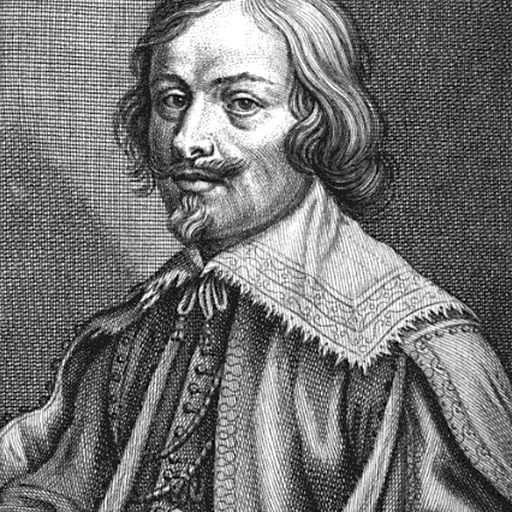
Jacques Callot was a baroque printmaker and draftsman from the Duchy of Lorraine.

 Holy Family at supper
 Restoration of the Aqueduct at Pisa
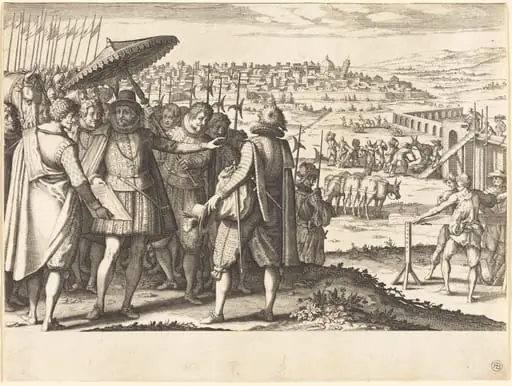 Restoration of the Aqueduct at Pisa
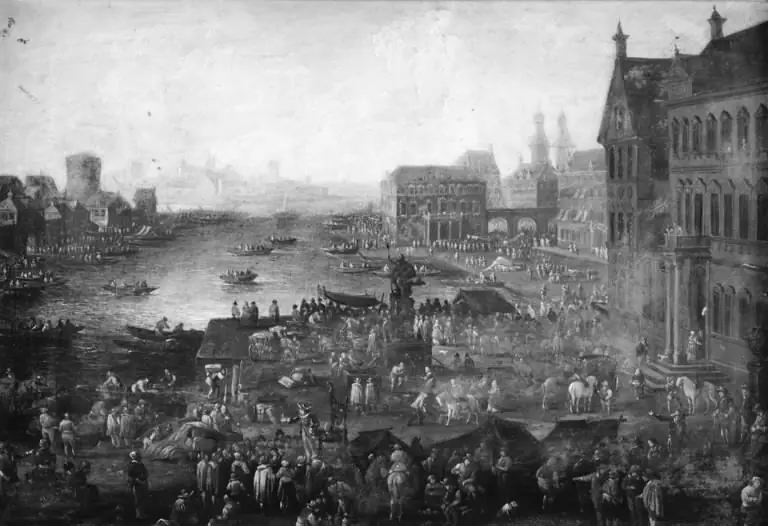 Square in Paris with Many Figures
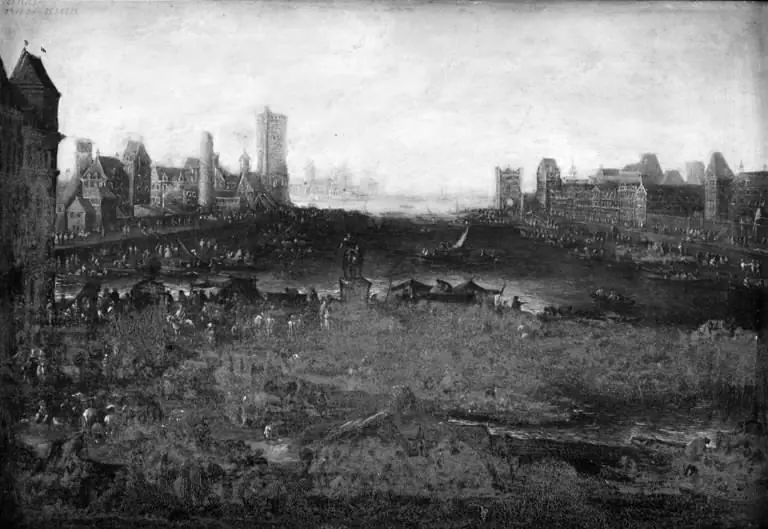 Square in Paris with Many Figures
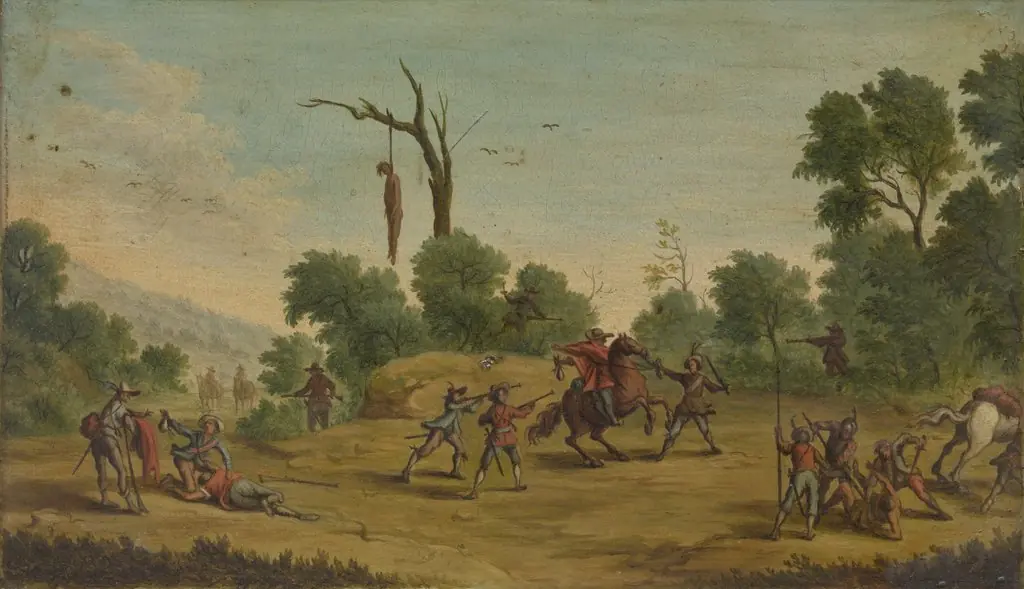 Horsemen Attacked by Robbers
 HOW WILL A COVERED PART BE CORRECTED?HOW WIKA A COVERED HEART DEED CORRECTED?
![Christ Walking on the Water [second plate], by Jacques Callot](https://artifactworldgallery.com/img/jacques-callot--christ-walking-on-the-water-second-plate--2069f3bfe4cb2126-w320.webp) Christ Walking on the Water [second plate]
Christ Walking on the Water [second plate]
 Lady with Plumed Hat, and Two Gentlemen
 Lady with Plumes, and Two Gentlemen
 Lady in Long Cloak, and Two Gentlemen
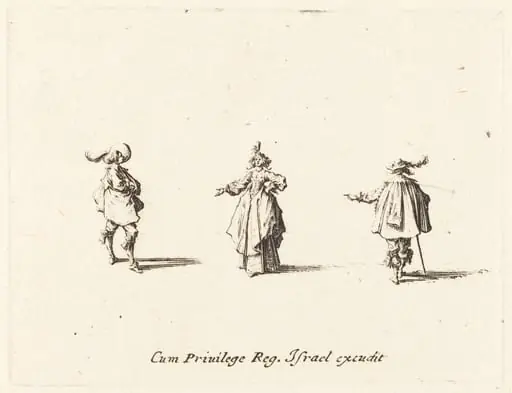 Lady with Outstretched Arm, and Two Gentlemen
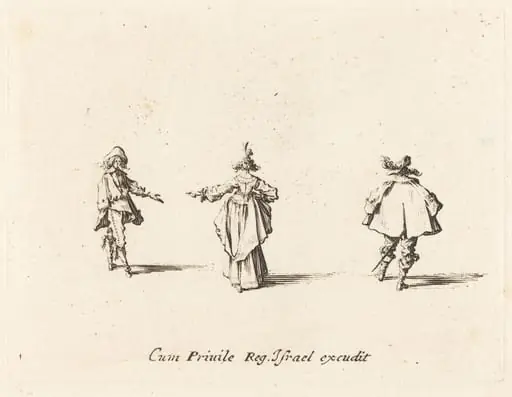 Lady with Outstretched Arm, Seen from Behind, and Two Gentlemen
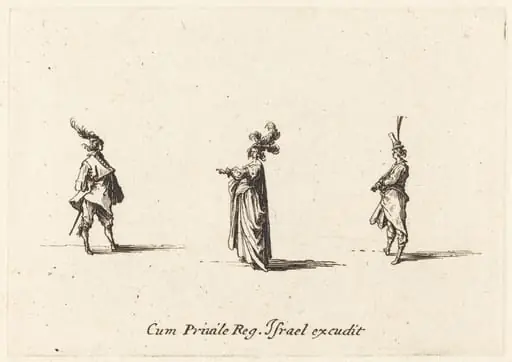 Lady with Plumed Hat, and Two Gentlemen
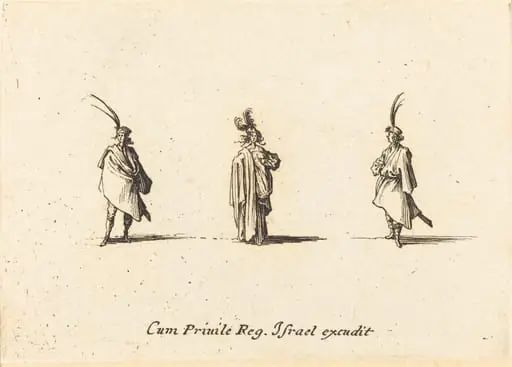 Lady in Long Cloak, and Two Gentlemen
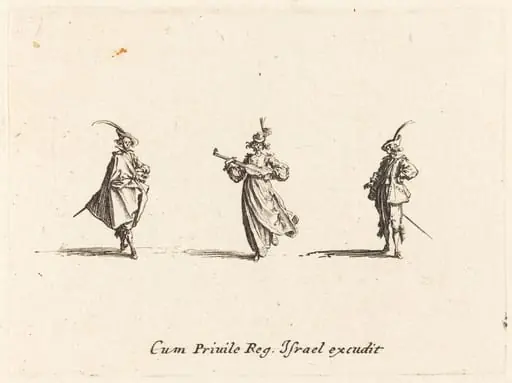 Lady with String Instrument, and Two Gentlemen
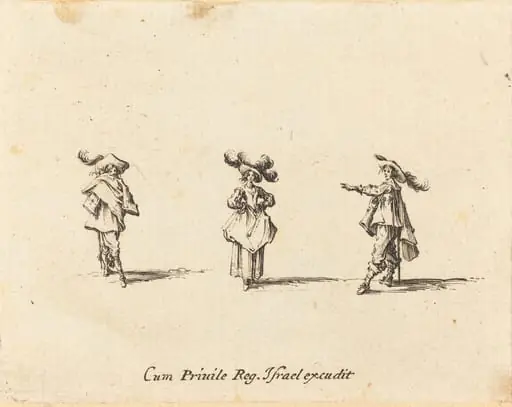 Lady with Large Plumes, and Two Gentlemen
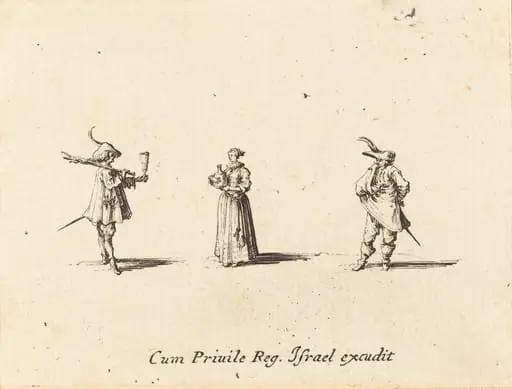 Lady with Wine Bottle, and Two Gentlemen
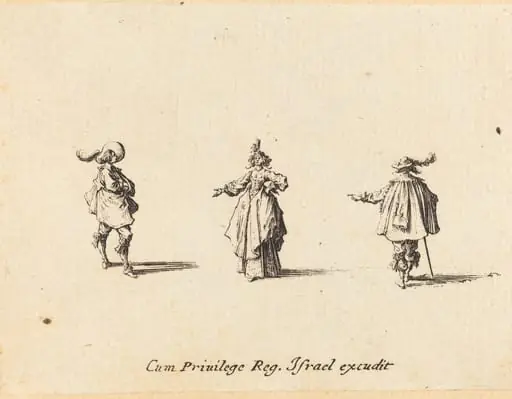 Lady with Outstretched Arm, and Two Gentlemen
 Lady with Large Plumes, and Two Gentlemen