Artwork
Lady with Outstretched Arm, and Two Gentlemen
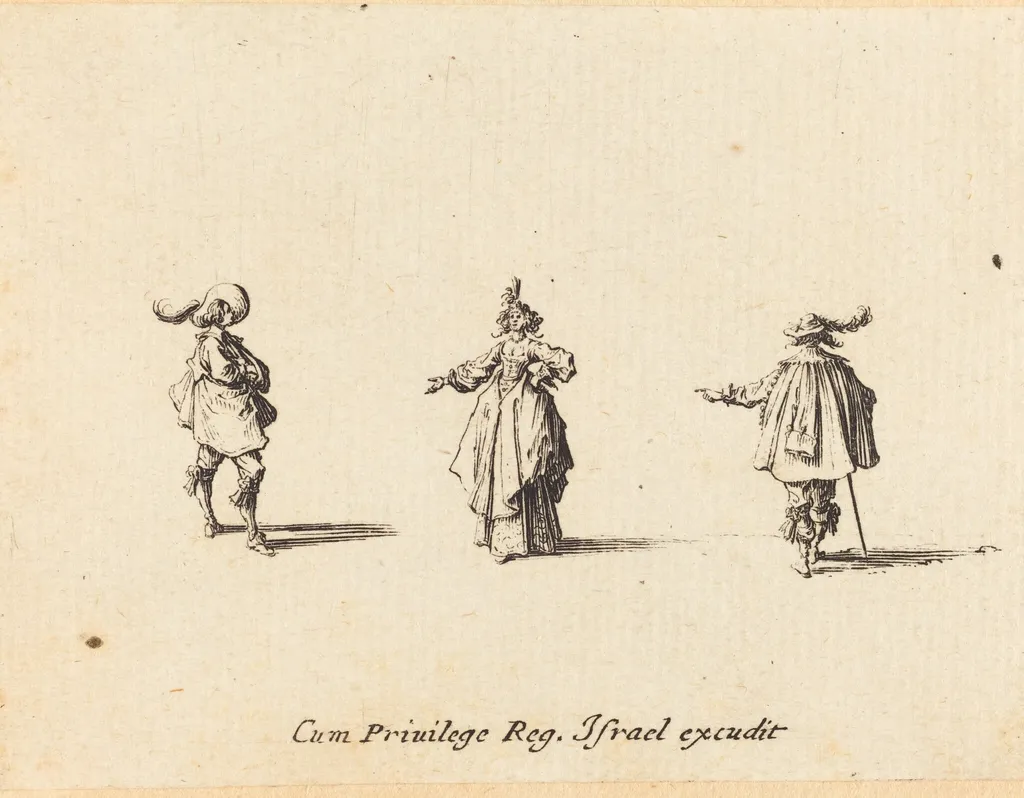
Lady with Outstretched Arm, and Two Gentlemen is an ink print by the Baroque artist Jacques Callot. It dates from 1634 and is held in the collection of the National Gallery of Art.
About this work
Overview
Created around 1634 by Jacques Callot, this etching on laid paper depicts three figures arranged in a linear composition.
Created around 1634 by Jacques Callot, this etching on laid paper depicts three figures arranged in a linear composition. Callot, a printmaker from the Duchy of Lorraine, was prolific in his use of etching, producing over a thousand works that captured the social and cultural textures of early 17th-century Europe. This piece exemplifies his precision in line and quiet narrative focus, typical of his mature period.
Subject & Meaning
The composition centers on a woman extending her arm, drawing the viewer’s attention to her gesture, while two men flank her in similar attire. Their coordinated clothing and formal posture suggest a ceremonial or courtly setting. The gesture may imply invitation, direction, or social hierarchy, though no explicit narrative is given. The scene evokes quiet ritual rather than dramatic action.
Technique & Style
Callot employed fine, controlled etching lines to render texture in fabric and subtle shifts in light across the figures. The use of laid paper, with its visible chain lines, enhances the tactile quality of the print. His meticulous attention to detail in folds, hats, and posture reflects his mastery of the medium, favoring clarity and restraint over theatricality.
History & Provenance
The work originates from Callot’s prolific output during his time in Florence and Paris, where he served aristocratic patrons. While its early ownership is undocumented, it aligns with other etchings from his 1630s period, often circulated among collectors of graphic art. No major institutional record of its early provenance is widely cited, but its style is consistent with his known oeuvre.
Context
In the 1630s, European print culture flourished as a means of disseminating visual ideas beyond painting. Callot’s works, though less overtly political than his war scenes, contributed to a growing interest in intimate, character-driven imagery. This etching reflects the era’s fascination with courtly manners and the quiet drama of everyday gestures among the elite.
Legacy
Callot’s influence extended to later printmakers through his technical innovations and compositional clarity. While this particular etching is not among his most reproduced works, it exemplifies his ability to convey social nuance with minimal means. It remains a quiet testament to his skill in capturing the dignity of ordinary moments within aristocratic settings.
Artist & collection

Artist
Jacques Callot was a baroque printmaker and draftsman from the Duchy of Lorraine.

 Holy Family at supper
 Restoration of the Aqueduct at Pisa
 Restoration of the Aqueduct at Pisa
 Square in Paris with Many Figures
 Square in Paris with Many Figures
 Horsemen Attacked by Robbers
 HOW WILL A COVERED PART BE CORRECTED?HOW WIKA A COVERED HEART DEED CORRECTED?
![Christ Walking on the Water [second plate], by Jacques Callot](https://artifactworldgallery.com/img/jacques-callot--christ-walking-on-the-water-second-plate--2069f3bfe4cb2126-w320.webp) Christ Walking on the Water [second plate]
Christ Walking on the Water [second plate]
 Lady with Outstretched Arm, and Two Gentlemen
 Lady with Outstretched Arm, Seen from Behind, and Two Gentlemen
 Lady with Outstretched Arm, Seen from Behind, and Two Gentlemen
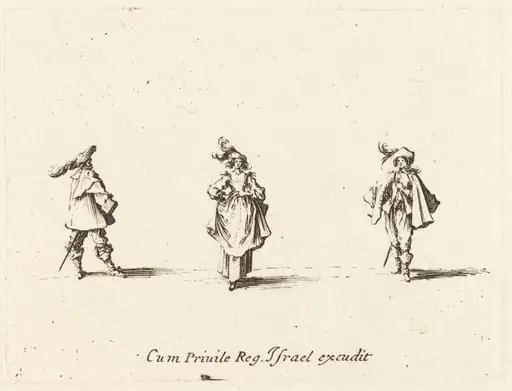 Lady with Plumes, and Two Gentlemen
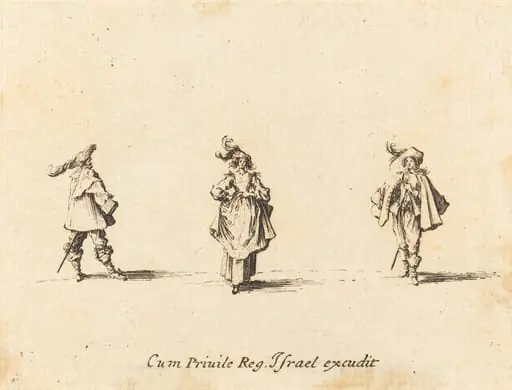 Lady with Plumes, and Two Gentlemen
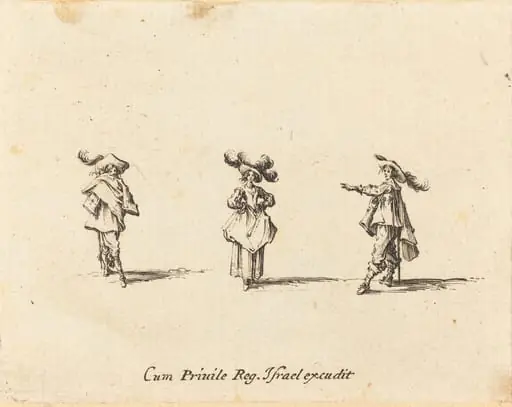 Lady with Large Plumes, and Two Gentlemen
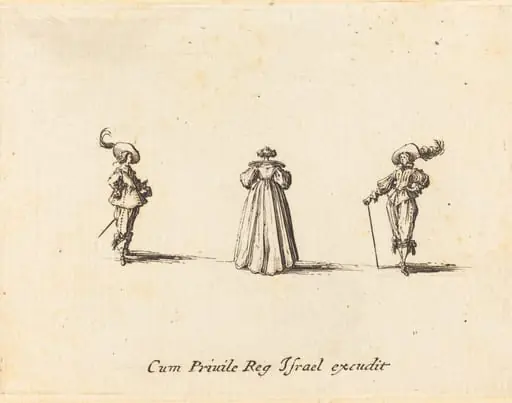 Lady Seen from Behind, and Two Gentlemen
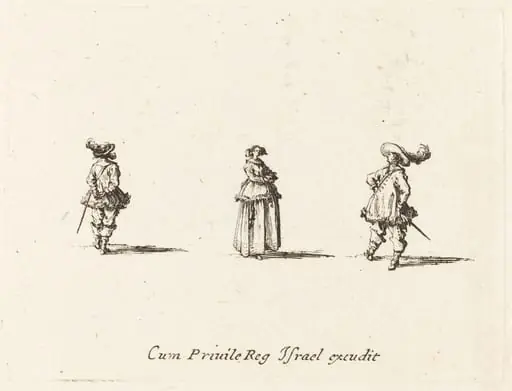 Lady with Arms Folded, and Two Gentlemen
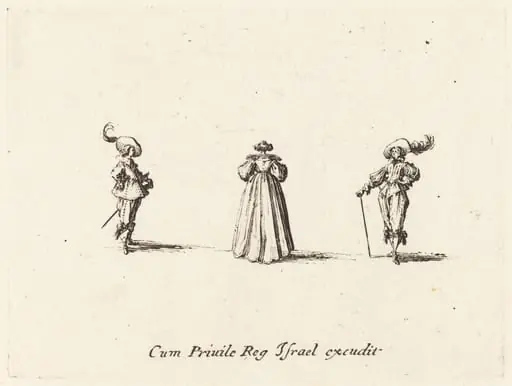 Lady Seen from Behind, and Two Gentlemen
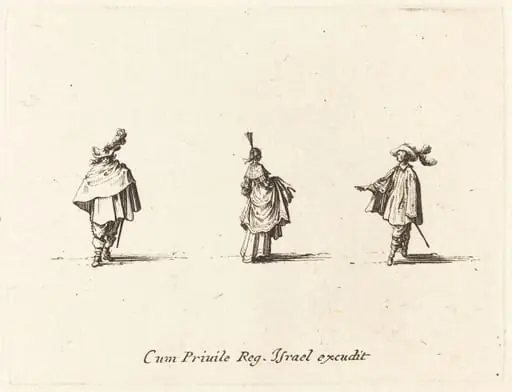 Lady with Dress Gathered Up, and Two Gentlemen
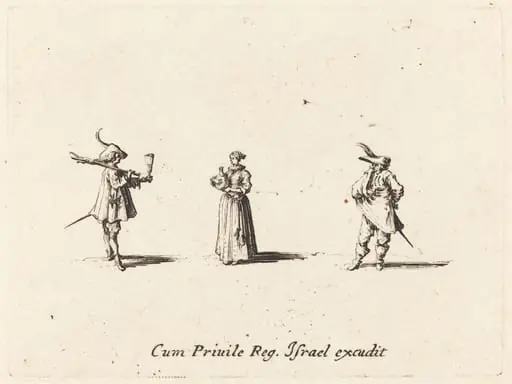 Lady with Wine Bottle, and Two Gentlemen