Artwork
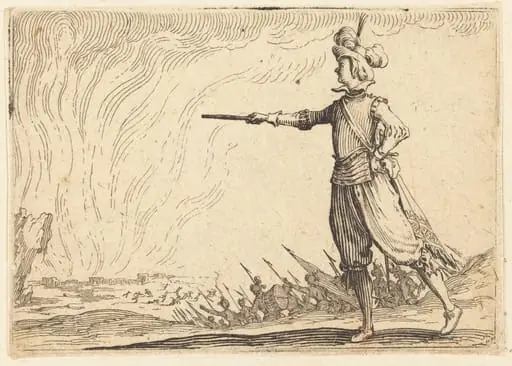
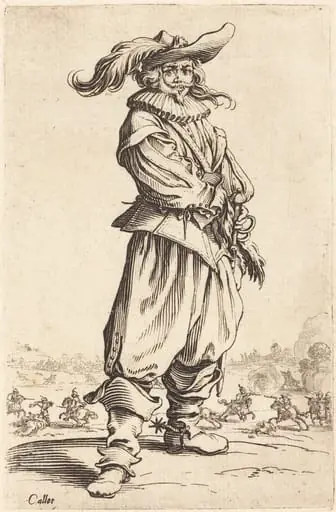
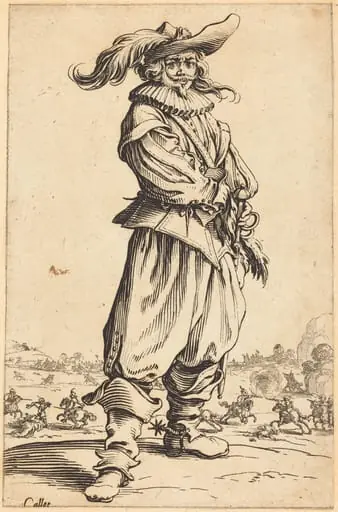
Military Commander on Foot
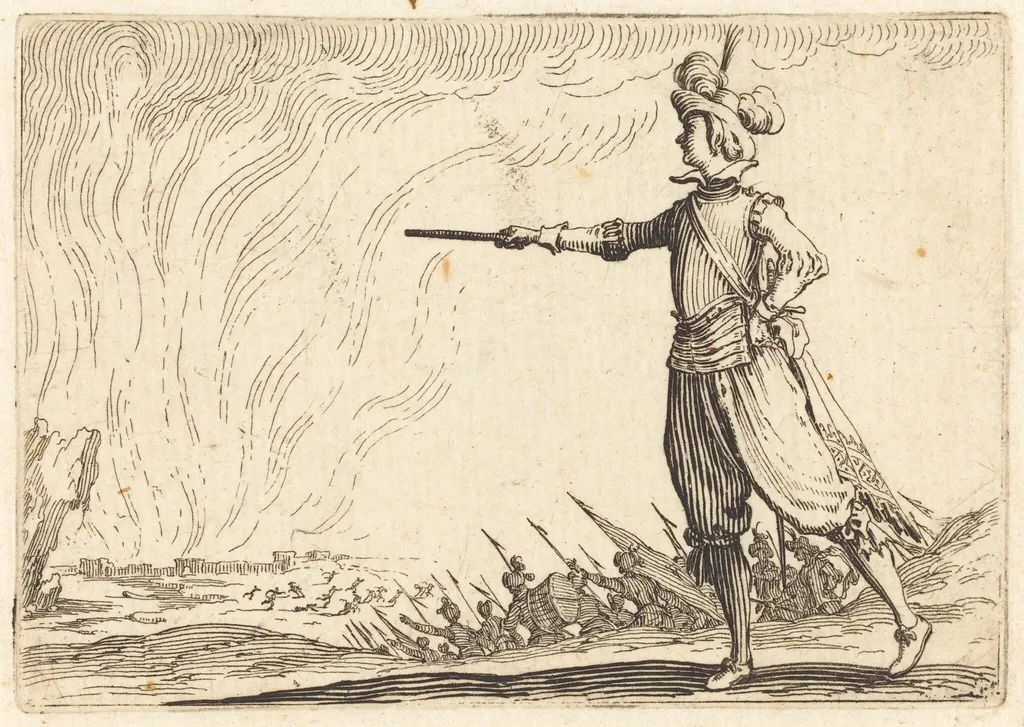
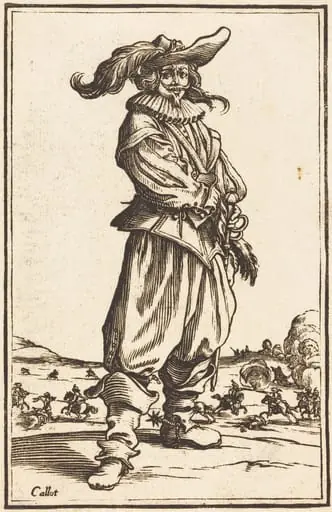
Military Commander on Foot is an ink print by the Baroque artist Jacques Callot. It dates from 1622 and is held in the collection of the National Gallery of Art.
About this work
Overview
Callot’s technical precision and attention to everyday detail distinguish his work within the broader tradition of Northern European printmaking.
Created around 1622 by Jacques Callot, this etching on laid paper depicts a solitary military officer standing on a road. As one of over 1,400 prints produced by the Lorrainer artist, it exemplifies his dedication to capturing the visual language of early 17th-century military life. Callot’s technical precision and attention to everyday detail distinguish his work within the broader tradition of Northern European printmaking.
Subject & Meaning
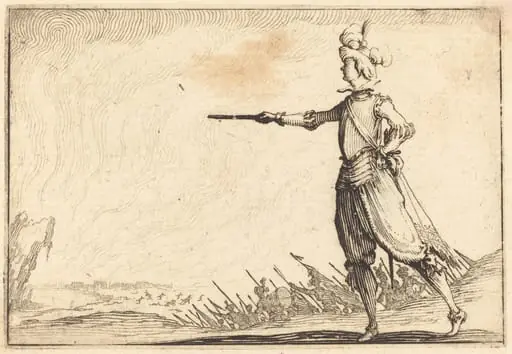
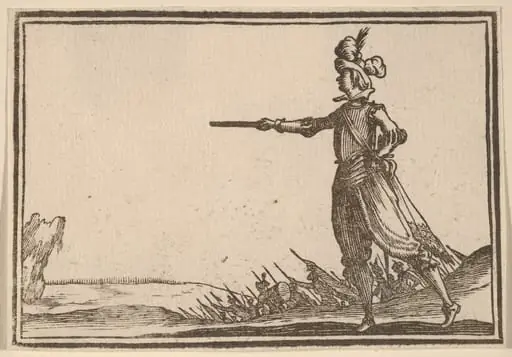
The figure is a foot officer, clad in period armor and a broad-brimmed hat, suggesting rank without overt grandeur. He stands alone on a path, his posture neither triumphant nor defeated, reflecting the quiet dignity of professional soldiers in an era of prolonged conflict. The image avoids narrative drama, instead offering a restrained portrait of military presence in civilian space.
Technique & Style
Callot employed fine-line etching to render intricate textures in fabric, metal, and terrain. His use of closely spaced, controlled lines creates depth and volume, particularly in the folds of armor and the roughness of the road. The precision of his burin work reveals his mastery of the etching needle, allowing for subtle gradations of light and shadow without wash or color.
History & Provenance
The print emerged during Callot’s most productive period, shortly after his return to Nancy from Italy. It likely circulated among collectors and military personnel, serving both as documentation and artistic study. While its early ownership is unrecorded, it aligns with the broader dissemination of his prints across Europe, particularly in regions affected by the Thirty Years’ War.
Context
In the early 1620s, Europe was engulfed in military upheaval, and printmakers like Callot became key chroniclers of soldierly life. His works filled a demand for visual records of camp routines, uniforms, and discipline. Unlike propagandistic imagery, his prints offered observational neutrality, capturing the mundane realities of war beyond battlefield heroics.
Legacy
Callot’s detailed etchings influenced generations of printmakers, particularly in their treatment of texture and social observation. 'Military Commander on Foot' stands as a quiet example of his broader contribution: transforming the etching medium into a vehicle for nuanced, non-idealized depictions of contemporary life, setting a precedent for later documentary print traditions.
Own this work as a print
Artist & collection
Artist
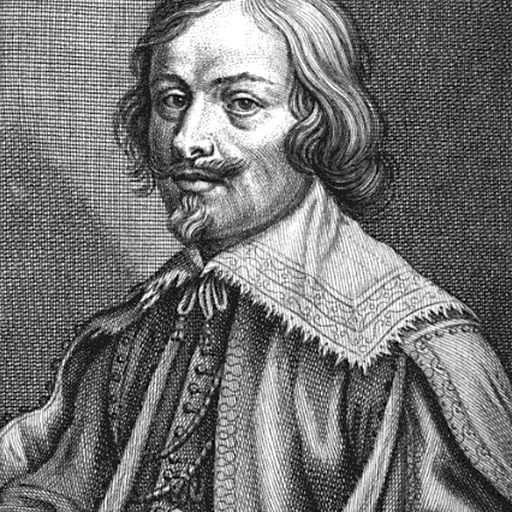
Jacques Callot was a baroque printmaker and draftsman from the Duchy of Lorraine.

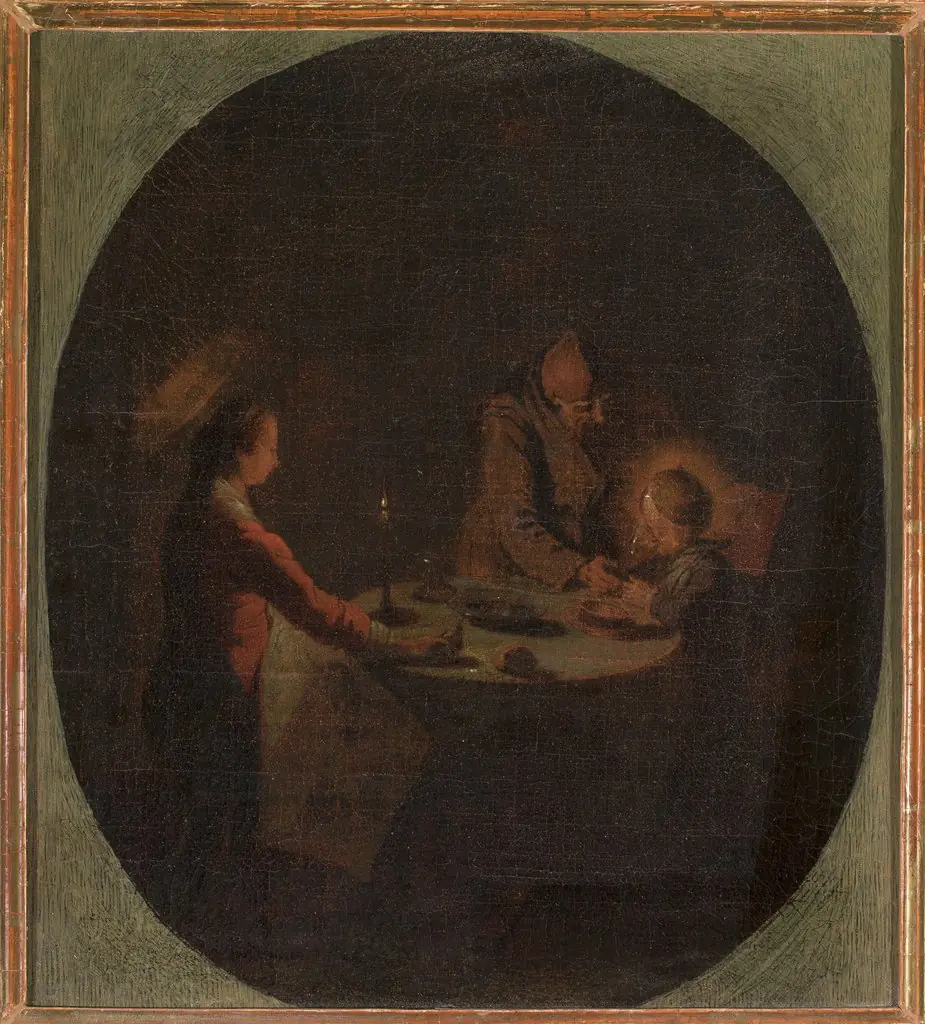 Holy Family at supper
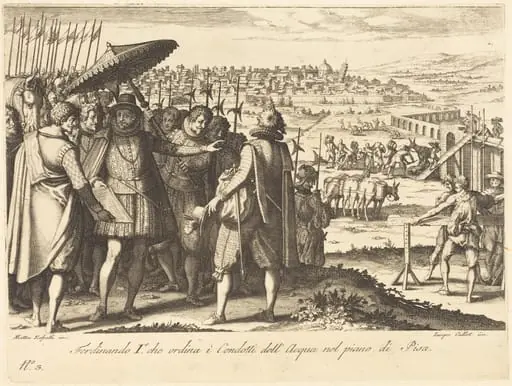 Restoration of the Aqueduct at Pisa
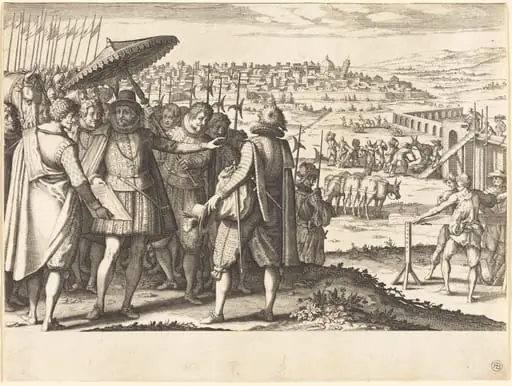 Restoration of the Aqueduct at Pisa
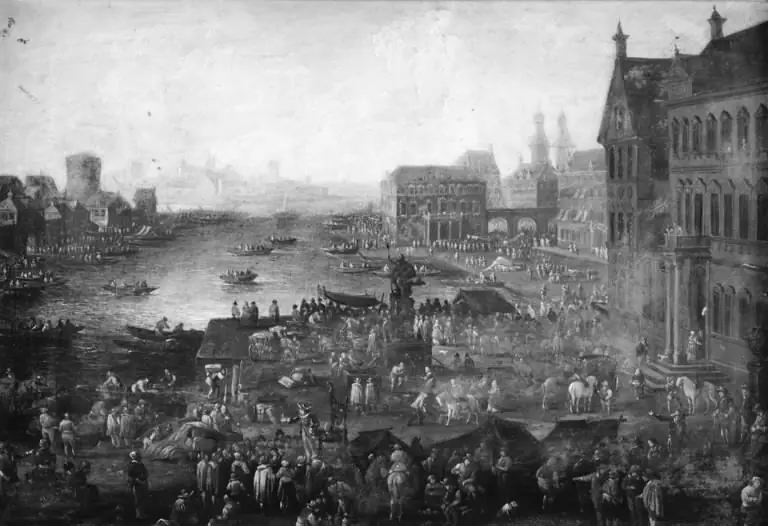 Square in Paris with Many Figures
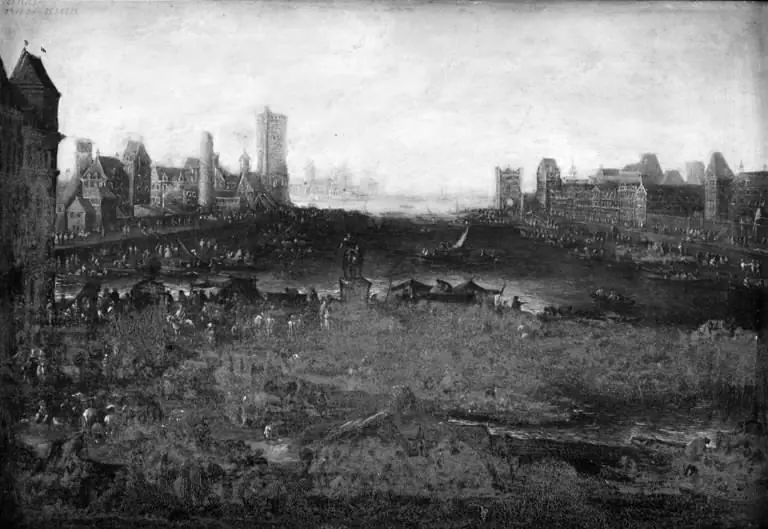 Square in Paris with Many Figures
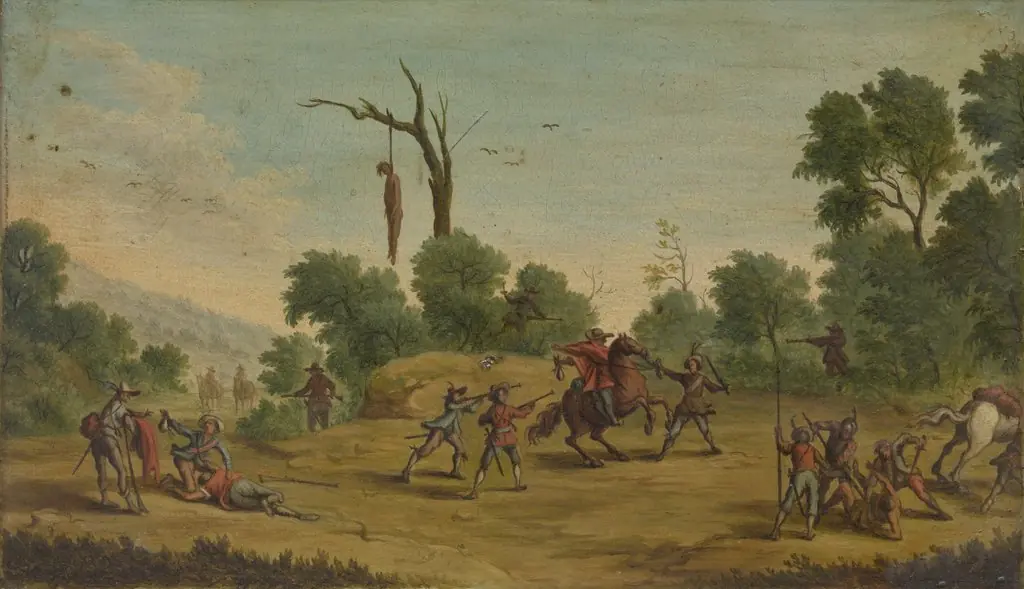 Horsemen Attacked by Robbers
 HOW WILL A COVERED PART BE CORRECTED?HOW WIKA A COVERED HEART DEED CORRECTED?
![Christ Walking on the Water [second plate], by Jacques Callot](https://artifactworldgallery.com/img/jacques-callot--christ-walking-on-the-water-second-plate--2069f3bfe4cb2126-w320.webp) Christ Walking on the Water [second plate]
Christ Walking on the Water [second plate]