Artwork
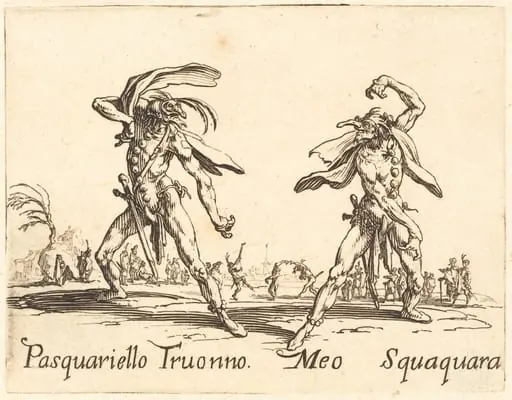
Pasquariello Truonno and Meo Squaquara
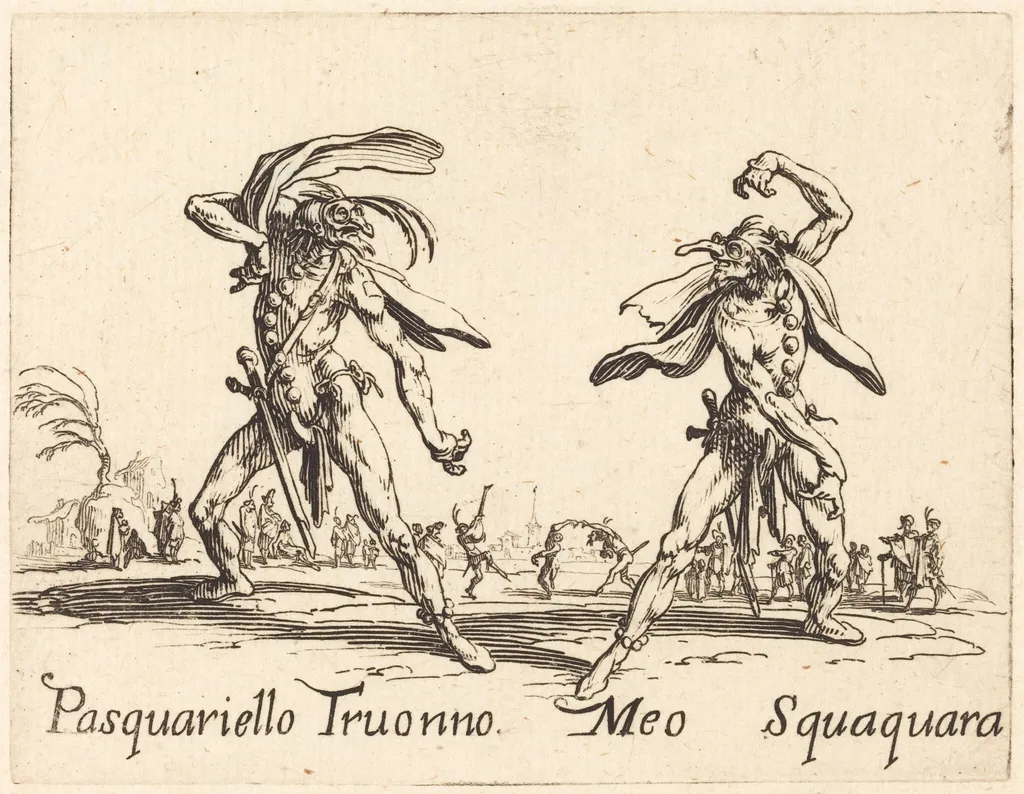
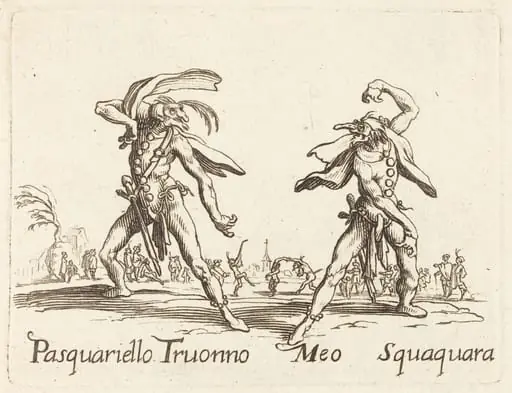
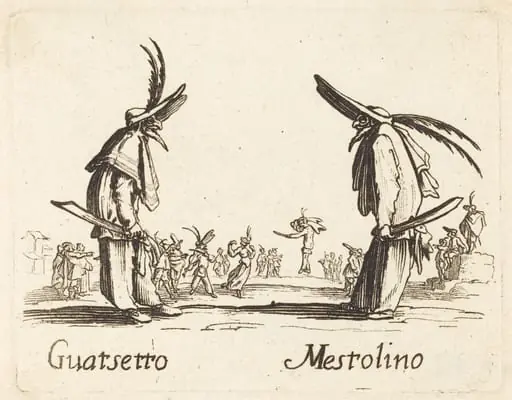
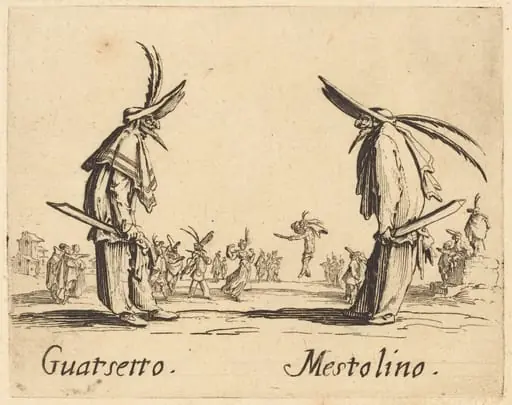
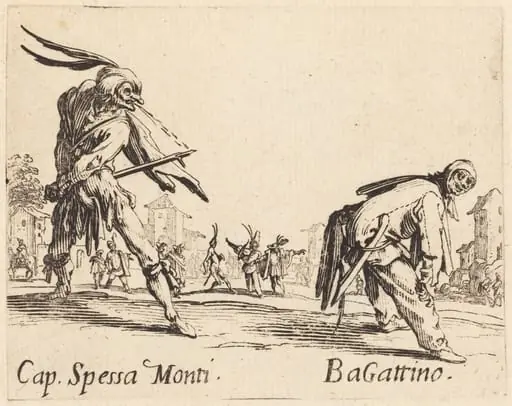
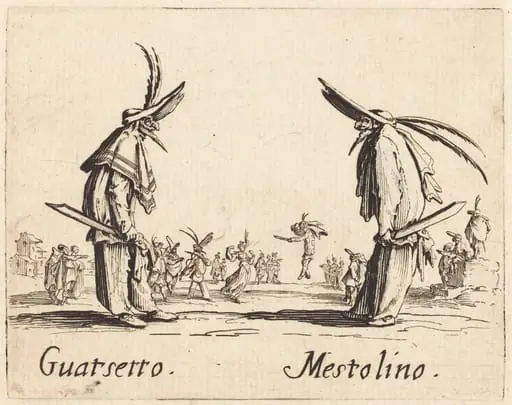
Pasquariello Truonno and Meo Squaquara is an ink print by the Baroque artist Jacques Callot. It dates from 1622 and is held in the collection of the National Gallery of Art.
About this work
Overview
This work is part of a series of genre scenes that blend observation with humor, rendered through the precise yet expressive technique of etching.
Created around 1622 by Jacques Callot, this etching on laid paper depicts two exaggerated figures in a landscape setting. Callot, a French artist from the Duchy of Lorraine, was known for his prolific output in printmaking, producing over a thousand etchings that captured the textures of everyday life. This work is part of a series of genre scenes that blend observation with humor, rendered through the precise yet expressive technique of etching.
Subject & Meaning
The figures, named Pasquariello Truonno and Meo Squaquara, appear to be comic archetypes, possibly drawn from Neapolitan folk traditions. Their towering forms and theatrical gestures suggest a satirical take on chaos or elemental forces, perhaps evoking storms or disorder. The scattered figures and smoldering fire in the background reinforce a sense of disruption, hinting at a narrative of disruption or farce rooted in popular culture of the time.
Technique & Style
Callot employed etching to achieve fine, fluid lines and dramatic contrasts. The loose, energetic strokes define the figures’ flowing garments and exaggerated postures, while the background is rendered with delicate, receding detail. His mastery of the medium allowed for both precision and spontaneity, characteristic of Baroque aesthetics that favored movement and emotional intensity over static composition.
History & Provenance
The print was made during Callot’s most productive period in Florence, where he was influenced by Italian theatrical and street life. Though its early ownership is undocumented, it entered major collections in the 18th and 19th centuries, often grouped with his other genre scenes. Its survival in multiple impressions suggests it was widely circulated among collectors interested in contemporary satire and printmaking innovation.
Context
Callot’s work emerged amid a flourishing of print culture in early 17th-century Europe, where etchings served as accessible records of social types and events. His depictions of jesters, soldiers, and street performers reflected broader interests in human behavior and class dynamics. This piece aligns with contemporaneous Italian and Flemish traditions of comic imagery, yet retains Callot’s distinctive attention to atmospheric detail and narrative nuance.
Legacy
Callot’s etchings, including this one, influenced generations of printmakers through their technical innovation and observational depth. While not widely exhibited as standalone works, they contributed to the legitimacy of genre subjects in fine art. His ability to capture fleeting moments with clarity helped shape the evolution of narrative printmaking in the centuries that followed.
Artist & collection
Artist
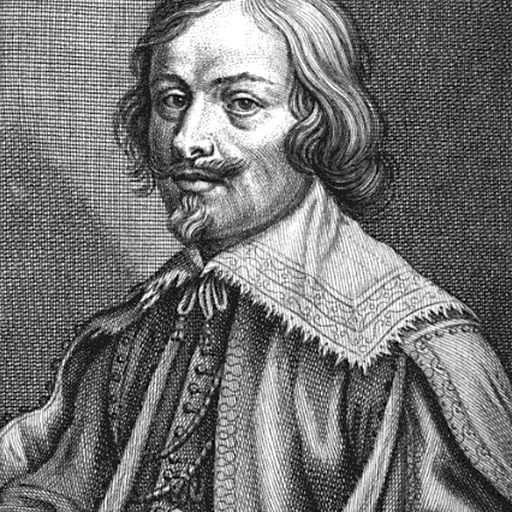
Jacques Callot was a baroque printmaker and draftsman from the Duchy of Lorraine.

 Holy Family at supper
 Restoration of the Aqueduct at Pisa
 Restoration of the Aqueduct at Pisa
 Square in Paris with Many Figures
 Square in Paris with Many Figures
 Horsemen Attacked by Robbers
 HOW WILL A COVERED PART BE CORRECTED?HOW WIKA A COVERED HEART DEED CORRECTED?
![Christ Walking on the Water [second plate], by Jacques Callot](https://artifactworldgallery.com/img/jacques-callot--christ-walking-on-the-water-second-plate--2069f3bfe4cb2126-w320.webp) Christ Walking on the Water [second plate]
Christ Walking on the Water [second plate]