Artwork
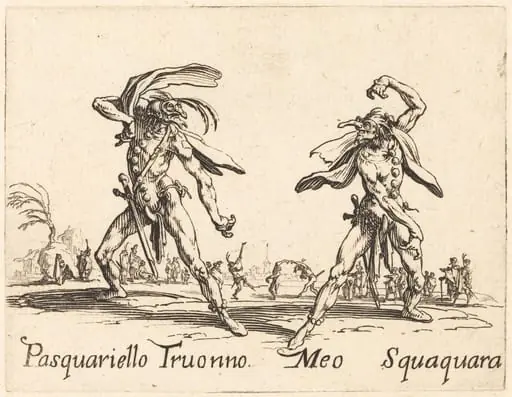
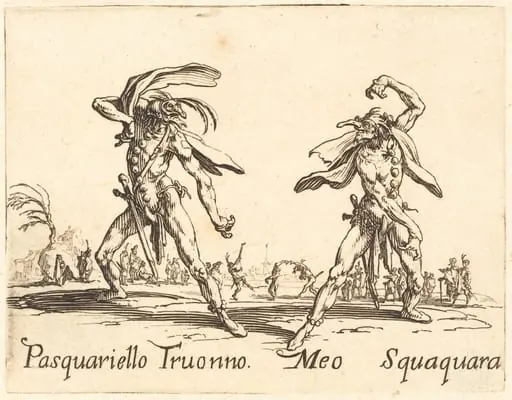
Pasquariello Truonno and Meo Squaquara
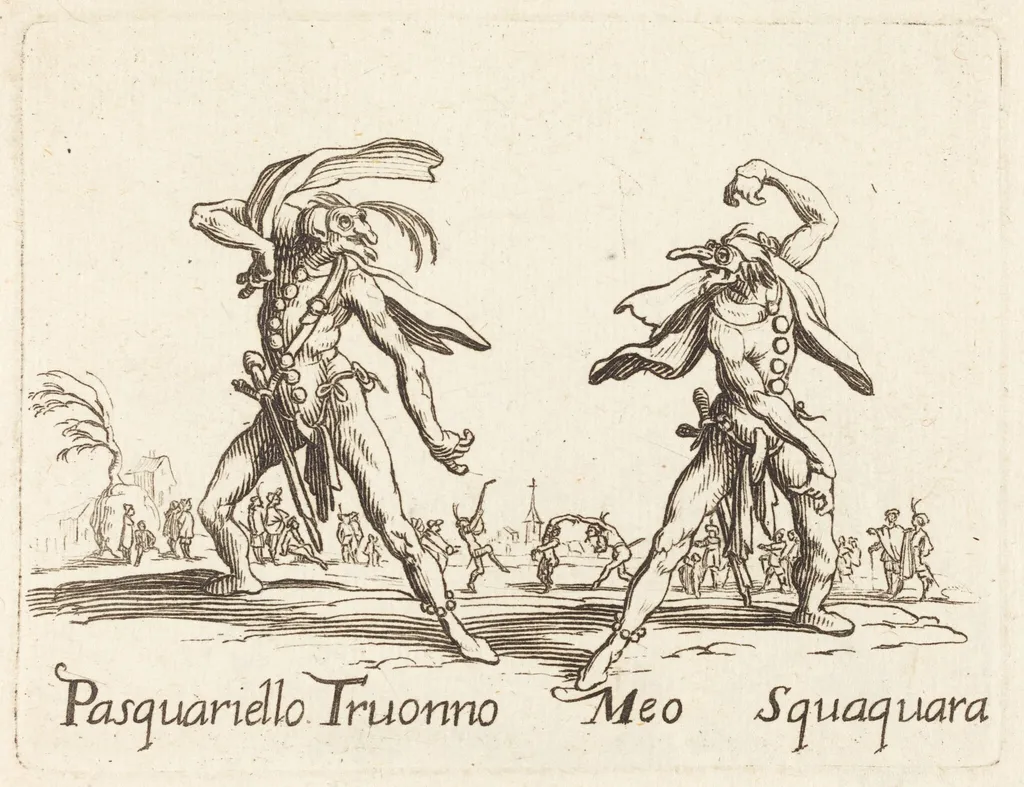
Pasquariello Truonno and Meo Squaquara is an ink print by the Baroque artist French 17th Century. It dates from 1622 and is held in the collection of the National Gallery of Art.
About this work
Overview
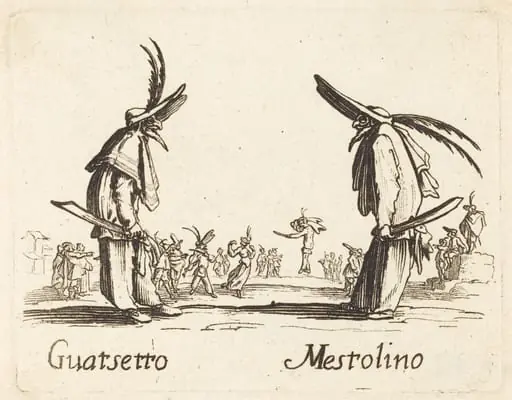
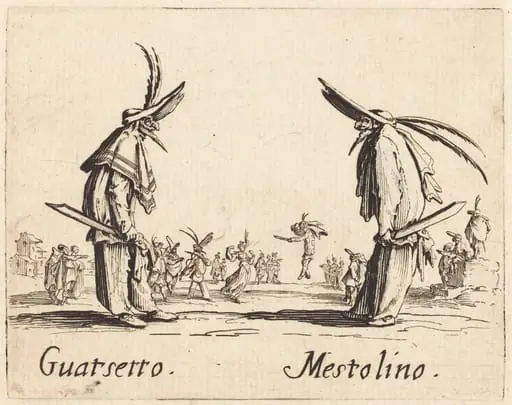
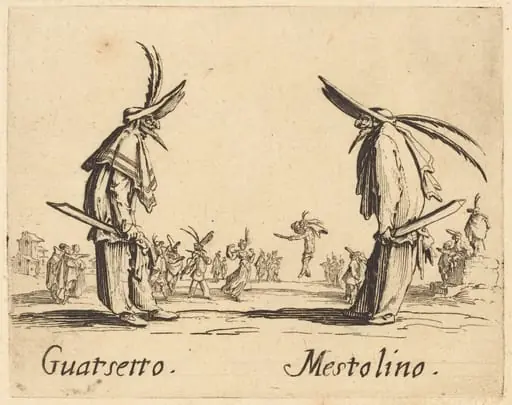
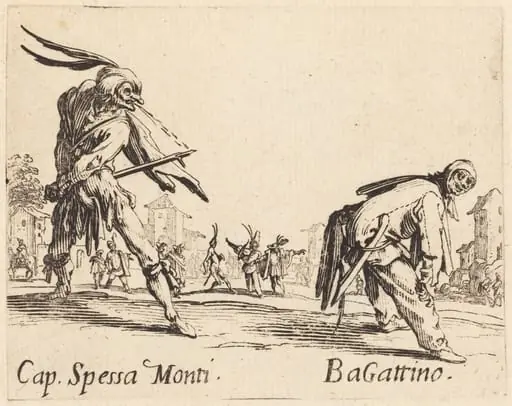
This etching on laid paper depicts a dramatic scene of two gigantic, winged figures, identified as Pasquariello Truonno and Meo Squaquara, rampaging through a village. The contrast between their destructive actions and serene facial expressions underscores the artwork's intrigue.
Subject & Meaning
The subject revolves around the mythological or allegorical figures of Pasquariello Truonno (crowned with feathers) and Meo Squaquara (in a loose robe), whose names suggest associations with storm giants. Their calm demeanor amidst chaos may symbolize the unpredictable nature of natural forces or the coexistence of serenity and destruction.
Technique & Style
Executed as an etching, the artwork showcases the artist's skill in carving lines into a metal plate to achieve detailed, expressive imagery. The technique allowed for the precise rendering of contrasting elements: the giants' massive forms, the miniature villagers, and the detailed village backdrop.
History & Provenance
Limited information is provided regarding the artwork's historical context, creation date, or ownership history. Further research would be necessary to illuminate its provenance and the artist's intentions behind the piece.
Context
While specific contextual details about the artwork's creation are lacking, the depiction of giants interacting with human settlements suggests it might relate to folklore, mythological themes, or allegorical narratives common in European art, particularly in the tradition of depicting supernatural beings in everyday settings.
Legacy
The artwork's impact or influence on subsequent artistic works is not immediately evident from the provided information. Its legacy, if any, would depend on its reception, exhibition history, and how it has been interpreted or referenced by later artists or scholars.
Artist & collection

Artist
Seventeenth-century French printmakers turned ink into story. Their tools were burin and acid, paper their stage. Look at the Beggar Woman with Rosary (1622), etched on laid paper, her hands folded around faith, or The…