Artwork
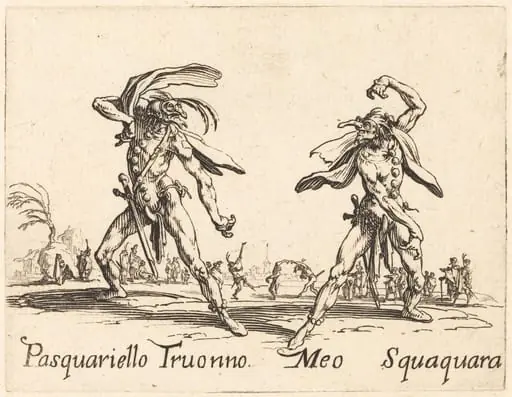
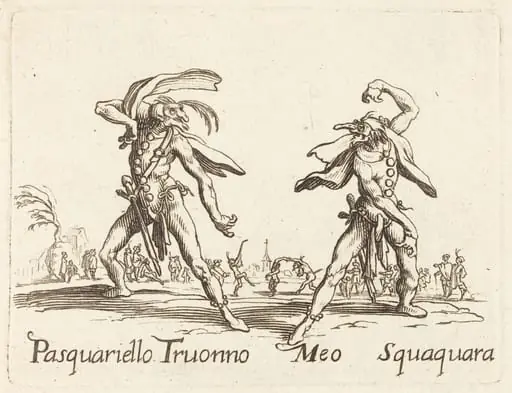
Pasquariello Truonno and Meo Squaquara
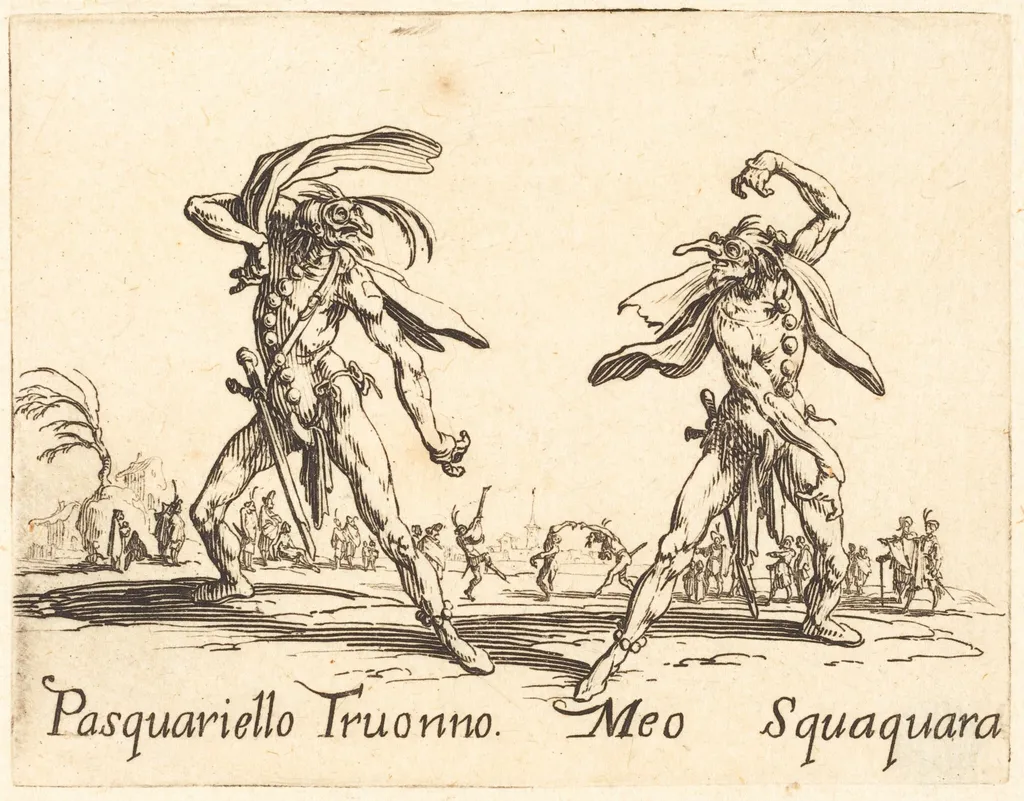
Pasquariello Truonno and Meo Squaquara is an ink print by the Baroque artist Jacques Callot. It dates from 1622 and is held in the collection of the National Gallery of Art.
About this work
Overview
Pasquariello Truonno and Meo Squaquara is an etching on laid paper created by Jacques Callot around 1622. As a prolific French baroque printmaker, Callot produced over 1,400 etchings, capturing scenes of everyday life, religious themes, and military subjects, often set against detailed landscapes.
Subject & Meaning
The print depicts two imposing figures, likely inspired by the commedia dell’arte tradition, dominating a scene of fleeing crowds. These characters, identified by name, may originate from a narrative or festival context, reflecting Callot’s observation of contemporary society.
Technique & Style
Executed in etching, the work showcases Callot’s contribution to the technical and narrative evolution of old master printmaking. The contrast between the gigantic, elaborately dressed figures and the tiny, panicked crowd highlights Callot’s mastery of scale and composition.
History & Provenance
Created circa 1622, the etching is part of Callot’s extensive body of work. While specific ownership history is not provided, the piece is characteristic of Callot’s output during his productive period in the early 17th century.
Context
This work reflects the baroque era’s fascination with contrasting scales, drama, and everyday life. The commedia dell’arte influence suggests a connection to popular theatrical traditions of the time.
Legacy
Pasquariello Truonno and Meo Squaquara contributes to Callot’s legacy as a innovator in printmaking, influencing the development of narrative and technical aspects in the medium.
Artist & collection
Artist
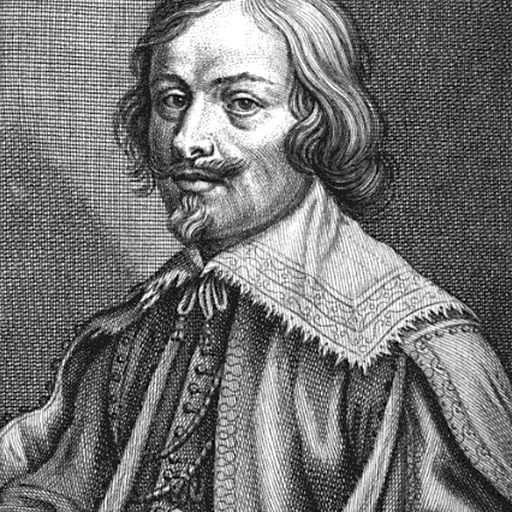
Jacques Callot was a baroque printmaker and draftsman from the Duchy of Lorraine.

 Holy Family at supper
 Restoration of the Aqueduct at Pisa
 Restoration of the Aqueduct at Pisa
 Square in Paris with Many Figures
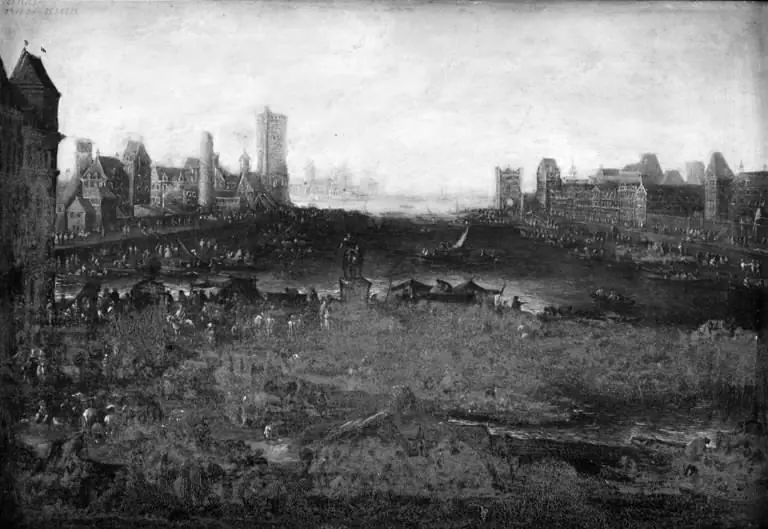 Square in Paris with Many Figures
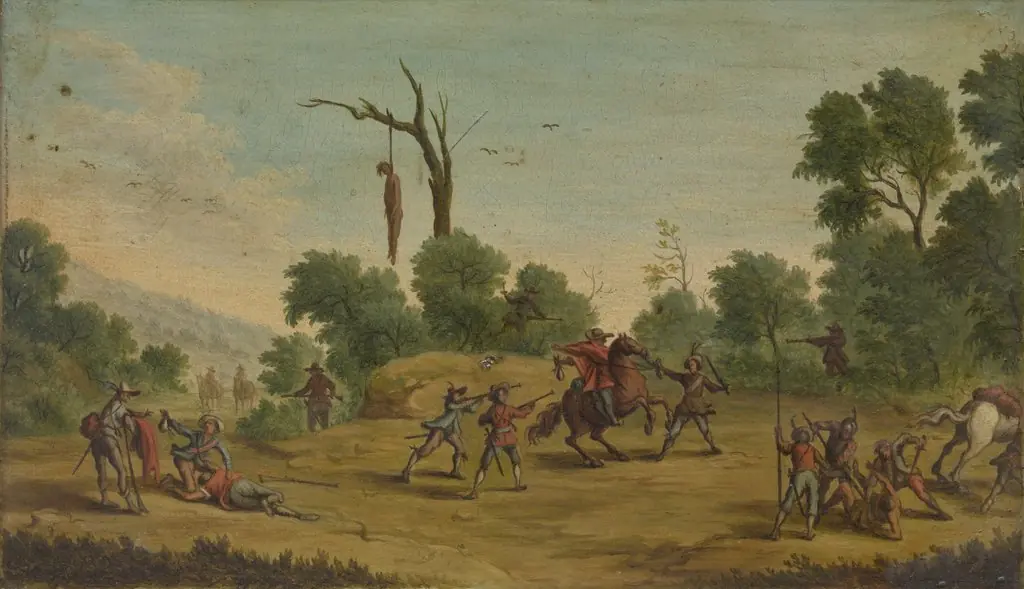 Horsemen Attacked by Robbers
 HOW WILL A COVERED PART BE CORRECTED?HOW WIKA A COVERED HEART DEED CORRECTED?
![Christ Walking on the Water [second plate], by Jacques Callot](https://artifactworldgallery.com/img/jacques-callot--christ-walking-on-the-water-second-plate--2069f3bfe4cb2126-w320.webp) Christ Walking on the Water [second plate]
Christ Walking on the Water [second plate]