Artwork
Piazza Santa Croce, Florence
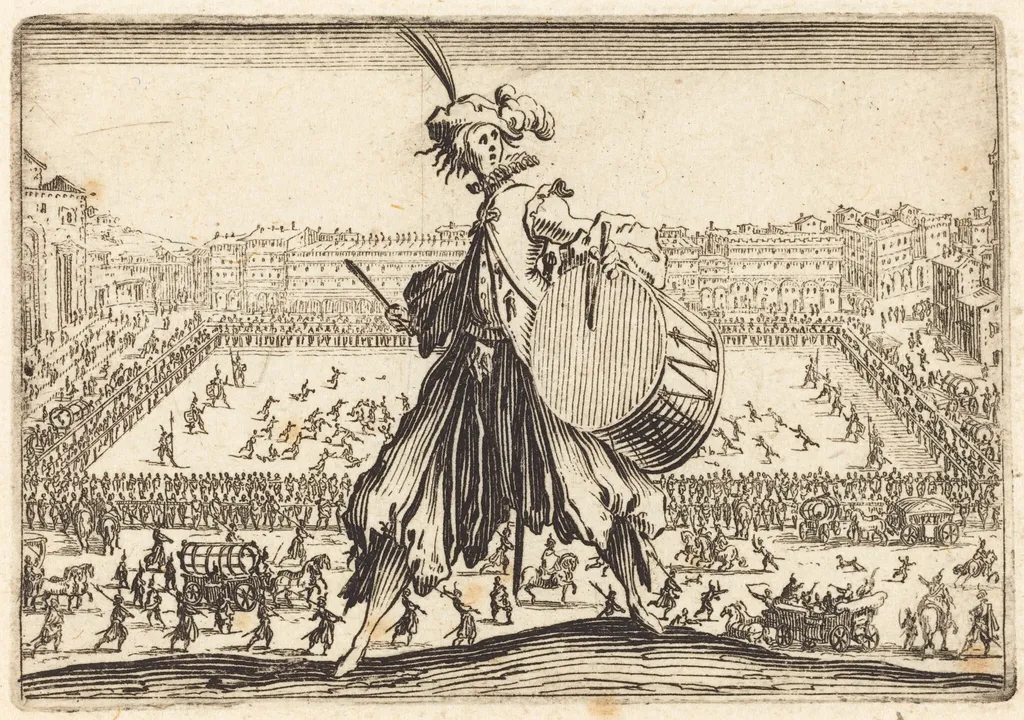
Piazza Santa Croce, Florence is an ink print by the Baroque artist Jacques Callot. It dates from 1622 and is held in the collection of the National Gallery of Art.
About this work
Overview
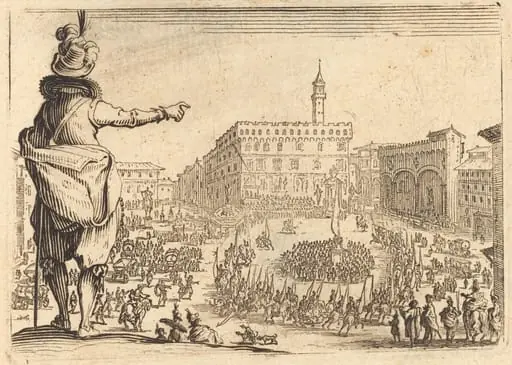
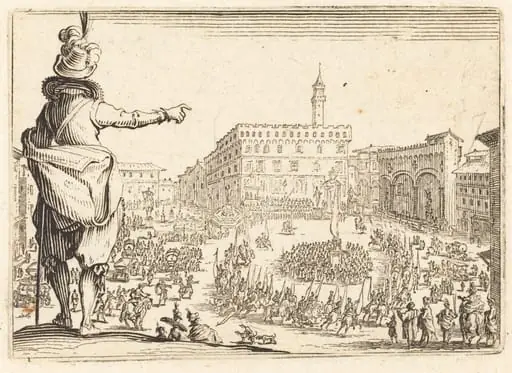
Jacques Callot, a French printmaker from Lorraine, produced this etching around 1622 during his time in Italy. Rendered on laid paper, the work is one of over 1,400 prints he created, reflecting his focus on urban life and social observation. The scene captures a public square in Florence, rendered with meticulous line work and a keen eye for spatial depth, characteristic of his mature style.
Subject & Meaning
The scene lacks overt narrative or religious symbolism, instead emphasizing the rhythm and variety of public interaction in early 17th-century Florence.
The etching portrays Piazza Santa Croce as a vibrant crossroads of daily life, with figures of differing social standing intermingling. A central figure in a long coat, drum in hand, suggests a performer or municipal musician, anchoring the composition. The scene lacks overt narrative or religious symbolism, instead emphasizing the rhythm and variety of public interaction in early 17th-century Florence.
Technique & Style
Callot employed fine, controlled etching lines to build texture and movement across the crowded square. His use of hatching and cross-hatching creates subtle gradations of light and shadow, enhancing the sense of depth and volume. The density of figures is balanced by the architectural backdrop, demonstrating his command of perspective and his ability to render complex scenes with clarity.
History & Provenance
Created during Callot’s stay in Florence, the print likely served as a record of the city’s public spaces for European audiences familiar with Italian urban culture. It was part of a broader series documenting Italian life, circulated among collectors and artists. The work survives in multiple impressions, indicating its popularity and the artist’s active print market.
Context
In the early 1600s, Florence was a center of artistic and civic activity, with piazzas serving as stages for both ritual and everyday life. Callot’s interest in such scenes aligned with broader European trends in genre depiction, influenced by Dutch and Italian realism. His prints offered a secular counterpoint to religious imagery dominant in print culture at the time.
Legacy
Callot’s detailed urban views influenced later generations of printmakers, particularly in their treatment of crowd scenes and architectural setting. While not widely exhibited in his lifetime as a standalone work, this etching exemplifies his contribution to the documentation of early modern public space, bridging observation and artistry in print.
Artist & collection
Artist
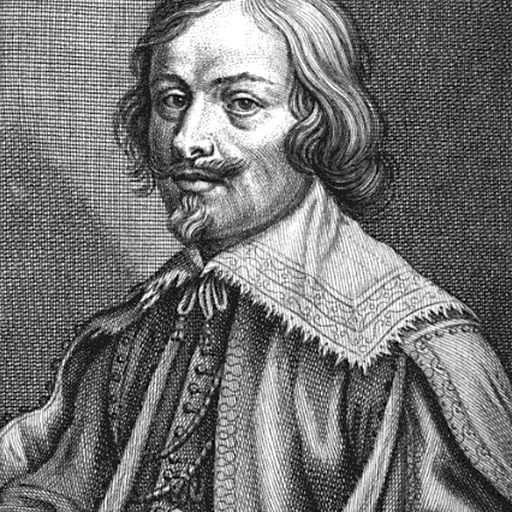
Jacques Callot was a baroque printmaker and draftsman from the Duchy of Lorraine.

 Holy Family at supper
 Restoration of the Aqueduct at Pisa
 Restoration of the Aqueduct at Pisa
 Square in Paris with Many Figures
 Square in Paris with Many Figures
 Horsemen Attacked by Robbers
 HOW WILL A COVERED PART BE CORRECTED?HOW WIKA A COVERED HEART DEED CORRECTED?
![Christ Walking on the Water [second plate], by Jacques Callot](https://artifactworldgallery.com/img/jacques-callot--christ-walking-on-the-water-second-plate--2069f3bfe4cb2126-w320.webp) Christ Walking on the Water [second plate]
Christ Walking on the Water [second plate]
 Piazza Santa Croce, Florence
 Piazza Santa Croce, Florence
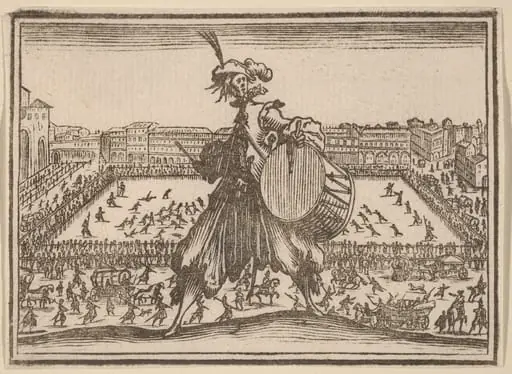 Piazza Santa Croce, Florence
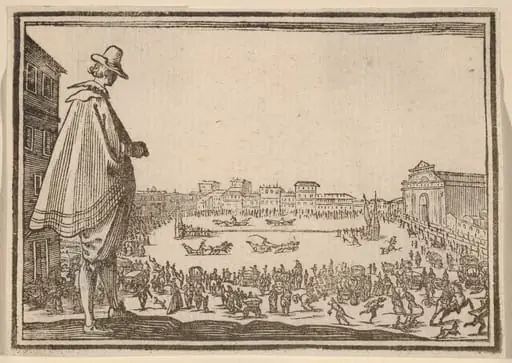 Piazza Santa Maria Novella, Florence
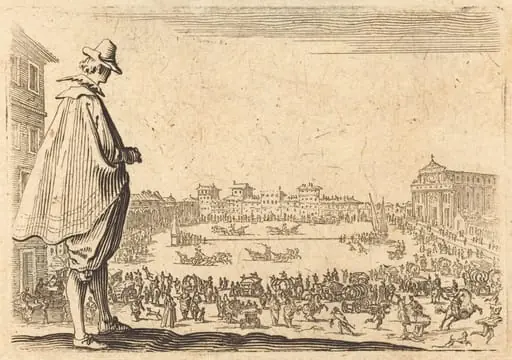 Piazza Santa Maria Novella, Florence
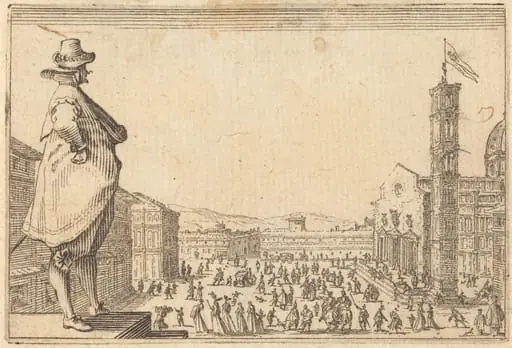 Piazza del Duomo, Florence
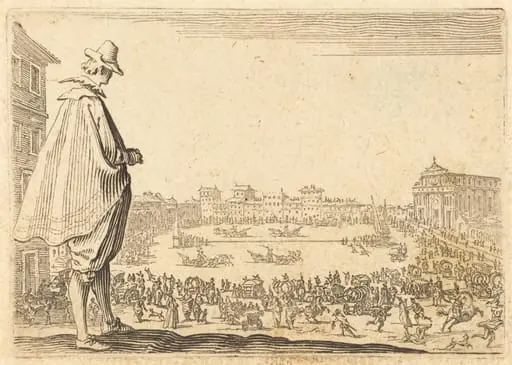 Piazza Santa Maria Novella, Florence
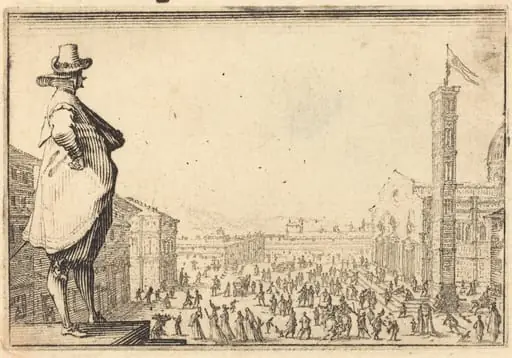 Piazza del Duomo, Florence
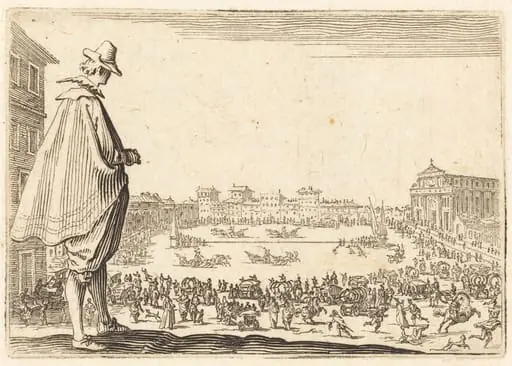 Piazza Santa Maria Novella, Florence
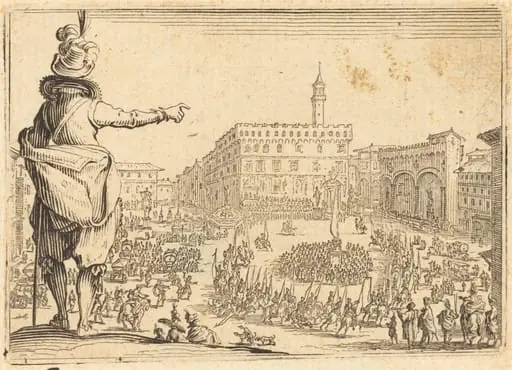 Piazza della Signoria, Florence
 Piazza della Signoria, Florence
 Piazza della Signoria, Florence