Artwork
Piazza Santa Croce, Florence
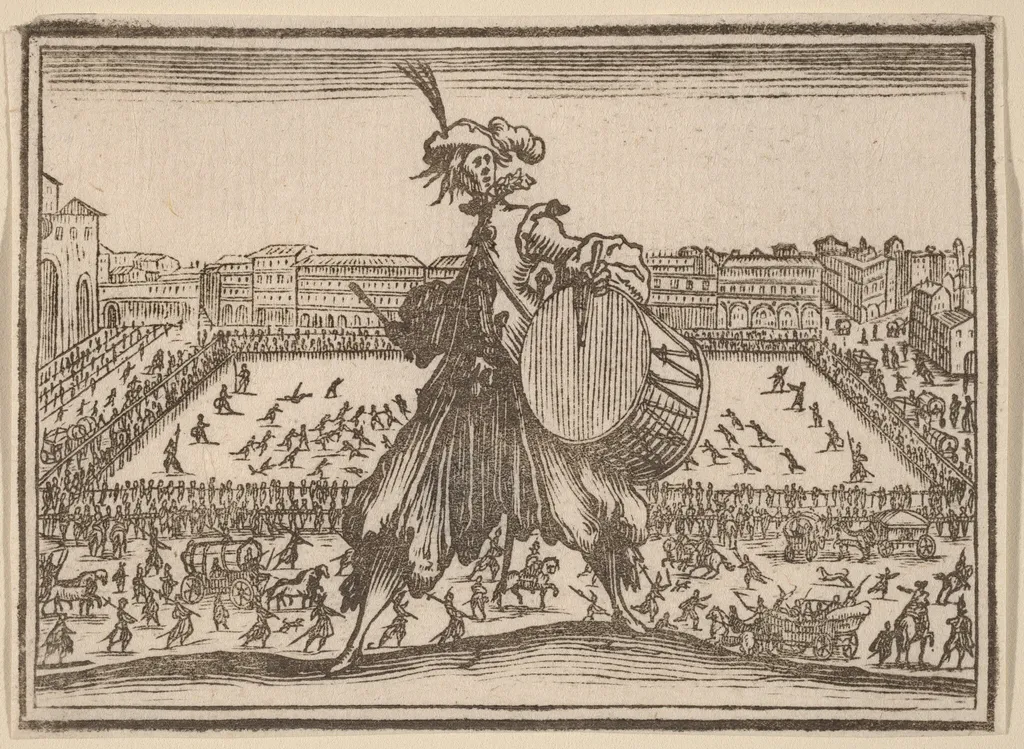
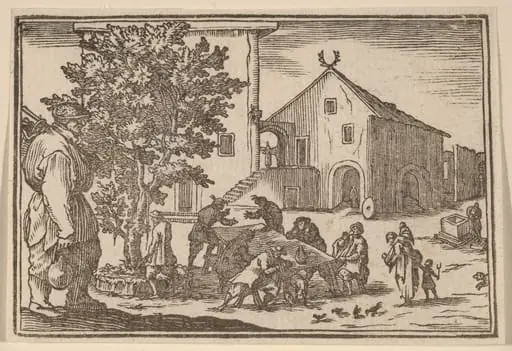
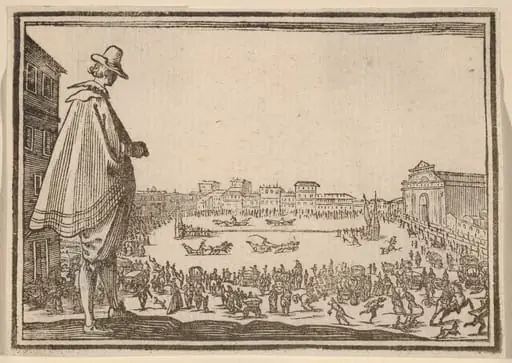
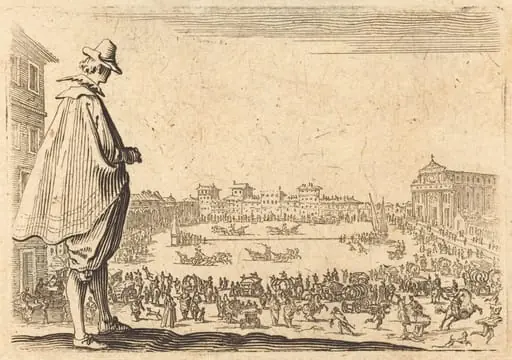
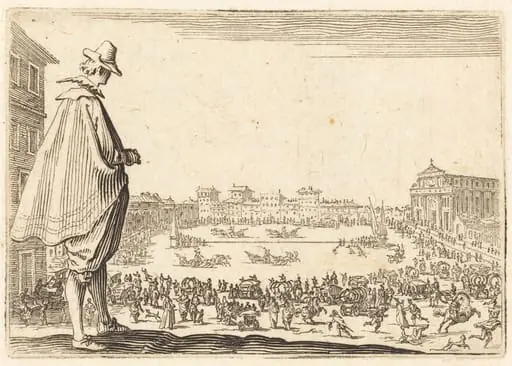
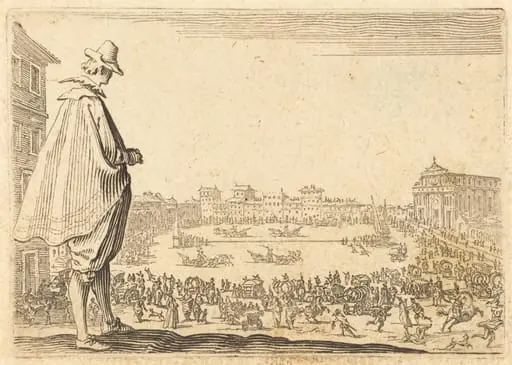
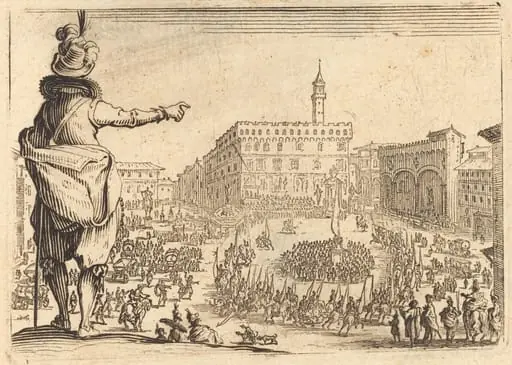
Piazza Santa Croce, Florence is an ink print by the Baroque artist Edouard Eckman. It dates from 1621 and is held in the collection of the National Gallery of Art.
About this work
Overview
Unlike painted scenes, this image relies on carved lines to suggest form and rhythm, offering a graphic interpretation of urban life.
Piazza Santa Croce, Florence is a woodcut print produced in 1621 by Edouard Eckman. Rendered on laid paper, the work captures a bustling public square in Florence, emphasizing motion and communal activity. The medium of woodcut lends a distinctive linear texture, characteristic of early modern printmaking. Unlike painted scenes, this image relies on carved lines to suggest form and rhythm, offering a graphic interpretation of urban life.
Subject & Meaning
The scene depicts a festive gathering in the piazza, centered on a prominent figure in the foreground wearing a feathered hat and holding a drum. This individual appears to direct the energy of the crowd, which includes figures in motion—running, gesturing, and interacting. The composition suggests a public celebration, possibly tied to a religious or civic occasion, reflecting the social vibrancy of Florence’s communal spaces during the early 17th century.
Technique & Style
Eckman employed woodcut technique, carving lines into a wooden block to create the image, then inking and pressing it onto paper. The resulting print features bold, rhythmic contours and areas of solid black, with minimal shading. This method prioritizes clarity and pattern over naturalism, emphasizing movement through repeated lines and simplified forms. The texture of the laid paper further enhances the tactile quality of the impression.
History & Provenance
The print dates to 1621, placing it within a period when woodcuts were still widely used for disseminating images, particularly in Northern Europe and Italy. While Eckman’s broader oeuvre is not extensively documented, this work survives as a rare visual record of Florentine public life from the early Baroque era. Its preservation suggests it may have circulated among collectors or served as a topographical record.
Context
In early 17th-century Florence, public squares like Santa Croce were centers of civic and religious life, hosting processions, markets, and festivals. The depiction of a lively crowd aligns with contemporary accounts of urban festivities, often tied to feast days or the presence of visiting dignitaries. Eckman’s focus on movement and communal activity reflects a broader European interest in documenting everyday spectacle through print.
Legacy
As a relatively modest print, Piazza Santa Croce, Florence does not occupy a central place in art historical narratives, but it contributes to the understanding of how urban scenes were visually recorded before photography. Its survival offers insight into the role of printmaking as a tool for capturing transient moments of public life, preserving a glimpse of Florence’s social rhythms in a format accessible beyond elite patrons.
Artist & collection


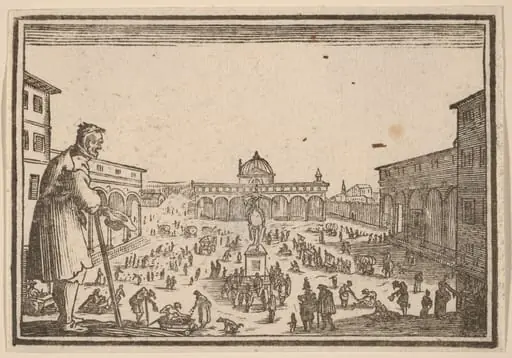
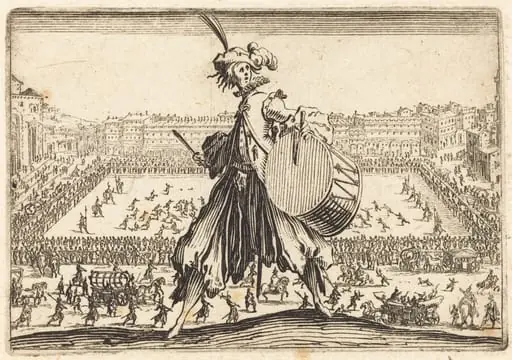 Piazza Santa Croce, Florence
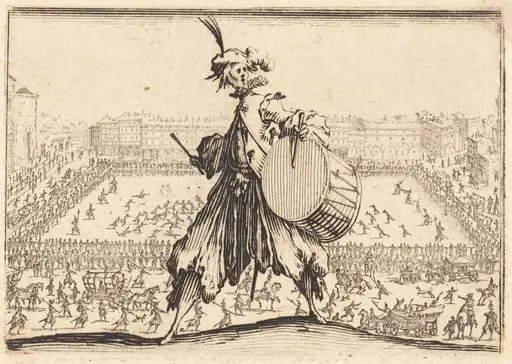 Piazza Santa Croce, Florence
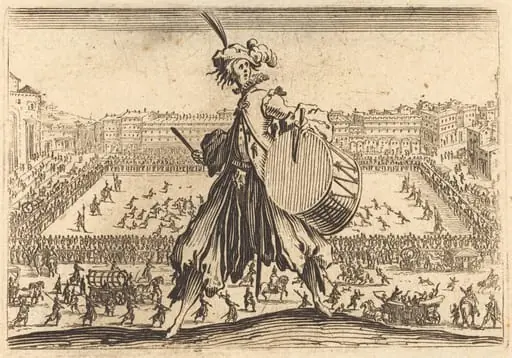 Piazza Santa Croce, Florence
 Piazza Santa Maria Novella, Florence
 Piazza Santa Maria Novella, Florence
 Piazza Santa Maria Novella, Florence
 Piazza Santa Maria Novella, Florence
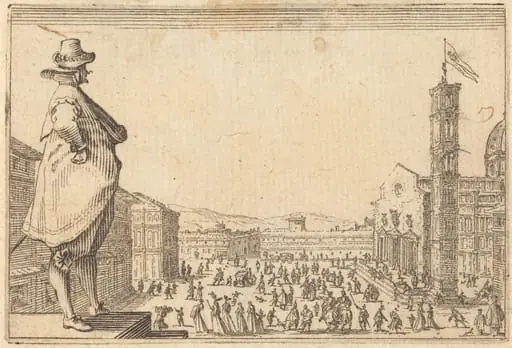 Piazza del Duomo, Florence
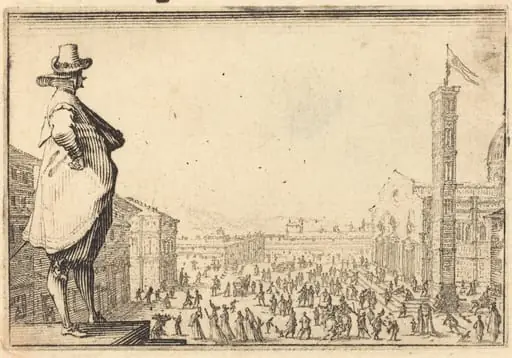 Piazza del Duomo, Florence
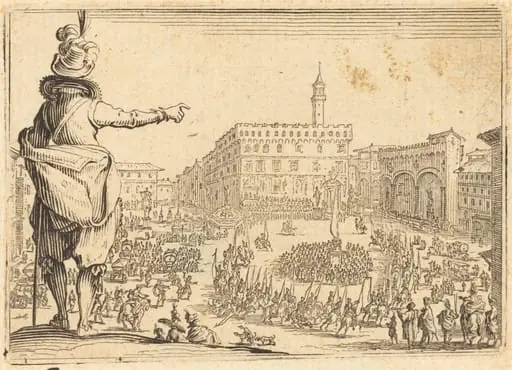 Piazza della Signoria, Florence
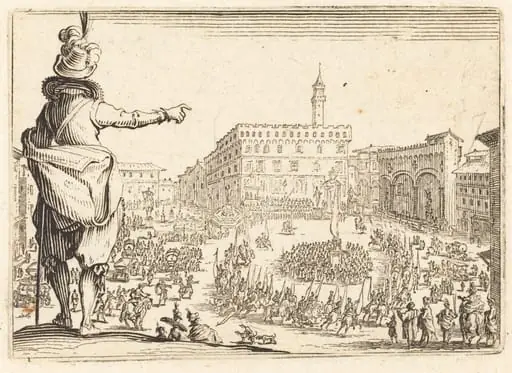 Piazza della Signoria, Florence
 Piazza della Signoria, Florence