Artwork
Razullo and Cucurucu
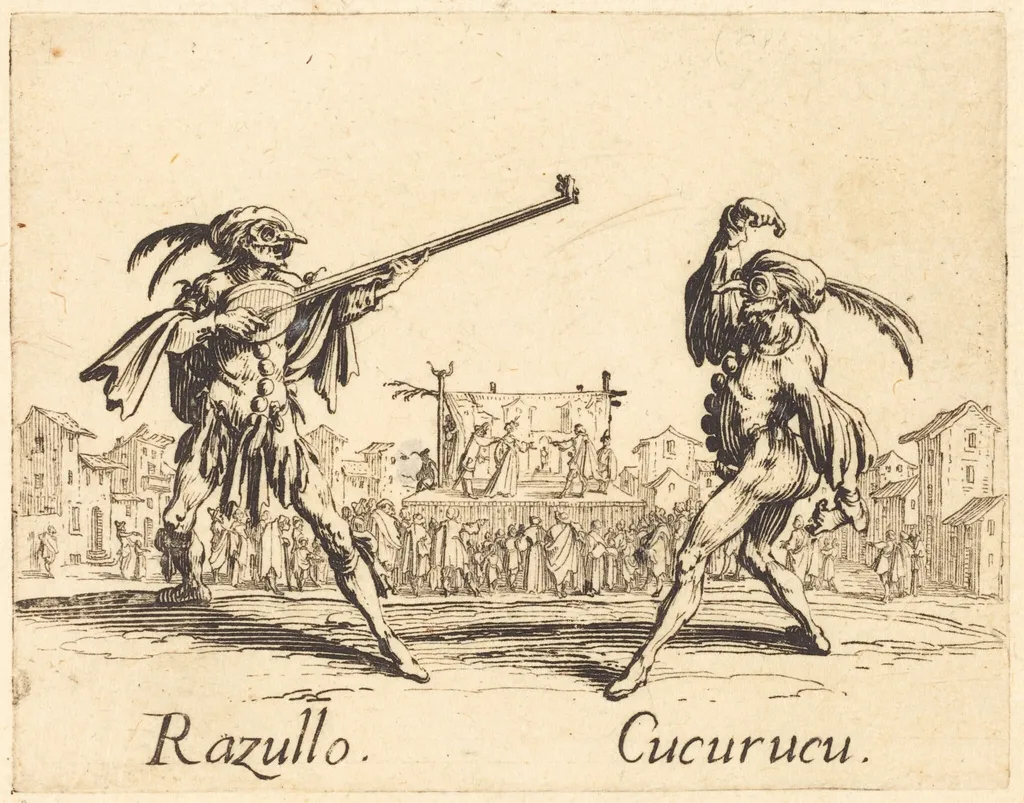
Razullo and Cucurucu is an ink print by the Baroque artist Jacques Callot. It dates from 1622 and is held in the collection of the National Gallery of Art.
About this work
Overview
Razullo and Cucurucu is an etching on laid paper created by Jacques Callot around 1622. Characteristic of Callot's prolific output, this work captures a vivid social scene with meticulous detail.
Subject & Meaning
The etching depicts two eccentric, tall figures in a bustling street, distinguished by oversized, feathered hats and loose clothing. One wields a long pole, the other a telescope, set against a backdrop of a stage performance featuring a cross. The title suggests these characters might be satirical, exaggerating or mocking a serious subject.
Technique & Style
Callot employed sharp, dynamic lines to convey a sense of liveliness and slight chaos, typical of his baroque style. The etching's visual energy underscores the bustling atmosphere of the scene.
History & Provenance
Created in the early 17th century by French baroque printmaker Jacques Callot, this etching is part of his extensive body of work (over 1,400 etchings) documenting contemporary life in the Duchy of Lorraine.
Context
Razullo and Cucurucu reflects Callot's broader artistic practice of precisely capturing diverse social strata and scenes, from soldiers and beggars to court figures, often within detailed, everyday settings.
Artist & collection
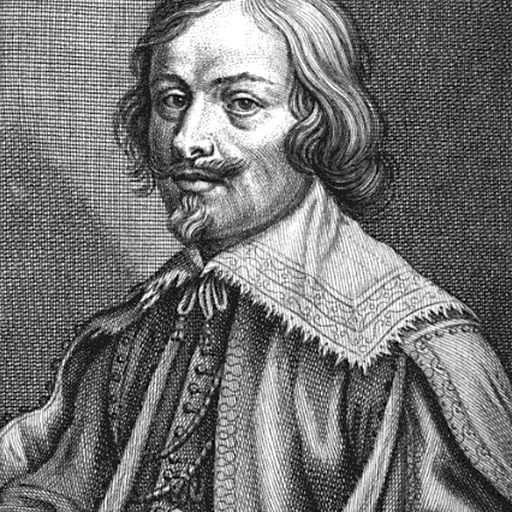
Artist
Jacques Callot was a baroque printmaker and draftsman from the Duchy of Lorraine.

 Holy Family at supper
 Restoration of the Aqueduct at Pisa
 Restoration of the Aqueduct at Pisa
 Square in Paris with Many Figures
 Square in Paris with Many Figures
 Horsemen Attacked by Robbers
 HOW WILL A COVERED PART BE CORRECTED?HOW WIKA A COVERED HEART DEED CORRECTED?
![Christ Walking on the Water [second plate], by Jacques Callot](https://artifactworldgallery.com/img/jacques-callot--christ-walking-on-the-water-second-plate--2069f3bfe4cb2126-w320.webp) Christ Walking on the Water [second plate]
Christ Walking on the Water [second plate]