Artwork
St. Eulalia; St. Fusca and Maura; St. Valentine; St. Anthony
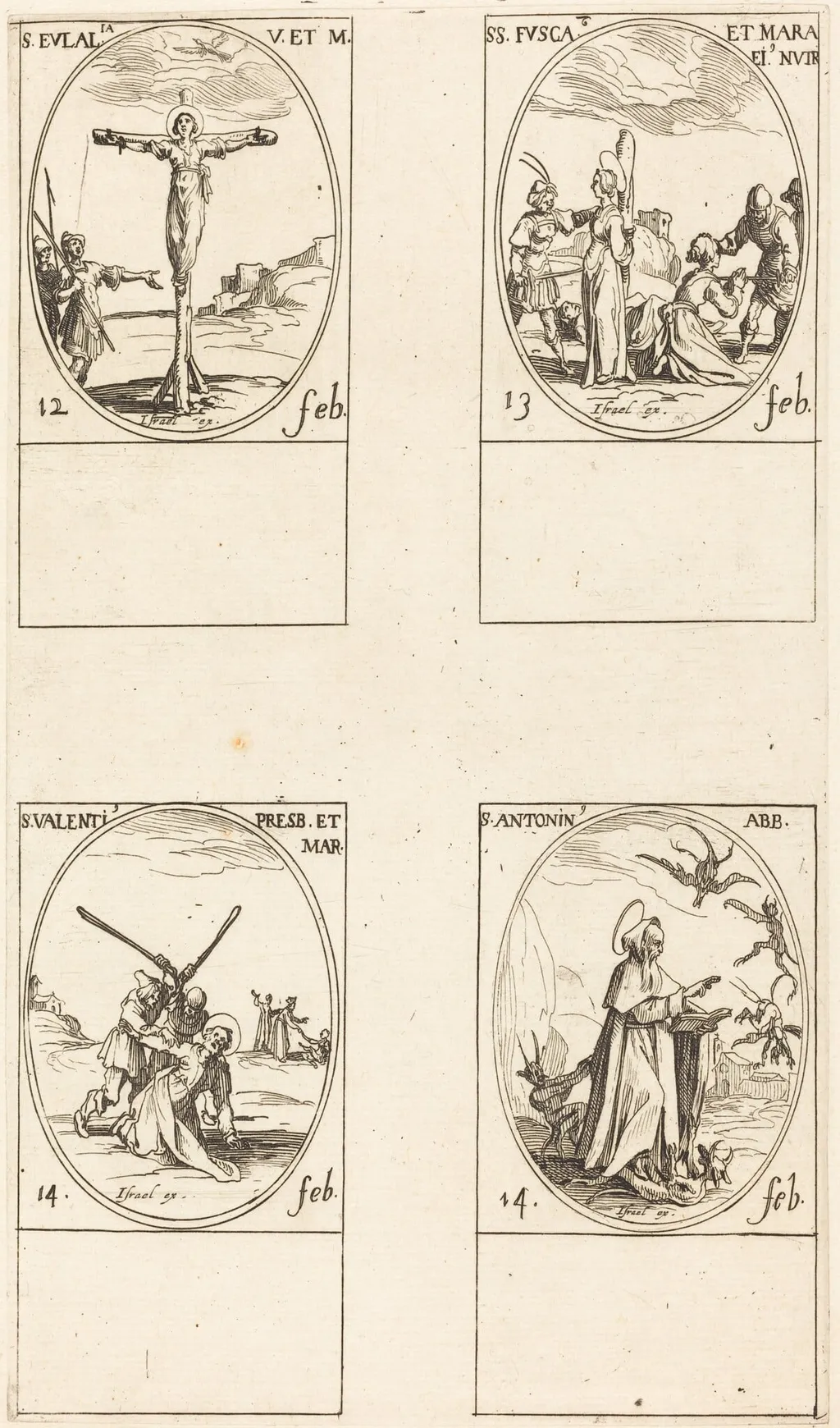
St. Eulalia; St. Fusca and Maura; St. Valentine; St. Anthony is an ink print by the Baroque artist Jacques Callot. It dates from 1634 and is held in the collection of the National Gallery of Art. Created circa 1634, this work consists of four small oval etchings on laid paper, each depicting a different saint.
About this work
Overview
Created circa 1634, this work consists of four small oval etchings on laid paper, each depicting a different saint. The French Baroque printmaker Jacques Callot, active in the Duchy of Lorraine, executed the images using the etching technique, a medium he employed for a prolific output of more than a thousand prints.
Subject & Meaning
The individual plates illustrate the martyrdoms and legends of Saint Eulalia, Saint Fusca and Maura, Saint Valentine, and Saint Anthony.
The individual plates illustrate the martyrdoms and legends of Saint Eulalia, Saint Fusca and Maura, Saint Valentine, and Saint Anthony. Each scene presents a narrative moment—such as a woman on a cross attended by soldiers, a group of figures on horseback, a spear‑bearing figure with a kneeling supplicant, and a robed saint with a staff accompanied by a bird and a dog—intended to convey the virtues and trials associated with the saints.
Technique & Style
Callot’s etching displays the fine line work and crisp detailing characteristic of his practice. The use of laid paper provides a subtle texture that enhances the contrast between the delicate cloud borders, the inscribed names, and the sharply rendered figures. The composition balances intricate human activity with clear, readable storytelling, a hallmark of early 17th‑century printmaking.
History & Provenance
The set belongs to Callot’s extensive series of religious prints, produced during a period when devotional imagery was in high demand across Europe. While specific ownership records are limited, the work reflects the artist’s broader engagement with ecclesiastical commissions and the circulation of prints for private contemplation and public instruction.
Context
In the early 1630s, the Counter‑Reformation spurred a surge in visual representations of saints, and Callot’s prints responded to this cultural climate. Operating from Lorraine, he blended French Baroque sensibilities with the detailed observation of everyday life that marked his oeuvre, situating these religious scenes within a realistic, almost documentary visual language.
Artist & collection
Artist
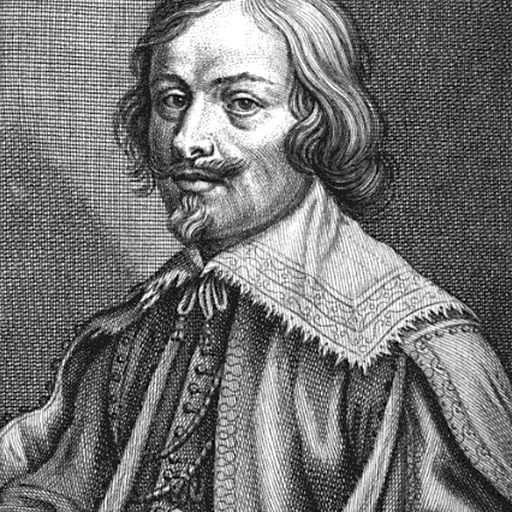
Jacques Callot was a baroque printmaker and draftsman from the Duchy of Lorraine.

 Holy Family at supper
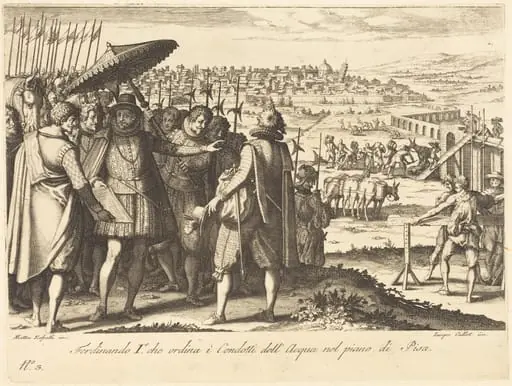 Restoration of the Aqueduct at Pisa
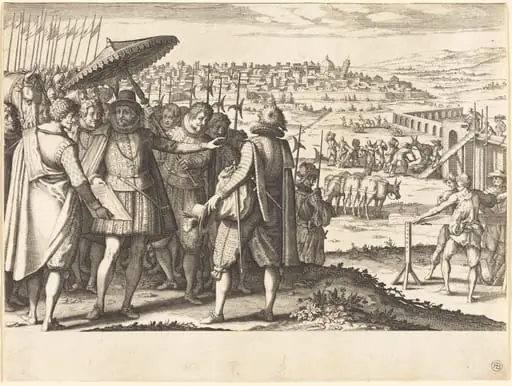 Restoration of the Aqueduct at Pisa
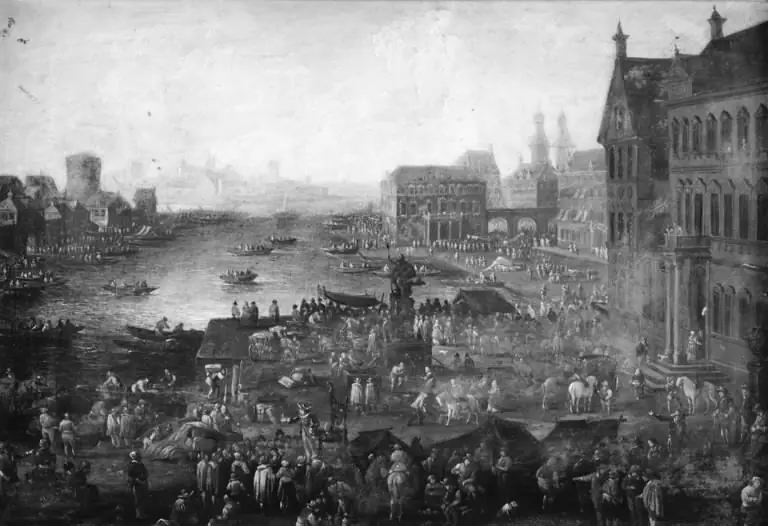 Square in Paris with Many Figures
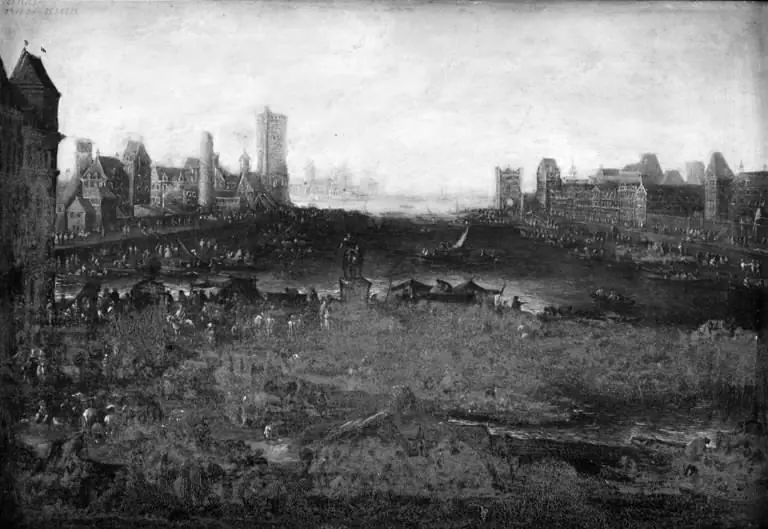 Square in Paris with Many Figures
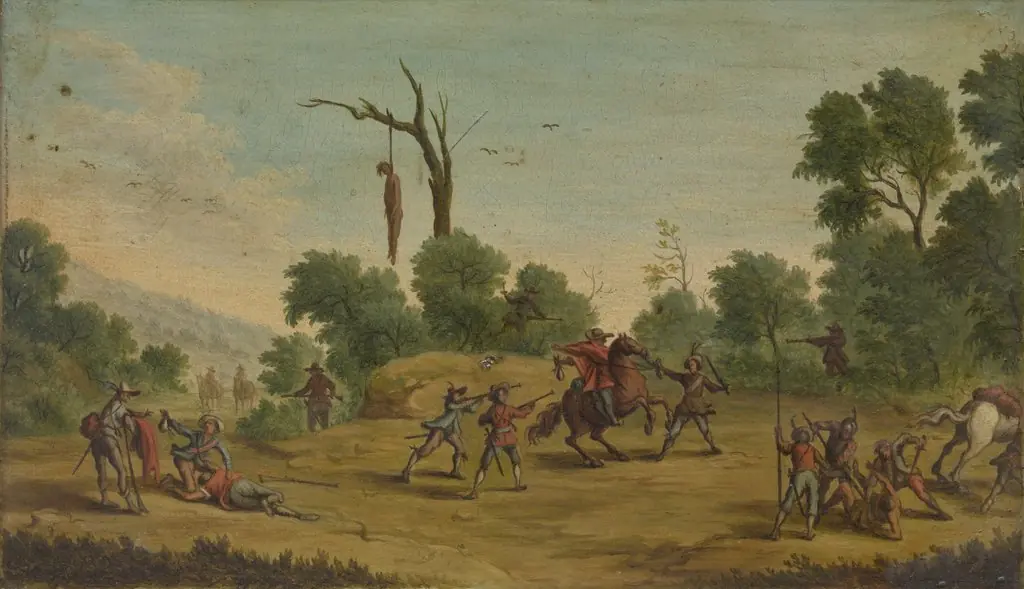 Horsemen Attacked by Robbers
 HOW WILL A COVERED PART BE CORRECTED?HOW WIKA A COVERED HEART DEED CORRECTED?
![Christ Walking on the Water [second plate], by Jacques Callot](https://artifactworldgallery.com/img/jacques-callot--christ-walking-on-the-water-second-plate--2069f3bfe4cb2126-w320.webp) Christ Walking on the Water [second plate]
Christ Walking on the Water [second plate]
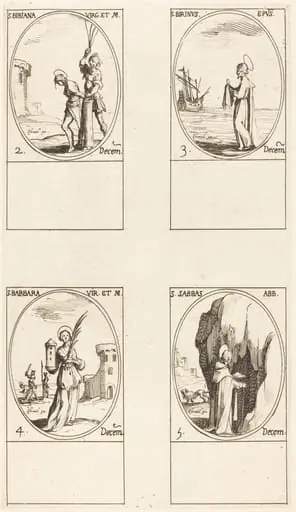 St. Bibiana; St. Birinus; St. Barbara; St. Sabbas
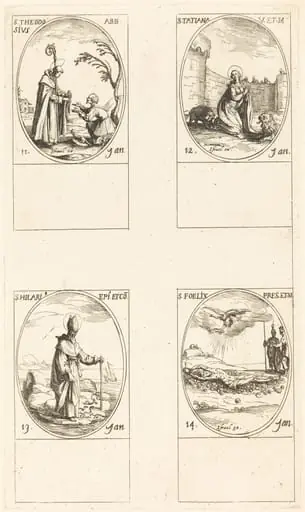 St. Theodosius; St. Tatiana; St. Hilary; St. Felix
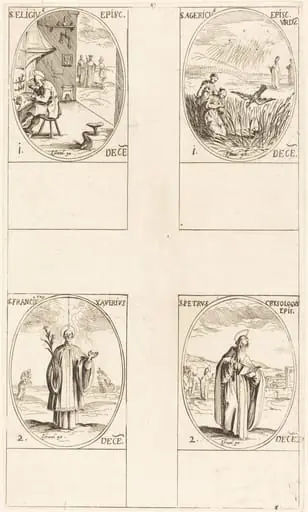 St. Eligius; St. Agericus; St. Francis Xavier; St. Peter Chrysologus
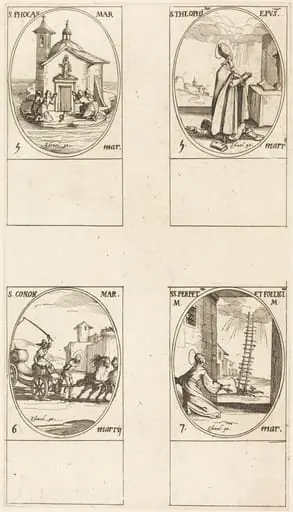 St. Phocas; St. Theophilus; St. Conon; Sts. Perpetua and Felicitas
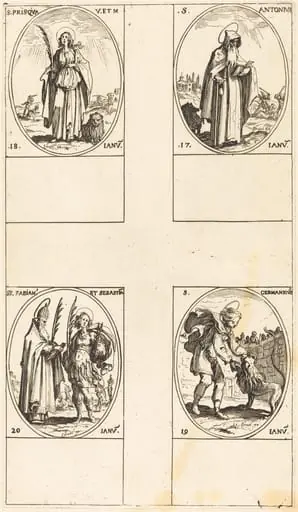 St. Anthony; St. Prisca; St. Germanicus; Sts. Fabian and Sebastian
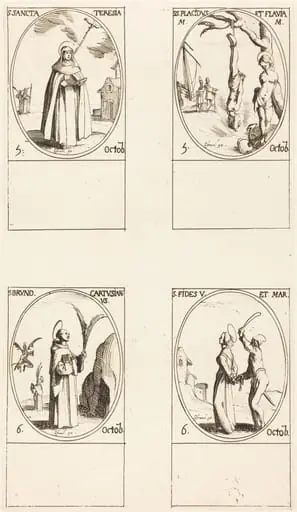 St. Theresa; St. Placidus and Flavia; St. Bruno; St. Faith
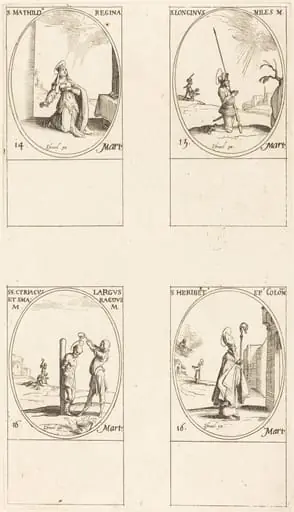 St. Matilda; St. Longinus; St. Cyriacus; St. Heribert
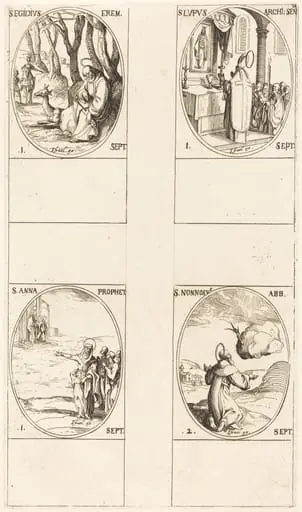 St. Giles; St. Lupus; St. Anne; St. Nonnosus
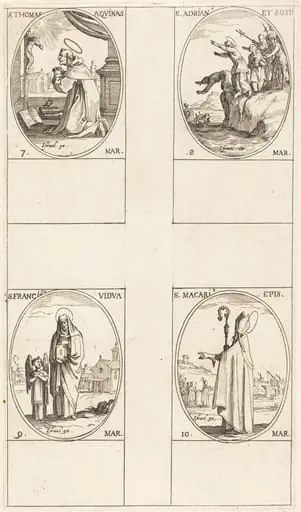 St. Thomas Aquin; St. Adrian and Companions; St. Frances; St. Macari