Artwork
The Gardener
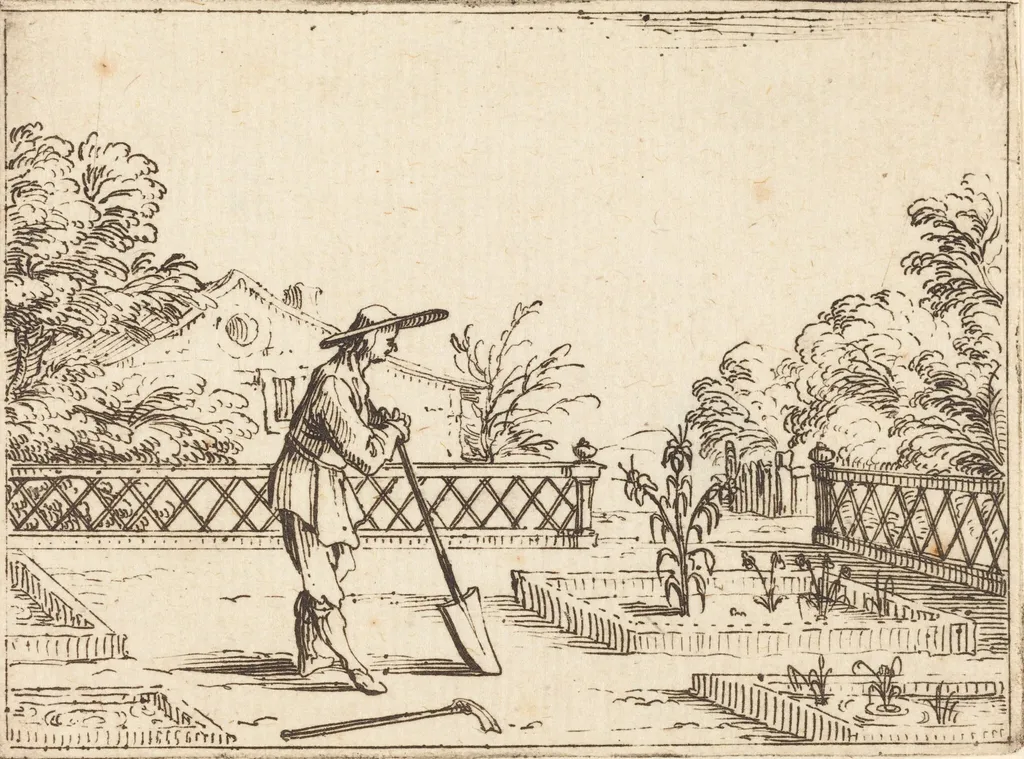
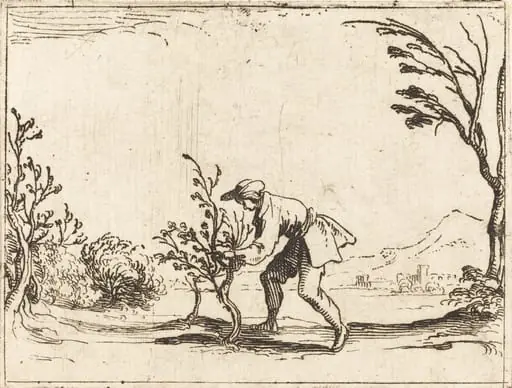
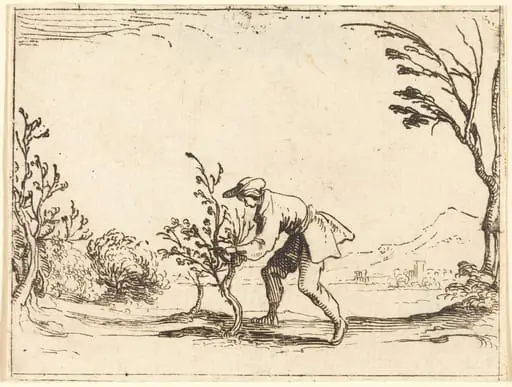
The Gardener is an ink print by the Baroque artist Jacques Callot. It dates from 1628 and is held in the collection of the National Gallery of Art.
About this work
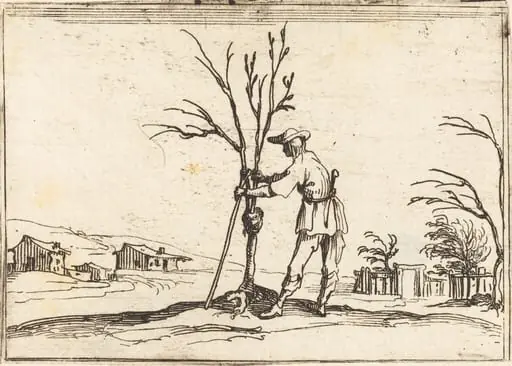
The painting shows a man tending to plants.
He's dressed in simple clothes and is focused on his work. This etching is interesting because it gives us a glimpse into everyday life in the 17th century, and the details in the gardener's face and clothes suggest a sense of quiet dedication.
You can learn more about this style by looking into the technique of etching.
Overview
Jacques Callot, a printmaker from the Duchy of Lorraine, produced *The Gardener* in 1628 as an etching on laid paper. Part of a vast output of over 1,400 prints, this work exemplifies his focus on ordinary life rather than grand historical or mythological themes. His prints often captured laborers, soldiers, and rural figures, presenting them with careful observation and technical precision.
Subject & Meaning
The print depicts a man engaged in quiet horticultural labor, dressed in modest attire and absorbed in his task. There is no narrative drama or symbolic allegory; instead, the scene emphasizes dignity in routine work. Callot’s choice to portray a gardener reflects an interest in the rhythms of daily existence, offering a quiet counterpoint to the turbulence of his era.
Technique & Style
Callot employed etching to achieve fine linear detail, using a needle to draw through a wax ground on a metal plate before acid biting the exposed lines. The delicate rendering of the gardener’s clothing, tools, and facial expression reveals his mastery of tonal gradation and texture. The background is minimally suggested, directing focus to the figure and his activity.
History & Provenance
Created during Callot’s mature period in Nancy, the etching was likely produced for a private or scholarly audience rather than mass distribution. It circulated among collectors of prints who valued his observational realism. While its early ownership is undocumented, it entered institutional collections in the 19th century as interest in Northern Renaissance and Baroque printmaking grew.
Context
In early 17th-century Europe, printmaking became a key medium for documenting social life beyond elite circles. Callot’s work emerged alongside growing civic curiosity about common people, influenced by humanist ideals and the rise of empirical observation. His depictions of laborers aligned with broader trends in Northern European art that valued authenticity over idealization.
Legacy
Callot’s *The Gardener* contributed to the legitimization of everyday subjects in printmaking. His technical innovations and attention to ordinary figures influenced later generations of artists, including Rembrandt and the 18th-century French caricaturists. The work remains a reference for studies of labor, material culture, and the social dimensions of early modern visual representation.
Own this work as a print
Artist & collection
Artist
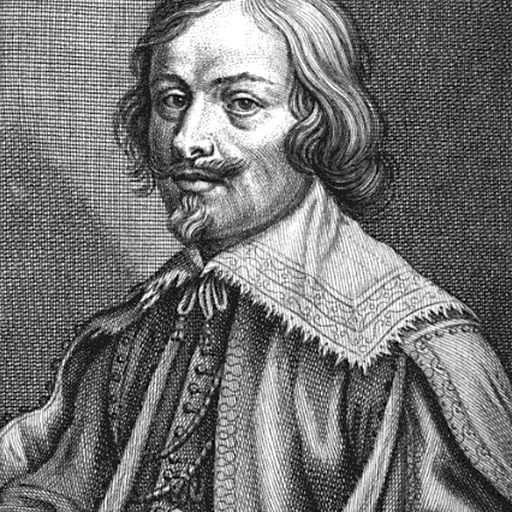
Jacques Callot was a baroque printmaker and draftsman from the Duchy of Lorraine.

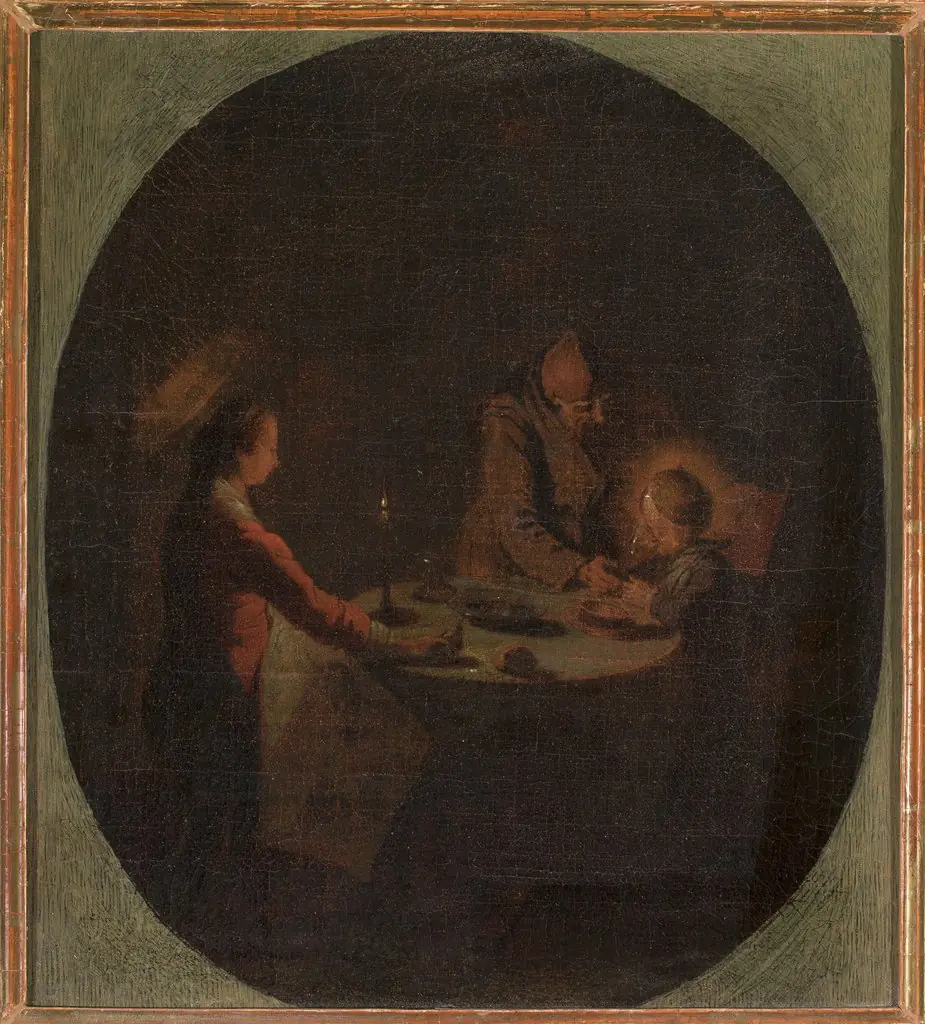 Holy Family at supper
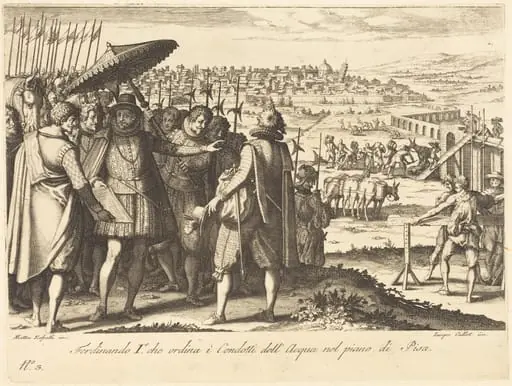 Restoration of the Aqueduct at Pisa
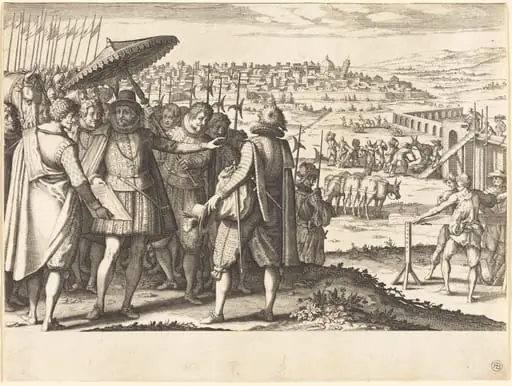 Restoration of the Aqueduct at Pisa
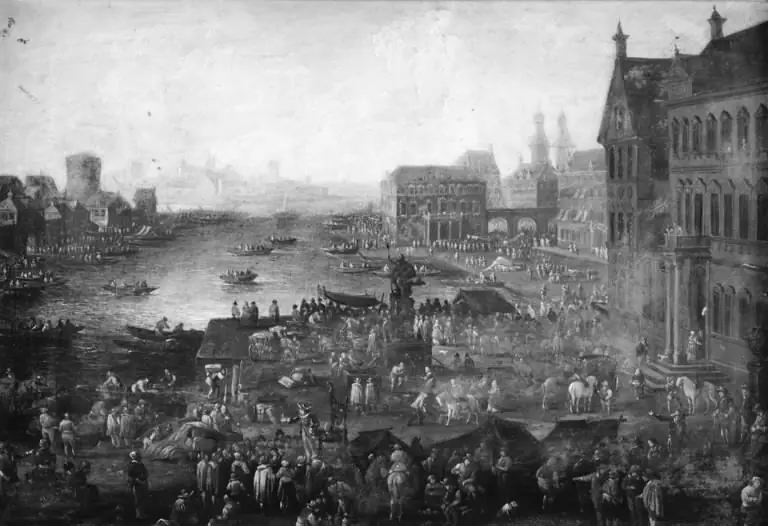 Square in Paris with Many Figures
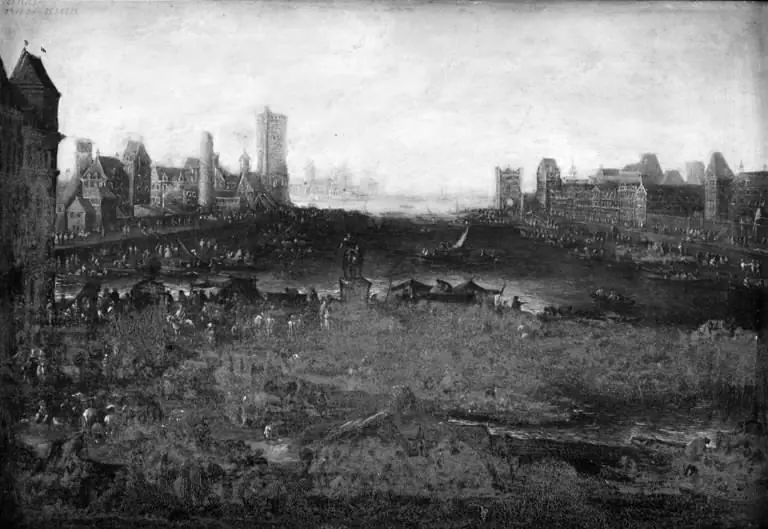 Square in Paris with Many Figures
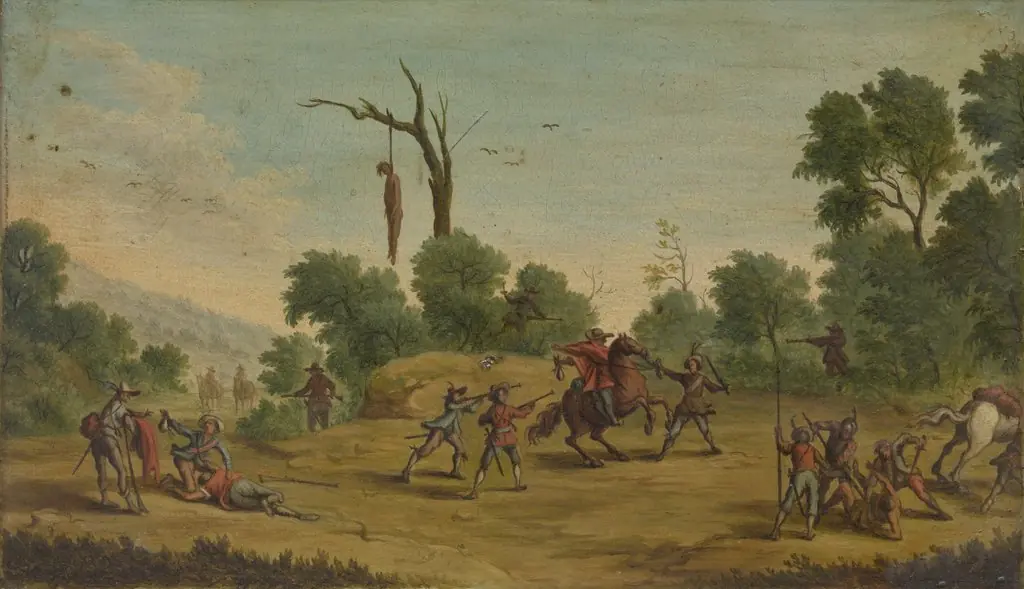 Horsemen Attacked by Robbers
 HOW WILL A COVERED PART BE CORRECTED?HOW WIKA A COVERED HEART DEED CORRECTED?
![Christ Walking on the Water [second plate], by Jacques Callot](https://artifactworldgallery.com/img/jacques-callot--christ-walking-on-the-water-second-plate--2069f3bfe4cb2126-w320.webp) Christ Walking on the Water [second plate]
Christ Walking on the Water [second plate]