Artwork
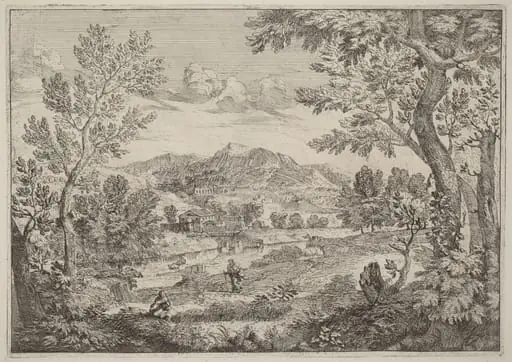
Mountainous Landscape with the Parable of the Sower
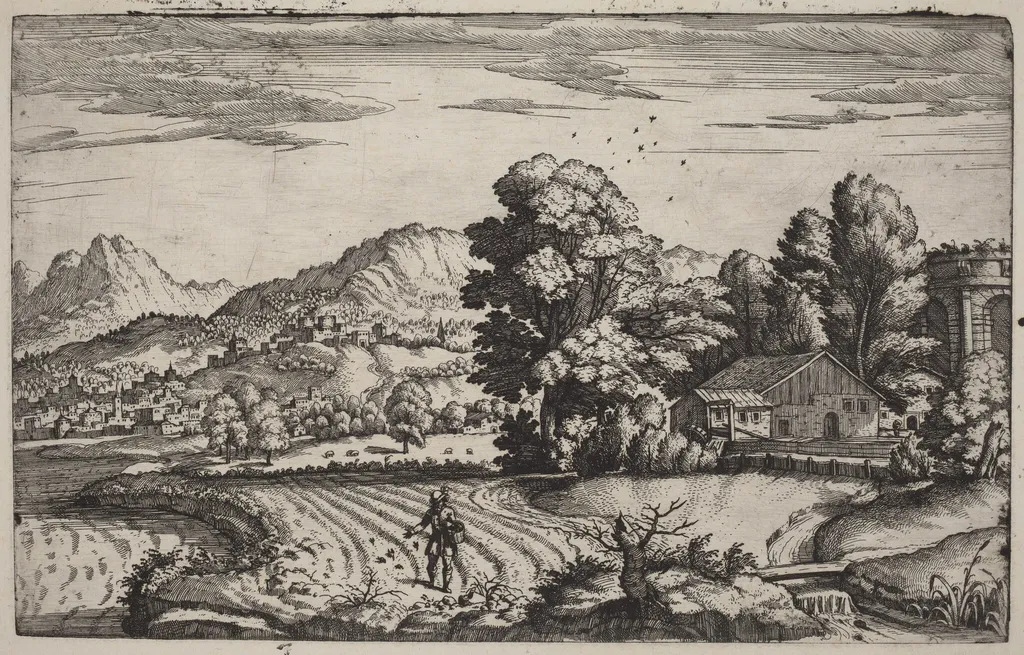
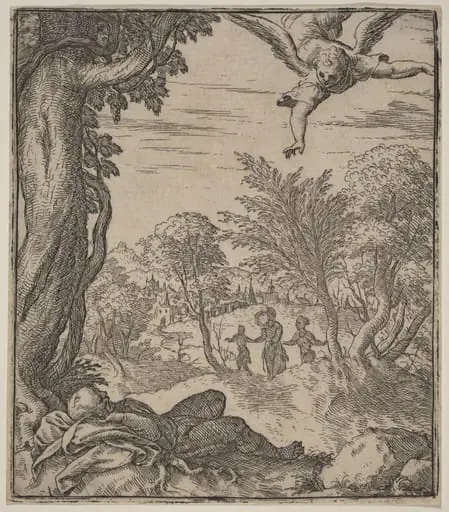
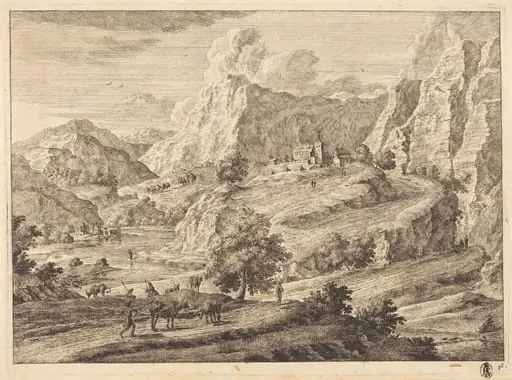
Mountainous Landscape with the Parable of the Sower is an ink print by the Renaissance artist Giovanni Battista Fontana. It dates from 1572 and is held in the collection of the National Gallery of Art.
About this work
Overview
Fontana, active in Austria during this period, employed etching as a means to disseminate complex scenes to broader audiences.
Created around 1572, this etching by Giovanni Battista Fontana depicts a tranquil alpine valley intersected by a winding river and dotted with clustered dwellings. Executed in fine linear detail on laid paper, the work merges a naturalistic landscape with a biblical narrative, reflecting the artist’s engagement with both topographical observation and religious storytelling. Fontana, active in Austria during this period, employed etching as a means to disseminate complex scenes to broader audiences.
Subject & Meaning
The scene illustrates the Parable of the Sower from the Gospels, subtly embedded within the landscape rather than staged as a dramatic event. A solitary figure near the river may represent the sower, his actions harmonized with the rhythm of the land. The quiet village and cultivated hills suggest the fertile ground mentioned in the parable, inviting contemplation of spiritual growth amid everyday rural life without overt symbolism.
Technique & Style
Fontana used precise, controlled etching lines to model form and depth, rendering hills, trees, and architecture with subtle tonal gradations. The delicate rendering of fabric folds and architectural details reveals meticulous craftsmanship. The composition avoids dramatic contrasts, favoring a muted, atmospheric perspective that enhances the sense of spatial recession and quietude, characteristic of Northern Italian printmaking traditions of the period.
History & Provenance
Fontana, born near Verona and trained in the Venetian tradition, relocated to Austria in the 1560s, where he worked on religious commissions and court projects. This print likely originated during his time in Innsbruck, prior to his official appointment as court artist in 1575. Though no early ownership records are documented, the work aligns with the circulation of prints among educated patrons in the Habsburg territories during the late 16th century.
Context
In the decades following the Reformation, religious imagery in print form became a key medium for conveying doctrinal themes without direct ecclesiastical oversight. Fontana’s integration of biblical narrative into landscape reflects a broader trend among Northern Italian and Central European artists who sought to harmonize sacred content with naturalistic settings, appealing to both devotional and aesthetic sensibilities.
Legacy
Fontana’s etchings contributed to the development of landscape as a vehicle for moral and spiritual reflection in print culture. Though less widely known than his contemporaries, his synthesis of Venetian coloristic sensitivity and Alpine topography influenced regional printmakers. This work remains a quiet example of how religious narratives were woven into the fabric of everyday scenery during the late Renaissance.
Own this work as a print
Artist & collection

Artist
Giovanni Battista Fontana (1524 – 25 September 1587) was an Italian painter and engraver.

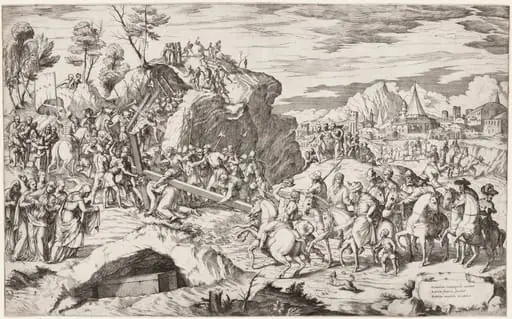
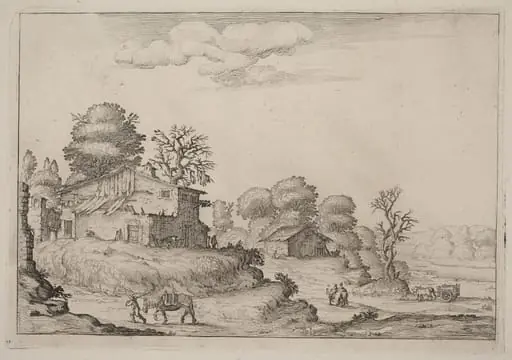 Rustic Landscape with Peasants and Horses
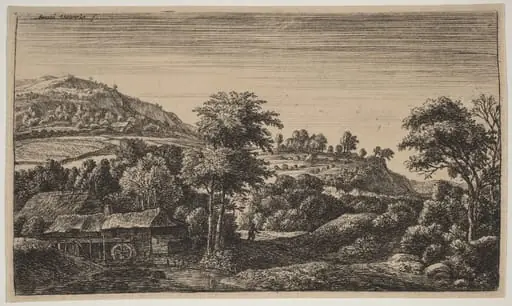 Watermill at the Foot of a Hill
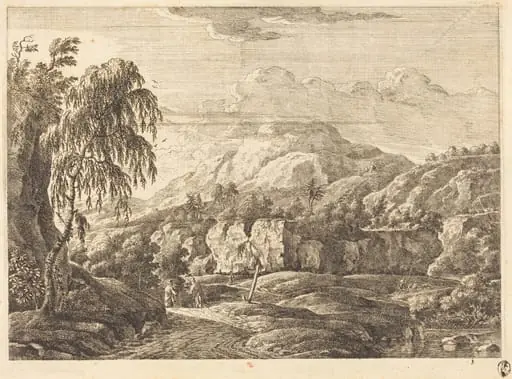 Landscape with Cross and Figures
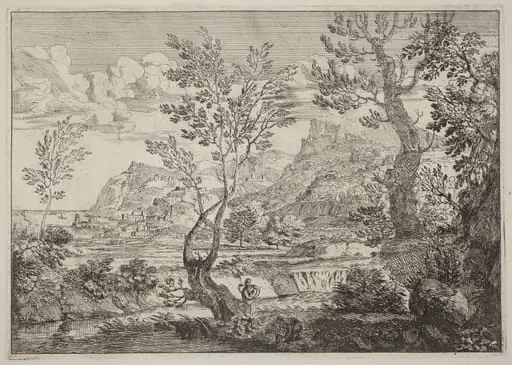 A Waterfall
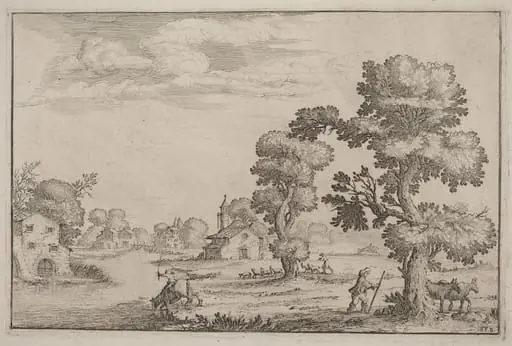 Lakeside Village with Herdsmen
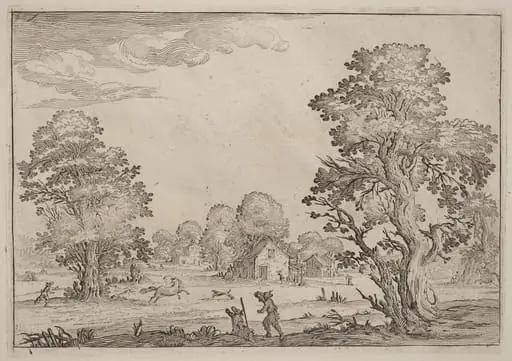 Landscape with Runaway Horses
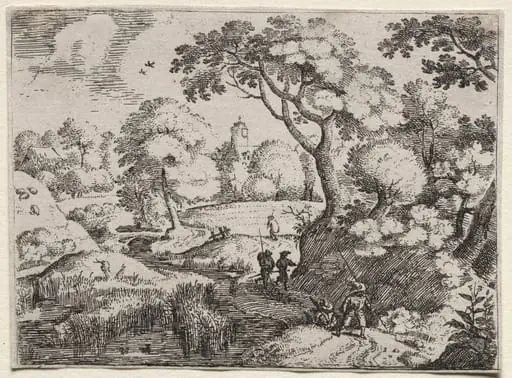 Six Landscapes: Path Between Swamp and Wooded Bank
 Houses Beside a Mountain
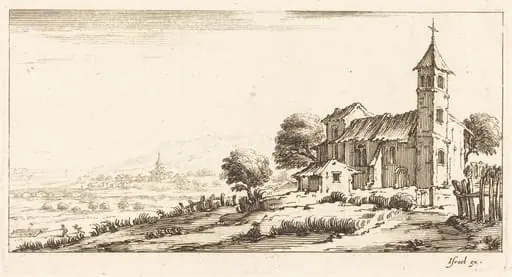 Village Church
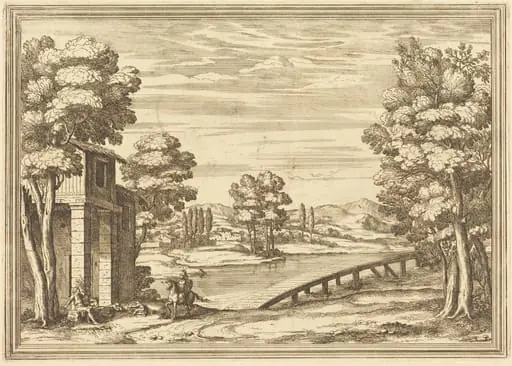 Il Greco in Troia: Plate 7
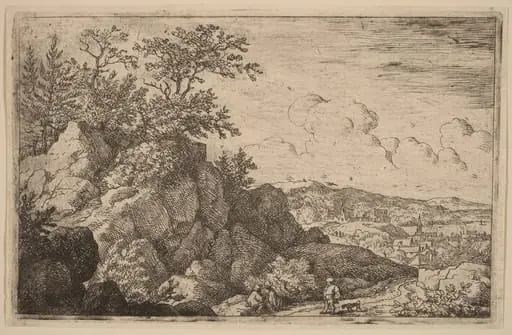 Peasant with His Dog
 Mountainous Landscape with Figures and a Monastary