Artwork
Road along a Field
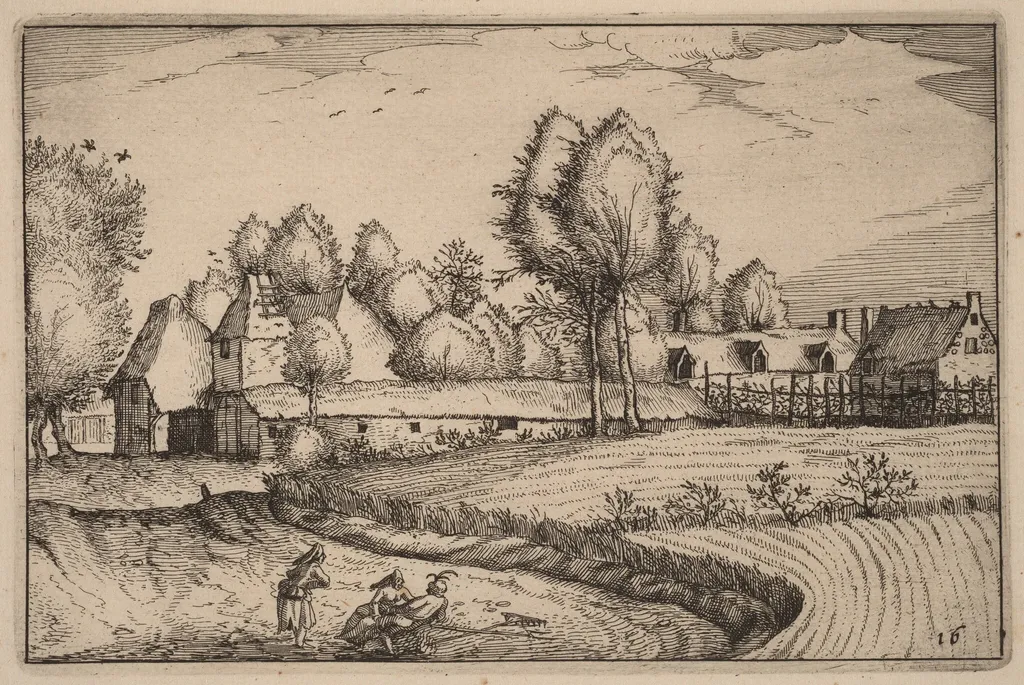
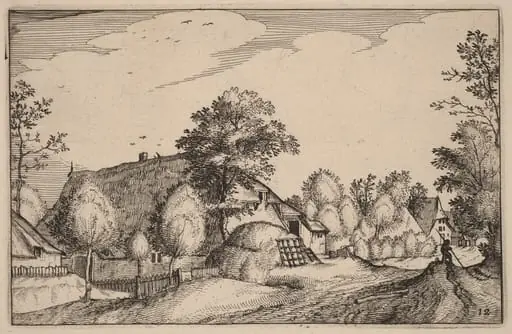
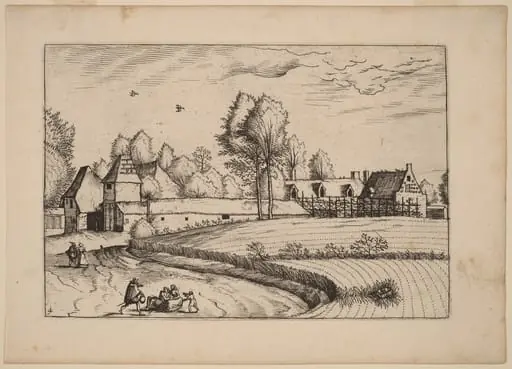
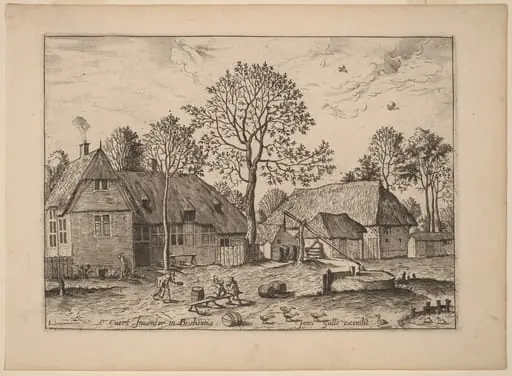
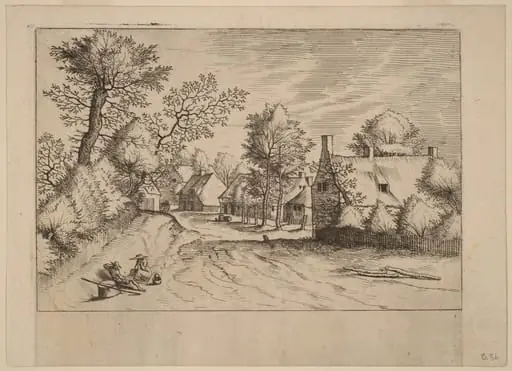
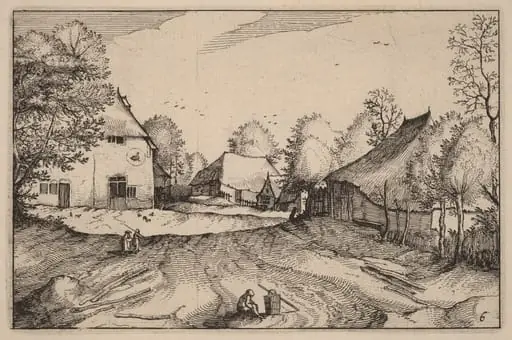
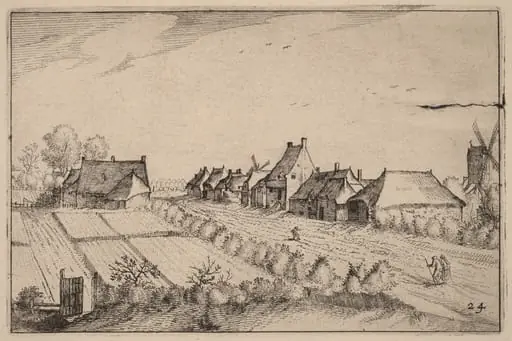
Road along a Field is an ink print by the Baroque artist Claes Jansz Visscher. It dates from 1612 and is held in the collection of the National Gallery of Art.
About this work
Overview
Created in 1612 by Claes Jansz Visscher, this etching captures a tranquil Dutch countryside path winding through open fields.
Created in 1612 by Claes Jansz Visscher, this etching captures a tranquil Dutch countryside path winding through open fields. As a printmaker and publisher active in Amsterdam, Visscher specialized in detailed topographical imagery. The work exemplifies the precision and quiet observation characteristic of early 17th-century Dutch graphic art, produced through the etching technique where acid etches lines into a metal plate for ink transfer.
Subject & Meaning
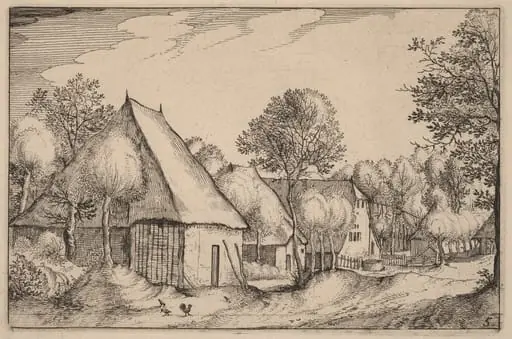
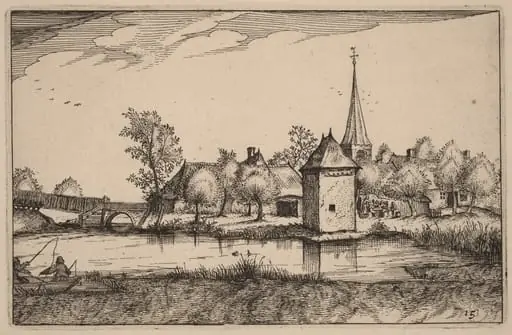
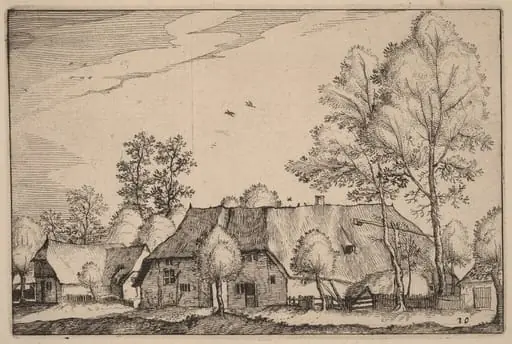
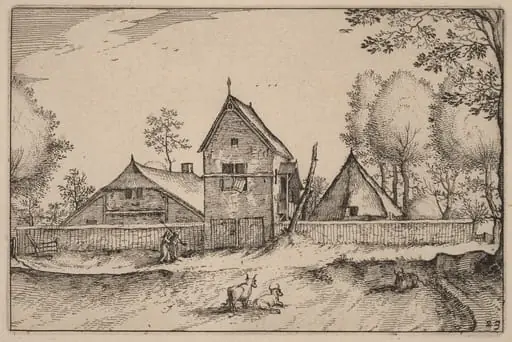
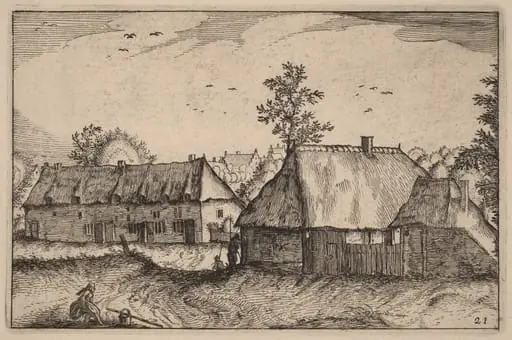
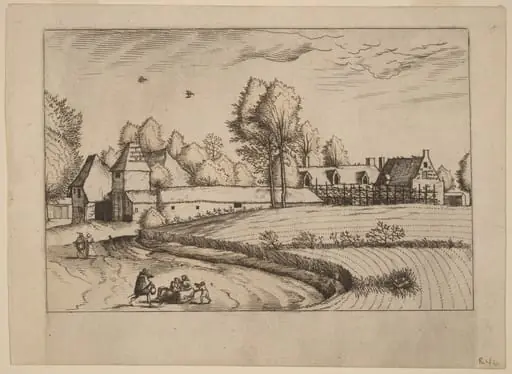
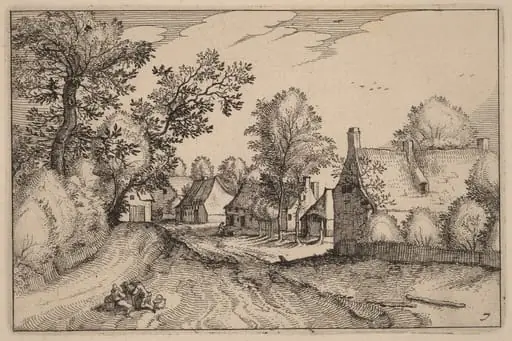
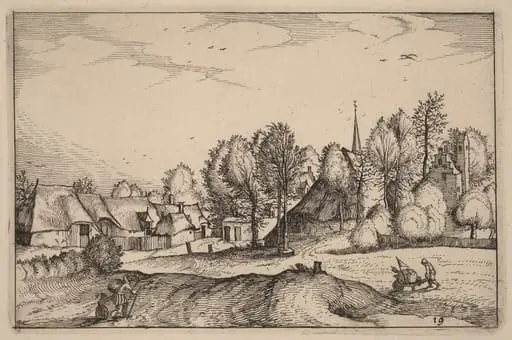
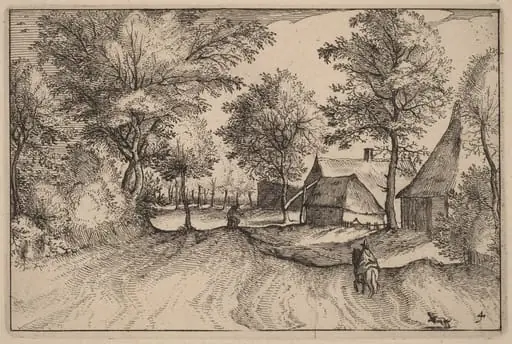
The scene portrays a modest rural road flanked by fields, scattered thatched dwellings, and a narrow stream. Two figures rest near the water, while a third stands nearby, suggesting brief pauses in daily movement. The composition emphasizes stillness and human presence within the landscape, reflecting an interest in ordinary life rather than grand narratives. It conveys a sense of place grounded in local observation.
Technique & Style
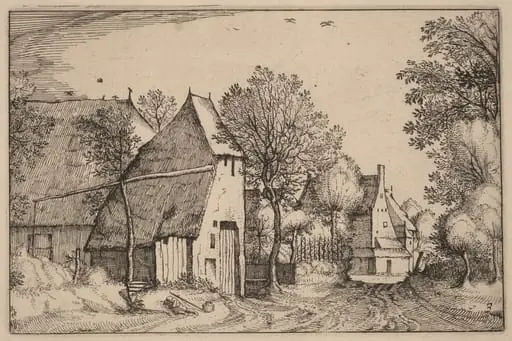
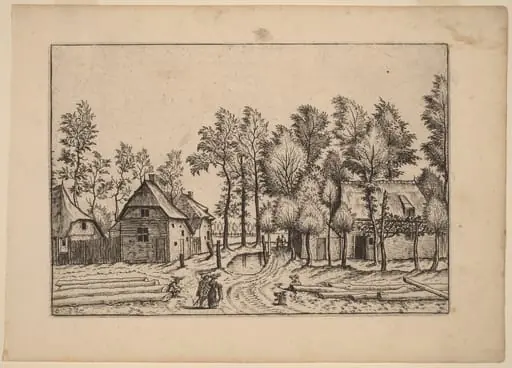
Executed in etching, the image relies on fine, controlled lines to render textures: the roughness of tree bark, the softness of grass, and the folds of clothing. The tonal range is achieved through varying line density rather than shading, typical of the medium. Visscher’s precision in depicting architectural and natural elements reveals his training in cartographic draftsmanship, translating survey-like accuracy into artistic form.
History & Provenance
Claes Jansz Visscher established a family publishing house in Amsterdam that became a leading producer of maps and prints. This etching, dated 1612, belongs to his early output before the firm expanded into large-scale cartography. While the specific provenance of this impression is unrecorded, it aligns with the commercial and artistic practices of his workshop, which distributed prints widely across Europe.
Context
In early 17th-century Holland, printmaking flourished as a medium for documenting landscapes, cities, and daily life. Visscher’s work emerged alongside a growing market for affordable, detailed imagery, fueled by rising literacy and civic pride. His focus on rural scenes complemented the broader cultural interest in the natural environment, distinct from religious or mythological subjects common elsewhere in Europe.
Legacy
Visscher’s prints, including this etching, contributed to the standardization of Dutch landscape representation in print. His workshop’s longevity ensured his stylistic approach influenced generations of engravers. Though less celebrated than later painters of the Dutch Golden Age, his work remains a vital record of how ordinary spaces were visually codified during a period of economic and artistic transformation.
Own this work as a print
Artist & collection

Artist
Claes Janszoon Visscher (1587 – 19 June 1652) was a Dutch Golden Age draughtsman, engraver, mapmaker, and publisher.